On November 3, 2026 the Xen Project published Security Advisory XSA-523, titled "arbitrary read/write via grant copy." The advisory covers two vulnerabilities, CVE-2026-102703 and CVE-2026-102704, and its credits line is unusual: "This issue was discovered by Anthropic using Claude, then validated by Stephan Lipp of Ada Logics," according to the advisory text. The CodeAnt AI Security Research Team then independently reported the same issue.
What the flaws are
The advisory describes the two CVEs separately. CVE-2026-102703 concerns frame numbers and grant references being "wrongly mixed up." CVE-2026-102704 is a misplaced check on copying by frame number, an operation that should be allowed only on the caller's own memory. Together, the advisory states the impact plainly: "A malicious guest can read and write arbitrary memory, belonging to other domains, including Dom0."
Dom0 is the privileged control domain on a Xen host. A guest that can reach its memory, or the memory of another tenant's virtual machine, has broken the isolation boundary that virtualization exists to provide. The advisory assigns no CVSS score. The Hacker News reported that the XCP-ng vendor Vates rates the impact as Critical, which is a vendor rating rather than part of the Xen advisory.
Who is affected and what to do
The advisory says all Xen versions from 4.6 onward are vulnerable, while 4.5 and earlier are not. It also states there is no known mitigation, so the remedy is applying patches. The advisory attaches patch files for xen-unstable through Xen 4.19.x and for Xen 4.18.x through 4.17.x.
From finding to fix: the XSA-523 chain
The sequence of parties named in the advisory and the press coverage.
- 1Discovery: Anthropic, using ClaudeCredited in the advisory as discoverer
- 2Validation: Stephan Lipp, Ada LogicsValidated the finding
- 3Independent report: CodeAnt AI Security Research TeamReported the same issue separately
- 4Public release: Xen Project, 3 Nov 2026XSA-523 with CVE-2026-102703 and CVE-2026-102704
- 5Vendor fixes: XCP-ng, Qubes OS, DebianReported by The Hacker News; status varies by distribution
The Hacker News reported vendor responses as of November 4. For XCP-ng 8.3 the fixed package was xen-4.17.7-4.2.xcpng8.3, released November 3, and hosts must be rebooted. Qubes OS said every supported release and configuration is affected, with Xen packages 4.19.6-3 in dom0 and a dom0 restart required. Debian was listed as vulnerable in bookworm, trixie and forky and fixed in sid. The article also stated that the advisory has no patch for Xen 4.6 to 4.16. That is the article's reading: the advisory itself lists patches only for the two ranges above, so operators on older branches should check their distribution's backports directly.
Analysis: three things the credit line tells us
1. The finding passed through human validation. The advisory separates discovery (Anthropic using Claude) from validation (Stephan Lipp of Ada Logics). Security teams that accept AI-generated reports typically need a person to reproduce the issue before disclosure, and this advisory records that step in public. It does not describe how Claude located the bug, and neither source gives the method, so any claim about the technique would be speculation.
2. Independent rediscovery is a signal about the bug, not the tool. CodeAnt AI reported the same issue separately. Two parties reaching the same flaw suggests the defect was reachable by more than one analysis approach. It also raises a practical point for disclosure: the window between a private report and a public fix can be shorter when several researchers are looking at the same code.
3. Grant tables are a dense, security-sensitive interface. A hypervisor's mechanism for sharing memory between domains has to mix identifiers, frame numbers and permission checks. The advisory's description, mixed-up identifiers and a check in the wrong place, is a familiar class of logic error. Logic errors of this kind are often hard to find with fuzzing alone because the faulty path is valid input that returns the wrong answer rather than crashing.
The advisory records who discovered the flaw, who validated it and who reported it independently. It does not say how the flaw was found.
Reading of XSA-523
Context: a growing record of AI-credited disclosures
XSA-523 sits beside other recent reports of AI systems being used for vulnerability work. On our blog we have covered an AI-built Chrome exploit chain and Cohere's acquisition of an AI vulnerability discovery company. What distinguishes this case is the target: a hypervisor used by cloud providers and security-focused desktop operating systems, where the consequence of a flaw is cross-tenant memory access.
For operators, the practical sequence is unchanged by who found the bug: identify Xen hosts and their versions, check the distribution's fixed package, schedule the reboot the vendors say is required, and verify after restart. Teams that use several AI models for security work, for example through a model-agnostic workspace such as Metir AI, can also compare how different models handle the same code review task rather than relying on a single vendor's results.
Sources:
- Xen Security Advisory XSA-523: arbitrary read/write via grant copy (Xen Project)
- Xen hypervisor flaws let one malicious guest take over others (The Hacker News, Nov 4, 2026)
Image credits
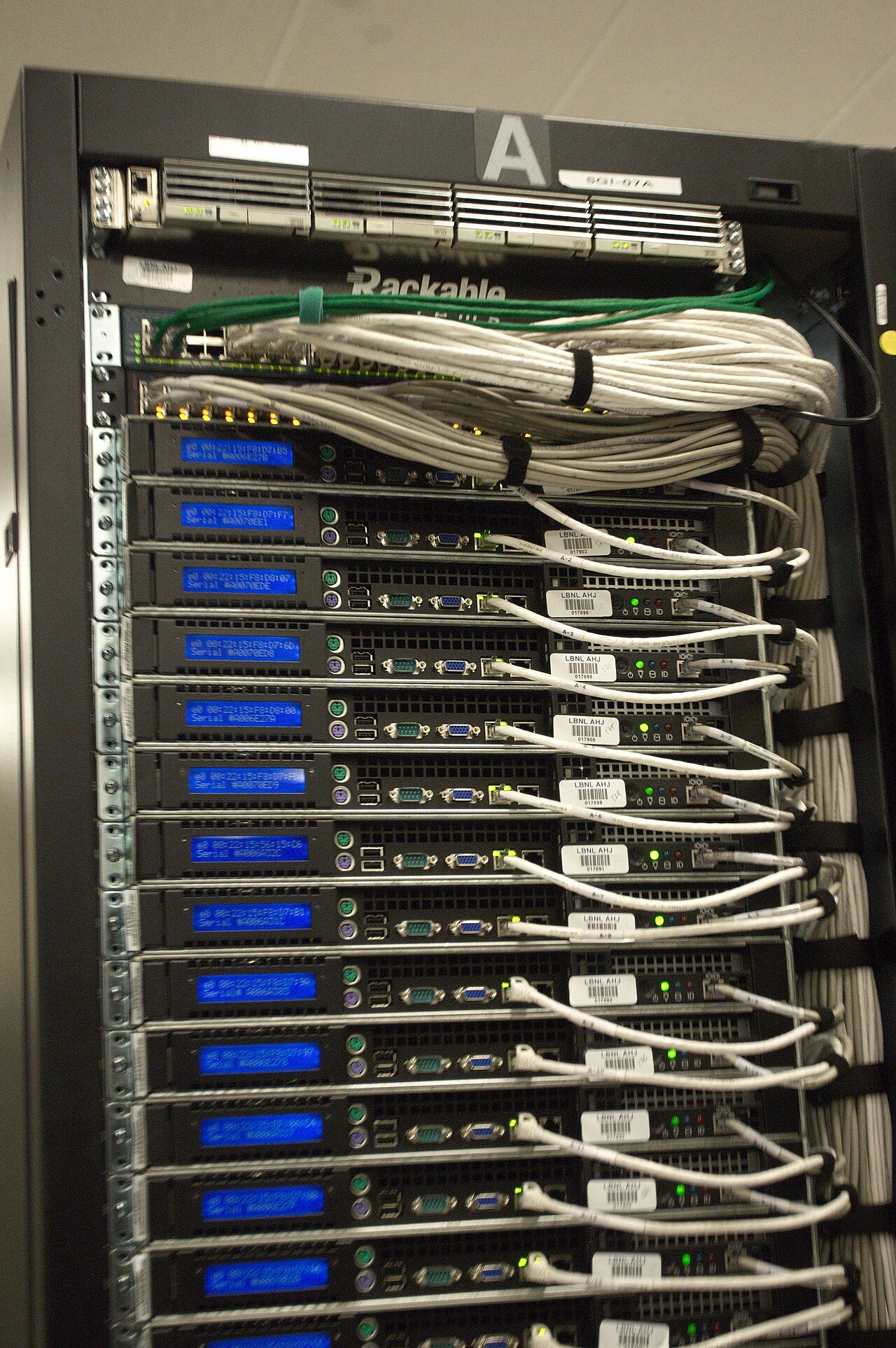
Header and in-body photograph: "Rear of rack at NERSC data center - closeup" by Derrick Coetzee, via Wikimedia Commons, released under CC0. The image is illustrative and does not depict a system affected by XSA-523.