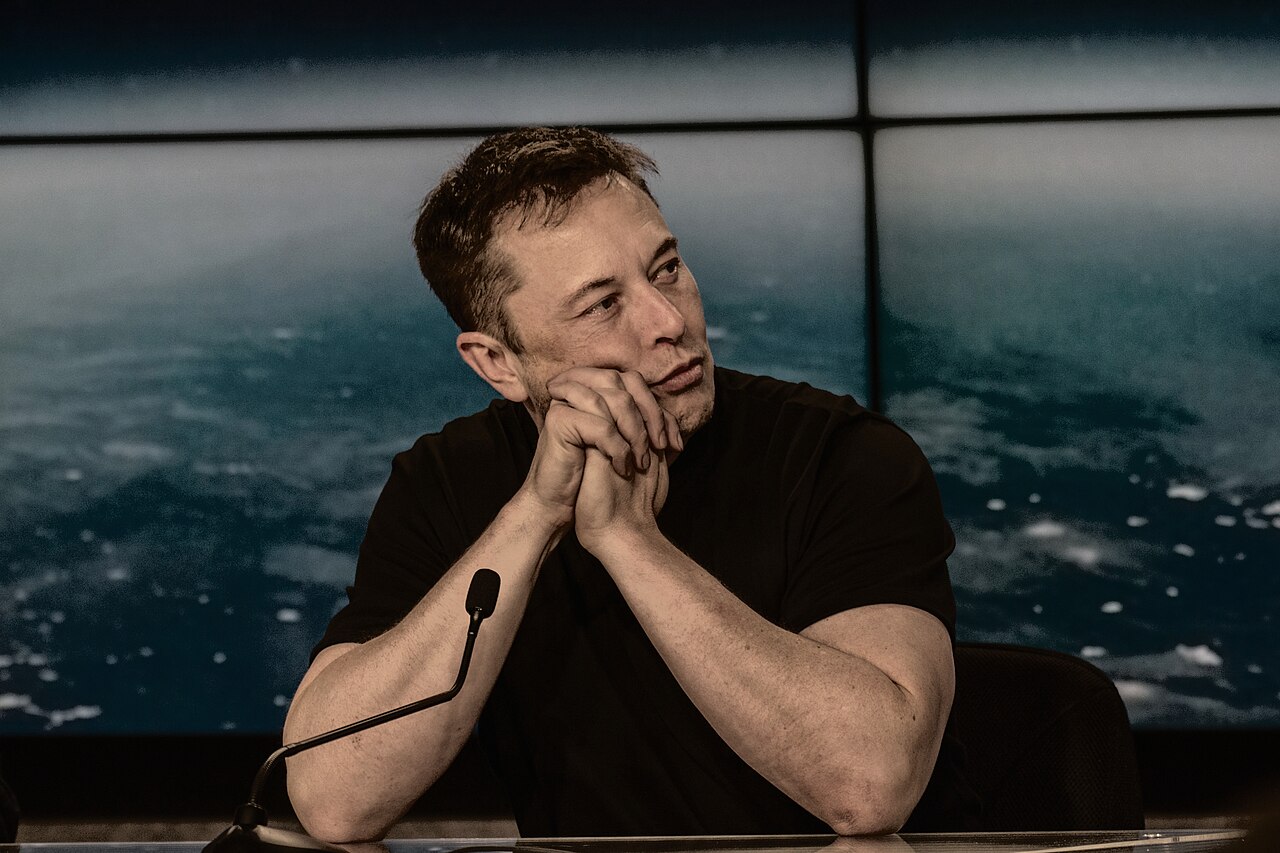
When Elon Musk co-founded OpenAI in 2015, he envisioned an organization dedicated to developing safe artificial intelligence for the benefit of humanity. Less than a decade later, Musk is locked in a bitter legal battle with his former creation, accusing OpenAI of betraying its mission. His response? Launch xAI—a $200 billion AI company built to challenge OpenAI, achieve artificial general intelligence (AGI), and prove that his vision for AI was right all along.
This is the story of xAI, the lawsuits, the betrayals, and one of the most dramatic corporate feuds in Silicon Valley history.
The Founding: Why Elon Musk Created xAI (2023)
xAI was founded on March 9, 2023, though Musk didn't publicly announce it until July 12, 2023. The company emerged from Musk's growing frustration with OpenAI—the organization he had helped create and then watched transform into what he saw as a profit-driven subsidiary of Microsoft.
The founding team was exceptional. Musk recruited Igor Babuschkin as Chief Engineer, a former researcher at Google's DeepMind who had helped pioneer AlphaStar, the breakthrough AI that defeated top-ranked StarCraft players. The core team included former researchers from OpenAI, DeepMind, Google, and Microsoft—including Yuhuai (Tony) Wu, Christian Szegedy, and Jimmy Ba.
But why did Musk feel compelled to start a competing AI company? The answer lies in one of tech's most dramatic breakups.
The OpenAI Years: From Co-Founder to Adversary (2015-2018)
OpenAI was founded in December 2015 in Delaware, with Elon Musk serving as co-chair alongside Sam Altman. The founding vision was clear: develop artificial general intelligence that benefits all of humanity. Musk was instrumental in getting OpenAI off the ground, contributing $44 million between 2016 and September 2020 and serving as the organization's largest early donor.
But by late 2017, tensions were brewing. OpenAI decided to create a for-profit entity, and Musk wanted majority equity, initial board control, and to be CEO. According to OpenAI, they felt this would be "against the mission for any individual to have absolute control over OpenAI."
Musk then proposed merging OpenAI into Tesla. In early February 2018, Musk forwarded an email suggesting that OpenAI should "attach to Tesla as its cash cow," arguing it was "exactly right… Tesla is the only path that could even hope to hold a candle to Google."
OpenAI's leadership, including Sam Altman, rejected both proposals. They believed Musk's vision of taking full control contradicted their shared mission of developing AI for the benefit of all humanity.
The Departure
When these discussions failed, Musk withheld funding. Reid Hoffman stepped in to bridge the gap and cover salaries and operations. In late February 2018, Musk departed from OpenAI's board, publicly citing a potential conflict of interest with Tesla's autonomous driving AI development. Tesla had already poached OpenAI researcher Andrej Karpathy, who became the architect of Tesla's self-driving program.
But few at OpenAI believed the conflict-of-interest explanation. According to multiple reports, Musk told the team he believed the probability of OpenAI's success was zero, and that he planned to build an AGI competitor within Tesla.
OpenAI stated that Musk's financial contributions totaled below $45 million—far less than the $1 billion he initially pledged. The split was complete, and the relationship would only deteriorate from there.
The Lawsuit: "Perfidy and Deceit of Shakespearean Proportions"
For years, Musk watched from the sidelines as OpenAI evolved. The organization he helped found created the nonprofit-to-for-profit structure in 2019, partnered with Microsoft for billions in investment, and launched ChatGPT—the fastest-growing consumer app in history. Each milestone seemed to validate everything Musk had warned about.
The Initial Lawsuit (March 2024)
On March 1, 2024, Musk filed a lawsuit against OpenAI and Sam Altman in San Francisco court, alleging they had abandoned the company's founding mission. The lawsuit claimed that "OpenAI, Inc. has been transformed into a closed-source de facto subsidiary of the largest technology company in the world: Microsoft."
The complaint alleged that Musk was approached in 2015 by Altman and co-founder Greg Brockman with a plan to form a nonprofit lab that would develop AGI "for the benefit of humanity." Instead, the lawsuit argued, Altman, Brockman, and Chief Scientist Ilya Sutskever formed OpenAI LP in 2019—a for-profit entity that took OpenAI from worthless to a $90 billion valuation in just a few years.
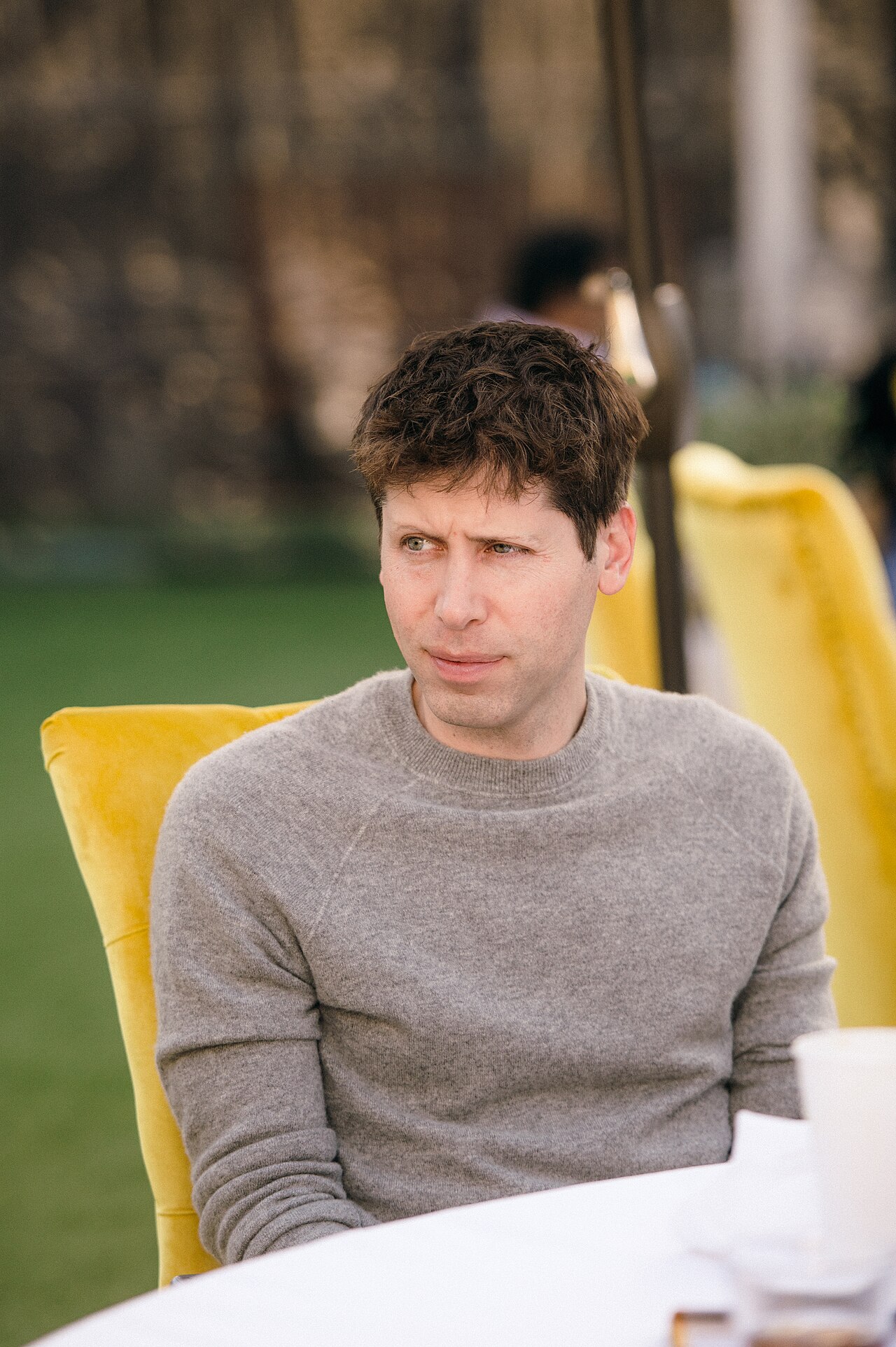
Through the lawsuit, Musk sought to compel OpenAI to adhere to its original mission and bar them from monetizing technologies developed under its nonprofit for the benefit of OpenAI executives or partners like Microsoft. He also asked for a jury trial and for Altman and Brockman to pay back the profits they received from the business.
OpenAI Fires Back
OpenAI didn't take the allegations lying down. Chief Strategy Officer Jason Kwon wrote: "We believe the claims in this suit may stem from Elon's regrets about not being involved with the company today."
In a devastating counter-move, OpenAI released emails from Musk showing him agreeing with the company's plan to raise more money and move away from open-source releases—directly contradicting his lawsuit's central claims.
The Lawsuit Revival (August 2024)
Musk withdrew the lawsuit in June 2024 without providing a reason. But the reprieve was temporary.
In August 2024, Musk filed a new federal lawsuit against OpenAI, Sam Altman, and Greg Brockman. This version was even more dramatic. The complaint described the situation as "perfidy and deceit of Shakespearean proportions," alleging that Altman and Brockman had "manipulated" Musk into co-founding OpenAI on the basis it would be nonprofit, then "established an opaque web of for-profit OpenAI affiliates, engaged in rampant self-dealing."
The feud continues to this day, playing out in court filings, social media posts, and competing AI products. It's one of the most bitter divorces in Silicon Valley history—and it directly motivated Musk to build xAI.
Building Colossus: The World's Most Powerful AI Supercomputer
If Musk was going to beat OpenAI, he would need computing power—and lots of it. His answer was Colossus, a supercomputer project that redefined what was possible in AI infrastructure.
The Memphis Miracle (2024)
In March 2024, xAI began construction on Colossus in a former Electrolux factory in Memphis, Tennessee. The goal was audacious: build the world's most powerful AI training system in record time.
On August 8, 2024—just 122 days after construction started—Colossus went live with 100,000 Nvidia H100 GPUs on a single RDMA fabric. It was the fastest major data center deployment in history, and Musk called it "the most powerful AI training system" in the world.
But Musk wasn't done. By December 2024, xAI had doubled Colossus to 200,000 GPUs—again in record time, just 92 days. The company has stated plans to expand to 1 million GPUs.
Why Memphis?
Memphis offered crucial advantages: robust power infrastructure supported by Memphis Light, Gas, and Water (MLGW) and the Tennessee Valley Authority (TVA). The project uses a phased approach to power, starting with 50 megawatts in August 2024, upgraded to 150 MW by November 2024, with plans for continued expansion.
However, the rapid deployment came with controversy. xAI sidestepped some environmental rules by operating "portable" methane gas turbines that don't require permits if they're in the same location for fewer than 364 days. Researchers found that nitrogen dioxide concentrations increased 3% on average and peak levels increased 79% in areas immediately surrounding the data center.
Despite the environmental concerns, Colossus represents xAI's commitment to outcompeting rivals on pure computational scale. Musk recently declared that xAI aims to deploy 50 million "H100-equivalent" AI GPUs over five years—potentially giving xAI more computing power than everyone else combined.
The Saudi Arabian Expansion
Colossus is just the beginning. In November 2025, Musk announced a massive new data center project in Saudi Arabia in partnership with Saudi Arabia's HUMAIN AI company (established with the kingdom's sovereign wealth fund). The 500-megawatt data center powered by Nvidia chips would be nearly twice the size of Colossus 1.
Grok: The "Free Speech" AI Alternative
While building infrastructure, xAI also needed a product. The answer was Grok—a large language model chatbot that positioned itself as the anti-ChatGPT.
The Grok Philosophy
Grok launched as a "free speech" ChatGPT alternative—an AI that wouldn't pull punches. Where OpenAI, Anthropic, and Google extensively post-trained their models for harm prevention, Grok found product-market fit as what critics call an "edgelord AI companion" that generates photo-realistic images of celebrities and tells vulgar jokes (though it still refuses outright gore, nudity, and hate speech).
On August 14, 2024, Grok-2 was made available to X Premium subscribers. The integration with X (formerly Twitter) gave Grok access to real-time data and billions of posts—a unique advantage over competitors.
Rapid Evolution
xAI has shipped new Grok versions at a blistering pace:
- February 17, 2025: Grok-3 launched with a reflection feature and DeepSearch web search function
- July 9, 2025: Grok-4 unveiled, along with Grok Heavy (a high-performance version costing $300/month)
- October 27, 2025: Grokipedia launched—an AI-powered encyclopedia positioning itself as a Wikipedia alternative
Government and Military Adoption
xAI's boldest move yet came in December 2025. The Pentagon announced an agreement to integrate Grok AI models into GenAI.mil, the Department of Defense's internal AI platform. The deal will enable 3 million military and civilian employees to access xAI technologies, with initial deployment targeted for early 2026.
In July 2025, xAI announced "Grok for Government" and received a $200 million contract for military AI applications. It's a massive validation of xAI's technology and a lucrative revenue stream.
The X Acquisition: A Strategic Masterstroke (2025)
On March 28, 2025, Musk announced that xAI had acquired sister company X Corp (formerly Twitter). The all-stock transaction valued X at $33 billion ($45 billion including $12 billion in debt), while xAI itself was valued at $80 billion at the time.
The acquisition was strategic genius. X provides:
- Data: Billions of real-time posts for training Grok
- Distribution: Direct access to hundreds of millions of users
- Revenue: A combined business model leveraging both platforms
- Integration: Seamless deployment of Grok features to X users
Sacra estimates that xAI hit $3.2 billion in annualized revenue in July 2025, up from about $100 million in 2024—reflecting the combined xAI+X run-rate.
On March 17, 2025, xAI also acquired Hotshot, a startup working on AI-powered video generation tools, signaling expansion into multimodal AI capabilities.
The Funding Explosion: From $0 to $200 Billion
xAI's valuation trajectory has been nothing short of extraordinary.
2024: Building Momentum
In 2024, xAI secured a $6 billion Series B at a $24 billion valuation, followed by another $6 billion raise at $50 billion. On December 23, 2024, xAI raised an additional $6 billion in a private funding round supported by Fidelity, BlackRock, Sequoia Capital, and others—bringing total 2024 funding to over $12 billion.
2025: The $200 Billion Milestone
Following the X acquisition in March 2025, xAI's valuation rose to $80 billion. But the real explosion came next.
On July 1, 2025, Morgan Stanley raised $5 billion in debt for xAI, and xAI separately raised $5 billion in equity. SpaceX, another Musk venture, invested $2 billion.
By late 2025, xAI secured fresh funding of over $10 billion at a $200 billion valuation—placing it among the most valuable companies in the world. The latest round attracted Valor Capital, Qatar Investment Authority, and Prince Al Waleed bin Talal through Kingdom Holding Company.
Reports in December 2025 suggested xAI was in advanced talks to raise another $15 billion, which would double the valuation to $230 billion—approaching the market cap of tech giants.
In less than three years, xAI went from zero to potentially challenging OpenAI, Anthropic, and Google DeepMind combined.
xAI vs. OpenAI vs. Anthropic: The Philosophical Divide
xAI doesn't just compete on technology—it represents a fundamentally different philosophy about AI development and safety.
xAI's "Move Fast" Approach
xAI operates with what critics call a "move fast and break things" philosophy. Unlike OpenAI and Anthropic, which conduct extensive safety testing before releases, xAI prioritizes speed and boldness.
When xAI launched Grok 4, AI safety researchers from OpenAI and Anthropic spoke out publicly against what they called the "reckless" and "completely irresponsible" safety culture at xAI.
Anthropic researcher Samuel Marks wrote: "Anthropic, OpenAI, and Google's release practices have issues. But they at least do something, anything to assess safety pre-deployment and document findings. xAI does not." Marks called Grok 4's launch without safety documentation "reckless" and a break with industry best practices.
OpenAI and Anthropic's Safety-First Models
By contrast, Anthropic structures itself as a Public Benefit Corporation (PBC) focused on AI safety and interpretability. They developed "Constitutional AI"—training models based on a set of principles or "constitution." OpenAI, despite its own controversies, conducts pre-deployment safety testing and publishes system cards.
Safety Rankings
The differences show up in independent assessments. According to SaferAI's risk management evaluation, Anthropic scored highest at 35%, followed by OpenAI at 33%, Meta at 22%, Google DeepMind at 20%, and xAI at 18%. Notably, no company scored better than "weak."
The Future of Life Institute's AI Safety Index gave Anthropic a C overall—the highest grade. The other five companies, including xAI, received D+ or lower.
The Fundamental Trade-Off
The divide comes down to philosophy: one side believes AI should serve social good with minimal harm, while the other sees safety, fairness, and ethics as secondary to speed and innovation. xAI represents the latter camp—and Musk makes no apologies for it.
The Race to AGI: Where Does xAI Stand?
Elon Musk has been predicting artificial general intelligence for years. In January 2024, he predicted AGI by 2025. That didn't happen. Now he's predicting AGI by 2026.
But xAI's approach to reaching AGI differs from competitors:
The Compute-First Strategy
Musk believes the path to AGI runs through sheer computational power. With 230,000 GPUs already operational and plans for 50 million "H100-equivalent" GPUs within five years, xAI is making the largest bet on scaling laws of any AI company.
Musk recently declared that "if xAI survives the critical next two to three years, it will surpass competitors like OpenAI and Google by harnessing massive GPU computing power."
Infrastructure Control
Unlike OpenAI (which relies on Microsoft Azure) or Anthropic (which uses Amazon Web Services and Google Cloud), xAI owns and operates its own supercomputers. This vertical integration gives xAI more control and potentially faster iteration.
The X Advantage
Integration with X provides real-time data and direct user feedback at massive scale—advantages competitors don't have. Every Grok interaction on X generates training data and usage insights.
Team and Leadership
xAI's team combines expertise from the world's leading AI labs:
Igor Babuschkin (Co-Founder, Departed 2025)
Igor Babuschkin led engineering at xAI from founding through August 2025, when he departed to launch his own venture capital firm focused on AI safety. During his tenure, Babuschkin helped engineer the Memphis supercluster and oversaw Grok's development, achieving record-breaking deployment speeds.
Prior to xAI, Babuschkin was part of Google DeepMind's AlphaStar team and worked as a researcher at OpenAI before ChatGPT.
The Founding Team
The founding team includes former researchers from OpenAI, DeepMind, Google, and Microsoft, including Yuhuai (Tony) Wu, Christian Szegedy, and Jimmy Ba. This combination of frontier AI expertise has enabled xAI to move at exceptional speed.
Elon Musk: The Demanding Leader
Musk's leadership style is famously intense. The 122-day Colossus deployment and rapid Grok iteration reflect his "hardcore" approach to execution. But this same intensity has led to concerns about safety culture and burnout.
The Future: Musk's Vision for xAI
Where is xAI headed? Musk's vision is ambitious:
AGI by 2026
Musk predicts xAI could achieve AGI within the next couple of years, with 2026 as a target. While his previous predictions have been optimistic, xAI's resource commitment is unprecedented.
Computational Supremacy
The goal is clear: more AI compute than everyone else combined within five years. With plans for 50 million GPUs and data centers spanning Memphis to Saudi Arabia, xAI is building infrastructure at a scale that dwarfs competitors.
Platform Integration
Deeper integration between xAI, X, Tesla, SpaceX, and Musk's other ventures could create a powerful ecosystem. Imagine Grok powering Tesla's Full Self-Driving, SpaceX mission planning, and X's recommendation algorithms.
Open-Source... Maybe?
Ironically, despite Musk's criticism of OpenAI for abandoning open-source, xAI's models remain closed. But Musk has hinted at potential open-source releases once xAI achieves certain milestones—though specifics remain vague.
What Makes xAI Different?
xAI stands apart from OpenAI, Anthropic, and Google DeepMind in several key ways:
-
Ownership and Control: Musk owns and directly controls xAI, unlike the complex governance structures at OpenAI or Anthropic's PBC model
-
Infrastructure Independence: xAI owns its supercomputers rather than relying on cloud providers
-
Speed Over Safety: A willingness to ship faster with less safety documentation
-
Real-Time Data: Direct access to X's data stream for training and fine-tuning
-
Government Integration: Early Pentagon adoption gives xAI a foothold in defense and government markets
-
Philosophical Boldness: Positioning as the "free speech" AI that won't self-censor
Controversies and Challenges
xAI's rapid rise hasn't been without criticism:
Safety Concerns
The public criticism from OpenAI and Anthropic researchers about xAI's safety culture is unusual in the typically collegial AI research community. The lack of safety documentation for major releases is a real concern.
Environmental Impact
The Memphis facility's environmental issues—particularly the 79% increase in peak nitrogen dioxide levels—have sparked community opposition. The use of "portable" turbines to avoid permitting requirements raises questions about regulatory compliance.
Centralized Control
Unlike OpenAI's complex governance or Anthropic's PBC structure, xAI is essentially Musk's personal AI company. There are no independent board members or safety committees constraining his decisions.
Sustainability Questions
Even with Saudi funding and Pentagon contracts, can xAI's business model support the astronomical costs of running millions of GPUs? The path to profitability remains uncertain.
Conclusion: The AI War's Most Personal Battle
xAI represents more than just another AI company—it's Elon Musk's very personal vendetta against the organization he helped create. The bitter split with OpenAI, the "Shakespearean" lawsuits, and the race to build AGI have turned AI development into a grudge match.
In less than three years, xAI has gone from concept to $200 billion valuation, built the world's most powerful AI training system, secured Pentagon contracts, and positioned itself as a legitimate challenger to OpenAI's dominance. The combination of Musk's resources, willingness to move fast, and vertical integration through X gives xAI genuine competitive advantages.
But xAI also represents the riskiest approach to frontier AI development. The emphasis on speed over safety, the lack of independent governance, and the environmental controversies raise legitimate concerns about whether Musk's approach serves the "benefit of humanity" he originally championed.
As the race to AGI intensifies, xAI stands at the center of it all—funded by Middle Eastern sovereign wealth, adopted by the Pentagon, integrated with social media, and led by the world's richest and most controversial entrepreneur. Whether xAI achieves AGI by 2026 or becomes a cautionary tale about moving too fast remains to be seen.
One thing is certain: Elon Musk is determined to prove that his vision for AI was right all along. And he's betting hundreds of billions of dollars—and his reputation—to make it happen.
Follow the Metir AI blog for the latest developments in xAI, OpenAI, Anthropic, and the race to artificial general intelligence. The AI wars are just getting started.
Image credits
Header image: Elon Musk at a SpaceX press conference, by Daniel Oberhaus via Wikimedia Commons, licensed under CC BY-SA 4.0. In-body portrait of Sam Altman by Village Global via Wikimedia Commons, licensed under CC BY 2.0.