On September 1, 2026, World Labs released Atlas, a model it calls an "omni model" pretrained from scratch to natively operate on text, images, video, and 3D at once. World Labs, co-founded by Fei-Fei Li, is pitching Atlas as spatial intelligence software: a system that does not just generate a video clip or an image, but reconstructs and holds onto the 3D geometry of a scene, then lets a user move a camera through it, place new objects into it, or hand the reconstruction to a robot for training.
That is a meaningfully different claim than another video model launch, and it sits inside a broader argument Li has made for years: that language alone is not enough for AI to understand and act in the physical world, and that a distinct class of "world models" is needed alongside large language models. Atlas is World Labs' most direct attempt yet to build that class of model as a single, general system rather than a narrow research demo.
What Atlas actually does
World Labs describes Atlas's architecture as a multimodal autoregressive diffusion transformer: a transformer-based model that combines autoregressive sequence modeling, the technique that predicts the next step in a sequence and underlies most text LLMs, with diffusion via rectified flow, the technique that generates high-fidelity pixels in modern image and video models. It operates on latent representations produced by variational autoencoders (VAEs) rather than raw pixels directly.
Text model, video model, world model
Atlas is positioned by World Labs as an omni model spanning text, images, video, and 3D. The distinguishing feature against a plain video generator is that it reconstructs and holds onto 3D scene geometry rather than producing a flat sequence of frames.
Categories simplified for comparison. World Labs describes Atlas as pretrained from scratch to operate natively across all four modalities, using an autoregressive-diffusion transformer architecture.
In practice, World Labs says Atlas can generate up to one minute of video at 1440p with what it calls pixel-perfect camera control, meaning a user or another system can specify precise camera geometry and Atlas will follow it rather than treating camera motion as an emergent side effect of the prompt. It can also generate still images and 360-degree panoramas from text, and reconstruct a 3D scene from as few as one and as many as 100 or more input images, outputting the reconstruction as point clouds and 3D Gaussian splats, both standard formats for representing 3D geometry that other tools and engines can consume. Given a reference image, Atlas can also synthesize a new view of that same scene from a different, specified camera position, and it can take a set of images and place them at defined 3D positions to build a larger spatial context.
World Labs says Atlas outperforms specialized reconstruction models on the benchmarks it ran, despite being a generalist system rather than one built solely for reconstruction. That claim is worth holding at arm's length for reasons covered below.
Why the hybrid architecture is the interesting part
Most of the individual pieces inside Atlas already exist elsewhere. Autoregressive transformers are the backbone of essentially every major text LLM. Diffusion and rectified-flow techniques already drive today's leading image and video generators. What Atlas is arguing for is that combining them into one model, trained jointly across text, image, video, and 3D from the start, produces a system that a model trained on video alone cannot match: one that keeps a consistent, addressable 3D scene in mind rather than generating each frame anew with no persistent structure underneath it.
That distinction, a persistent 3D scene versus a flat sequence of frames, is the practical difference between a video generator and a world model as researchers in this area use the term. A video model can produce something that looks plausible in the moment. A world model is meant to produce something a downstream system, a robot, a game engine, a simulation, can actually query, navigate, and act inside consistently.
A workable Real-to-Sim pipeline targets robotics' actual bottleneck directly: not compute, but the shortage of realistic environments to train and test in safely.
Metir AI analysis
The robotics case: Real-to-Sim
Of the target applications World Labs names, robotics is the one most tied to a specific, well-documented industry problem. Training a robot policy on hardware in the real world is slow, expensive, and can damage the robot or its surroundings when it fails, which happens constantly during learning. Simulation solves the speed and safety problem but only if the simulated environment resembles the real one closely enough that skills learned in sim transfer back out. That gap, commonly called sim-to-real transfer, has been one of the persistent bottlenecks in applied robot learning for years.
The Real-to-Sim pipeline
World Labs frames robotics as a target application for Atlas: turning a phone capture of a real space into a 3D simulation a robot can train in, before it ever touches the real environment.
Sim-to-real training data has been a persistent bottleneck in robot learning; a workable Real-to-Sim reconstruction step targets that bottleneck directly. World Labs has not published independent benchmarks validating this pipeline's real-world training outcomes.
World Labs' pitch is that Atlas's 3D reconstruction capability turns an ordinary phone capture of a real room or workspace into a navigable 3D simulation close enough to the real thing that a robot can train inside it before ever touching physical hardware, a workflow the company calls Real-to-Sim. If that pipeline works as described at production quality, it targets the actual constraint in robot learning rather than a peripheral one. Whether it does, at the fidelity robotics teams need, has not yet been independently demonstrated.
What launched without: a verification problem
Atlas shipped into early access with select partners, accessible by request form, and World Labs did not name those partners. More notably, the launch did not include a research paper, a model card, published pricing, parameter counts, training data specifics beyond a general reference to a large diverse corpus, or evaluation code and dataset splits that would let outside researchers reproduce the results. Every benchmark figure attached to the launch is World Labs' own, and independent replication had not been published as of launch day, according to a review by Implicator.
That same review noted a specific wrinkle in the reconstruction benchmark: World Labs compared Atlas against a model called VGGT-Omega 1B that had itself carried a public notice, issued about two weeks before Atlas launched, warning that its own results "may be inflated" due to benchmark contamination. World Labs' launch post did not reference that notice. None of this means the underlying capabilities are misrepresented, but it does mean the specific numbers World Labs published cannot currently be checked against outside evaluation, and should be read as vendor-reported rather than independently verified until a paper, model card, or third-party benchmark appears.
Where Atlas sits among other world-model efforts
Atlas is not the only project working this territory. Google DeepMind's Genie line targets interactive, generated environments from a different technical angle, and Nvidia's Cosmos platform, alongside video-generation-focused companies like Decart and Runway, are each approaching pieces of the same broader problem, generating and reasoning about video and simulated worlds, from different starting points. World Labs itself previously shipped Marble, an earlier, narrower spatial product, before positioning Atlas as the more general, omni-modal successor. None of these efforts has established a clear technical lead across the board, and it is too early, particularly given the gaps in what World Labs published, to declare a winner among them.
 NVIDIA
 Google
What is clearer is the direction the field is moving: beyond text-only language models and toward systems that natively handle spatial and physical structure. As that expansion continues, teams building AI-powered products increasingly need access to more than one kind of model rather than standardizing on a single architecture that may not cover a new modality well. That is part of the argument for a model-agnostic platform like Metir AI, which gives teams access to a broad range of AI models side by side rather than locking a product into one vendor's roadmap as the field keeps adding new modalities.
The takeaway
Atlas is a real technical bet: one model trained from scratch across text, images, video, and 3D, built to persist scene geometry rather than just generate frames, aimed squarely at use cases like robotics simulation that a flat video generator cannot serve. The capabilities World Labs describes, minute-long camera-controlled video, 3D reconstruction from a handful of images, novel view synthesis, are substantial if they hold up under outside scrutiny. But "if" is doing real work in that sentence. With no paper, no model card, no pricing, and no named partners at launch, the benchmark claims currently rest entirely on World Labs' own reporting, and the field, along with anyone evaluating Atlas for real deployment, will need independent verification before treating those numbers as settled.
Sources:
- Atlas | World Labs
- Fei-Fei Li's World Labs debuts Atlas, a world model showcase for advanced spatial intelligence | SiliconANGLE
- World Labs' Atlas withholds paper, price, and partners | Implicator
- AI Pioneer Fei-Fei Li's World Labs Raises $1 Billion in Funding | Bloomberg via US News
- World Labs lands $1B, with $200M from Autodesk, to bring world models into 3D workflows | TechCrunch
Image credits
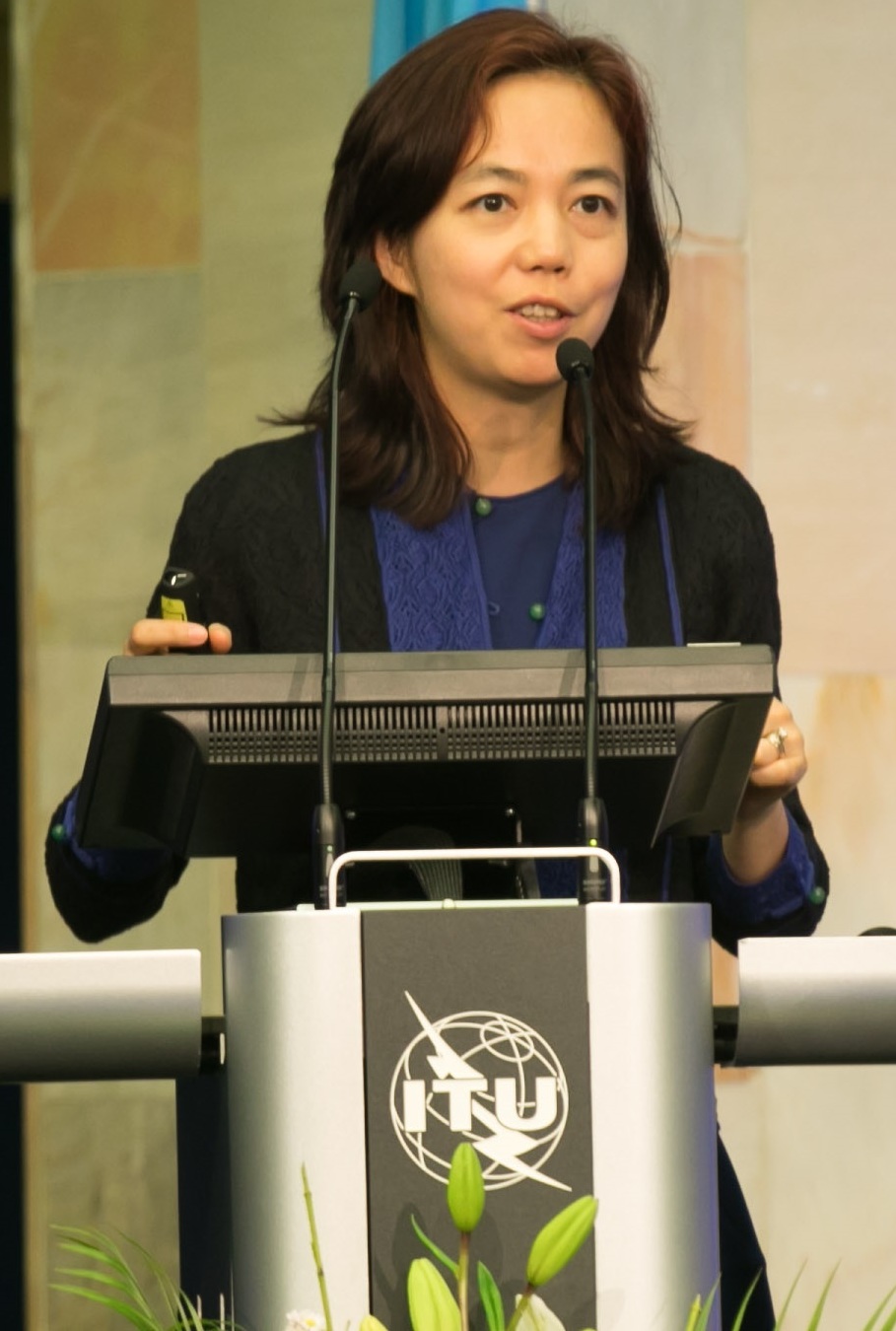
Header and in-body photograph: Fei-Fei Li, co-founder of World Labs, speaking at the ITU AI for Good Global Summit in Geneva, June 2017, by ITU Pictures via Wikimedia Commons, licensed under CC BY 2.0. The photo does not depict Atlas, World Labs' product, or the September 2026 launch itself; it shows the company's co-founder.