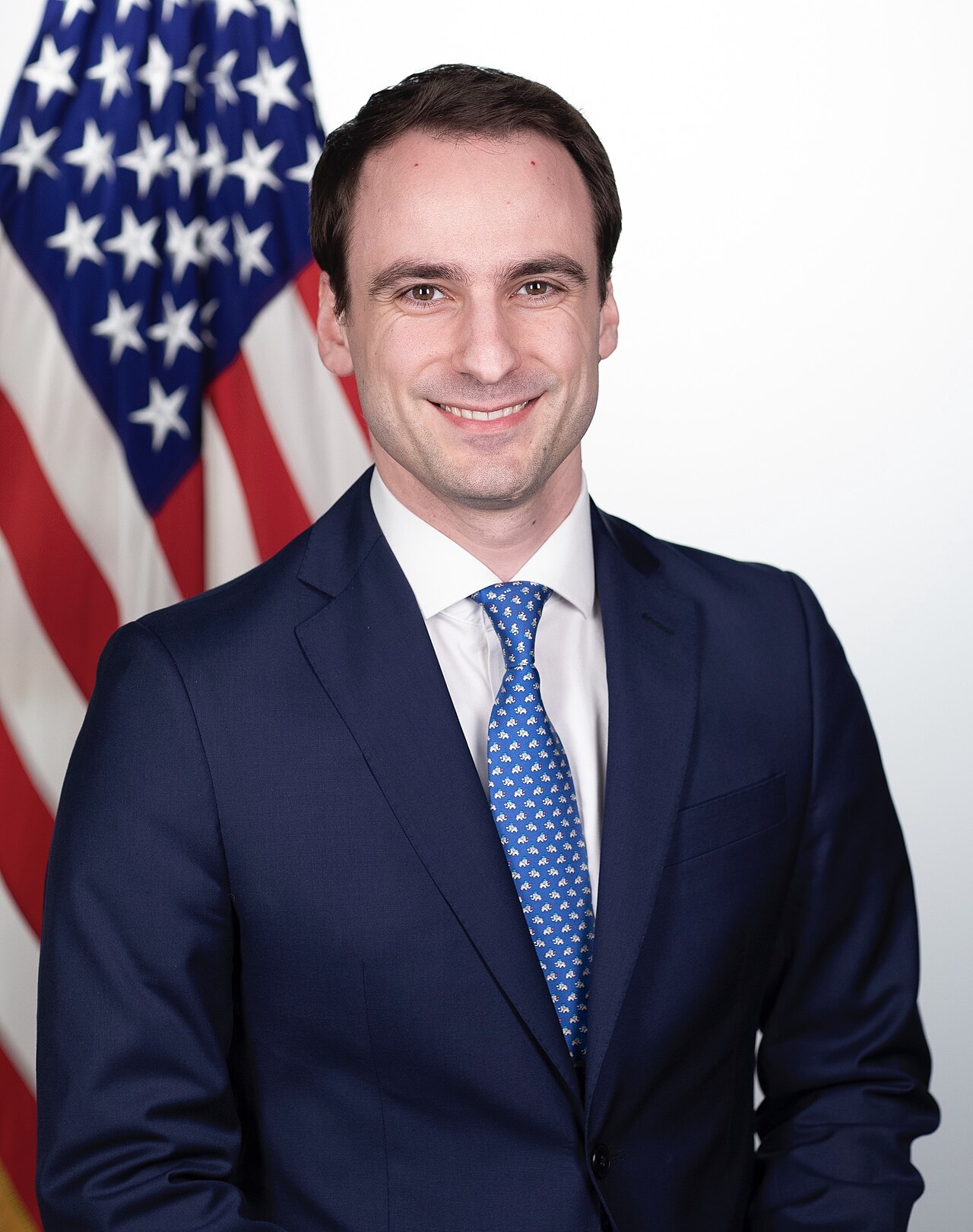
On July 22, 2026, Michael Kratsios, director of the White House Office of Science and Technology Policy, made an accusation no senior US official had made before in this specific form: that a named Chinese AI lab had covertly copied a named US frontier model. Kratsios said the administration had information indicating that Moonshot AI, the company behind the open-weights model Kimi K3, had distilled Anthropic's Fable model while building it. Hours later, Treasury Secretary Scott Bessent said sanctions and Entity List designations were "on the table." This piece lays out what was actually alleged, what distillation is and is not, why the specific timeline makes this hard to verify either way, and what the dispute means for anyone deciding which models to build on.
 Anthropic
 Moonshot AI
 NVIDIA
What Kratsios actually alleged
Kratsios's statement, as reported by TechCrunch and CyberScoop, drew a deliberate line between two things. "Legitimate AI distillation used to create smaller, more efficient models plays a vital role in this open innovation ecosystem," he said. "However, large-scale, covert industrial distillation aimed at stealing proprietary U.S. technology and undermining American research is unacceptable." The specific claim against Moonshot was that the company built a sophisticated internal platform to conduct distillation against US models at scale, and that it rapidly switched between different access methods to avoid detection.
A second, separate allegation was layered on top: that Moonshot had acquired servers equipped with Nvidia's GB300 chips, part of the Blackwell generation that is banned from sale to Chinese companies under US export controls, and had accessed GB300 hardware in Thailand, likely to train its models. Kratsios did not publish supporting evidence for either claim, and Moonshot did not respond to requests for comment before the initial reporting went out.
What distillation is, and why it is contested here
Model distillation is a standard, widely used technique: a smaller "student" model is trained to imitate the outputs of a larger "teacher" model, which is a cheap way to transfer some of a big model's capability into a compact one. Labs distill their own models constantly, and it is common practice industry-wide. What makes distillation contested rather than routine is when the teacher is a competitor's model, accessed through its public API against the terms of service, at a scale designed to reconstruct much of its capability rather than to build a genuinely small, efficient derivative.
That is the accusation's real shape: not that distillation happened (a technique nobody disputes exists), but that Moonshot ran it covertly, at industrial scale, specifically against Fable, and tried to hide the access pattern. Proving that is much harder than describing it. There is no way to inspect Kimi K3's weights and read off "this came from Claude." What is available instead is behavioral forensics: does the student model behave in ways that correlate statistically with the teacher's outputs more than chance would predict.
Distillation from Claude is clearly part of the story, likely largely from Fable, and is clearly nothing close to the whole story.
Ryan Greenblatt, Chief Scientist, Redwood Research
The evidence that exists, and its limits
The most concrete data point in public circulation is behavioral, not architectural. Ryan Greenblatt, Chief Scientist at Redwood Research, published a cross-entropy analysis comparing K3's raw text outputs against a range of other models, and found that K3 identifies itself as Claude in a disproportionate share of identity-probing prompts, in a pattern he argues is hard to explain as random noise. That finding has circulated widely as evidence of a Fable connection.
It is also weaker evidence than it sounds. Self-identification quirks are a known artifact of training on internet text that already contains large volumes of Claude's own outputs, conversation logs, and discussion of Claude, none of which requires direct API access to a competitor's model. Developers discussing the finding on Hacker News noted that the behavior is easy to reproduce by simply omitting a system prompt that specifies the model's identity, and that a model bootstrapping on older supervised fine-tuning data "sitting around" would show the same pattern without any live distillation attack. Greenblatt himself has been careful not to overstate the finding, writing that distillation from Claude is "clearly part of the story, likely largely from Fable, and is clearly nothing close to the whole story," meaning even the researcher whose analysis is being cited does not treat it as proof of the specific, large-scale attack Kratsios described.
The disputed 26-day window
Fable became public on July 1 and Kimi K3 shipped 15 days later. That gap is the center of the dispute: the White House calls it evidence of rapid, covert distillation, while Moonshot points to it as proof the timeline barely allows for it.
- Jul 1, 2026Fable 5 restored globallyAnthropic reinstates public access to Claude Fable 5 after a brief export-control suspension.
- Jul 16, 2026Kimi K3 launchesMoonshot AI releases its 2.8 trillion parameter model, roughly two weeks after Fable becomes public.
- Jul 22, 2026White House accusationMichael Kratsios alleges covert distillation of Fable; Treasury threatens sanctions and Entity List action.
- Jul 27, 2026Full open weights dueMoonshot is scheduled to publish K3’s complete model weights, five days after the accusation.
Neither side has published forensic evidence settling the question; the calendar is the only fact both sides agree on.
The 15-day problem
The detail skeptics keep returning to is the calendar. Anthropic restored global public access to Fable on July 1, 2026, after a brief suspension tied to export-control questions. Kimi K3 launched on July 16, roughly two weeks later, as a 2.8 trillion parameter model that independent evaluators had already placed at or near the frontier tier, including a 76% pairwise win rate that put it at the top of the Frontend Code Arena leaderboard. Training and validating a model of that scale, even one built substantially on an existing base, in a two-week window is difficult to reconcile with "primarily distilled from a model that had only just become available."
A Moonshot employee, Randy Xian, made exactly that point publicly after the accusation: pointing to the gap between Fable's return and K3's launch and calling it, sarcastically, "Guinness World Record stuff" to have trained a new frontier model that fast. Braden Hancock, a researcher at the Laude Institute and co-founder of Snorkel AI, offered a more measured version of the same skepticism, saying he does not think a model this strong, this quickly after Fable's release, is the product of distillation alone. Greenblatt's counter is that the tight window does not rule out earlier, unauthorized access, for instance through partners with prerelease access to Fable or through channels that predate the July 1 public relaunch, an explanation that is plausible but, like the accusation itself, currently unproven in public.

Not the first time, and not without a backdrop
This is not the first distillation dispute involving Anthropic's models in 2026. In June, Anthropic separately accused Alibaba's Qwen lab of what it called the largest known distillation campaign against Claude, alleging that operators linked to Alibaba generated more than 28.8 million exchanges through roughly 25,000 fraudulent accounts between April and June. Alibaba subsequently banned employees from using Anthropic's tools for work, citing its own security concerns. Earlier in the year, Anthropic had also pointed to a collective pattern involving DeepSeek, Moonshot, and MiniMax, citing around 16 million exchanges through roughly 24,000 fake accounts. What is new in the July 22 episode is not the underlying suspicion but who is voicing it: this is the first time a senior US government official, rather than Anthropic itself, has publicly named a specific lab and a specific model in a distillation accusation, backed by an explicit sanctions threat from Treasury.
The timing sits alongside another fact worth noting without drawing a causal line from it: Anthropic confidentially filed a draft S-1 with the SEC on June 1, 2026, putting it on a path toward a public listing alongside a wave of other AI IPOs. A high-profile federal accusation defending a company's core model IP is not unusual regardless of a company's public-market plans, and there is no public evidence connecting the two events beyond their proximity in time. Readers should treat the overlap as context, not as evidence of motive.
The export-control question is its own separate credibility problem
The GB300 allegation deserves to be evaluated on its own terms, separate from the distillation claim. GB300 chips, part of Nvidia's Blackwell generation, are barred from sale to Chinese entities under current US export rules. If Moonshot obtained and used them, whether through direct acquisition or by routing access through Thailand, that would be a more straightforward violation to establish than distillation, since it concerns physical hardware and paper trails rather than statistical inference about model weights. It is also the allegation for which the least public detail has been offered: Kratsios asserted the claim without describing how the administration obtained the information, and no shipping records, corporate filings, or on-the-ground reporting have been made public to substantiate it as of this writing. A claim about chip smuggling through a third country is, in principle, far easier to prove or disprove than a claim about which text a model was trained on, which makes the current absence of supporting detail notable in either direction: it could reflect classified sourcing the administration is not ready to disclose, or a claim that has gotten ahead of the evidence.
What this means for teams choosing which models to build on
Set aside for a moment whether the accusation holds up. The practical takeaway for any team evaluating Kimi K3, or any other Chinese open-weights model, is that provenance and compliance risk are a separate axis from technical merit. A model can score well on independent benchmarks and still carry geopolitical and regulatory exposure that has nothing to do with how good its outputs are: export-control questions, the possibility of future Entity List action, and reputational risk from an unresolved IP dispute are all live considerations independent of quality.
That is one of the practical reasons a model-agnostic approach to building AI products is worth taking seriously, not as an ideological stance but as a hedge. A workspace like Metir AI, which gives teams access to models from multiple labs rather than committing to one, means a compliance posture change, a sanctions designation, or a model simply falling out of favor does not force a rebuild. Switching which model handles a given task becomes a routing decision instead of a migration project, which matters more, not less, when the models in question are also the subject of active geopolitical disputes.
The honest position
Neither side in this dispute has published the evidence that would settle it. The White House has made a specific, serious accusation without publishing the underlying analysis. Moonshot has not offered a technical rebuttal beyond pointing at the calendar, and has not addressed the GB300 allegation at all in public statements captured so far. Independent researchers have found a real, statistically notable behavioral signal, self-identification as Claude, but its author is explicit that it does not, by itself, establish the scale or method of the alleged attack. The 15-day gap between Fable's public return and K3's launch is a genuine complication for the distillation theory as stated, but it does not rule out other access paths that predate the July 1 relaunch. Readers should treat this as an open, contested question rather than a settled one in either direction, and watch for whether either side publishes the forensic detail that has so far been missing.
Sources:
- Treasury threatens sanctions after White House claims Moonshot distilled Anthropic's Fable | TechCrunch
- White House accuses Chinese company of distilling Anthropic's Fable | CyberScoop
- White House accuses Moonshot AI of using Anthropic's Fable to build Kimi K3 | CryptoBriefing
- Moonshot AI accessed Nvidia's chips despite Chinese export ban, White House official says | CNBC
- Global AI experts push back on US 'distillation' claims against Moonshot's Kimi K3 model | South China Morning Post
- What is China's Kimi K3 and why is the US so rattled by it? | CNN Business
- As mentioned in my comment, Kimi K3 identifies itself as Claude ~15% of the time | Hacker News
- Anthropic accuses Alibaba of campaign to 'brazenly' and 'illicitly' extract AI capabilities | CNBC
- China's Alibaba bans Anthropic AI for employees after 'distillation attack' accusation | CNBC
- Anthropic confidentially submits draft S-1 to the SEC | Anthropic
- Anthropic files to go public | TechCrunch
- Kimi K3 tops Arena's coding leaderboard, and it's open-weight | The New Stack
- Kimi K3: Open Frontier Intelligence | Moonshot AI
Image credits
Header image: Michael Kratsios, director of the White House Office of Science and Technology Policy, official government portrait, via Wikimedia Commons, public domain. In-body photograph: the entrance sign of the US Department of the Treasury building in Washington, D.C., photographed December 2025 by G. Edward Johnson via Wikimedia Commons, licensed under CC BY 4.0.