In October 2025, Elon Musk's artificial intelligence company xAI launched Grokipedia—an AI-powered encyclopedia positioning itself as a direct alternative to Wikipedia. With 885,279 articles at launch and a promise to "purge out the propaganda," Grokipedia has sparked intense debate about the future of online knowledge and the role of AI in information verification.
But what exactly is Grokipedia? How does it work? And can an AI-generated encyclopedia truly rival the crowd-sourced approach that has made Wikipedia the internet's go-to knowledge source for over two decades?
Let's dive deep into everything you need to know about Grokipedia in 2026.
What is Grokipedia?
Grokipedia is an AI-generated online encyclopedia operated by xAI, Elon Musk's artificial intelligence company. Launched on October 27, 2025, the platform uses the Grok large language model to generate, edit, and fact-check encyclopedia articles in real-time.
According to official reports, Grokipedia launched with 885,279 articles, compared to Wikipedia's more than 7 million English-language articles. As of December 2025, the platform has grown to over 1 million articles.
The platform features a minimalist interface with a prominent search bar—similar to Wikipedia—but with one crucial difference: articles cannot be directly edited by users. Instead, logged-in visitors can suggest corrections through a pop-up form, which the Grok AI then evaluates for accuracy.
Who Created Grokipedia? The xAI and Elon Musk Connection
Grokipedia was created by xAI, an American AI company founded by Elon Musk in 2023. xAI's flagship product is the Grok family of large language models, which power the encyclopedia's content generation and fact-checking capabilities.
The origins of Grokipedia trace back to September 2025, when Musk appeared at the All-In podcast conference. During the event, venture capitalist David Sacks suggested building an AI knowledge base called "Grokipedia," stating that "Wikipedia is so biased, it's a constant war."
According to news reports, Musk had previously called for a boycott of donations to Wikipedia in December 2024, referring to it as "Wokepedia" due to what he perceived as left-wing bias. Following the podcast discussion, Musk announced that xAI was building the new AI-generated encyclopedia.
Why Was Grokipedia Created? The Problems It Aims to Solve
Musk and xAI have positioned Grokipedia as a solution to perceived problems with Wikipedia:
1. Editorial Bias
The primary criticism driving Grokipedia's creation is the claim that Wikipedia suffers from systematic editorial bias. Musk and supporters argue that Wikipedia's volunteer editor model allows certain ideological perspectives to dominate article content, particularly on controversial political and social topics.
2. Edit Wars
Wikipedia's open-editing model sometimes leads to "edit wars" where competing editors repeatedly change article content to reflect their preferred viewpoint. Grokipedia's AI-controlled editing process aims to eliminate this friction.
3. Verification Challenges
While Wikipedia requires citations and sources, verifying the accuracy of information across millions of articles is challenging. Grokipedia promises AI-powered fact-checking to maintain higher accuracy standards.
4. Update Speed
Wikipedia relies on volunteer editors to update articles with breaking news and new information. An AI-powered system theoretically could update content faster and more comprehensively.
How Grokipedia Works: The AI-Powered Encyclopedia Model
Grokipedia operates fundamentally differently from Wikipedia. Here's how the platform works:
AI-Powered Content Generation
Most Grokipedia articles are generated by the Grok large language model. According to reports, the AI synthesizes information from various sources to create comprehensive encyclopedia entries.
However, it's worth noting that some Grokipedia articles "have been forked from Wikipedia, with some copied nearly verbatim"—meaning the platform relies partly on the very resource it aims to replace.
Automated Fact Verification
Each Grokipedia page displays a declaration that Grok has "fact-checked" the content, along with a timestamp of the most recent verification. The platform positions this AI verification as superior to Wikipedia's citation-based approach.
However, as critics have noted, at the time of reporting, Grok articles displayed badges marking "fact checked by Grok three weeks ago"—an eternity in the internet age for time-sensitive topics.
Source Aggregation
Rather than requiring manual citation like Wikipedia, Grokipedia's AI aggregates information from multiple sources. The platform includes a citations system offering "one-click access to the source of the information, from the text itself."
Interestingly, Fortune reported that "Elon Musk's 'Grokipedia' cites Wikipedia as a source, even though it's the exact thing he's trying to replace."
Limited User Editing
Unlike Wikipedia's open editing model, Grokipedia articles cannot be directly edited. Instead, users can submit correction requests through an on-screen form. The Grok AI then evaluates these suggestions and determines whether to implement changes.
This "walled garden approach" represents a fundamental philosophical difference from Wikipedia's crowd-sourced model.
How Grokipedia Differs from Wikipedia

Let's compare the two platforms directly:
Wikipedia
- ✅ 7+ million English articles
- ✅ Open editing by anyone
- ✅ Extensive citation requirements
- ✅ Transparent edit history
- ✅ Community-driven governance
- ✅ Non-profit structure
- ✅ No AI-generated content
- ✅ Multi-language support (300+ languages)
- ✅ Images and multimedia
- ❌ Can have edit wars
- ❌ Update speed depends on volunteer editors
Grokipedia
- ✅ 1+ million articles (growing)
- ✅ AI-powered fact-checking
- ✅ Rapid content generation
- ✅ Citation system with source links
- ✅ Minimalist interface
- ❌ No direct user editing
- ❌ AI-generated content (with known hallucination risks)
- ❌ English only (as of December 2025)
- ❌ No images in articles
- ❌ Closed editing model
- ❌ For-profit company structure
Why Grokipedia Claims to Be More Accurate Than Wikipedia
xAI positions Grokipedia as more accurate than Wikipedia based on several arguments:
1. Consistent AI Verification
Rather than relying on volunteer editors with varying expertise, Grokipedia uses a consistent AI model to verify facts across all articles.
2. Elimination of Bias
By removing human editors, Grokipedia claims to eliminate the ideological biases that allegedly plague Wikipedia's editorial process.
3. Comprehensive Source Analysis
The Grok AI can theoretically analyze far more sources than any human editor when creating or verifying articles.
4. Continuous Updates
AI-powered systems can update content continuously as new information becomes available, rather than waiting for volunteer editors to make changes.
However, these claims have faced significant scrutiny, as we'll explore in the public reception section below.
Key Features and Capabilities of Grokipedia
As of December 2025, Grokipedia offers these core features:
Simple Search Interface
The platform centers around a prominent search bar where users type queries—similar to Wikipedia's interface but even more minimalist.
"Fact Checked by Grok" Badges
Each article displays a badge indicating when Grok last verified the content, providing transparency about verification recency.
Citation System
Articles include citations with "one-click access to the source of the information, from the text itself"—making it easy to verify claims.
Voice Search
The platform supports voice search, making it particularly useful for mobile users who want to look up topics hands-free.
Smart Filters
According to user guides, Grokipedia includes "smart filters to help you find what you need."
Account History
Registered users can save their search history and access previous searches with one click—though this remains the primary advantage of creating an account.
Browser Compatibility
The web-based platform works across all modern browsers and devices without requiring downloads.
How to Access and Use Grokipedia
Getting started with Grokipedia is straightforward:
Step 1: Visit the Website
Navigate to grokipedia.com on any modern web browser.
Step 2: Search for Topics
Use the search bar to look up any topic, just as you would on Wikipedia.
Step 3: Read AI-Generated Articles
Browse the AI-generated encyclopedia entries, which include citations to source materials.
Step 4: Optional Account Creation
While not required, you can create an account to save your search history. Sign up options include:
- Email address
- X (Twitter) account
- Google account
- Apple account
Step 5: Submit Corrections
If you notice errors, click the correction form to submit suggestions for the Grok AI to evaluate.
Current Limitations to Note
- English only: As of December 2025, Grokipedia is only available in English
- No images: Articles do not feature images or multimedia
- Beta status: The "v0.1" designation indicates an early public beta with "limited editing access, occasional factual gaps, and system downtime"
Current Status and Availability
As of December 2026, Grokipedia remains in early beta (v0.1). The platform is:
- Publicly accessible at grokipedia.com
- Free to use without payment requirements
- English-language only
- Growing rapidly with over 1 million articles
- Experiencing occasional downtime as engineers refine the infrastructure
According to Fox Business, "Musk's new Grokipedia crashes [on] launch day"—indicating that the platform experienced significant technical challenges during its initial rollout.
Public Reception and Reviews: The Controversy
Grokipedia's launch has been met with intense scrutiny and criticism from multiple quarters:
Accuracy Concerns
Initial reviews focused heavily on accuracy issues. Critics noted that AI-generated content is prone to "hallucinations and potential algorithmic bias."
According to reports, the platform has been criticized for "promoting right-wing perspectives and xAI founder Elon Musk's views" and "validating debunked conspiracy theories on topics such as HIV/AIDS denialism, vaccines and autism, climate change, and race and intelligence."
Bias Rather Than Neutrality
Despite positioning itself as less biased than Wikipedia, NBC News noted that Musk's Grokipedia entry "did not mention his controversial hand gesture from January 2025."
Time magazine wrote that the Grokipedia article on Musk sometimes "describes him in rapturous terms while downplaying, or even omitting, several of his controversies."
Reliance on Wikipedia
Perhaps most ironically, Fortune reported that Grokipedia cites Wikipedia as a source—undermining its positioning as a superior alternative.
The Wikimedia Foundation responded to NPR, stating: "Wikipedia's knowledge is — and always will be — human... This human-created knowledge is what AI companies rely on to generate content; even Grokipedia needs Wikipedia to exist."
Academic Criticism
Researchers have been particularly critical. Anaïs Nony, a researcher at the University of Johannesburg, stated that Grokipedia seeks to "discredit scientific and collaborative work."
LK Sellig, an AI researcher at the Weizenbaum Institute, described Grokipedia as "cloaking misinformation."
Positive Reception
The platform has received support primarily from right-wing figures who welcome an alternative to Wikipedia. However, as Dataconomy noted, "Grokipedia's 'AI-verified' pages show little change from Wikipedia"—suggesting the platform may not be as revolutionary as claimed.
The Future of AI-Powered Encyclopedias
Grokipedia represents an interesting experiment in applying AI to knowledge curation, but its early reception suggests significant challenges:
The Human Knowledge Problem
As the Wikimedia Foundation emphasized, AI systems like Grok ultimately depend on human-created knowledge for training data. Replacing human editors with AI doesn't eliminate bias—it simply shifts where that bias originates.
Verification at Scale
While AI can process vast amounts of information quickly, the challenge of truly verifying facts—especially on controversial topics—remains unsolved. "Fact-checked by Grok" badges provide a veneer of authority but don't guarantee accuracy.
The Open vs. Closed Debate
Wikipedia's open editing model has flaws, but it also provides transparency and community accountability. Grokipedia's closed model may eliminate edit wars, but it also removes the crowd-sourced error correction that makes Wikipedia remarkably accurate overall.
Conclusion: A Bold Experiment with Uncertain Results
Grokipedia represents Elon Musk and xAI's ambitious attempt to reimagine how we create and consume encyclopedic knowledge. With AI-powered generation, automated fact-checking, and a promise to eliminate bias, the platform addresses real concerns about Wikipedia's model.
However, early evidence suggests Grokipedia faces significant challenges:
- Accuracy concerns due to AI hallucinations and algorithmic bias
- New biases rather than true neutrality
- Dependence on Wikipedia for source material
- Limited features compared to the mature Wikipedia platform
- Skeptical academic reception from researchers
For now, Grokipedia remains an experimental beta platform that serves more as a commentary on Wikipedia than a true replacement. Whether it evolves into a legitimate alternative or fades as an interesting but flawed experiment remains to be seen.
If you're curious about the future of AI-powered knowledge platforms, Grokipedia is worth exploring at grokipedia.com. Just approach its claims of superior accuracy with appropriate skepticism.
Interested in how AI is transforming information access? Check out our guide: Which LLM to Use and When: The Ultimate Guide to Choosing the Right AI Model in 2026
Sources
- Elon Musk launched Grokipedia. Here's how it compares to Wikipedia | PBS News
- Elon Musk announces 'Grokipedia' as Wikipedia alternative from xAI
- Grokipedia and Wikipedia: Here's what they say about each other : NPR
- Elon Musk's 'Grokipedia' cites Wikipedia as a source | Fortune
- Elon Musk launches Grokipedia, AI rival to Wikipedia | Fox Business
- Grokipedia - Wikipedia
- How to Use Grokipedia v0.1: The Complete Guide
- Grokipedia falls flat, but AI is already rewriting Wikipedia's future
- Elon Musk launches Grokipedia as an alternative to 'woke' Wikipedia
- Grokipedia's "AI-verified" Pages Show Little Change From Wikipedia - Dataconomy
Image credits
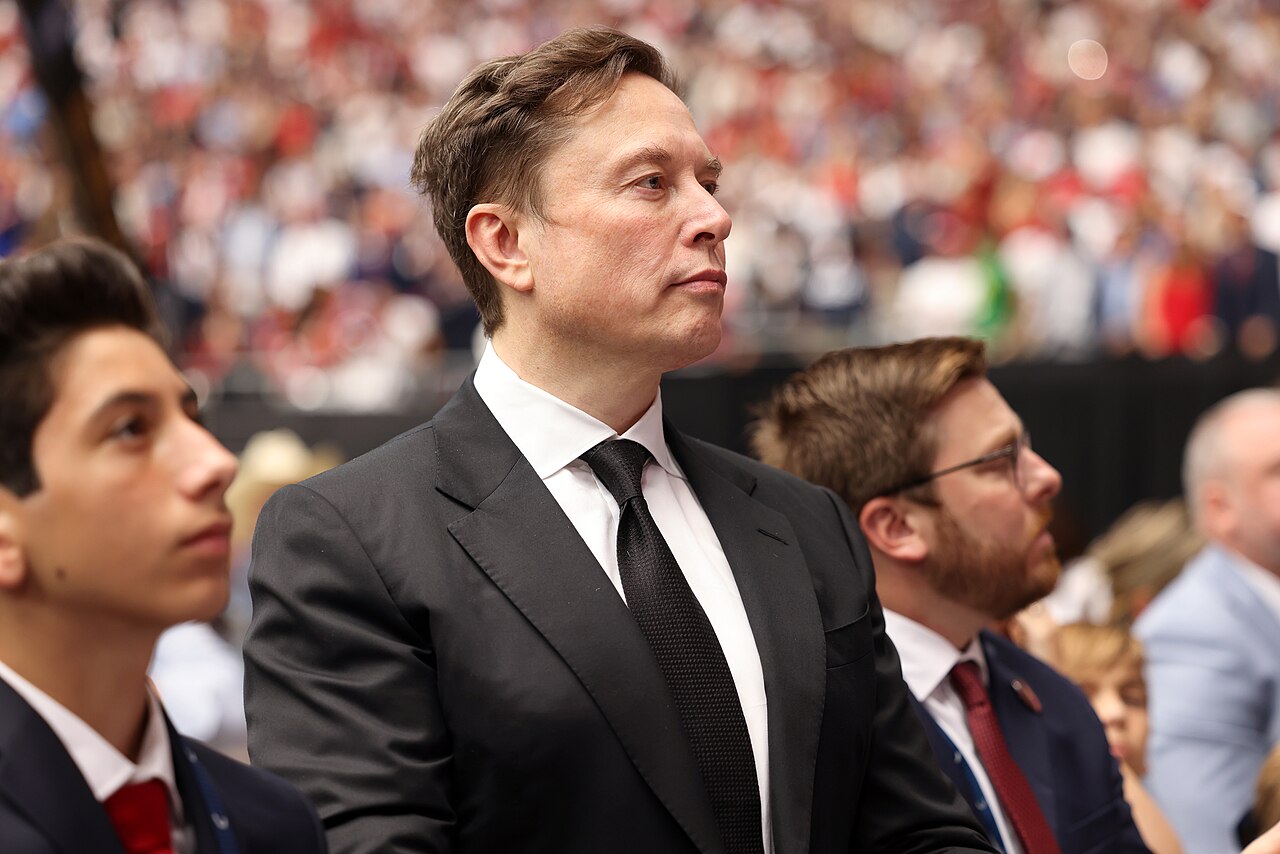
Header image: Elon Musk, whose company xAI launched Grokipedia, photographed in 2025 by Gage Skidmore via Wikimedia Commons, licensed under CC BY-SA 4.0. In-body portrait of Jimmy Wales by Frank Schulenburg via Wikimedia Commons, licensed under CC BY-SA 3.0.