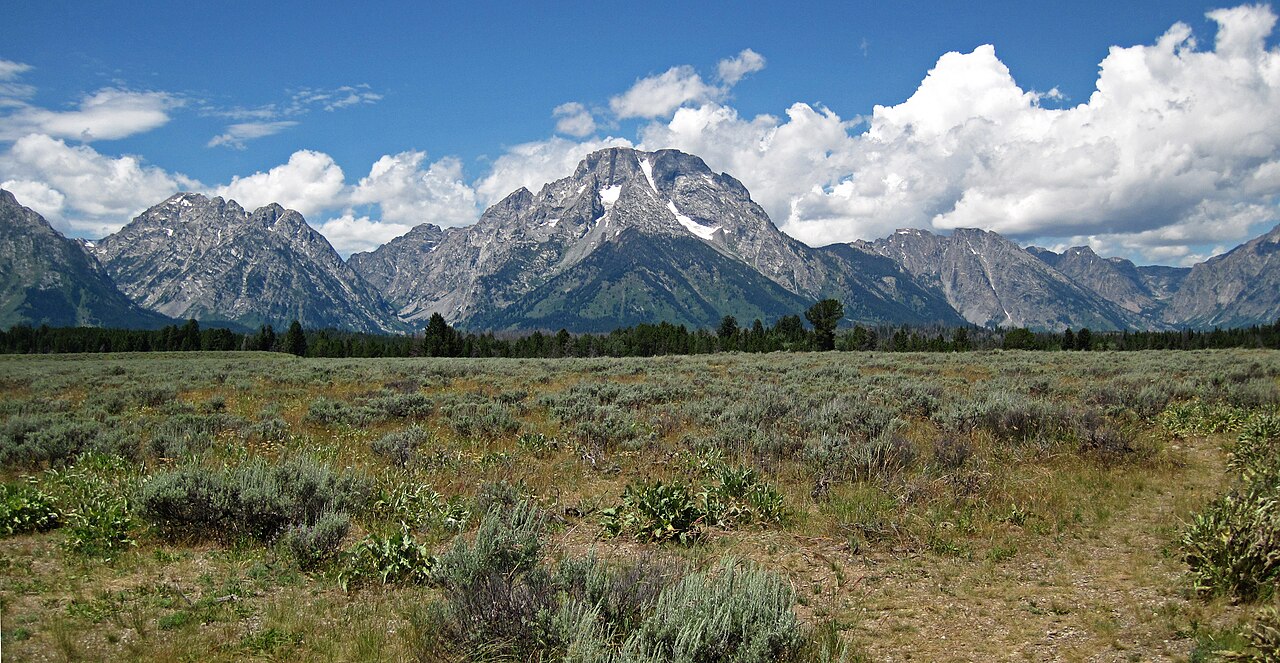
On August 28, 2026, at the Federal Reserve's annual symposium in Jackson Hole, Wyoming, Fed Chair Kevin Warsh devoted a keynote not to the usual questions of rate cuts and labor markets but to artificial intelligence. His central claim was unusual for a sitting central banker: AI, he said, is "a new variable, potentially a new factor of production, that will have consequences for both the economy and the conduct of monetary policy." That single phrase, "factor of production," is doing a lot of work, and it is worth unpacking slowly rather than cheering or dismissing.
 OpenAI
 Anthropic
 NVIDIA
 Microsoft
What "factor of production" actually means
In economics, the factors of production are the basic inputs that everything else is built from. The classical three are land, labor and capital. Adding a fourth to that list is not a rhetorical flourish; it is a claim about how output gets made. When Warsh floats AI as a potential new factor, he is asking whether compute, and the "tokens" that models produce, has become an input to the economy in the way that hours of work or units of machinery are, rather than just another product sold within it.
AI is a new variable, potentially a new factor of production, that will have consequences for both the economy and the conduct of monetary policy.
Fed Chair Kevin Warsh, Jackson Hole, August 28, 2026
The distinction matters because a new factor of production changes the ceiling on how fast an economy can grow without overheating. If AI meaningfully raises the productivity of existing labor and capital, the economy can expand faster while keeping inflation in check, which is exactly the combination that makes a central banker's job easier. If instead AI mostly reshuffles activity or substitutes for workers without lifting total output, the growth story is thinner than the headlines suggest. Warsh was careful not to declare which of these is true. He framed it as the open question of the moment.
The numbers he leaned on, and their limits
The figure that drew the most attention was his citation that annualized token sales at the two leading labs alone have passed $100 billion, an increase of more than 500 percent from a year earlier. As a growth rate, that is extraordinary, and it is the kind of signal that would normally show up loudly in national statistics. His point was that it does not: this activity is expanding at a pace the official productivity data has not yet captured.
A 500%-plus jump in a year, invisible in official productivity data
Annualized token sales at the two leading AI labs, in billions of dollars. Warsh cited the current run rate and its year-over-year growth; the earlier bar is the level that growth implies.
Source: remarks by Fed Chair Kevin Warsh, Jackson Hole, August 28, 2026. The earlier-year figure is implied by the cited 500%-plus growth rate, not a separately reported number.
That gap between a booming private-sector signal and quiet official data is the analytically interesting part. Productivity statistics are measured with a lag and are notoriously hard to pin down in real time, especially for a technology whose output is hard to price. A central bank that waits for clean productivity numbers before acting may be reading the economy through a mirror that shows the recent past. A central bank that acts on token-sales growth is reading a signal that is fast but narrow, and possibly circular, since much of that spending is one AI company paying another. Warsh's speech lived in the tension between those two readings rather than resolving it.
Why a productivity question becomes a monetary-policy question
The bridge from AI to interest rates runs through a single idea: the neutral rate of interest, the level that neither stimulates nor restrains the economy. If AI raises the return on capital by making investment more productive, the neutral rate tends to rise, and the same nominal interest rate becomes less restrictive than it looks. That is why Warsh tied the technology directly to policy. He is signaling that the Fed may need to rethink its assumptions about how tight or loose current rates really are, not because inflation demands it today, but because the productive capacity of the economy may be shifting underneath the models the Fed relies on.
He did not use this as cover to promise easier money. On inflation he was direct: the Fed's preferred gauge, the 12-month change in the PCE price index, stood at 3.7 percent in his telling, with the six-month change running hotter at 4.1 percent, both above the 2 percent target. His stated bar was that "we must be confident that underlying inflation is moving to our objective, clearly and at sufficient speed. Otherwise, we have work to do." The AI framing raises the possible growth ceiling; it does not wave away an inflation reading that is still too high. Holding both of those at once is the honest position, and it is the one he took.
The question underneath the question: complement or substitute
The most consequential uncertainty Warsh raised was whether AI usage will be "complementary or competitive to labor." This is not an abstract debate. If AI complements workers, making each hour of human work more valuable, the result is higher wages and higher output together, the benign version of a productivity boom. If AI substitutes for workers faster than the economy creates new roles, you can get rising output alongside a weaker labor market, which pulls monetary policy in two directions at once. The same speech that described a potential growth engine also flagged the distributional question that determines whether that growth is widely felt.
Will the application of AI cause a significant, sustained rise in productivity across the economy? And if so, when?
Kevin Warsh, framing the central open question
There is also a capital-intensity fork he named. One path has each new generation of models demanding ever more capital, in the form of chips, data centers and power, which would keep investment high and the neutral rate elevated. The other has AI helping devise capital-light solutions, doing more with less silicon and less energy, which would look very different for both growth and inflation. Nothing in the current data settles which path dominates, and the honest reading of the speech is that the Fed is watching, not concluding.
What it means beyond the Fed
For anyone running a business rather than a central bank, the practical takeaway is narrower than the macro debate but connected to it. Whether AI turns out to be a genuine new factor of production depends, in aggregate, on millions of individual decisions about whether the technology actually complements the work people do. That is decided at the level of workflows, not speeches: whether a team can point the right model at the right task and get real output, or whether the tooling adds friction that eats the gain.
That is the quiet link between the macro question and ordinary software choices. The productivity that would justify Warsh's framing only shows up if organizations can capture it, and capturing it means being able to reach the best model for a given job rather than being locked to one that happens to be mediocre at it. Infrastructure that stays model-agnostic, the approach platforms like Metir take in routing work across models from OpenAI, Anthropic, Google and others, is one way to keep that option open as capabilities move between labs. The economy-wide productivity number the Fed is waiting for is, in the end, an aggregate of whether the technology is being used well or badly one desk at a time.
The bottom line
Warsh's Jackson Hole remarks did not announce a policy change, and reading them as dovish or hawkish misses the point. What he did was put AI at the center of how the Fed thinks about the economy's growth ceiling, the neutral rate, and the labor market, while explicitly refusing to declare the question answered. The $100 billion token figure is a vivid signal of scale and speed; it is not yet proof of economy-wide productivity, and he did not claim it was. The most useful way to read the speech is as an admission that a central variable in the outlook is now something central banks have never had to model before, held against an inflation rate that still, for now, has the last word.
Sources:
- Keynote remarks by Chairman Warsh at the 2026 Jackson Hole Economic Policy Symposium, Federal Reserve Board
- Warsh says AI could turbocharge the economy. The Fed is keeping close watch, Yahoo Finance
- Fed Chair Warsh Calls AI a 'Hinge Point in History', Decrypt
- The Fed Chair Says AI Is Moving Faster Than Even Its Believers Predicted, 24/7 Wall St.
- Full Transcript: Fed's Kevin Warsh Remarks from Jackson Hole, Aug. 28, 2026, Singju Post
Image credits
- Hero: the Teton Range above the Jackson Hole valley, Grand Teton National Park, Wyoming, the setting for the Federal Reserve's annual economic symposium. Wikimedia Commons, by James St. John, licensed CC BY 2.0.
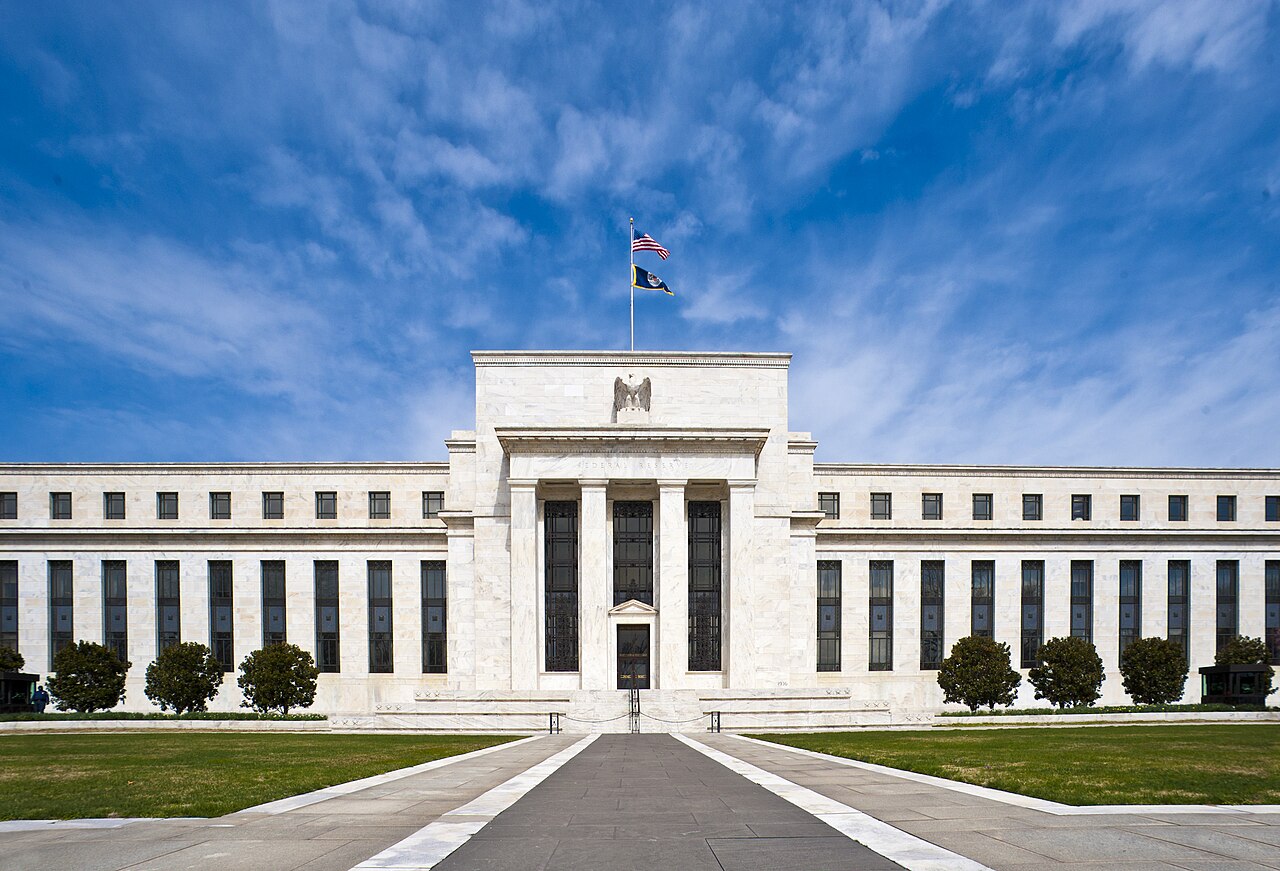
- Federal Reserve headquarters: the Marriner S. Eccles Federal Reserve Board building, Washington, D.C. Wikimedia Commons, by Federalreserve, public domain.