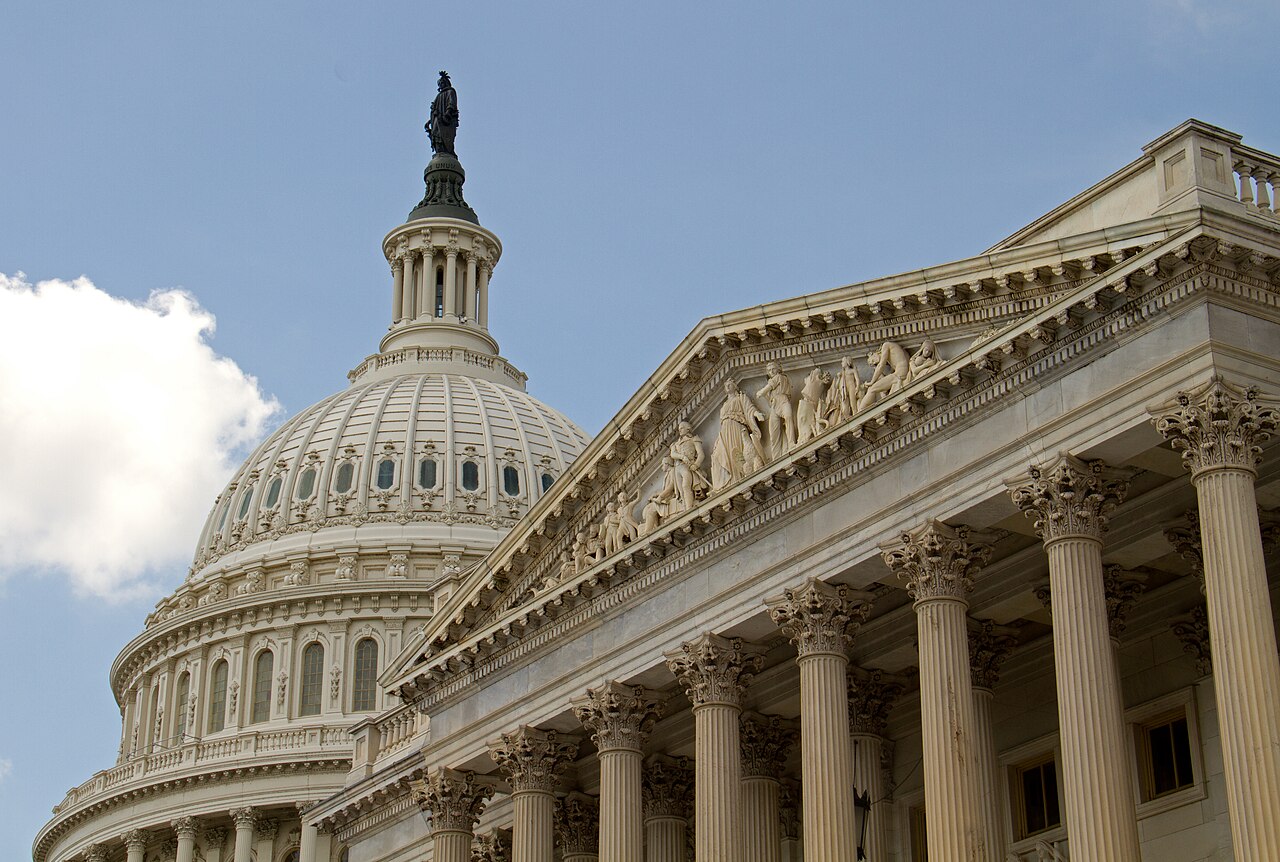
Six US senators have asked Amazon, Alphabet, Meta and Microsoft to disclose how much they have deducted for AI spending under the 2025 One Big Beautiful Bill Act (OBBBA). The letters, led by Senator Elizabeth Warren and reported on September 28, 2026, put AI data center tax breaks at the center of a fast-growing political argument over who pays for the AI buildout.
 AWS
AWS Google
 Meta
Meta Microsoft
What the AI tax breaks letters actually say
The letter obtained from Senator Warren's office is dated September 27, 2026, and addressed to the chief executive of each company. The copy to Microsoft CEO Satya Nadella is signed by Warren and Senators Tina Smith, Jeff Merkley, Richard Blumenthal, Bernie Sanders and Elissa Slotkin. Press accounts of the other letters describe the same request to Meta, Alphabet and Amazon.
The senators ask each company five groups of questions, due by October 11, 2026:
- How much it deducted for AI in tax year 2025, split into data center construction (including servers and cooling equipment), interest on debt financing AI capital spending, and utility and energy costs for AI research.
- Which AI-related tax policies it lobbied Congress to include in OBBBA, and how much it spent.
- Which AI-related tax policies it lobbied federal agencies on since January 20, 2025, and how much it spent.
- Donations to 501(c)(4) groups in the past 12 months on tax or AI policy.
- Donations since January 20, 2025 to projects tied to President Trump, including the White House ballroom and presidential library.
Some press reports list October 12 as the deadline. The letter text itself says October 11, which is the date used here.
Reading the numbers: what is sourced and what is not
Several figures circulate around this story, and they measure different things.
The $96 billion. The letter says tax breaks for AI spending have "contributed to" a 25 percent drop in nationwide corporate tax revenue, "a total of $96 billion," this year. It cites a September 14, 2026 Politico report for that figure. It is a drop in aggregate corporate receipts across the whole economy, and AI expensing is described as one contributor. It is not the combined savings of the four companies.
The ITEP estimates. The Institute on Taxation and Economic Policy (ITEP), a research group that favors higher taxes on corporations and high earners, published a report on August 14, 2026. Using 10-K filings, it counted $204 billion in federal tax breaks disclosed by publicly traded US companies for 2025, and said six companies accounted for $83 billion. The four letter recipients were Microsoft at $18.7 billion, Alphabet at $18.4 billion, Amazon at $17.4 billion and Meta at $13.7 billion, a combined $68 billion.
Federal tax breaks disclosed for 2025, by company
ITEP estimate, billions of US dollars. All provisions combined, not only AI-related deductions.
Source: ITEP, Six Companies Reaped $83 Billion in Federal Tax Breaks in 2025, August 14, 2026.
These are total tax breaks of all kinds for 2025: ITEP's report names accelerated depreciation, research and development provisions, credits and stock option deductions. They are not an isolated AI-deduction figure, which is exactly what the senators are asking the companies to supply. A separate ITEP analysis from September 17 estimated $27 billion in accelerated depreciation breaks across five large tech companies (adding Oracle), and noted those companies spent roughly $380 billion on capital investment in 2025, with projections to roughly double in 2026.
Company-level tax bills. The letter points to Microsoft's current federal income tax expense falling from $14.1 billion in fiscal 2025 to $2.5 billion in fiscal 2026, even as pretax income rose by $42.3 billion, citing Microsoft's 10-K. Microsoft's capital expenditures were $115.9 billion in fiscal 2026, per the same filing. For Meta, reporting on the letters says it paid $2.8 billion in federal income tax in 2025 versus $9.6 billion in 2024, with capital spending of $72 billion in 2025.
Meta federal income tax paid
Billions of US dollars. The senators describe profit as roughly similar across the two years.
Source: Senators' letters, as reported by InvestmentNews and Yahoo Finance, September 2026.
How full expensing works
Normally, when a company buys a server or builds a facility, the tax code makes it deduct the cost gradually over the asset's recovery period. Full expensing lets it deduct the whole cost in the first year. The total deduction over time is the same, but the timing shifts: taxable income drops sharply early, and the savings are an interest-free deferral that grows if the company keeps investing.
OBBBA changed two rules that matter here:
- Bonus depreciation. The law raised first-year bonus depreciation to 100 percent for property acquired after January 19, 2025, and made it permanent. Before OBBBA the allowance was scheduled to fall to 40 percent in 2025, 20 percent in 2026 and zero in 2027. Eligible property includes assets with a recovery period of 20 years or less, which can cover servers and networking equipment.
- Domestic research expensing. New Section 174A restores immediate deduction of domestic research and experimental costs, including software development, for tax years beginning after December 31, 2024. Companies can alternatively elect to capitalize and amortize them over five to 10 years.
The letter also raises a third channel: Treasury guidance on the corporate alternative minimum tax (CAMT). It cites Bloomberg Tax reporting that Meta disclosed more than $8 billion in benefit from one such change.
Why an AI buildout magnifies the effect
Expensing rewards capital intensity. A company that spends little on equipment gains little, while one that spends tens of billions a year on chips, servers and data centers can push a large share of that cost into the first-year deduction. When capital spending is rising steeply, as with these four companies, each year's new deductions can outrun the depreciation that would have been taken on older assets under the old schedule, so the deferral keeps renewing.
Two caveats matter for interpretation. First, much of the cost of a data center is the building and land, and the letter asks about equipment, interest and energy separately for a reason: not every dollar qualifies for immediate deduction, and the rules differ by asset type. Second, a lower current tax bill is not the same as a permanently lower one. Deferred taxes are a liability on the balance sheet, and if investment slows, the deferral reverses.
The policy debate
Supporters of the letters argue that tax subsidies for AI build-out lack evidence of need. ITEP's Matthew Gardner has written there is "no evidence whatsoever that tax breaks are necessary to encourage their construction" of data centers. The senators also frame the cost in terms of the deficit and spending on social programs, and tie it to lobbying and political donations.
Defenders of full expensing make a different case. Many economists, including some who oppose the broader bill, have long argued that immediate deduction of investment costs removes a bias against capital spending and is a pro-growth feature of the tax code, rather than a special favor. The Tax Foundation, a nonpartisan think tank, has criticized congressional proposals aimed at data centers specifically, saying they would "add significant complexity to the tax code and draw arbitrary lines" and may push AI investment overseas. It said one proposal from Senator Mark Warner to limit bonus depreciation for certain data center spending would "discourage investment at the margin without raising much long-run revenue," as quoted by InvestmentNews.
Both sides can point to real effects. Expensing does lower current tax payments, and it also lowers the after-tax cost of investment. Which matters more depends on how much of the spending would have happened anyway, a counterfactual no one can observe directly. ITEP's own comparison also uses the 21 percent statutory rate as the baseline, a choice the other side would dispute.
The question the letters pose is narrow: how much of each company's 2025 deduction was for AI.
Analysis of the senators' request
What happens after October 11
The letters carry no legal force. The six signers are members of the Senate minority, and subpoena authority in the Senate generally sits with committee chairs and the majority, so the companies are under no legal obligation to answer. Firms often reply to such letters with a general statement, or not at all. Microsoft declined to comment to Yahoo Finance, and Amazon, Alphabet and Meta did not immediately respond to requests for comment, per the same report.
Things worth watching:
- Whether any company answers with numbers. Public companies disclose deferred tax balances in their filings, but the specific split the letter requests (equipment, interest, energy) is not usually broken out.
- Next earnings and 10-K disclosures. Tax lines and cash taxes paid will show how the trend develops as 2026 capital spending runs well above 2025.
- Legislative follow-through. Proposals such as Senator Warner's limit on bonus depreciation for data centers already exist, but any change would require a majority and a presidential signature.
- Treasury action on CAMT. The letter treats administrative guidance as a second lever, which can change without a vote.
For readers following AI economics, the broader point is that the cost of AI infrastructure includes a tax-policy layer that is mostly invisible in headline capital spending figures. Teams that compare models and providers, including those who use a multi-model platform like Metir, are watching the same cost curve from the user side.
Sources:
- Warren, Smith, Merkley, Blumenthal, Sanders and Slotkin letter to Microsoft (PDF), September 27, 2026
- ITEP, Six Companies Reaped $83 Billion in Federal Tax Breaks in 2025
- ITEP, Big Tech Is Raking in Enormous Tax Breaks for AI Development
- InvestmentNews, AI tax breaks draw Warren probe of Meta, Google, Amazon, Microsoft
- Yahoo Finance, Elizabeth Warren demands answers on $96B in lost federal revenue
- Covington, Key provisions of the One Big Beautiful Bill Act
- The American Prospect, The Companies That Got $83 Billion in Tax Breaks Last Year
Image credits
- Hero: US Capitol dome and Senate-side east front, photo by David, Wikimedia Commons, CC BY 2.0.
- In-body: Meta Platforms headquarters sign, Menlo Park, photo by LPS.1, Wikimedia Commons, CC0.