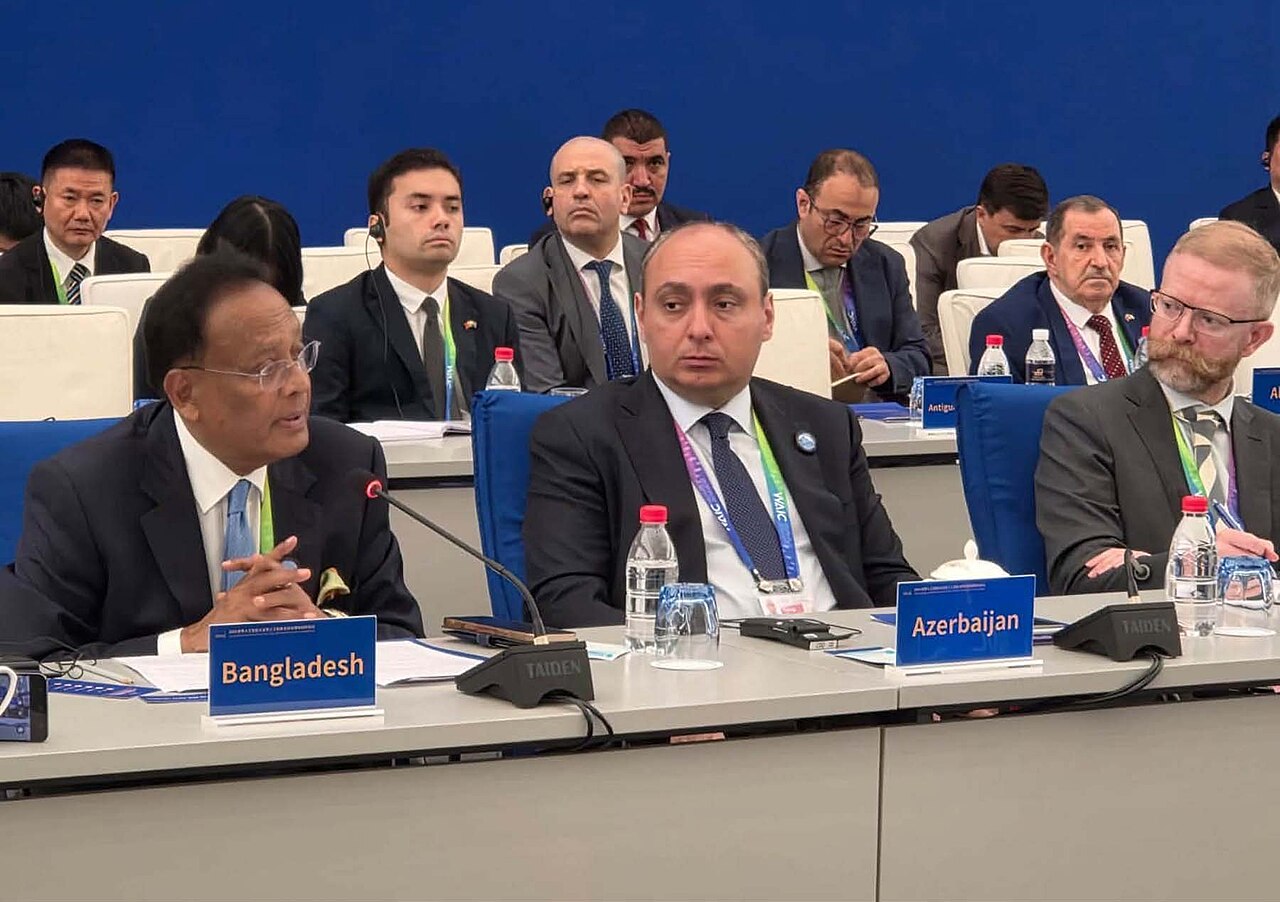
On July 17, 2026, the World Artificial Intelligence Conference opened in Shanghai as the largest edition since the event began in 2018, and it did more than showcase products. Twenty-nine countries signed a founding agreement for the World Artificial Intelligence Cooperation Organization, a China-backed intergovernmental body to be headquartered in Shanghai, and President Xi Jinping attended in person for the first time to deliver a keynote. An annual expo became the launch venue for an alliance. This piece looks at the scale of the event, what WAICO actually is, and why a third pole of AI governance matters regardless of where you sit.
 DeepSeek
 Qwen
QwenThe scale, and why it is the point
The raw numbers are worth stating because scale is itself the message. WAIC 2026 gathered more than 1,100 companies and showcased over 3,000 AI products and technologies across more than 140 forums, with over 300 global product launches on a show floor exceeding 100,000 square meters. The exhibition spanned foundation models, AI chips, computing infrastructure, robotics, autonomous systems, enterprise AI and healthcare applications, the full stack rather than a single layer.
A conference of that size, coordinated with a head-of-state keynote and the signing of an intergovernmental agreement, is a statement of intent. The framing from Chinese officials was explicit: Chinese open-source models represented by DeepSeek and Qwen have lowered the cost and barrier to using AI, and the pitch is that this helps all parties, especially developing countries, benefit from AI. Whether one accepts that framing or reads it as strategic positioning, the deliberate coupling of a massive product showcase with a governance launch is the structural fact to notice.
What WAICO is, and what it is trying to do
The World Artificial Intelligence Cooperation Organization is the substantive news. It is a China-backed intergovernmental body, to be headquartered in Shanghai, with 29 countries signing the founding agreement. That combination, a permanent seat in China, a multi-country membership, and a governance remit, is what distinguishes it from a typical conference declaration.
Three poles of AI governance
WAICO enters a field with two established reference points. The three differ less on wanting oversight than on who sets the rules and how binding they are.
Descriptions are high-level. The practical question is whether these approaches converge on shared standards or harden into competing blocs.
WAICO enters a field that already has two established reference points. The European Union's AI Act is the most prescriptive: binding, risk-tiered obligations that scale with how a system is used. The United States has leaned toward a lighter-touch, security-focused review of the most capable frontier models, resting heavily on voluntary commitments and industry cooperation. WAICO positions itself on a third axis, framing AI as a shared global good and emphasizing open models and access for economies that have been on the outside of a field dominated by a handful of well-capitalized US labs.
The analytical read is that the three are not really arguing about whether AI needs oversight. They are arguing about who sets the rules, how binding those rules are, and whose models and infrastructure the resulting standards favor. A governance body headquartered in Shanghai and built around open Chinese models is, among other things, a bid to shape those standards from a base outside the US and EU.
The three poles are not arguing about whether AI needs oversight. They are arguing about who writes the rules, and whose models the rules favor.
The open-model dimension
The most concrete lever behind the WAICO pitch is open-weight models. When a capable model can be downloaded and run rather than only rented through a US-based API, the barriers of cost, access and dependency fall for a government or company outside the main AI hubs. Chinese labs have leaned into this deliberately: DeepSeek, Qwen and others have released strong open models, and at WAIC, DeepSeek was reported to be running on domestic Ascend clusters at production scale, underscoring an end-to-end stack of Chinese models on Chinese silicon.
That combination is what gives the access argument its force. A country that adopts open Chinese models running on non-US hardware reduces its exposure to US export controls and pricing decisions in one move. It is a genuine value proposition for the Global South and, simultaneously, a way to extend the influence of a particular ecosystem. Both readings are true at once, and a neutral account holds them together rather than picking one.
What is unresolved
Several things are worth flagging as open rather than settled. A founding agreement signed by 29 countries is a starting point, not a functioning institution; the meaningful test is what standards WAICO actually produces, whether members adopt them, and whether it develops real convening power or remains largely symbolic. The composition of the membership, and how it evolves, will say more about its trajectory than the launch itself.
The larger unresolved question is convergence versus fragmentation. The optimistic path is that these poles eventually align on interoperable standards for safety, evaluation and disclosure, so that a model or an application built under one regime is legible under another. The other path is a hardening into competing blocs, with divergent rules, incompatible compliance regimes, and AI ecosystems that increasingly do not interoperate across geopolitical lines. WAIC 2026 is evidence that the second dynamic is at least as live as the first, and the honest position is that which way it breaks is not yet decided.
What it means for people building with AI
For teams building products, the governance chessboard can feel remote, but its downstream effects are practical. A more fragmented landscape means the model you can use, the terms you can use it on, and the infrastructure it runs on may increasingly depend on jurisdiction. That raises the value of not being welded to a single model or provider, because the option that is available, compliant and cost-effective in one market or moment may not be in another.
This is the quiet through-line. Chinese open models are now a serious part of the global menu alongside US closed and open systems, and the menu will keep shifting with policy as much as with capability. A model-agnostic workspace such as Metir AI, which can route a task to whichever model is the best fit rather than committing a whole stack to one, is one way to treat that shifting landscape as a set of choices rather than a lock-in. The point is not which bloc prevails; it is keeping the freedom to adapt as they contend.
The bigger picture
WAIC 2026 marks the moment China stopped treating its flagship AI conference as a showcase and started using it as a platform for alliance-building. The scale, the Xi keynote, and the WAICO signing turned an expo into a governance event, anchored by a concrete asset: capable open models running on domestic hardware, offered as a lower-barrier alternative to a US-centric stack.
What that produces is still open. WAICO could become an influential standard-setter or a mostly symbolic body; the global picture could converge toward shared rules or splinter into competing regimes. What is no longer in doubt is that AI governance now has a serious third pole with its own models, its own infrastructure, and its own venue, and that the contest over who writes the rules is fully underway.
Sources:
- China Launches Rival AI Governance Bloc as WAIC 2026 Opens With 300 Product Debuts | TechTimes
- China to host major AI conference, with 'record-breaking' participation | Global Times
- Xi Jinping to Attend WAIC for First Time as China Declares AI Ecosystem Dominance | BigGo Finance
- World Artificial Intelligence Conference (WAIC) 2026 | PyTorch
- Shanghai to host biggest AI conference | The Manila Times
Image credits
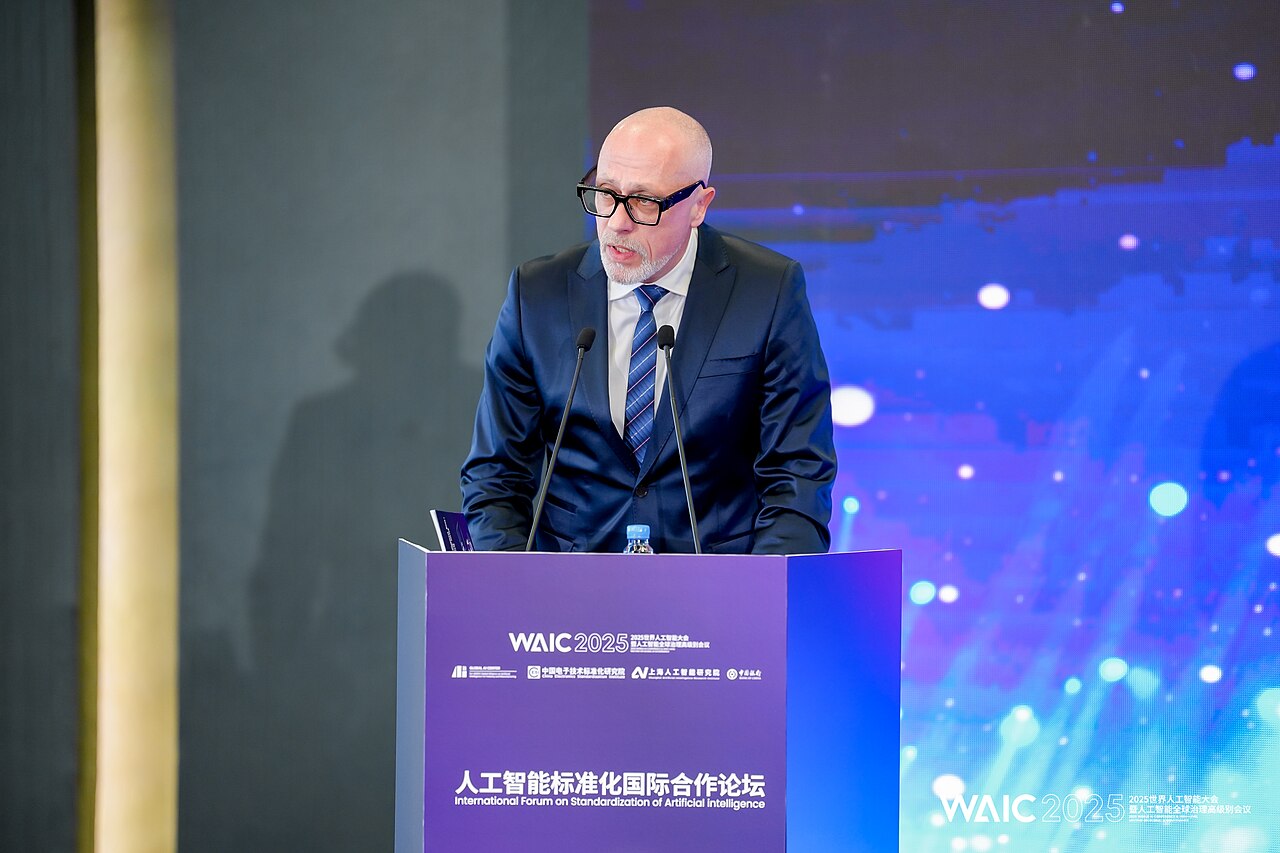
Header image: national delegations at the high-level meeting on global governance of artificial intelligence held on the sidelines of WAIC 2026 in Shanghai on July 18, 2026, by the Press Information Department, Government of Bangladesh via Wikimedia Commons, public domain. In-body photograph of the International Forum on Standardization of Artificial Intelligence at WAIC 2025 by Emmanuel Goffi via Wikimedia Commons, licensed under CC BY-SA 4.0.