On September 10, 2026, Universal Music Group and ElevenLabs announced a multi-year licensing agreement and a wider strategic collaboration built around a new AI music platform. The first deliverable is a licensed tool that will let fans create remixes, mashups, "new track interpretations," and personalized vocal experiences from songs by participating UMG artists, with those artists opting in and receiving compensation when their work is used. For ElevenLabs, a company best known for voice AI, it is described as the firm's first agreement with a major record label. The announcement is worth reading closely, not for the product demo that has not yet shipped, but for what it signals about how the music industry has decided to handle generative AI after two years of litigation.
What the deal actually covers
The agreement spans both licensing and product development, which is a broader scope than a typical catalog license. UMG is granting rights to specific participating artists' recordings and compositions so ElevenLabs can build generative tools on top of them, while the two companies jointly develop the platform itself rather than UMG simply licensing content into an existing ElevenLabs product. The companies have been explicit that the resulting tool will be "distinct and offered separately from ElevenLabs' existing music products," meaning it is a new, purpose-built surface for licensed fan creation rather than an extension of ElevenLabs' current voice or music generation features.
Participation is opt-in at the artist level. UMG says artists and songwriters who choose to make their work available will be fairly compensated when fans use it to generate remixes or new vocal interpretations. Neither company has published the mechanics of that compensation, such as whether it is a flat licensing fee, a revenue share tied to usage, or something else, and that gap is one of the more consequential open questions the announcement leaves unanswered.
From litigation to licensing
The UMG-ElevenLabs deal lands inside a broader shift in how major labels have chosen to respond to generative AI. For roughly two years, the dominant posture from rights holders was enforcement. Universal Music Group, alongside Concord Music Group and ABKCO, sued Anthropic in 2023 over song lyrics reproduced by its Claude models. The following year, UMG joined Sony Music and Warner Music in suing the AI music generators Suno and Udio over allegedly training on copyrighted recordings without permission. Those cases established the industry's baseline position: unauthorized use of catalog material to train generative models is not something labels will accept quietly.
What has changed by 2026 is that some of that same litigation has started converting into licensing. Suno, one of the defendants in the 2024 label lawsuits, has been reported to be negotiating and in some cases reaching licensing arrangements with major labels as part of resolving its legal exposure, moving from an adversarial to a commercial relationship. The UMG-ElevenLabs agreement is the clearest marquee example yet of a label choosing to build a licensed, compensated product proactively, rather than only litigating unlicensed use after the fact.
A licensed, opt-in channel lets a label capture value and set terms for AI remixing that would otherwise happen anyway, without permission, on unlicensed tools.
That is the strategic logic worth naming plainly. Fans have been remixing, mashing up, and reinterpreting popular music with AI tools since long before any label signed a deal, mostly using generators with no licensing arrangement at all. A label facing that reality has two broad options: keep suing unauthorized uses one at a time, or build a sanctioned channel that redirects at least some of that activity into a system where the label sets the terms, tracks the usage, and gets paid. The UMG-ElevenLabs platform is a bet on the second option, at least for the artists who choose to participate.
The consent, credit, compensation framework
The template the companies are describing rests on three elements: artists opt in rather than being included by default, participating artists and songwriters are compensated when their work is used, and the resulting platform is kept separate from ElevenLabs' other tools so the licensed, rights-cleared product does not blur into any unlicensed capability the company might otherwise offer. That framing is emerging as something close to an industry standard for label-AI deals in 2026, and it is a meaningfully different posture than training on a catalog first and litigating access later.
It also leaves real questions open, which the announcement does not resolve. How is compensation calculated when a single remix draws on one artist's recording and another's composition. What happens to an artist's voice or style if a fan-made mashup blends a participating track with material from someone who declined to opt in. And how does a non-participating artist get protected from having their catalog invoked by association, if a remix platform allows cross-catalog mashups at all. These are the mechanics that will determine whether "consent, credit, compensation" is a durable framework or mostly a phrase used at launch.
ElevenLabs' beachhead into music
For ElevenLabs, the deal is notable less for its immediate product than for what it validates about the company's positioning. ElevenLabs built its reputation on voice cloning and synthesis, an area that has drawn its own share of scrutiny over consent and likeness rights. Landing a first major-label agreement, explicitly built around opt-in participation and compensation, lets the company present itself as pursuing a rights-cleared strategy in music rather than the trained-on-scraped-catalog approach that drew lawsuits against other AI music generators. Whether that positioning holds will depend on how the platform is actually built and how strictly the licensing terms are enforced once fans start using it, none of which has shipped yet.
What it means going forward
The UMG-ElevenLabs platform turns listeners into a new category of creator, working with an artist's actual catalog rather than a generic style prompt, and that is a genuine expansion of what a label's catalog can do commercially. It also raises a question the companies have not addressed directly: whether artists actually want fans remixing their work at scale, even with consent and payment attached, or whether opt-in participation will remain a minority choice while most of the catalog stays out.
For anyone building on generative AI tools more broadly, the underlying lesson generalizes past music. As rights-cleared licensing becomes a competitive feature rather than an afterthought, the tooling layer that sits on top of these models benefits from staying flexible about which provider's models it uses, since the set of properly licensed, compliant options will keep shifting as more of these deals get signed. That is the kind of model-agnostic approach Metir AI takes at the application layer, so a workflow is not locked to a single provider's catalog or terms as the licensing landscape moves.
Nothing about the September 10 announcement is a finished product. No release date, pricing, or interface has been shown, and the compensation formula for artists has not been published. What has been established is the shape of the deal: a major label choosing to build a compensated, opt-in AI platform rather than treat generative remixing as something to be fought off entirely. Whether that shape becomes the industry norm, or one experiment among several competing approaches, will depend on details still to come.
Sources:
- UMG, ElevenLabs Ink Deal to Develop AI-Powered Music Platform | Variety
- UMG, ElevenLabs to Develop AI Music Remix Platform | Billboard
- Universal Music, ElevenLabs Deal | Digital Music News
- Universal Music Group, ElevenLabs Enter Multi-Year AI Music Agreement | Unite.AI
- ElevenLabs and Universal Music Group's New AI Music Platform Will Let You Create Remixes of Licensed Songs | Digital Trends
Image credits
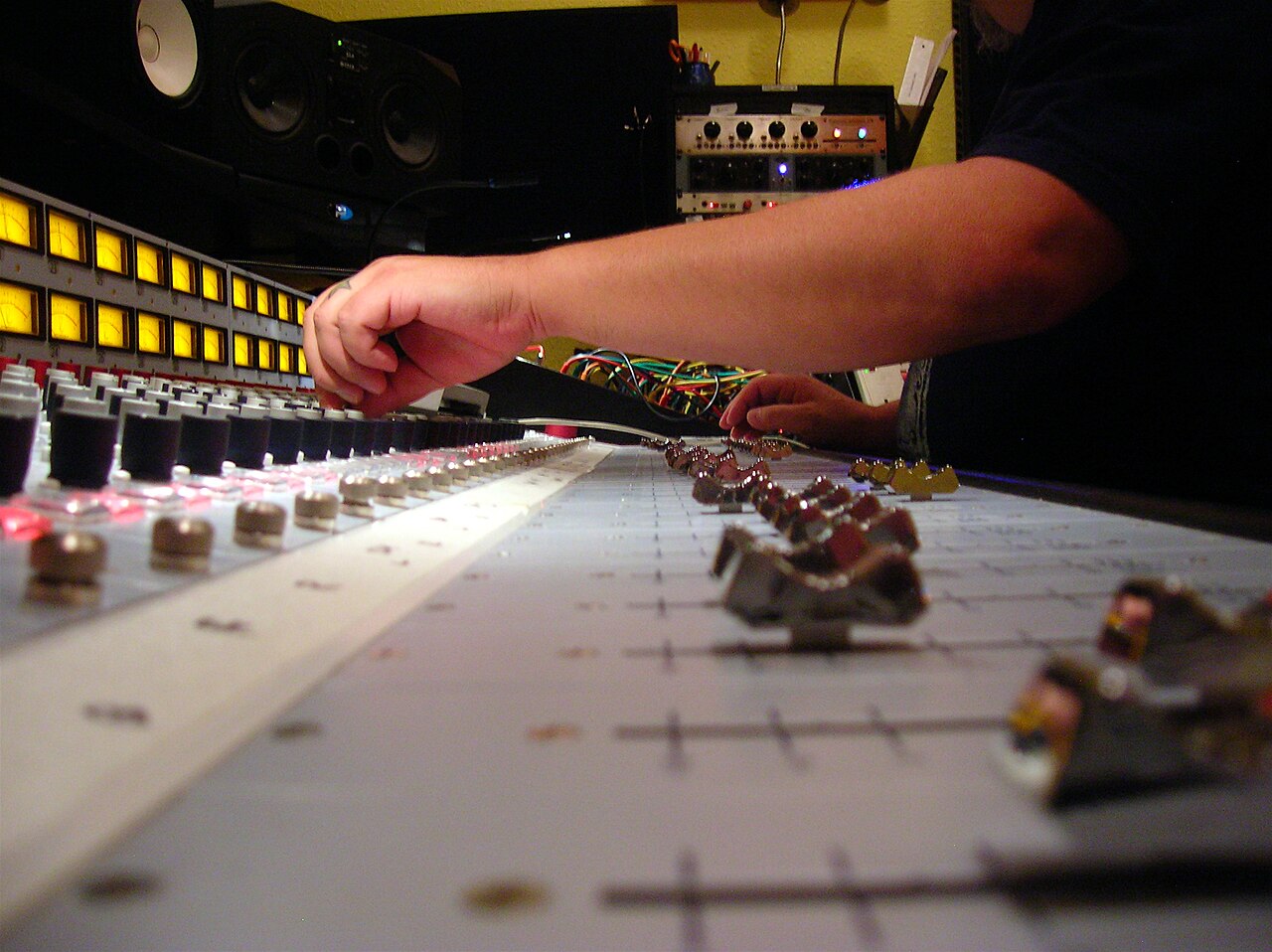
A recording studio mixing console (representative), VACANT FEVER, via Wikimedia Commons, licensed under CC BY-SA 2.0.