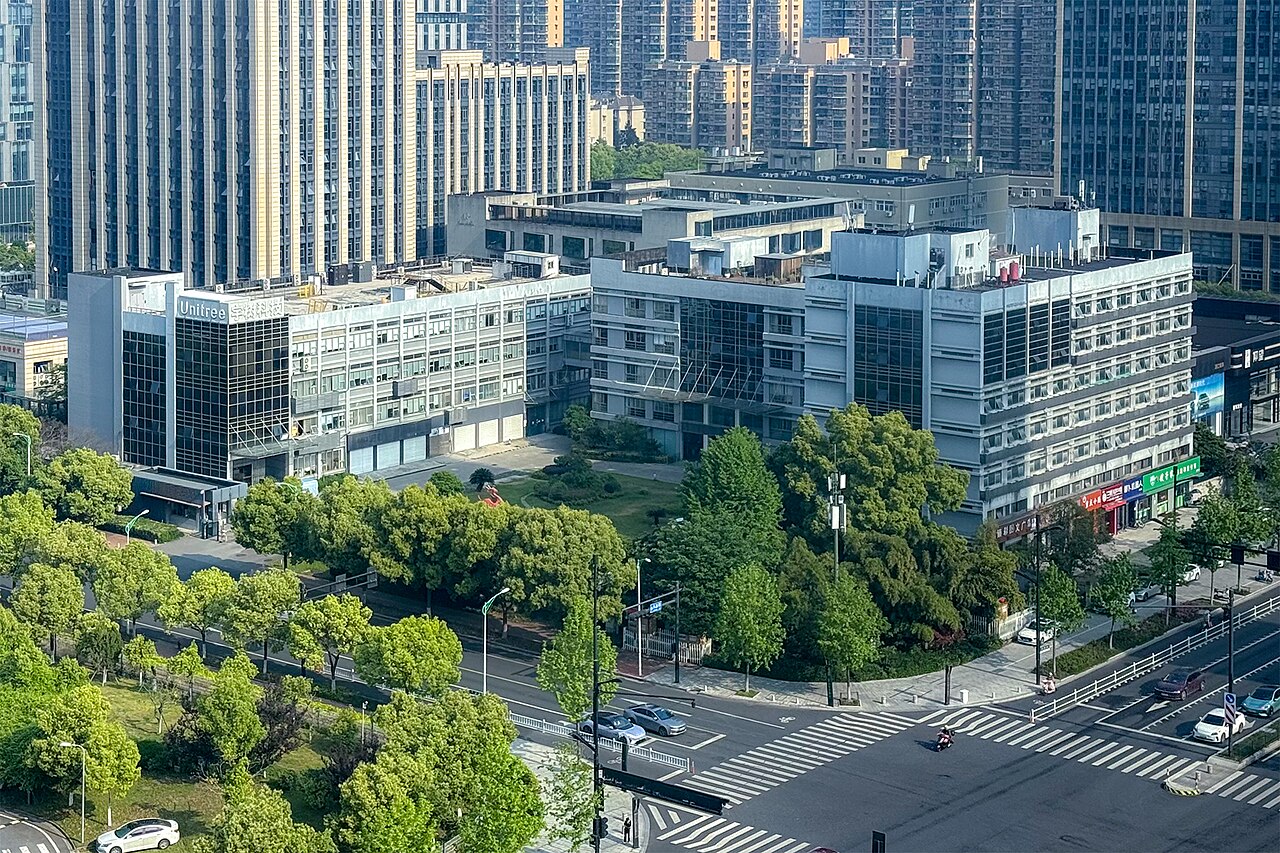
On August 6, 2026, Unitree Robotics priced its initial public offering on Shanghai's STAR Market at 150.8 yuan (about $22.34) per share, valuing the Hangzhou-based company at roughly 61 billion yuan, or about $9 billion. It is the first maker of humanoid robots to list on the Chinese mainland, and the pricing lands above the pre-deal expectations that had clustered nearer $7.4 billion. For an industry that has run largely on private capital and demo reels, the number is a milestone of a specific kind: a public, daily-traded price tag.
That is why this listing matters beyond one company. A private valuation is a negotiation between a startup and a handful of investors. A public one is a continuous vote by the whole market, and it becomes a reference point for everyone else in the field.
Unitree priced above expectations
Implied valuation, pre-deal expectation versus final IPO pricing ($ billions). The offering priced at about 61 billion yuan.
Pre-deal expectations near $7.4B were floated by Citic Securities and others; the final pricing implied about $9B.
From demo reels to a discovery price
Humanoid robotics has spent the last two years in a state of high visibility and low disclosure. Videos of robots walking, dancing and handling objects circulate widely, while hard financials stay private. A public listing changes the information environment. Unitree will now report audited figures, its shares will reprice every trading day, and analysts will publish estimates that others can argue with. The industry gets, for the first time in China, a market-tested anchor for what a pure-play humanoid company is worth.
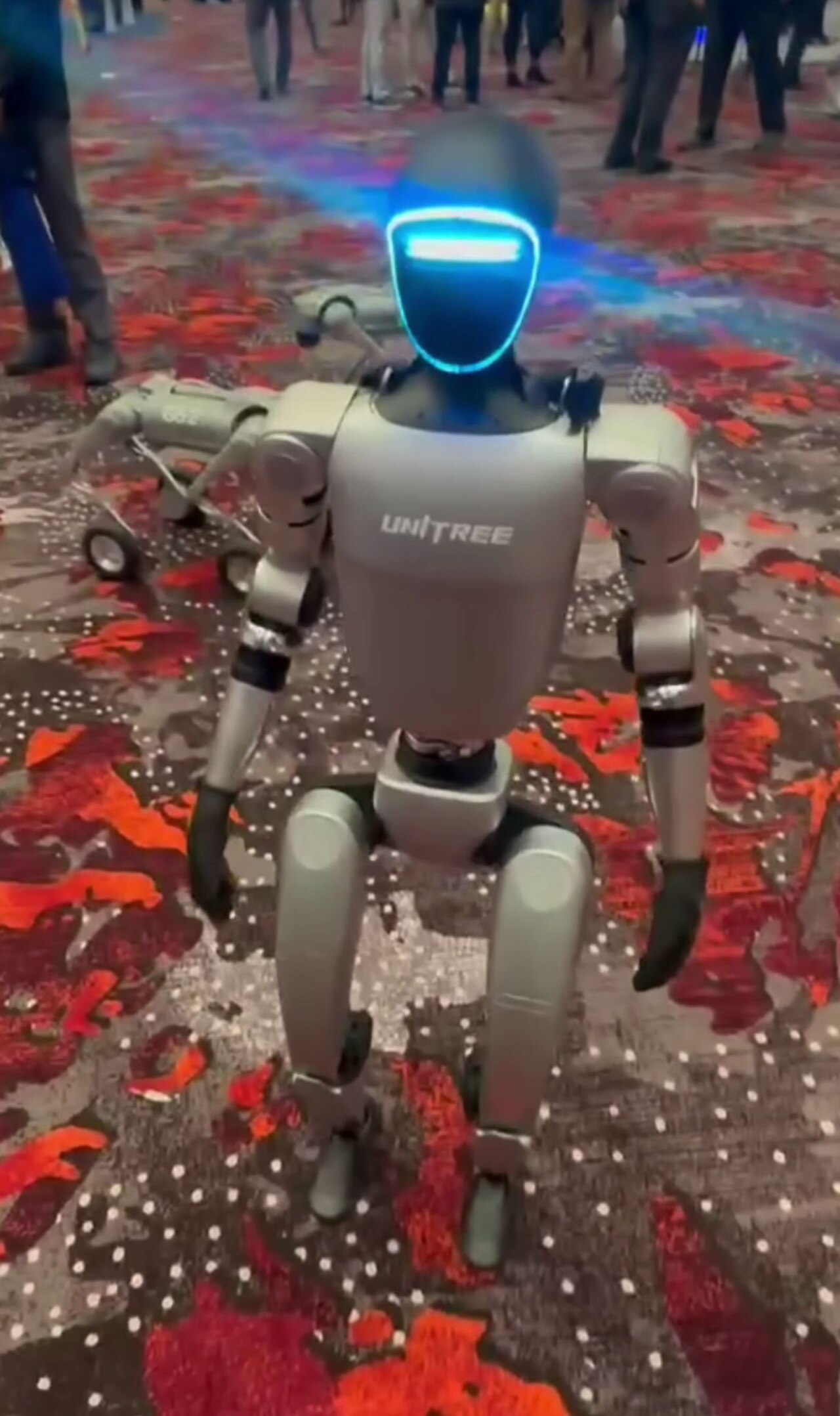
Unitree reaches this point earlier than most humanoid names for a practical reason: it already ships product. Its robot dogs and lower-cost humanoid units are among the most widely sold advanced robots in the world, which gives it real revenue and a manufacturing base that many rivals, still pre-production, lack. The IPO proceeds are earmarked for exactly that base, funding robot software and hardware development, new products and expanded manufacturing.
The DeepSeek signal
One detail in the offering carries outsized meaning. Chinese AI company DeepSeek is among the strategic investors in the listing. That links the country's most prominent AI model developer to its most prominent robot maker, and it is a compact illustration of where the field is heading. A humanoid robot is, in effect, a language-and-vision model given a body: the model supplies perception, planning and language, and the hardware supplies motion and manipulation. An investment that pairs a model champion with a hardware champion is a bet on that combination.
 DeepSeek
The embodied-AI stack
A humanoid robot is a model given a body. The brain has advanced quickly; the body is the capital-intensive frontier.
Vision and language models that perceive a scene, understand an instruction and plan a sequence of actions.
The runtime that turns a plan into motor commands and keeps the robot balanced, safe and responsive.
Motors, dexterous hands, sensors and structure. Reliable, low-cost manipulation is the unsolved part.
Battery life and a bill of materials low enough to deploy at scale, not just demonstrate on a stage.
Progress in the model layer raises the value of solving the hardware layer, because a capable brain is worth more when it can act in the world.
The embodied-AI stack helps explain why so much capital is chasing the category. The intelligence layer, the models that let a robot understand an instruction and plan a sequence of actions, has advanced quickly and is increasingly portable across hardware. The unsolved, expensive part is the body: reliable actuation, dexterous hands, battery life and a cost low enough to deploy at scale. Progress in the model layer raises the value of solving the hardware layer, because a capable brain is worth more when it can act in the world.
A humanoid robot is, in effect, a language-and-vision model given a body.
On why AI-model investors are backing hardware
What a listing does not settle
A neutral read has to separate the milestone from the fundamentals. A roughly $9 billion valuation for a company whose revenue, while real, is small relative to that figure is a bet on the future of embodiment, not a verdict on the present. Public markets are pricing a story about where humanoids go over the next decade, and that story remains genuinely uncertain. General-purpose humanoids that do useful, varied work in unstructured environments, safely and at acceptable cost, are still an unsolved problem, and timelines for solving it vary widely even among serious researchers.
There is also a structural point in where Unitree chose to list. A STAR Market debut, rather than Hong Kong or the United States, fits China's push to build and fund advanced-technology champions through onshore capital markets. That has benefits, including a supportive domestic investor base, and it comes with the specific dynamics of that market, including how retail participation and policy priorities can shape valuations. Readers weighing the price should hold both the technology story and the market context at once.
The benchmark effect
The most durable consequence of this IPO may be its gravitational pull on everyone else. Dozens of private robotics companies, in China and beyond, now have a public comparable to be measured against. That can cut both ways. If Unitree's shares hold up, it validates the category and likely accelerates further listings and funding. If they struggle, it becomes a cautionary marker that tempers private valuations across the field. Either way, the era in which humanoid robotics could be valued purely on private conviction is giving way to one where a public number sets the frame.
For the physical-AI thesis broadly, the takeaway is that the software brain and the hardware body are being financed as a single system. The intelligence increasingly travels across platforms and stays flexible about which model it runs, an arc that mirrors how software AI has evolved toward model-agnostic tooling. The bodies are the hard, capital-intensive frontier. Unitree's listing is the first time a public market has put a running price on that frontier, and it will not be the last.
Sources:
- Chinese humanoid robot maker Unitree prices IPO at $9 billion valuation, CNBC
- Unitree IPO opens with bids implying up to 55 billion yuan valuation, Caixin Global
- Chinese robot maker Unitree seen worth over $7.4 billion after IPO, Citic says, Yahoo Finance
- Unitree Robotics expected to be worth $7.4bn after Shanghai IPO, China Economic Review
- Unitree's IPO could value China's robot champion at $7bn or more, The Next Web
Image credits
- Hero: "20260425 Unitree Headquarter 01" licensed CC BY-SA 4.0, via Wikimedia Commons. Retrieved August 6, 2026, and visually reviewed before use. It shows Unitree's headquarters building.
- In-body: "Unitree G1" licensed CC0, via Wikimedia Commons. Retrieved August 6, 2026, and visually reviewed before use. It shows a Unitree humanoid robot.