
TypeSafe AI, a startup founded by former OpenAI researcher Diogo Almeida, is reportedly in early talks to raise more than $1 billion at a valuation of $10 billion or higher, according to reporting surfaced on September 25, 2026. What makes the figure striking is not only its size but its speed: the company had closed an earlier round at a valuation near $200 million roughly a week before. What makes it interesting is the product. TypeSafe's model, Jev, does not write essays, hold conversations, or generate code. It outputs a decision, often a label or a number, with a confidence value attached. This piece explains what a decision model is, why one might be worth $10 billion, and what the round signals about where AI value is settling.
 OpenAI
 Anthropic
 Google
A model that decides instead of talks
Most people meet AI through chat models: systems that take a prompt and produce free-form text, one token at a time. Jev belongs to a different category. As described by Bloomberg, which headlined it "an AI model that can't chat," and in TypeSafe's own positioning, Jev takes an input and returns a structured judgment, such as a classification and a probability that the classification is correct. Reported use cases include sorting email, scoring the urgency of a request, monitoring the behavior of an AI agent, and deciding which larger model a query should be routed to.
Two kinds of model, doing two different jobs
A decision model is not a smaller chatbot. It is built to answer a narrow question quickly and hand back something a program can act on, which is why it can sit in front of every request.
The two are complements. A decision model often decides whether, and which, chat model to call next.
The distinction matters because the two model types have different economics. A frontier chat model is powerful and general, but each call is comparatively slow and costly, and its output is prose that still needs to be parsed or trusted. A decision model is narrow, but fast and cheap enough to run on every single request flowing through a system, and its output drops straight into code. Industry commentary following an AI summit in San Francisco described Jev as dramatically faster and cheaper than leading models on the narrow tasks it targets. Those specific speed and cost multiples come from secondary accounts rather than a published benchmark, so they are best read as claims about the category's promise, not settled measurements.
Why a non-chat model could be worth $10 billion
At first glance, paying frontier-lab prices for something that cannot even hold a conversation looks backwards. The logic becomes clearer when you consider where a decision model sits. It is infrastructure that runs before, around, and between the expensive models, and the volume at that layer is enormous. Every request that a large AI system handles can pass through one or more cheap decisions: is this safe, is this urgent, which tool applies, which model should answer, did the agent just do something it should not have.
A decision model is the toll booth every request passes through, not the destination. Toll booths, at scale, are a business.
On why the routing layer commands a premium
That is a classic high-volume, low-unit-cost position, and it is one investors have historically paid up for. If a single cheap model can shave cost off, add a safety check to, or improve the routing of the billions of calls flowing through AI applications, the addressable surface is the entire industry's traffic rather than any one use case. A $10 billion valuation is a bet that this layer becomes a standard, metered part of the AI stack, the way content delivery networks and observability tools became standard parts of the web stack.
The speed of the markup, and what it says about the market
The week-long jump from roughly $200 million to a reported $10 billion is its own data point. Valuations moving 50-fold that fast reflect an investor environment in which a credible team with a differentiated technical approach and a plausibly enormous market can be repriced almost overnight. It also reflects scarcity: there are relatively few teams building serious non-chat models, so a category leader draws concentrated demand. The obvious caution is that a valuation set in early talks is not a closed round, and a markup driven by competition among investors is a statement about appetite as much as about the business's current revenue.
A roughly 50x valuation move in about a week
TypeSafe AI's reported valuation, in billions of dollars. The later figure is a valuation under discussion in a round said to be in early talks, not a closed financing.
The prior round valued TypeSafe near $200M; roughly a week later it was reported in talks to raise more than $1B at $10B or higher. Figures as reported; the later valuation is not a closed round.
The category, not just the company
Whether or not TypeSafe closes at $10 billion, the round points to a broader shift. As AI systems move from single chatbots to sprawling agentic pipelines, the work of deciding what to do, which model to use, and whether an output can be trusted becomes a distinct layer with its own tools. Routing a request to the cheapest model that can handle it, rather than sending everything to the most expensive one, is where a lot of real-world AI cost is won or lost. A fast, accurate decision model is one way to make that routing automatic.
That layer is quietly central to how model-agnostic products work. A platform like Metir AI, which routes across models from multiple providers rather than hard-wiring one, depends on exactly this kind of cheap, fast judgment about which model should handle a given task. The rise of dedicated decision models suggests the routing layer is maturing from an in-house trick into a category of its own.
The takeaway
Jev is a reminder that intelligence in AI is not only about the biggest, most capable model. A large and growing share of the value is in the plumbing: the fast, cheap components that decide, filter, and route the traffic before an expensive model ever runs. A reported $10 billion valuation for a model that cannot chat is less a paradox than a signal that investors expect that plumbing to become as standard, and as metered, as the models it serves.
Sources:
- Jev, an AI Model That Can't Chat, Takes On Bigger Rivals | Bloomberg
- TypeSafe AI Seeks $1 Billion Funding for Jev Model Development | GuruFocus
- TypeSafeAI seeks $1 billion investment at $10 billion valuation | DigitalToday
- TypeSafe Raises $1B at $10B Valuation a Week After $200M Round | HuggingNews
- TypeSafe AI draws $10bn interest as Jev targets lower-cost developer automation | Traders Union
- Jev 1.13 API Pricing and Providers | OpenRouter
Image credits
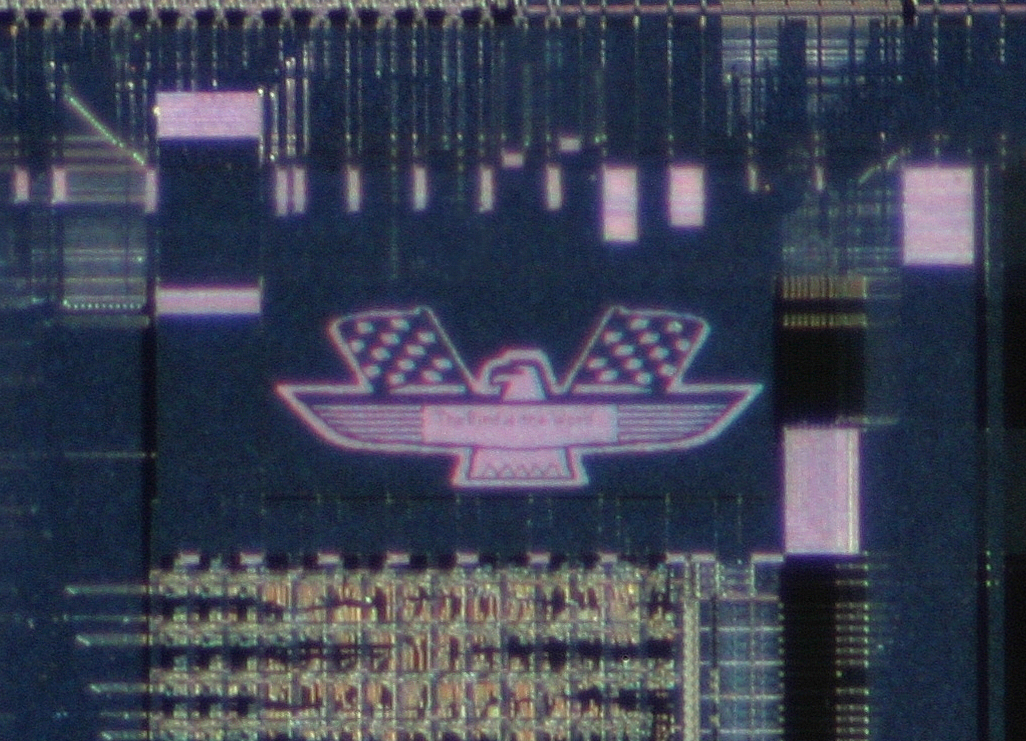
Header image: the underside of a ceramic pin-grid-array microprocessor package, by Mister rf, via Wikimedia Commons, licensed under CC BY-SA 4.0; an illustrative image of purpose-built silicon, not TypeSafe hardware. In-body macro die photograph of an HP PA-RISC PA-7100 processor, by Thomas Schanz, via Wikimedia Commons, licensed under CC BY-SA 4.0.