Around October 7 and 8, 2026, Theo Browne's Ping Labs published tsc-rs (the repository is called ts-rust), an experimental Rust port of the Go-based TypeScript 7 compiler, type checker and language server. According to the project's README, the port was written by Anthropic's Claude Opus 5.5 in roughly two weeks, and an earlier attempt with OpenAI models reportedly cost far more and stalled. The tsc-rs port is an unusually well-documented case study of agentic code translation, and every number below is the author's own claim rather than an independent measurement (GitHub README).
 Anthropic
 OpenAI
What tsc-rs claims to be
The README describes a Rust port of Microsoft's Go implementation of the TypeScript compiler. It says all 181,711 ported Go tests pass, that diagnostics on TanStack Query core and Hono match Go's, and that on 120 open-source repositories command-line output differs from Go's only in listed known problems and in cases where Go's own output varies between runs. It also carries an early-release warning alongside the statement that it has "100% compatibility in every real world project we have tested" (GitHub README). The author states, "I've never read a line of this code."
The README lists limits as well. Binaries exist for Linux x64 and macOS arm64 only. The code is pinned to a microsoft/TypeScript commit dated September 29, 2026 (TypeScript 7.1.0-dev). Known problems include monorepo diagnostics that can vary, possible stale output with tsc -b, and editor memory growth of about 20 MiB per 1,000 edits. One commentary piece noted an apparent mismatch between the README's September pin and an upstream manifest that names an earlier default, which it flagged as an open question (dev.to).
Context: Project Corsa and the Go port
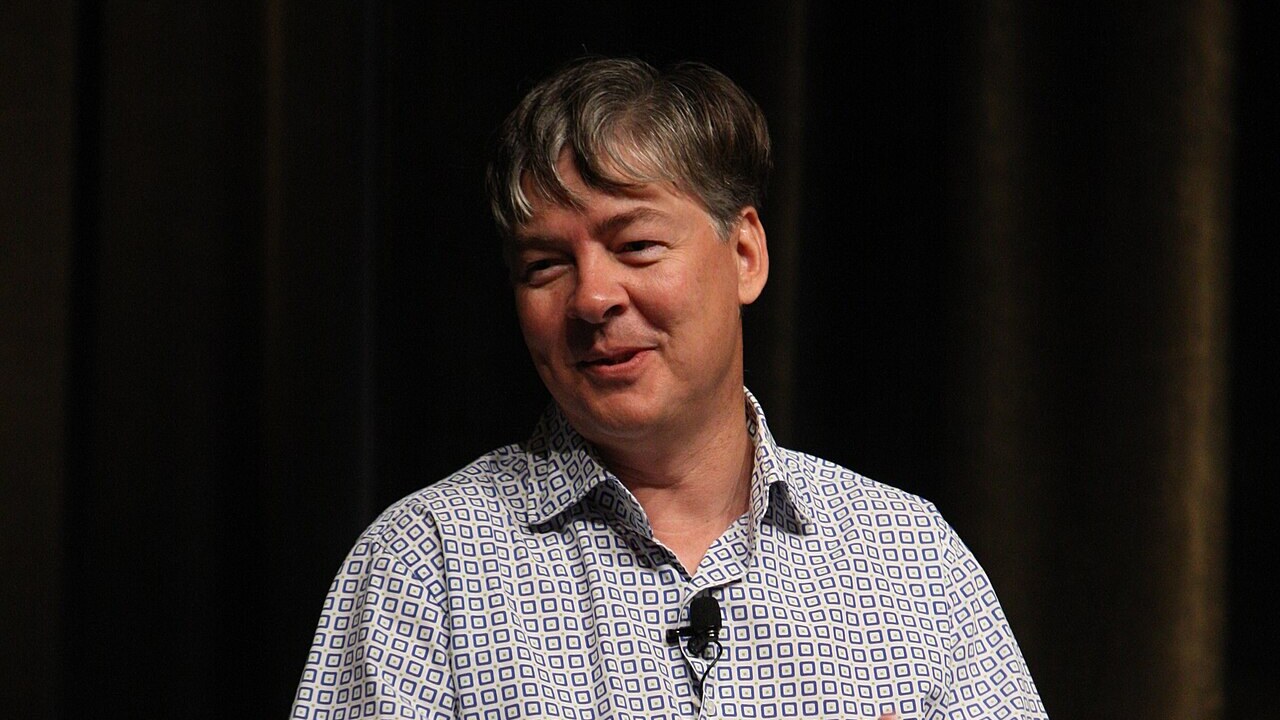
The port only makes sense against Microsoft's own native rewrite. On March 11, 2025, Anders Hejlsberg announced a native port of the TypeScript compiler, written in Go, saying it would "reduce most build times by 10x." Microsoft's benchmark table showed tsc speedups from 9.1x on tRPC to 13.5x on TypeORM, plus an 8x improvement in project load time on the VS Code codebase (Microsoft TypeScript blog). That Go codebase, now TypeScript 7, is the specification tsc-rs was translating.
Two attempts, two price points
The README says the earlier attempt used OpenAI models (it names GPT-5.6 Sol and GPT 6 Astra), spent over $400,000 in API tokens and reached about 84% compatibility. The Claude attempt started from scratch, had a working v0 in 10 hours, and then ran about two weeks at roughly $24,047 of API-price spend. The README adds that the Claude usage ran at 925% to 983% of a $200 plan's weekly limits (GitHub README). Browne's post, as quoted by AI Weekly, put it as burning about $400k on Codex and about $20k on Opus (AI Weekly).
Token spend at API prices, two attempts at the same port
Author-reported figures from the tsc-rs README. The first bar is a floor ("over $400,000"), and neither figure has been independently audited.
Sources differ on the totals. The README says the whole effort cost over $420,000 in tokens and that it "could probably have been done for ~$20k," while a commentary piece noted that this $420,000 figure does not match the "more than $400,000" attributed to the earlier attempt alone (dev.to). All of these are unaudited, and API-price equivalents are not what a subscriber actually paid.
Burned ~$20k of Opus and got there in 2 weeks.
Theo Browne, as quoted by AI Weekly
Why test suites work as specifications
The most transferable idea is structural. A compiler port has an unusually crisp oracle: the original implementation and its tests. Passing 181,711 ported Go tests gives an agent a dense, automatic signal on every change, which is what lets a long autonomous run self-correct without a human reading each diff. The README also says language server and API answers match Go on oracle test sets, and that Go's output was compared across 120 repositories (GitHub README).
Two competing readings are reasonable. One is that this is a repeatable recipe: wherever a mature implementation and a large conformance suite exist, translation costs may fall sharply. The other is that compilers are a favorable special case, since most software lacks a reference implementation and a suite of this size. AI Weekly's editors also raised the open question of how much human intervention the test pass required, which the README does not fully settle (AI Weekly).
The speed numbers
Benchmarks in the README were run on an Apple M4 Pro with macOS 26.5.1, using hyperfine medians of five runs after one warmup, with --noEmit --incremental false. Across real-world apps, the geometric mean speedup over tsc 6 was 7.1x for tsc 7 and 11.4x for tsc-rs, which the README puts at 1.61x faster than tsc 7. On 60 open-source projects it describes roughly half the type-checking time of Go's tsc. On the T3 Code project without Effect, it reports tsc-rs at 7.25 seconds, tsc 7 at 16.10 seconds and tsc 6 at 62.63 seconds, with Bun's checker fastest at 4.07 seconds (GitHub README). One commentary noted that the larger Effect comparison against an older plugin is not like for like (dev.to). The README also says its preview packages are built without the PGO and BOLT optimizations used in the measured build, so they run slower than the figures shown.
Unreviewed code and the maintenance question
The claim that nobody read the code is the part that will draw the most debate. Supporters can point to the oracle: behavior is checked against Go, not against a reviewer's judgment. Skeptics can point to what tests rarely cover, such as memory growth in long editor sessions, which the README itself lists, and to the burden of tracking upstream. Because tsc-rs is pinned to a specific TypeScript 7.1.0-dev revision, each upstream change must be re-ported and re-validated, and the commentary recommended naming a maintainer for that work before anyone replaces a working checker (dev.to).
What to watch
- Independent reproductions of the 1.61x figure on other hardware, and Windows support once binaries exist.
- How the project handles the next upstream TypeScript commits, which tests the maintenance cost directly.
- Whether other teams apply the same test-suite-as-spec method to different codebases, and at what cost.
- Whether the memory growth and monorepo issues in the README are fixed.
Teams that want to compare how different models handle long, test-driven coding tasks can do so in a model-agnostic workspace such as Metir, since the cost and quality gap between model families is the main variable in this story.
Sources:
- pingdotgg/ts-rust README (GitHub)
- AI Weekly: Ping Labs' Claude-built Rust port of tsc passes 181,711 tests
- dev.to: AI coding agents and Theo's Rust TypeScript compiler, the caveats
- Microsoft TypeScript blog: Announcing the native port of TypeScript
Image credits
- Anders Hejlsberg at PDC2008, photo by DBegley, licensed CC BY 2.0: Wikimedia Commons