In the annals of artificial intelligence history, few stories are as compelling as that of DeepMind. What began as an ambitious startup in a London office has transformed into one of the most influential AI research laboratories in the world, culminating in a 2024 Nobel Prize in Chemistry.
The Genesis: Three Minds, One Mission
The story begins in 2010, when three individuals with remarkably different backgrounds came together with a shared vision: to "solve intelligence" and use that intelligence to "solve everything else."
Demis Hassabis wasn't your typical tech founder. A former child chess prodigy who finished his A-levels two years early, he had already lived several lives before DeepMind. At just 17, he coded the multi-million selling simulation game Theme Park. After graduating from Cambridge with top honors in computer science, he founded the pioneering video game company Elixir Studios. But his true passion lay deeper—in understanding the very nature of intelligence itself. He returned to academia, earning a PhD in cognitive neuroscience at University College London, followed by postdocs at MIT and Harvard.

It was during his time at the Gatsby Computational Neuroscience Unit that Hassabis met Shane Legg, a New Zealand-born researcher equally obsessed with artificial general intelligence. Together with Mustafa Suleyman, a childhood friend of Hassabis with experience in social enterprise, the trio founded DeepMind in London.
The Google Chapter
The early DeepMind team worked in relative obscurity, but their approach was revolutionary: combining insights from neuroscience with cutting-edge machine learning. They pioneered deep reinforcement learning, teaching AI systems to learn from experience much like humans do.
Their breakthrough came when they demonstrated AI systems that could learn to play Atari games at superhuman levels—without being told the rules. The tech world took notice.
In January 2014, Google acquired DeepMind in what was then their largest European acquisition ever. The deal, reportedly worth over $500 million, brought DeepMind into Google's orbit while allowing it to maintain significant research independence.
AlphaGo: The Moment the World Watched
The world truly witnessed DeepMind's capabilities in March 2016, when their AI system AlphaGo defeated Lee Sedol, one of the greatest Go players in history. Go, an ancient Chinese board game, had long been considered a grand challenge for AI due to its astronomical complexity—there are more possible positions than atoms in the universe.
The five-game match in Seoul wasn't just a technical achievement; it was a cultural moment. Millions watched as AlphaGo made moves that human experts described as "beautiful" and "creative." In one legendary move—Move 37 of Game 2—AlphaGo played a move so unconventional that commentators initially thought it was a mistake. It wasn't. It was genius.
From Games to Science: AlphaFold's Revolution
But DeepMind's ambitions extended far beyond games. In 2020, they unveiled AlphaFold2, an AI system that solved one of biology's grand challenges: predicting the 3D structure of proteins from their amino acid sequence. This problem had stumped scientists for 50 years.
The implications were staggering. Understanding protein structures is fundamental to drug discovery, disease understanding, and biotechnology. DeepMind made the structures of over 200 million proteins—virtually every protein known to science—freely available to researchers worldwide.
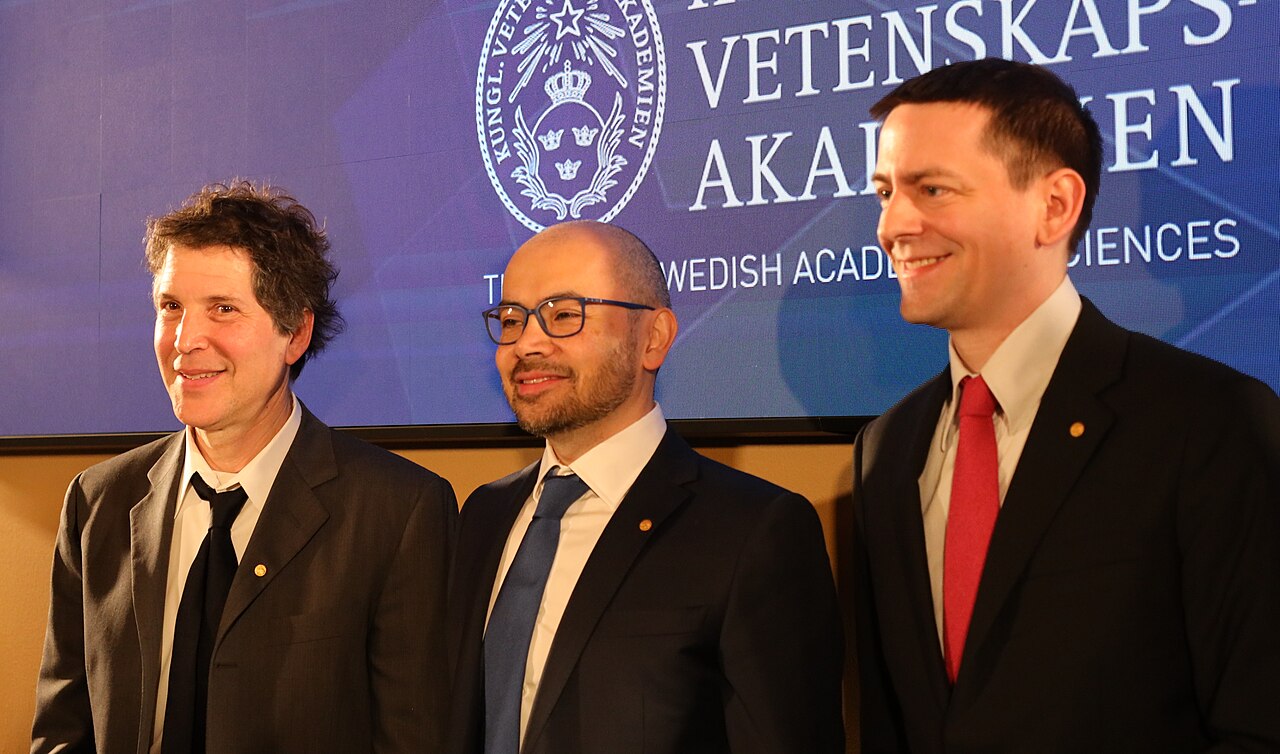
This work earned Demis Hassabis and John Jumper half of the 2024 Nobel Prize in Chemistry. As Hassabis reflected: "Maybe it's a watershed moment for AI that it's now mature enough, and it's advanced enough, that it can really help with scientific discovery."
The 2023 Merger and Beyond
In April 2023, responding to the seismic shift caused by ChatGPT and the AI race it ignited, Google merged DeepMind with its internal Google Brain team to form Google DeepMind. The combined entity, led by Hassabis, brought together two of the world's premier AI research groups under one roof.
That December, Google DeepMind launched Gemini, their most capable AI model yet—a multimodal system designed to work with text, images, and beyond.
The Road Ahead
Today, Google DeepMind stands at the frontier of artificial intelligence research. With over a decade of groundbreaking work, from game-playing AI to Nobel Prize-winning science, the lab continues to push toward their ultimate goal: artificial general intelligence that benefits humanity.
The journey from a London startup to a Nobel Prize-winning powerhouse is a testament to what happens when brilliant minds pursue ambitious goals. As AI continues to reshape our world, DeepMind's story reminds us that the most transformative technologies often begin with a simple, audacious question: What if we could solve intelligence?
The story of DeepMind continues to unfold. Stay tuned to the Metir AI blog for more insights into the companies, people, and technologies shaping the future of artificial intelligence.
Image credits
Header image: David Baker, Demis Hassabis and John Jumper at the 2024 Nobel Prize press conference, by Jennifer 8. Lee via Wikimedia Commons, licensed under CC BY-SA 4.0. In-body portrait of Demis Hassabis by Duncan Hull via Wikimedia Commons, licensed under CC BY-SA 4.0.