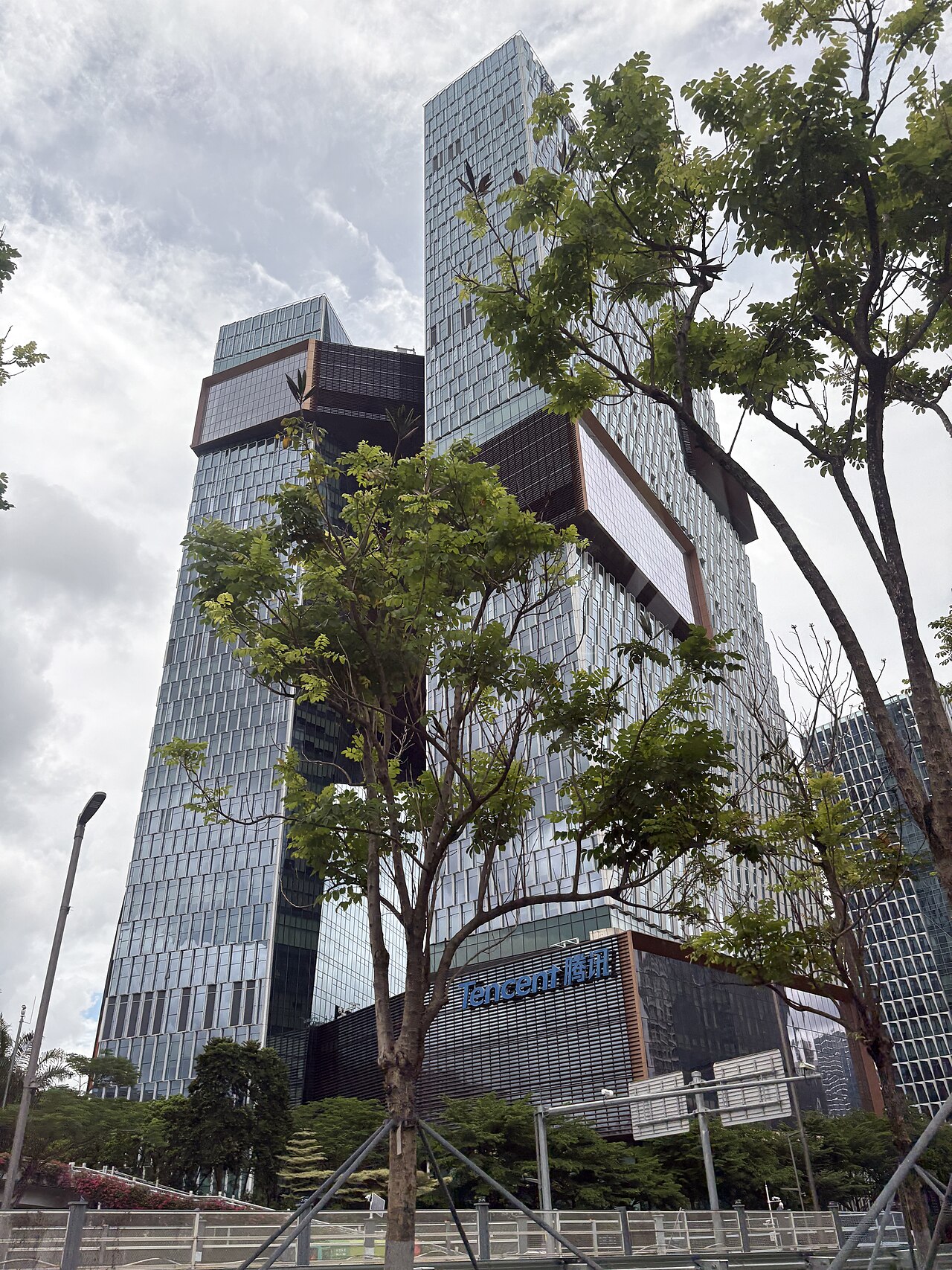
Tencent released and open-sourced a new large language model in its Hunyuan family, called Hy4 preview, on August 28, 2026, and said the model outperforms rivals Z.AI and Moonshot AI in the company's own internal tests. It is a small margin, by Tencent's own numbers, and it landed in a week when two other Chinese labs shipped new open-weight models of their own. The headline is Tencent's claim. The more useful story is what the release says about how crowded, and how open, China's frontier AI race has become.
 Qwen
Qwen DeepSeek
 Moonshot AI
 Z.ai
Z.aiWhat Tencent's Hunyuan Hy4 Actually Is
Hy4 preview is the newest model in Tencent's Hunyuan line, following Hy3 preview from July 2026. According to Tencent's own release materials, it is a Mixture-of-Experts (MoE) model with 770 billion total parameters and 49 billion active parameters per token, and a context window that exceeds 1 million tokens. Tencent says the model was built with what it calls "deep model-product co-design," and that the model itself contributed to its own training pipeline, autonomously optimizing training methods and inference infrastructure to produce a claimed 31.8% throughput improvement over its baseline.
Those specs, worth stressing, come from Tencent's release announcement and the model card Tencent published alongside the weights on Hugging Face, not from an independent lab. They are consistent across Tencent's own press materials and are the numbers most trade outlets have repeated, but they have not been independently reproduced or audited the way, say, a peer-reviewed architecture paper would be. Treat "770B total, 49B active, 1M+ context" as Tencent's description of its own model rather than a verified fact about it.
Hy4 preview is available as open-weight on Hugging Face, inside Tencent's own WorkBuddy and CodeBuddy coding assistants (free for two weeks at launch, per Tencent), through its Yuanbao and ima consumer apps, and via API through Tencent Cloud's TokenHub and OpenRouter. Tencent priced API access at $0.834 per million input tokens and $2.501 per million output tokens.
The Claim: Beating GLM-5.3 and Kimi K3
The part of the release that made international headlines, reported first in this form by Bloomberg, is Tencent's claim that Hy4 preview edges out two of its most closely watched domestic rivals: Zhipu AI's GLM-5.3 and Moonshot AI's Kimi K3. Tencent says it ran an internal blind evaluation with 163 in-house experts scoring 203 real-world engineering tasks on a 0-to-4 scale. Hy4 preview came out with an average score of 2.99, against 2.94 for Kimi K3 and 2.92 for GLM-5.3.
Tencent's internal blind-test scores for Hy4 preview
163 Tencent-selected experts scored 203 engineering tasks on a 0-4 scale. This is Tencent's own claim, run and graded in-house, not a third-party or independently reproduced benchmark.
The margin between all three models is well under two tenths of a point on a 4-point scale, run by the model maker itself. Treat this as a directional claim pending third-party benchmarks.
Read the numbers literally and the gap is thin: 0.07 points on a 4-point scale, produced, run, and graded entirely inside Tencent, comparing Tencent's own model against models it did not train. That is not a criticism specific to Tencent. Nearly every lab that publishes a benchmark comparison publishes one where its own model wins, and "internal blind test" evaluations, however well-intentioned, are inherently harder to audit than a public leaderboard with a fixed, shared test set. The independently maintained third-party benchmarks that would let a reader compare Hy4 preview, GLM-5.3, and Kimi K3 on equal footing were not yet available at the time of Tencent's announcement.
A 0.07-point gap on a 4-point scale, self-run and self-graded, is a claim worth noting and a benchmark worth waiting on.
On reading Tencent's Hy4 preview comparison
None of that means the claim is false. It means the honest way to describe Hy4 preview, for now, is as a model whose maker says it is competitive with the current best open Chinese models, pending the kind of third-party evaluation that would let outsiders check the number rather than take it on faith.

A Very Crowded Week for Open-Weight China
Hy4 preview did not launch into empty air. Two days before Tencent's announcement, on August 26, Alibaba's Qwen team released Qwen3.8-Flash-Next, an open-weight preview model previewing its coming Qwen4 architecture, and Z.AI shipped GLM-5.3-Flash, its first natively multimodal model in the GLM-5 line, on the same day. That is three major Chinese labs shipping new open-weight models inside a single week, on top of Moonshot AI's Kimi K3 and DeepSeek's own releases earlier in the year. Trackers following the pace of Chinese open-weight releases through 2026 describe a cadence of major drops arriving every few days rather than every few months.
The pattern that has held across 2026 is that Alibaba's Qwen, Z.AI's GLM, Moonshot's Kimi, DeepSeek, and Tencent's Hunyuan are no longer treated as a tier below the closed frontier labs. Multiple of these families now license their weights permissively (DeepSeek under MIT, Qwen under Apache 2.0) and post scores on public coding and agent benchmarks that sit close to, and in some categories match, proprietary Western models. Whether Hy4 preview specifically clears that bar is exactly the open question a third-party benchmark would settle. That five labs are shipping at this pace, competing openly on price and on published capability, is the settled part.
Why Open Weights, and Why Now
There is a strategic logic to Chinese labs concentrating on open-weight releases rather than closed APIs, and it predates Hy4 preview by years. US export controls on advanced AI chips have made compute a genuine constraint for Chinese labs, which changes the calculus around distribution. A closed, API-only model has to win on inference infrastructure and uptime at scale, areas where compute scarcity bites hardest. An open-weight model wins by proliferation: developers worldwide adopt it, fine-tune it, and build on it, and the lab that released it gains influence, mindshare, and a foothold in enterprise stacks without needing to out-build every hyperscaler's data center footprint. Open weights are also a lower-friction way to demonstrate frontier capability to a global developer audience that is otherwise skeptical of routing sensitive workloads through a Chinese-hosted API.
None of this is unique to Tencent. It is the same logic DeepSeek, Alibaba, Moonshot, and Z.AI have each followed with their own open releases through 2026, and it is a big part of why "the China open-model race" now reads as a genuine multi-player contest rather than a single company's story.
What It Means for Anyone Choosing a Model
For developers and teams evaluating models, the practical takeaway is not "switch to Hy4 preview" or "ignore Tencent's claim." It is that the number of credible, capable, openly licensed options has grown fast enough that betting a product on one lab's model, Chinese or Western, is now a real opportunity cost. A team that hard-commits to a single provider gives up the ability to move when a genuinely better or cheaper option ships, and in 2026 something has shipped almost weekly.
That is the practical case for staying model-agnostic. Metir AI routes chat requests across models from OpenAI, Anthropic, Google, xAI, and other providers rather than locking a workspace to one lab's roadmap, so a faster or cheaper model landing anywhere in the field, including from a lab that was not on anyone's radar a year ago, is an option to pick up rather than a reason to rebuild.
What to Watch Next
The question Tencent's own numbers cannot answer is how Hy4 preview performs on public, third-party benchmarks that GLM-5.3, Kimi K3, and the rest have also been scored on, the kind of apples-to-apples comparison that would either support or complicate Tencent's blind-test claim. Watch for those scores to land on independent leaderboards in the weeks after release, and watch whether Hy4 preview's real-world adoption, inside Tencent's own WorkBuddy and CodeBuddy products and via its open weights on Hugging Face, tracks the confidence of Tencent's announcement. In a field shipping a new frontier-adjacent open model every few days, the release itself is rarely the whole story. The independent verification that follows usually is.
Sources:
- Tencent Touts New AI Model It Claims Outperforms Z.AI, Moonshot | Bloomberg
- Tencent Releases and Open-Sources Tencent Hy4 preview | Tencent
- Tencent Unveils Hy3 Preview Model, Enhances Agent Capabilities and Real-World Usability | Tencent
- Tencent open-sources Hy4 preview with 770B parameters and a 1M-token context | TechNode
- Tencent Organization Page | LLM Stats
- tencent/Hy4-preview | Hugging Face
- Five open weight releases in nine days: GLM-5.3-Flash, Qwen3.8-Flash, and more | Requesty
Image credits
Header and in-body photographs of Tencent's Seafront Towers headquarters campus in Shenzhen, China, by Chainwit. via Wikimedia Commons (header, in-body), both licensed under CC BY 4.0.