On October 16, 2026, Bloomberg reported that Taiwan plans to add artificial intelligence servers and cutting-edge semiconductors to its list of controlled items. Once the measures take effect, shipping restricted AI hardware to China would become a criminal offense under Taiwan's Foreign Trade Act. The plan comes from Economic Affairs Minister Kung Ming-hsin, who gave Bloomberg News an interview on October 12. He did not say when the measures will begin.
The legal gap the plan closes
The most useful part of the story is the problem it addresses. According to Bloomberg, Taiwan does not currently treat unauthorized AI chip exports to China as a crime in its own right. Officials can warn sellers that they may be violating US rules, but local courts can only charge smugglers under other existing laws. Local authorities had been exploring legal tools to prosecute AI chip smuggling as a criminal violation for the first time.
The US has long restricted Chinese purchases of AI chips from Nvidia and AMD, yet companies in China still obtain them through a black market, and US officials allege that billions of dollars' worth of Nvidia hardware has reached China over the past few years. That sets up a gap between where US controls apply and where the physical hardware is assembled, shipped and transshipped. Taiwan's role in the semiconductor supply chain is why a Taiwanese control could matter in practice, although the report does not quantify it.
 NVIDIA
The US trade deal link
Kung tied the changes to Taiwan's agreement with the US. "Going forward, some of our measures on controlled items will correspond to American ones because we have made quite some commitments in the Agreement on Reciprocal Trade," he told Bloomberg. The agreement, signed earlier in 2026, was described in Bloomberg's linked headline as a pact to cut tariffs and boost investment.
Some of our measures on controlled items will correspond to American ones because we have made quite some commitments in the Agreement on Reciprocal Trade.
Kung Ming-hsin, Taiwan Economic Affairs Minister, to Bloomberg
The article also notes that the controls would be among the strictest measures of President Lai Ching-te's administration, and that Kung discussed plans to raise billions of dollars for US industrial parks intended to support an AI hardware supply chain for Nvidia and other makers. The pairing is worth noting analytically: tighter control of exports to China sits alongside deeper investment ties to the US, so the control is one component of a broader bargain rather than a standalone security measure.
What is still undefined
Several details determine how much the plan changes in practice, and the reporting does not resolve them.
- Timing. Kung declined to say when the measures will be implemented.
- Penalties. The article states that the shipments would become a criminal offense but gives no specific penalties.
- Coverage. The scope is described as AI servers and cutting-edge semiconductors. The precise technical thresholds and the list of items have not been published in the coverage reviewed.
- Who is covered. Whether the new controls apply to named parties or to all customers in China is not stated in the Bloomberg text; one secondary report suggests scope may broaden beyond blacklisted companies, which is unconfirmed.
How to read it
Two features make the plan notable regardless of what the final text says. First, it moves enforcement from the US side to the Taiwan side of the supply chain, which changes who can be prosecuted and where. Second, it ties a technology control to a tariff and investment agreement, which suggests the final rules may track US definitions closely. The sector effect also depends on server makers and distributors, whose compliance burden grows if the definition of an AI server is broad.
For teams planning around compute access, the lesson is that hardware availability is shaped by law as much as by supply. Software that is not tied to one provider or region, such as the model-agnostic approach behind Metir AI, is less exposed when export rules change where capacity can be shipped. The details to watch are the effective date and the published item list.
Sources:
- Taiwan to Curb AI Chip Exports to China as Part of US Trade Deal | Bloomberg
- Taiwan to curb AI chip exports to China as part of US trade deal | BusinessMirror (Bloomberg)
Image credits
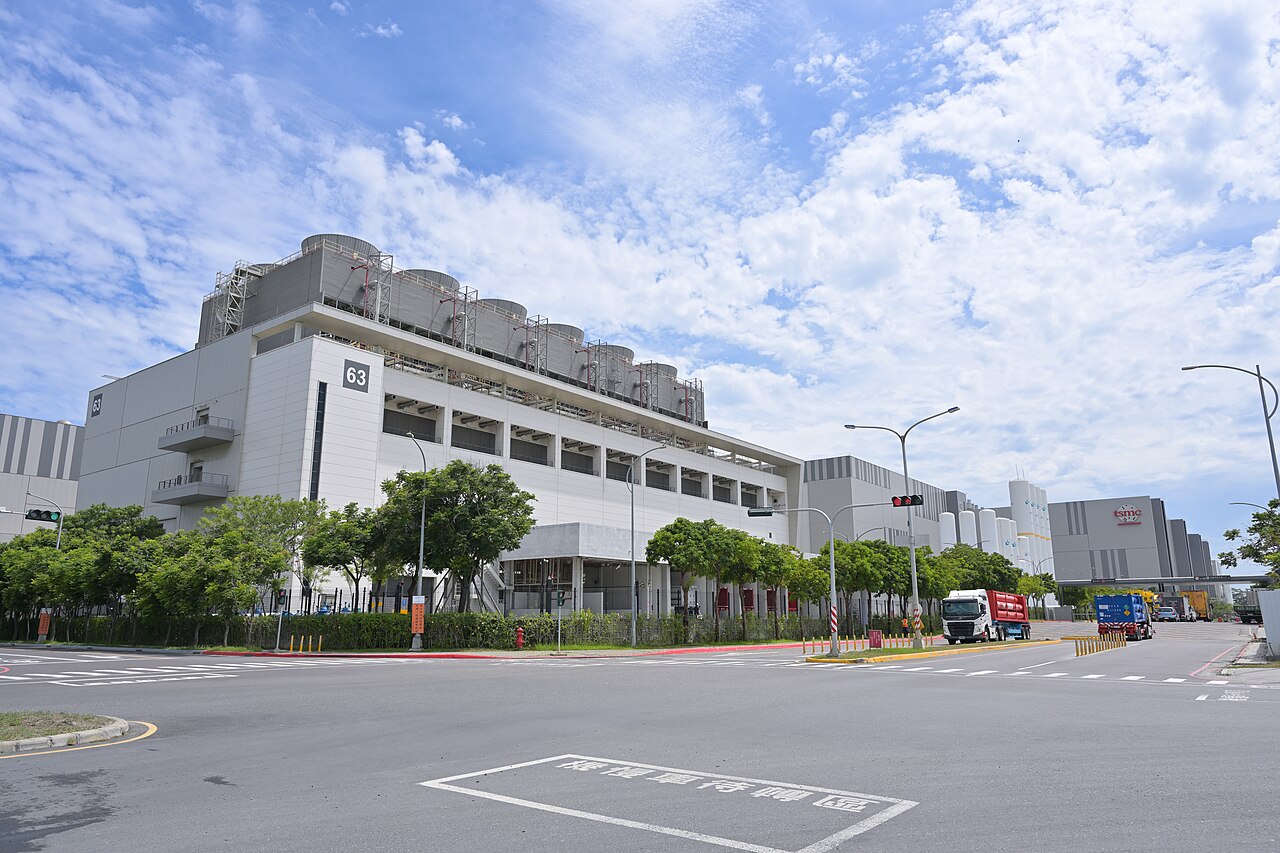
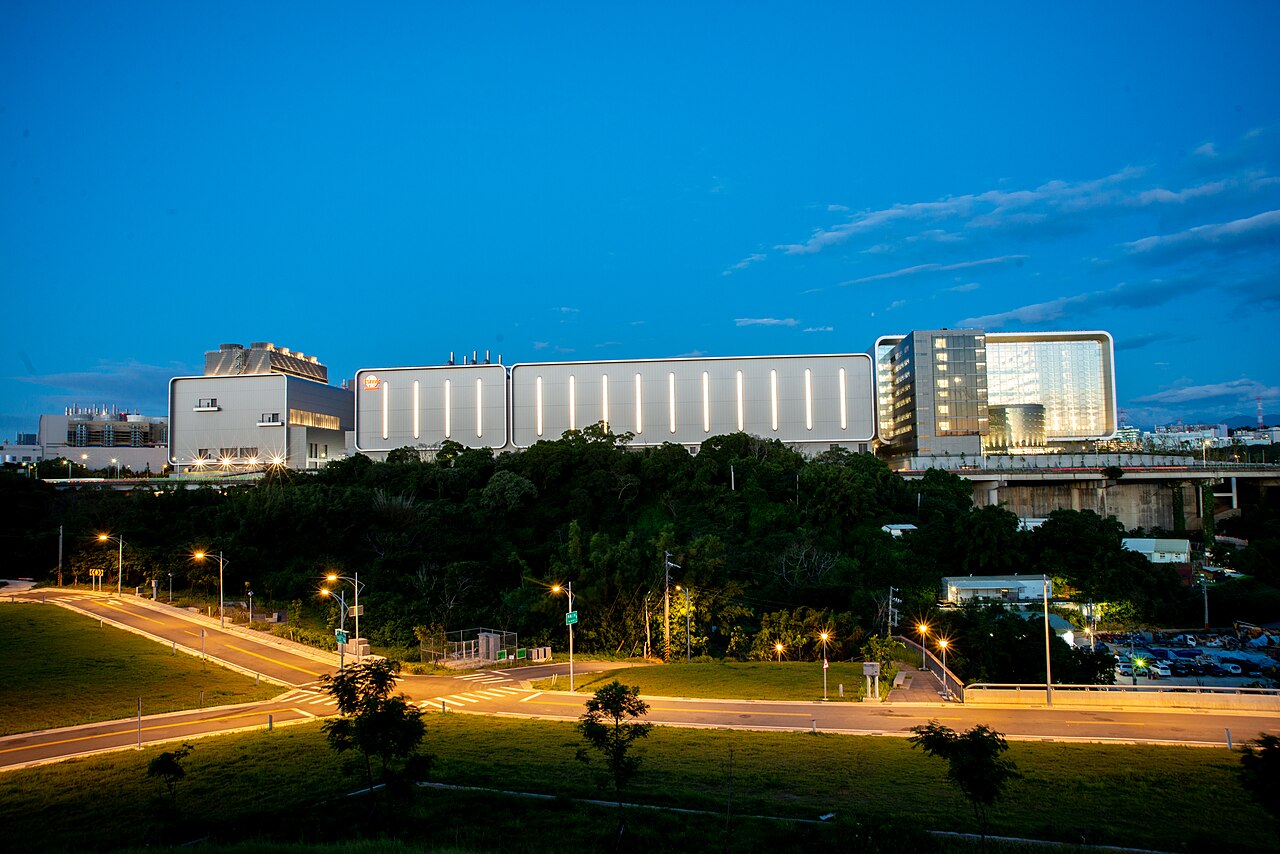
Header image: TSMC Fab 18 in the Southern Taiwan Science Park, photographed May 2025 by 4300streetcar, via Wikimedia Commons, licensed CC BY 4.0. In-body photograph of the TSMC Global R and D Center in Hsinchu by 曾 成訓, via Wikimedia Commons, licensed CC BY 2.0. Both are illustrative and predate this announcement.