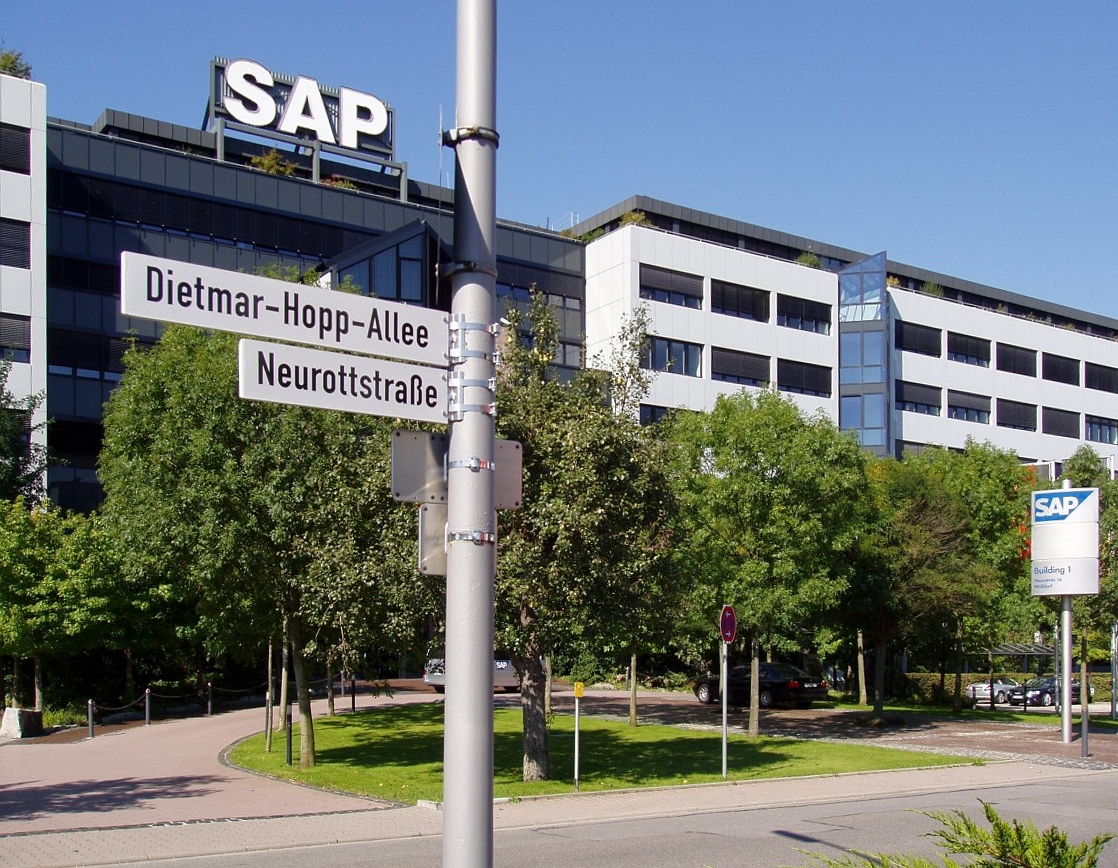
On July 17, 2026, SAP confirmed it had completed its acquisition of Prior Labs, a German AI research company, and pledged to invest more than one billion euros over four years to scale it. What makes the deal interesting is not the price but the target. Prior Labs does not build chatbots. It builds foundation models for tables, the rows and columns of structured data that businesses actually run on. While most of the AI conversation in 2026 has been about language, one of Europe's largest software companies just placed a very large bet on a quieter frontier. This piece explains what tabular foundation models are, why they are technically distinct from the models most people know, and what SAP is really buying.
Most AI is trained on prose. Business runs on tables
The large language models that power chat assistants learn from text: books, code, articles, conversations. They are extraordinary at anything that looks like language. But a great deal of the world's most valuable data is not prose at all. It is structured: a spreadsheet of transactions, a database of inventory, a ledger of payments, a table of sensor readings, a customer list with dozens of columns.
For decades, the workhorse tools for making predictions from that kind of data were not neural networks at all. They were methods like gradient-boosted decision trees, the quiet engine behind countless fraud detectors, demand forecasts and credit models. These methods are excellent, but each one has to be trained from scratch on each new dataset, which takes time, expertise and tuning. There was no equivalent of the pretrained foundation model that you could point at a fresh table and get a strong prediction immediately.
A great deal of the world's most valuable data is not prose at all. It is rows and columns, and that is a different kind of intelligence problem.
What a tabular foundation model does differently
A tabular foundation model, or TFM, is an attempt to bring the foundation-model idea to structured data. The breakthrough associated with Prior Labs is a model family called TabPFN, whose research was published in the journal Nature and which set the state of the art on tabular benchmarks across hundreds of independent academic studies.
The key trick is what practitioners call in-context learning. Instead of training a fresh model on your table, a TFM is pretrained once on a vast range of synthetic tabular problems. When you then hand it a new dataset, it does not retrain. It looks at your rows and columns as context and produces predictions directly, in a single pass, the way a language model answers a prompt without being retrained on your question. For small and medium datasets, this can match or beat carefully tuned traditional methods while taking seconds instead of hours.
The distinction is worth making concrete:
| Language foundation models | Tabular foundation models | |
|---|---|---|
| Trained on | Text, code, conversation | Structured rows and columns |
| Core task | Generate and reason over language | Classify and forecast from tables |
| Typical use | Chat, writing, coding, search | Fraud, demand, risk, pricing, churn |
| How you use it | Prompt with words | Provide a table as context |
| Retraining per dataset | Not required | Not required |
That last row is the point. Both kinds of model share the same headline advantage over the tools they replace: you do not build a bespoke model for every new problem. You bring a pretrained general model to the specific data in front of you.
Why SAP specifically, and why now
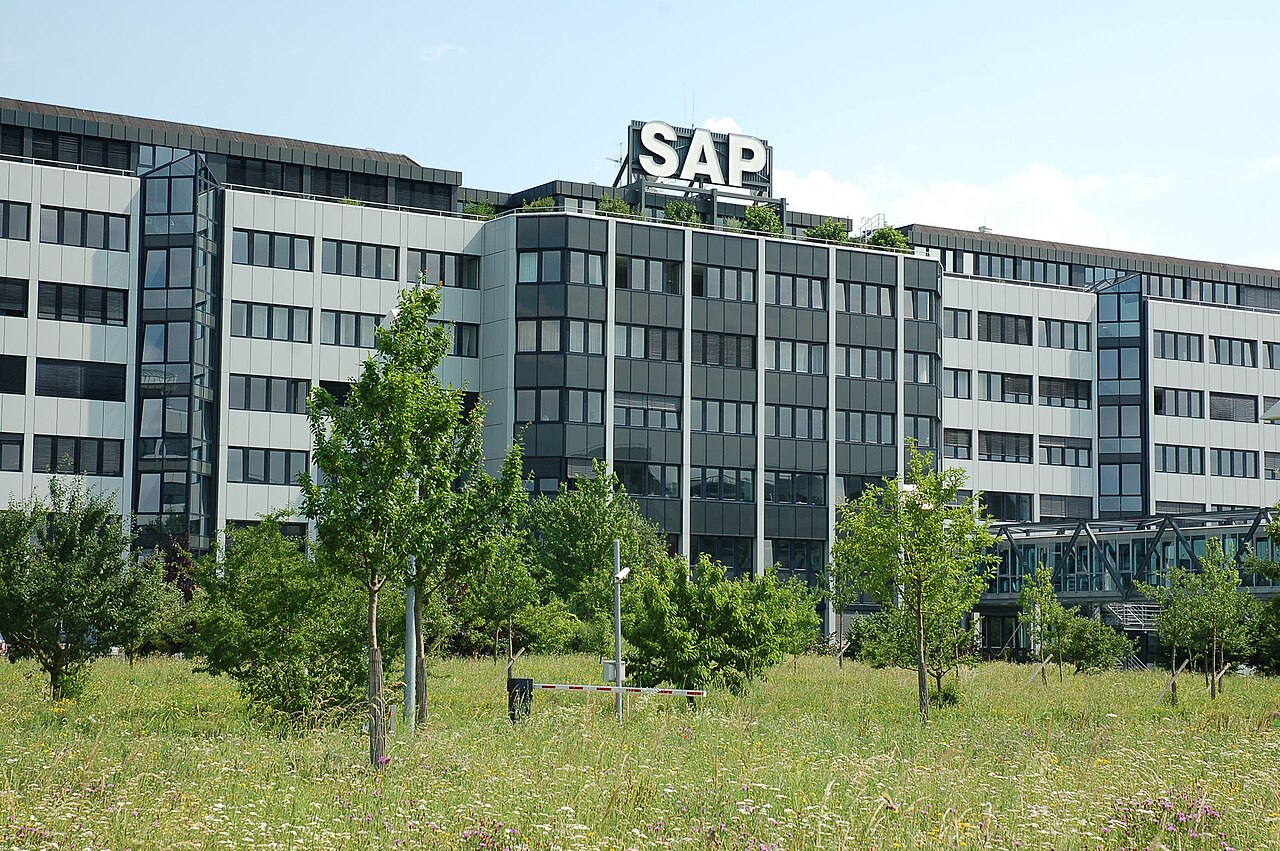
The strategic logic becomes clear once you see what SAP owns. SAP is the backbone of enterprise resource planning for a large share of the world's biggest companies. Its systems hold the tables: the financials, the supply-chain records, the procurement and HR data that run global businesses. That is enormous structured-data gravity.
A company like OpenAI or Google has the advantage in language. But the value locked inside enterprise tables is a different asset, and it is one SAP is unusually positioned to exploit because it already sits on top of the data. Buying the leading tabular-model research lab, rather than trying to win the crowded language race, is a bet that the next enterprise AI advantage comes from predicting better from the data companies already have, not from generating more text.
 OpenAI
 Google
The timing also reflects a broader realization. As language models commoditize, the differentiated value moves toward the data and the task. Structured business data is proprietary, messy, and hard to replicate, which makes a model that unlocks it a defensible asset in a way a general chatbot is not.
The honest caveats
Enthusiasm should be tempered with precision about what TFMs do and do not do today. The published strength of models like TabPFN is clearest on small to medium datasets; very large tables and certain problem types still favor established methods, and the field is actively working on scaling. A foundation model for tables is not a magic replacement for domain knowledge, clean data, or careful validation. Structured data is often riddled with missing values, inconsistent definitions and leakage, and no model fixes bad data.
There is also an integration reality. Owning the best tabular model is not the same as embedding it usefully across an enterprise software suite, which is exactly why SAP is committing a billion euros and four years rather than treating this as a finished product. The acquisition is a starting line.
What it means for everyone else
Even for teams that will never touch SAP, this deal carries a useful signal. The AI frontier is broadening beyond language into the specialized shapes that real work takes: tables, time series, molecules, images, code. The winning approach is rarely one universal model for everything; it is the right kind of model for the kind of data in front of you.
That is a practical argument for flexibility. If different problems are best served by different models, then the sensible posture is to avoid committing your whole workflow to a single engine and instead keep the freedom to use whichever one fits the task. A model-agnostic workspace such as Metir AI is built on that assumption, that a person's work spans many kinds of intelligence, and the tool should route each job to the model that handles it best rather than forcing everything through one. SAP is applying that logic at the scale of enterprise data. The underlying idea, match the model to the problem, is the same one that serves an individual choosing tools for a day's work.
The bigger picture
It is easy to miss stories like this because they lack the drama of a new chatbot. But SAP's billion-euro move is a marker of where enterprise AI value is migrating: away from the generic and toward the structured, proprietary data that companies already own. Tabular foundation models are still early, and their limits are real. What the acquisition establishes is that a serious, well-capitalized player now believes the next enterprise advantage is hiding in plain sight, in the rows and columns businesses have been collecting all along.
Sources:
- SAP Completes Prior Labs Acquisition | SAP News Center
- SAP to Acquire Prior Labs to Establish a Globally Leading Frontier AI Lab in Europe | SAP News Center
- SAP's 1bn euro bet on AI is about tables, not chatbots | The Next Web
- From research project to 1B-backed AI lab in 18 months: Prior Labs | TechFundingNews
- SAP acquires Prior Labs just 18 months after launch in 1B+ deal | Tech.eu
Image credits
Header image: SAP headquarters, main entrance, Walldorf, Germany, via Wikimedia Commons, released into the public domain. In-body photograph of SAP headquarters buildings in Walldorf via Wikimedia Commons, licensed under CC BY 2.0.