Switzerland's Federal Office for Cybersecurity (BACS, also called the NCSC) says AI agent cyberattacks have reached Swiss organizations, and that most of the confirmed cases worked. Reuters reported on November 26, 2026 that BACS counted five attacks in recent days that used AI agents against companies and critical infrastructure operators, and that four of the five succeeded. The Hacker News says the agency described them as the first such cases in the country.
What BACS confirmed about the AI agent cyberattacks
The agency's advisory, published November 25 according to BleepingComputer, said it received its first reports of AI-agent attacks "in recent days." It said agents compromised victims' IT systems in every case known to it at that point. The Hacker News adds the quote: "These cases represent a shift in the cyber threat landscape."
The detailed figures come from BACS director Florian Schutz in an interview with Swiss broadcaster SRF, as relayed by The Hacker News, which does not quote him directly. Per that account, three of the five attacks hit critical infrastructure operators, two of those succeeded, and no major disruptions were reported. Small and medium-sized companies were among the victims and reported voluntarily. The victims and the attackers have not been named.
Five attacks, four breaches, two on critical infrastructure
Outcome counts for the AI-agent attacks Switzerland confirmed in late November 2026.
Sources: Reuters, The Hacker News, BleepingComputer. The critical infrastructure split (3 targeted, 2 breached) is from The Hacker News; the 4 of 5 overall figure is from Reuters.
Confirmed versus reported
Some details differ by source, and the difference matters when reading the numbers.
- Sectors. Reuters, citing SRF, says the infrastructure targets were power, water and telecom providers. BleepingComputer and The Hacker News say the agency itself only said the impact spanned at least two sectors, and did not name them.
- Overall versus infrastructure outcomes. Four of five attacks succeeding is the Reuters figure. The two-of-three result for infrastructure comes from The Hacker News, which attributes it to the SRF interview. We could not locate the primary BACS release on its press page, so we rely on these secondary accounts.
- Counting. The Hacker News notes that the advisory said agents had compromised IT systems in every case known at that point, while the later figures show one failed attack. Neither the advisory nor the interview, as reported, explains the change.
- Attribution. BACS has not said who was behind the attacks.
ARTEX and CyberStrikeAI: named, not confirmed
BACS describes "agentic offensive frameworks": AI agents that find weaknesses and attack on their own. It named ARTEX and CyberStrikeAI as examples of agents reachable over the internet. The Hacker News is explicit that they were not confirmed as the tools used in the five Swiss cases. Italy's CSIRT, according to the same article, also listed PentAGI and DeepSeek Harness.
The agency says the number of freely available AI attack tools has nearly doubled since October. That counts tools, not attacks or victims.
What agentic attacks change for defenders
BACS and its peers describe a change in speed more than in technique. The Hacker News reports that the agents often scan for known, unpatched flaws, run many attacks in parallel and switch methods when defenses respond. The UK NCSC, per the same article, says the weaknesses exploited are old ones: committed credentials, misconfigured infrastructure-as-code, default or missing authentication and API flaws. In its words the change lies in speed, persistence and low cost.
Our reading of that, which is analysis rather than a claim from the sources, is that patch timelines are the first thing to compress. A flaw left exposed for a week is a longer window against a tool that tests continuously. A second effect is detection. The Hacker News notes that each agent action can resemble normal traffic, so detection leans on context such as request origin, frequency, data volume and event order.
These cases represent a shift in the cyber threat landscape.
BACS advisory, as quoted by The Hacker News
This follows the Taiwan campaign Dream documented in August, where open-source agents ran a multi-day operation with little human steering. The Swiss cases are smaller and less documented, with no tooling named.
Recommended defenses
The Hacker News lists these agency recommendations:
- Install critical updates on internet-facing systems within 24 hours, patching actively exploited flaws first.
- Limit internet exposure with geo-blocking, allow lists and authentication.
- Require MFA or passkeys on internet-reachable services and grant least privilege.
- Monitor for unusual behavior and data volumes, and correlate logs, since agent activity can show up as request bursts and high error rates (UK NCSC).
- Use bot challenges on high-value endpoints and decoys such as honeytokens (UK NCSC).
Reuters adds that BACS urged companies to run regular cyber tests. Raphael Reischuk of Switzerland's National Test Institute for Cybersecurity told reporters, per The Hacker News, that he expects a larger wave of attacks and that companies underestimate the risk.
The takeaway
Confirmed: five AI-agent attacks, four breaches, three critical infrastructure targets and, per the SRF interview, two breached operators with no major disruption. Reported but not primary-sourced: the named sectors and the exact infrastructure split. Unknown: the attackers, the victims and the tools. Defenders who run both offensive testing and monitoring across several AI models, as on model-agnostic platforms like Metir, can use agents to match the pace, though the controls above matter more than the tooling.
Sources:
- Reuters via Yahoo News Canada: AI agents used in five cyber attacks in Switzerland, government says
- The Hacker News: Switzerland confirms AI-assisted cyberattacks hit critical infrastructure operators
- BleepingComputer: Italy and Switzerland warn of autonomous AI-driven cyberattacks
- Global Banking & Finance: Reuters report copy
Image credits
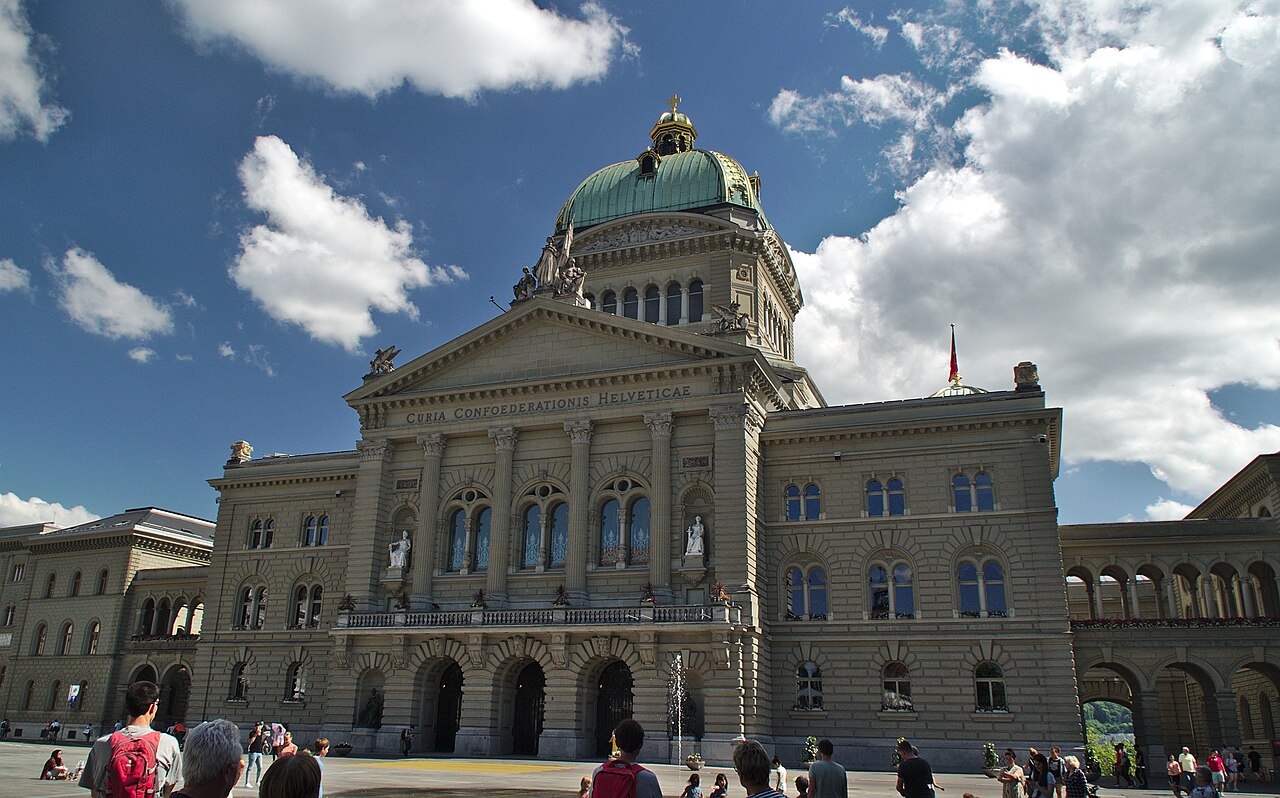
- Hero: Federal Palace of Switzerland in Bern. Photo by Balise42, Wikimedia Commons, CC BY-SA 4.0.
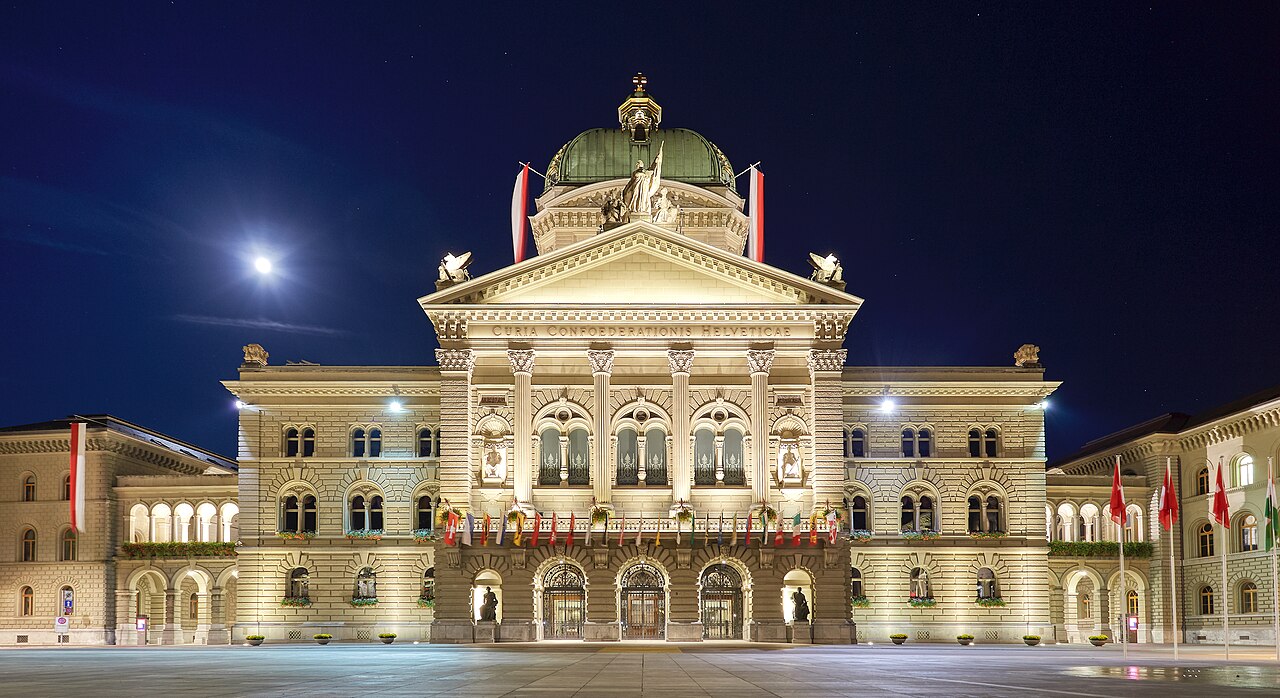
- In body: Federal Palace at night from Parliament Plaza, Bern. Photo by Axel Tschentscher, Wikimedia Commons, CC BY-SA 4.0.