Between June 30 and July 27, 2026, seven frontier or open-weight model families shipped from six different labs. Claude Sonnet 5, Grok 4.5, the three-tier GPT-5.6 family, Gemini 3.6 Flash, DeepSeek V4, Claude Opus 5 and Kimi K3 all arrived inside a single four-week window, alongside strong open releases from Z.ai's GLM-5.2 and Alibaba's Qwen 3.6. No single one of these was a category-defining leap. Together, they mark something more structural: the point at which frontier AI stopped being a race with one clear leader and became a field of several models trading places within a few benchmark points of each other. This piece walks through the release calendar, what near-parity actually looks like in the numbers, and what a compressed, crowded field changes for the people deciding what to build on.
 Anthropic
 OpenAI
 Google
 xAI
xAI DeepSeek
Seven frontier model releases, four weeks
The calendar makes the compression concrete. Anthropic opened the window on June 30 with Claude Sonnet 5, its mid-tier Claude 5-generation model. xAI followed on July 8 with Grok 4.5, explicitly positioned for business and coding work and priced to undercut Claude's Opus tier. OpenAI staged the rollout of its three-tier GPT-5.6 family, Luna, Terra and Sol, starting in late June and reaching wider availability around July 9. Moonshot AI brought Kimi K3 online through its API on July 16, a 2.8 trillion parameter model that immediately ranked third on the Artificial Analysis Intelligence Index. Google refreshed its fast tier with Gemini 3.6 Flash on July 21. Then, on July 24, Anthropic shipped Claude Opus 5, its fourth Claude 5-generation model release in under two months, the same day DeepSeek V4 completed its move to general availability. Kimi K3's full weights followed on July 27, the largest open-weight release published to date.
Four weeks, seven frontier releases
Every major model launch from June 30 to July 27, 2026. Colour marks whether the weights are open or stay closed behind an API.
- June 30, 2026Claude Sonnet 5Anthropic ships its mid-tier Claude 5 model, days after Fable 5 and Mythos 5 had already opened the generation.
- July 8, 2026Grok 4.5xAI positions the release for business and coding work, undercutting Claude Opus pricing while leading on agentic tool use.
- Late June to July 9, 2026GPT-5.6 family (Luna, Terra, Sol)OpenAI stages the rollout to trusted partners first, then to the wider public, with Sol reaching general availability around July 9.
- July 16, 2026Kimi K3Moonshot AI brings a 2.8 trillion parameter model online through its API, ranking third on the Artificial Analysis Intelligence Index.
- July 21, 2026Gemini 3.6 FlashGoogle refreshes its fast, low-cost tier as the price end of the race keeps moving.
- July 24, 2026Claude Opus 5 and DeepSeek V4Anthropic ships its fourth Claude 5-generation model in under two months, the same day DeepSeek V4 completes its move to general availability.
- July 27, 2026Kimi K3 open weightsMoonshot publishes the full 2.8 trillion parameter weights, the largest open-weight release to date.
GLM-5.2 and Qwen 3.6 also shipped within this same window, widening the open-weight side further.
The pattern behind the dates is what matters more than any single launch. Artificial Analysis's own tracking put six labs above a score of 50 on its Intelligence Index by mid-July, up from two in early June, with the top three models on the index coming from three different labs and spanning just three points between them. A year earlier, that kind of index would typically have shown one or two labs clearly ahead of the field. By this summer, the leaderboard was closer to a cluster than a ladder.
Open and closed weights are converging
The more interesting split isn't between labs, it's between open and closed. DeepSeek V4's strongest configuration reportedly scored around 80.6 percent on SWE-bench Verified, a test of resolving real GitHub issues, putting an openly downloadable model within a fraction of a point of the leading closed systems on a hard, practical coding benchmark. Kimi K3, at 2.8 trillion total parameters with roughly 50 billion active per token, beat Claude Fable 5 on Moonshot's own Frontend Code Arena evaluation and landed third overall on the Artificial Analysis Index before its weights were even public.
Summer 2026 is the first stretch where a model anyone can download sits within a benchmark point of the strongest closed systems, rather than a tier behind them.
On the open-versus-closed gap
Anthropic's own numbers tell a version of the same story from the closed side. On Frontier-Bench v0.1, a benchmark the company introduced with the Claude 5 generation, Opus 4.8 scored 18.7 percent, Claude Fable 5 reached 33.7 percent, GPT-5.6 Sol posted 37.5 percent, and Claude Opus 5 hit 43.3 percent when it shipped on July 24. That is more than a doubling of Anthropic's own top score in roughly two months, achieved across four separate model releases rather than one big jump. Progress this summer came in frequent, moderate increments spread across labs, not in a single vendor pulling decisively ahead.
A hundred-fold price spread in the same generation
Capability converging did not mean price converging. Listed per million output tokens, DeepSeek's V4-Flash comes in at $0.28 and V4-Pro at $0.87. Grok 4.5 and GPT-5.6's budget tier, Luna, both sit near $6. Gemini 3.6 Flash lists at $7.50. GPT-5.6's mid-tier Terra and Kimi K3 both land around $15. Claude Opus 5 lists at $25, and GPT-5.6's flagship tier, Sol, at $30.
A hundred-fold price spread in the same generation
List output prices per million tokens for the summer 2026 releases. Purple marks open-weight models; green marks closed, API-only models.
DeepSeek V4-Flash to GPT-5.6 Sol spans roughly a hundred-fold in list price within the same few weeks, even as their capability gaps narrow.
That is roughly a hundredfold spread across models shipped within weeks of each other, some of them scoring within single digits of one another on independent benchmarks. The open-weight entries anchor the cheap end largely because sparse mixture-of-experts architectures let a model carry a large total parameter count while activating only a fraction of it per token, which is also why DeepSeek and Moonshot can give the weights away and still profit from serving them. The closed end holds its pricing on the strength of proprietary tuning, safety work and infrastructure that a buyer cannot replicate by downloading a file. Both are legitimate business models. They just no longer map cleanly onto a single price-to-capability curve.
What compressed, crowded cycles change for buyers
For a team picking what to run on, the practical shift is from a one-time platform decision to an ongoing allocation problem. When one lab is a clear generation ahead, standardizing on it is close to a free decision. When six labs cluster within a few points of each other and prices span two orders of magnitude, the same task, say bulk document extraction versus a hard multi-step coding agent, can have a genuinely different best answer depending on whether the priority is price, latency, or peak accuracy, and that answer can flip again within a month as the next release lands.
That is also where the lock-in question gets sharper rather than softer. Committing an entire product to a single vendor's API, prompt conventions and pricing now means re-betting on that vendor every few weeks as competitors close the gap or undercut on price, without necessarily knowing in advance which one you will want next quarter. The alternative that is gaining ground is treating model choice as a routing decision made per task rather than a platform decision made once: send high-volume, cost-sensitive work to whichever model is cheapest per task this month, and reserve the highest-capability tier for the smaller share of work that actually needs it, while keeping the ability to move a workload when a better option ships. A model-agnostic workspace such as Metir AI, which surfaces models from multiple labs side by side rather than betting the product on one, is one way teams are keeping that flexibility available as the field keeps reshuffling.
What this does not mean
None of this should be read as any one model or lab having "won" the summer, and the framing cuts both ways. A model leading one benchmark by a point can trail on another, benchmark scores from a lab's own launch materials (including some of the figures above) are self-reported and should be read as directional rather than definitive, and a cheap open model that matches a closed one on a coding benchmark does not automatically match it on safety tooling, support, or the operational maturity of running it at scale. The compressed cadence itself is also not guaranteed to continue at this pace; release schedules cluster and then space out as labs absorb feedback and plan the next training run. What the summer does establish is that, for now, "pick the best model" is a moving target updated roughly every few weeks rather than a decision made once a year, and that reality is durable even if any individual score in this piece is out of date within a quarter.
Sources:
- LLM Release Timeline | Model Release Dates
- AI Model Releases 2026: Complete Timeline Tracker | PromptZone
- AI Model Race Tracker | Every Frontier Model Expected Before Summer 2026 Ends | FourWeekMBA
- Four frontier launches in eight days: six labs now field a model above 50 on the Artificial Analysis Intelligence Index
- GPT-5.6 Pricing (July 2026): Sol $5, Terra $2.50, Luna $1 per 1M | AI Pricing Guru
- The new GPT-5.6 family: Luna, Terra, Sol | Simon Willison
- Grok 4.5 Arrives With Aggressive Pricing Aimed at Developers
- Grok 4.5: xAI Model for Coding and Agent Tasks | Quasa
- China's 2.8-trillion-parameter Kimi K3 beats Claude Fable 5 in Frontend Code Arena benchmark | Tom's Hardware
- Kimi K3's open weights arrive July 27. The catch is 1.4TB | TECHi
- Meet the New Claude Opus 5: Frontier-Class Agentic Coding and Computer Use at Unchanged Opus Pricing | MarkTechPost
- Anthropic launches Claude Opus 5, its fourth model in two months, and it tops Fable 5 on most benchmarks | TheNextWeb
- DeepSeek V4: 1.6T MoE, 1M Context, Architecture, Benchmarks, Pricing | MorphLLM
- AI News Today, July 26, 2026 | Build Fast With AI
Image credits
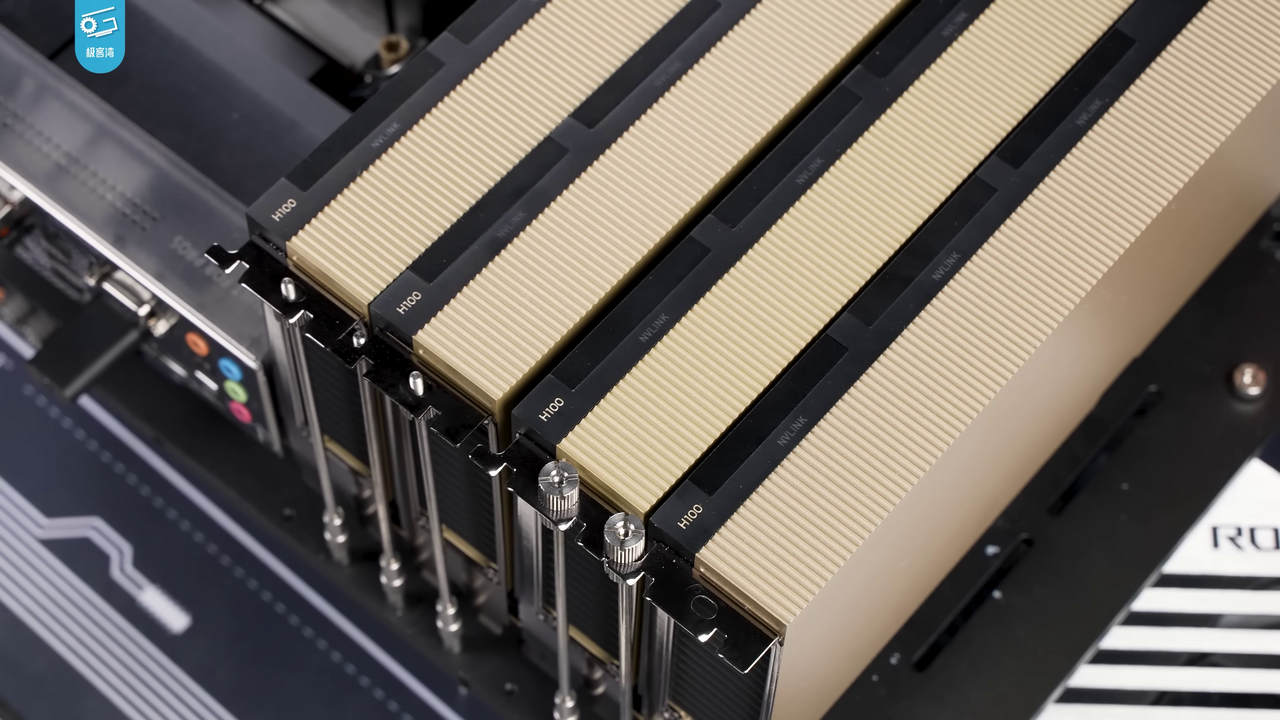
Header image: a data center server room, representing the compute infrastructure category behind this summer's model releases rather than any single lab's own facility, by BalticServers.com via Wikimedia Commons, licensed under CC BY-SA 3.0. In-body photograph of NVIDIA H100 GPU accelerator modules, general-purpose AI training and inference hardware rather than any lab's proprietary system, by 极客湾Geekerwan via Wikimedia Commons, licensed under CC BY 3.0.