On August 15, 2026, SpaceX officially closed its $60 billion acquisition of Cursor, the AI-native coding tool built by Anysphere. It is an unusual pairing on paper, a rocket and satellite company buying a code editor, but it is the second AI acquisition SpaceX has made in roughly a year, following its earlier acquisition of Elon Musk's AI lab xAI. Together, the two deals put compute, a frontier model, and a widely used developer tool under the same ownership.
What Actually Closed on August 15
The Cursor acquisition is confirmed, not speculative. TechCrunch reported that SpaceX and Anysphere first structured the deal as an option in April 2026, the companies confirmed they were moving forward with it in June 2026, and the transaction officially closed on August 15, 2026 at a $60 billion valuation. Cursor is one of the most widely adopted AI coding tools among professional developers, built around an editor that pairs directly with large language models to write, review, and refactor code.
The stated rationale, from both sides, was compute. SpaceX and Cursor described the deal as giving Cursor access to what the companies called the largest fleet of GPUs in the world. Cursor's framing was that SpaceX is building the computing capacity to scale intelligence, and that Cursor is one place where that intelligence becomes useful to developers.
Why an Aerospace Company Ends Up Owning a Code Editor
SpaceX is not primarily an AI company. It builds and launches rockets and operates the Starlink satellite network, businesses that require enormous amounts of compute for simulation, telemetry processing, and increasingly, autonomous systems work. That compute buildout, plus Musk's ownership of xAI, is what makes a rocket company acquiring a coding tool make a kind of internal sense rather than reading as a random diversification.
One owner, three layers: compute, model, and editor
With Cursor, SpaceX now sits underneath and on top of the AI coding stack at the same time.
The AI-native code editor where developers write and ship software.
Acquired by SpaceX for $60 billion, deal closed August 15, 2026.
The model layer that powers coding and agentic reasoning.
xAI already under SpaceX; Grok 4.6, tuned for coding and multi-step agentic tasks, shipped earlier in August 2026.
The physical hardware every layer above ultimately runs on.
Described by the companies as the largest fleet of GPUs in the world; also rented out to Anthropic and Google.
Stacked bottom to top: compute funds and constrains the model, the model powers the editor, and the editor is where the resulting intelligence reaches a developer.
Seen this way, the Cursor deal is not SpaceX entering the code-editor business so much as SpaceX finding a distribution surface for compute and a model it already owns. The pattern is unusual mainly because of who the buyer is, not because of the logic behind it. Software companies buying developer tools to bundle with their own platforms is a familiar move; an aerospace and satellite company doing it is what makes this deal notable.
The xAI Precedent
The Cursor deal follows SpaceX's earlier acquisition of xAI, the AI lab Musk founded that builds the Grok family of models. Earlier in August 2026, xAI and SpaceX jointly released Grok 4.6, a model built specifically to perform well on coding and multi-step agentic tasks, the kind of work an editor like Cursor depends on. SpaceX has also referenced compute-rental arrangements with outside labs, including Anthropic and Google, renting out capacity from the same GPU fleet it is now positioning as Cursor's advantage.
 xAI
xAI Anthropic
 Google
Put together, SpaceX now sits at three layers of the AI-coding stack at once: the physical GPUs, the frontier model trained and served on top of them, and the editor where a developer actually uses the result. Few companies in AI, or in software generally, own all three layers under one roof.
Compute as the Moat
The thesis underneath both acquisitions is that compute, not model architecture or product polish, is the scarcest and most durable advantage in AI right now. A company that owns a very large GPU fleet can subsidize the layers built on top of it: a model that is expensive to train and serve, and a developer tool that competes on price and speed against tools that have to buy or rent their compute from someone else.
Owning the largest fleet of GPUs in the world does not just mean cheaper training runs. It means whoever holds that fleet can decide which model and which developer tool get first claim on it.
Analysis of the stated rationale for the SpaceX-xAI-Cursor stack
That is the bull case for vertical integration: a tighter loop between compute, model, and product should mean faster iteration and lower marginal cost per developer served. The risk case is concentration. If the value in AI coding increasingly flows to whoever controls the compute underneath it, independent model labs and independent coding tools that do not own their own GPU fleets are competing at a structural disadvantage, regardless of how good their software is.
Days Later, a Reported Approach to Cognition
Four days after the Cursor deal closed, a report from The Information, picked up by TechCrunch, said SpaceX had approached Cognition, the startup behind the AI coding agent Devin, about a possible acquisition. Cognition's annualized revenue has been reported by Bloomberg to be approaching $1 billion, and Devin is used by enterprise customers including Mercedes-Benz, Citi, and Goldman Sachs.
From option to close, and the report that followed
The Cursor acquisition is confirmed and closed. The Cognition approach is a reported rumor that Cognition has denied.
SpaceX and Anysphere (Cursor's maker) first structure the acquisition as an option.
The companies confirm they are moving forward with the acquisition.
xAI and SpaceX jointly release Grok 4.6, built for coding and multi-step agentic tasks.
SpaceX officially closes its $60 billion acquisition of Cursor.
The Information reports SpaceX approached Cognition (maker of Devin) about a deal; Cognition's CEO publicly denies it, saying the company is "not for sale."
Dates and characterizations per TechCrunch, TNW, and TipRanks coverage cited in this article.
Cognition CEO Scott Wu publicly denied the report, stating the company is "not for sale." Coverage from TechCrunch and TNW indicates the talks are no longer active, though the two companies may still explore a commercial relationship, such as Cognition using SpaceX's compute, short of an acquisition. It is important to be precise here: the Cursor deal is closed and confirmed; the Cognition approach is a reported rumor that Cognition itself has denied, and it should not be read as a second completed acquisition.
Part of a Wider AI-Coding Consolidation Wave
Cursor's $60 billion price tag and the reported approach to Cognition sit inside a broader wave of eye-catching valuations for AI coding startups over the past two years, as venture investors and now strategic buyers race to secure the layer of software developers actually touch every day. Tools built for agentic, multi-step coding work, rather than simple autocomplete, have commanded the largest premiums, since that category is seen as the one most likely to change how software gets built rather than merely assist with it.
That consolidation pressure cuts against a countervailing pull in the same market: developer preference for tools that stay model-agnostic rather than being locked to one lab's stack. Whether Cursor keeps supporting models from multiple providers after being acquired by the company that also owns xAI, or is gradually steered toward Grok by default, is an open question the deal itself does not answer, and one worth watching for anyone who has come to rely on Cursor's multi-model workflow.
Risks and the Case for Staying Model-Agnostic
Beyond the model-neutrality question, the deal carries the ordinary risks of any large acquisition: integrating Cursor's engineering culture into SpaceX and xAI, retaining Cursor's talent through a $60 billion ownership change, and the antitrust and concentration questions that come with an increasingly small number of companies controlling both frontier compute and the software layer built on it. None of these have clear answers yet, since the deal only closed on August 15, 2026.
For developers and teams watching this consolidation from the outside, the practical lesson is less about picking a side in the Musk stack and more about not depending on any single vendor's roadmap for a tool as central as a coding assistant or chat interface. A model-agnostic platform like Metir AI, which works across models from OpenAI, Anthropic, Google, and xAI rather than being built around one lab's stack, is one way to keep that flexibility as more of the AI-coding market consolidates under a handful of vertically integrated owners.
Sources:
- SpaceX officially closes its Cursor acquisition | TechCrunch
- Cognition CEO denies report that SpaceX tried to acquire the startup | TechCrunch
- SpaceX approached Cognition about an acquisition, report says, and the company denies it | TNW
- Musk's AI hunger grows as SpaceX made moves on Cognition AI days after $60B Cursor takeover | TipRanks
Image credits
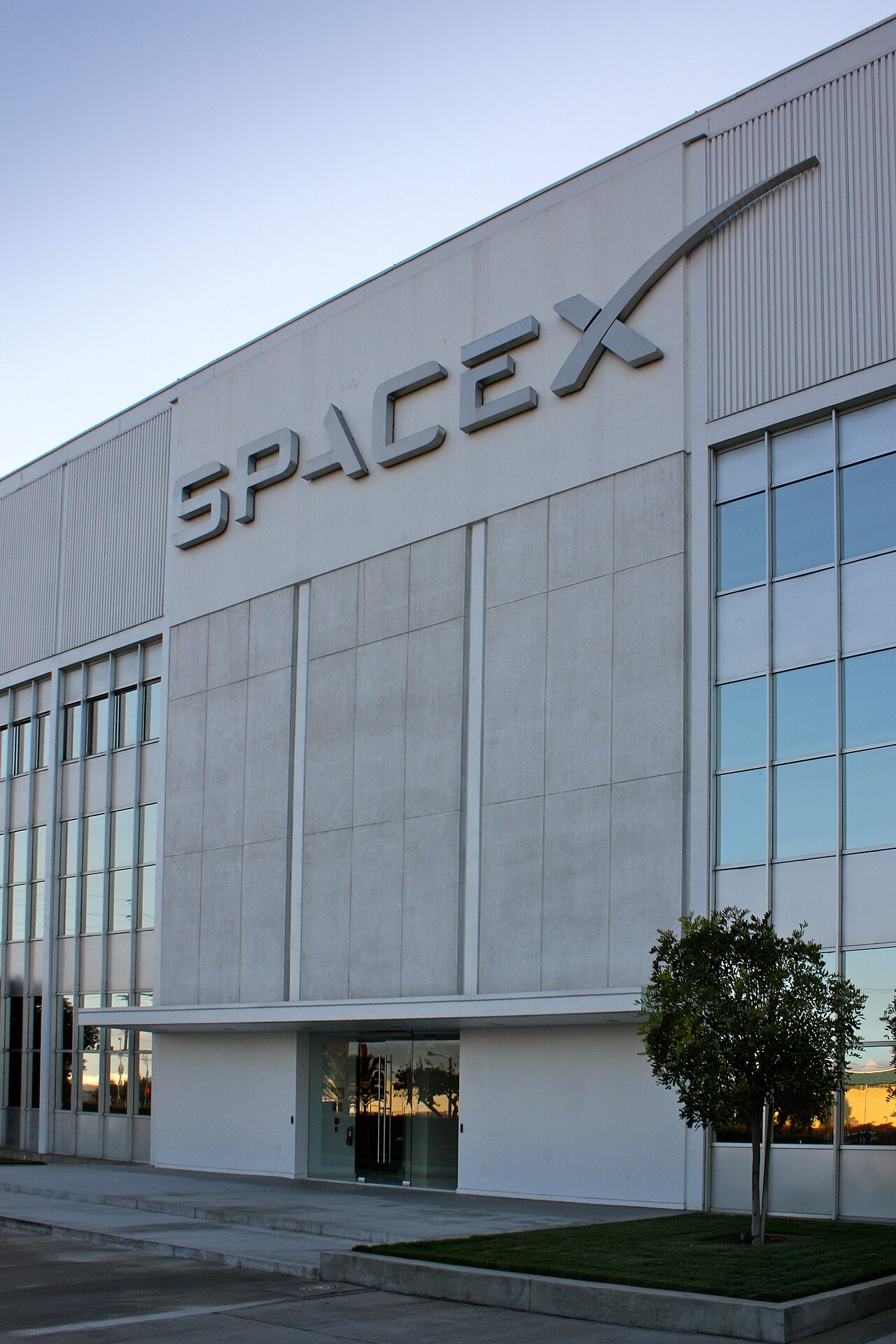
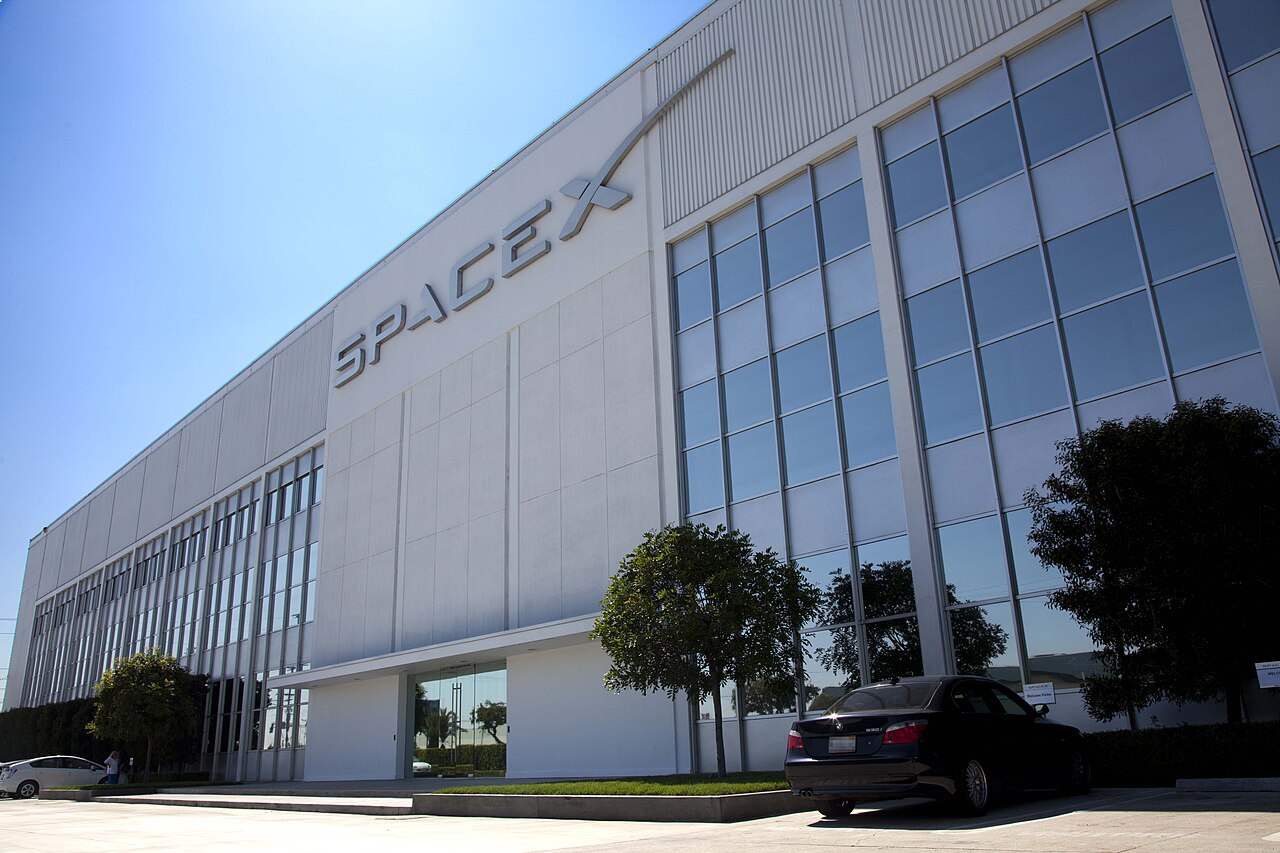
Header image: the entrance to SpaceX headquarters in Hawthorne, California, by Bruno Sanchez-Andrade Nuño via Wikimedia Commons, licensed under CC BY 2.0. In-body photograph of the SpaceX Hawthorne headquarters and factory building, by SpaceX via Wikimedia Commons, released as CC0 / public domain.