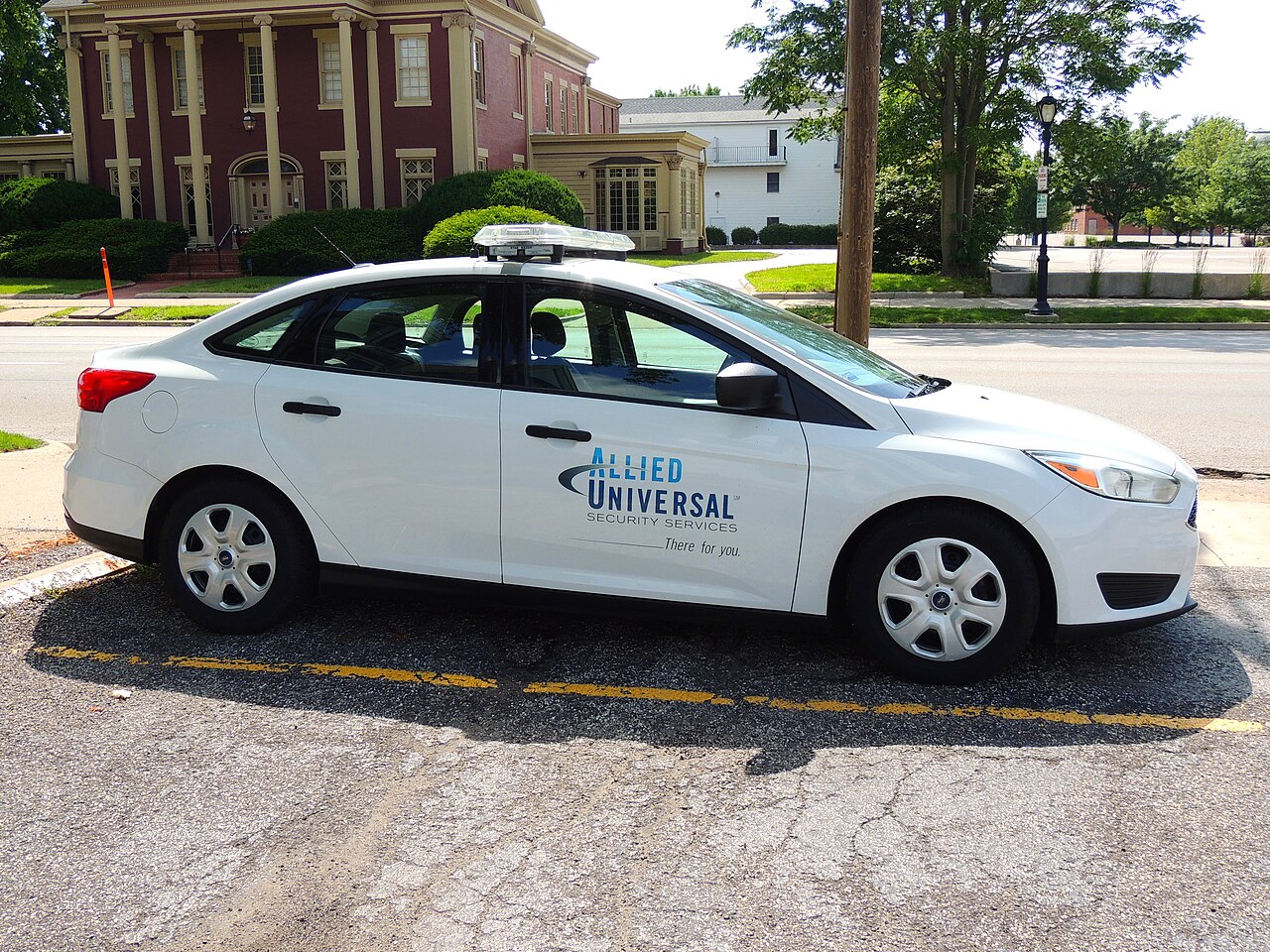
SoftBank Group is considering acquiring Allied Universal, the largest US security services company, according to a Bloomberg report published on October 16, 2026 and relayed by Investing.com. The report, which cites people familiar with the matter, says equity value could reach about $18 billion and that roughly $12 billion in publicly traded debt could bring the total transaction value close to $30 billion. It also says no final decisions have been made on a deal or its price. Neither SoftBank nor Masayoshi Son is quoted on the record; Son's views are attributed to Bloomberg's reporting.
How the reported Allied Universal value is built up
US dollars in billions, as reported from people familiar with the matter. SoftBank has not confirmed a bid.
The logic: a customer base for robots
The unusual part of the report is the rationale. The report says a deal could help Son extend AI from software and data centers into physical-world operations. Security work is labor-heavy, so it could serve as a testing ground for robots from SoftBank's portfolio companies. Bloomberg reported that Son sees robot fleets possibly replacing human guards at one-off events such as concerts, when the economics work. Allied's existing client base could let SoftBank deploy automation without building customers from scratch.
That framing resembles a pattern seen elsewhere in physical AI: building a robot is one challenge, and finding paying deployments with enough variety and volume to improve it is another. An incumbent services business supplies the second half. Whether owning the services company is a better route than partnering with it is a question the report does not answer.

What Allied Universal does
The report describes Allied Universal as a closely held company providing security personnel for businesses, events and infrastructure, including New York City's subway through contracts with the Metropolitan Transportation Authority. It also offers intelligence analysis, canine units and bomb technicians, along with cleaning, janitorial and facility maintenance. The report notes a significant presence in security for data center developments, which links to the other half of SoftBank's AI strategy.
That breadth matters for the robotics thesis. Some tasks, such as patrolling a defined space or monitoring a perimeter, are plausible candidates for automation. Others, such as emergency response and judgment-based situations, are the kind the report notes may be hard to automate fully. A company with a spread of such tasks gives a buyer a map of where automation could apply first and where it would not.
Security work is labor-heavy, so it could serve as a testing ground for robots from SoftBank's portfolio companies.
Bloomberg report, as summarized by Investing.com
The financing context
A $30 billion total, if it materialized, would arrive alongside other large SoftBank commitments. SoftBank has recently turned to debt markets, including a junk-bond sale reported in September to fund large-scale AI investments (see our coverage of SoftBank's junk bond sale). The Allied report does not describe a financing structure. The roughly $12 billion of debt is described as publicly traded debt that could be included in the total value, which usually indicates debt assumed or refinanced rather than new money.
Open questions
- Will a deal happen? Bloomberg reports that no decisions have been made on a deal or its price, so this is exploratory.
- What is the workforce effect? The report does not state Allied's headcount, so the scale of any labor substitution cannot be measured from the coverage reviewed.
- How much of the work can robots do? The article itself says complex security tasks and emergency responses may be difficult to automate fully.
- Why own rather than partner? Ownership gives control over deployment data and contracts but adds a large, low-margin services business to a portfolio focused on technology.
How to read it
The story is less about security guards and more about a question facing every robotics developer: where does the training and deployment data come from? Acquiring a labor-intensive services company is one answer, and it carries operating, labor and reputational considerations that a pure software deal does not. For readers following the AI infrastructure and physical AI stack, the signal worth tracking is whether this report becomes a formal approach. For teams building with AI today, the nearer-term takeaway is that deployments in the physical world are being treated as a strategic asset in their own right. Tools such as Metir AI address the software side of that shift, helping teams use whichever model fits a task without rebuilding around one vendor.
Sources:
- SoftBank weighs $30 billion Allied Universal deal as Son eyes security robots | Investing.com (citing Bloomberg)
- SoftBank's junk-bond sale reportedly carries yields of nearly 10% | Digg
Image credits
Header image: an Allied Universal patrol vehicle, by Asher Heimermann, via Wikimedia Commons, licensed under CC BY 3.0. In-body photograph: Masayoshi Son with Henna Virkkunen, 12 May 2025, European Communities 2025 / EC Audiovisual Service, via Wikimedia Commons, licensed under CC BY 4.0. Both are illustrative and unrelated to the report's events.