On March 26, 2026, Shield AI announced a $1.5 billion Series G at a $12.7 billion post-money valuation, alongside a separate $500 million preferred-equity investment from Blackstone, for a combined $2 billion raise. The valuation was up 140% from the $5.3 billion the company was worth just twelve months earlier. It is not, on its own, a July 2026 story, but it is the deal that best frames one: the months since have brought a run of similarly large autonomy and defense-AI rounds, culminating in a ten-day stretch in mid-July when Quantum Systems and Helsing alone drew roughly $3 billion in fresh venture capital. This piece looks at what Shield AI actually builds, places its raise inside that wider 2026 wave, and lays out, neutrally, both the demand-side logic driving the money in and the open questions the category still has not answered.
What Shield AI builds
Shield AI is not a drone company that added AI on top; the AI is the product. Its Hivemind software is an autonomy stack meant to let uncrewed aircraft fly, navigate and coordinate missions without a remote pilot or GPS, an increasingly important property in environments where satellite navigation and communications links can be jammed. Hivemind has flown in more than two dozen different aircraft types, according to Shield AI, and in February 2026 the U.S. Air Force selected it as a software provider for its Collaborative Combat Aircraft program, the drone-wingman effort meant to fly alongside crewed fighters. Notably, the Air Force structured that selection so Hivemind will also integrate with Anduril's competing Fury autonomous jet, an early sign that the Pentagon intends to buy autonomy software from more than one vendor rather than standardize on a single supplier.
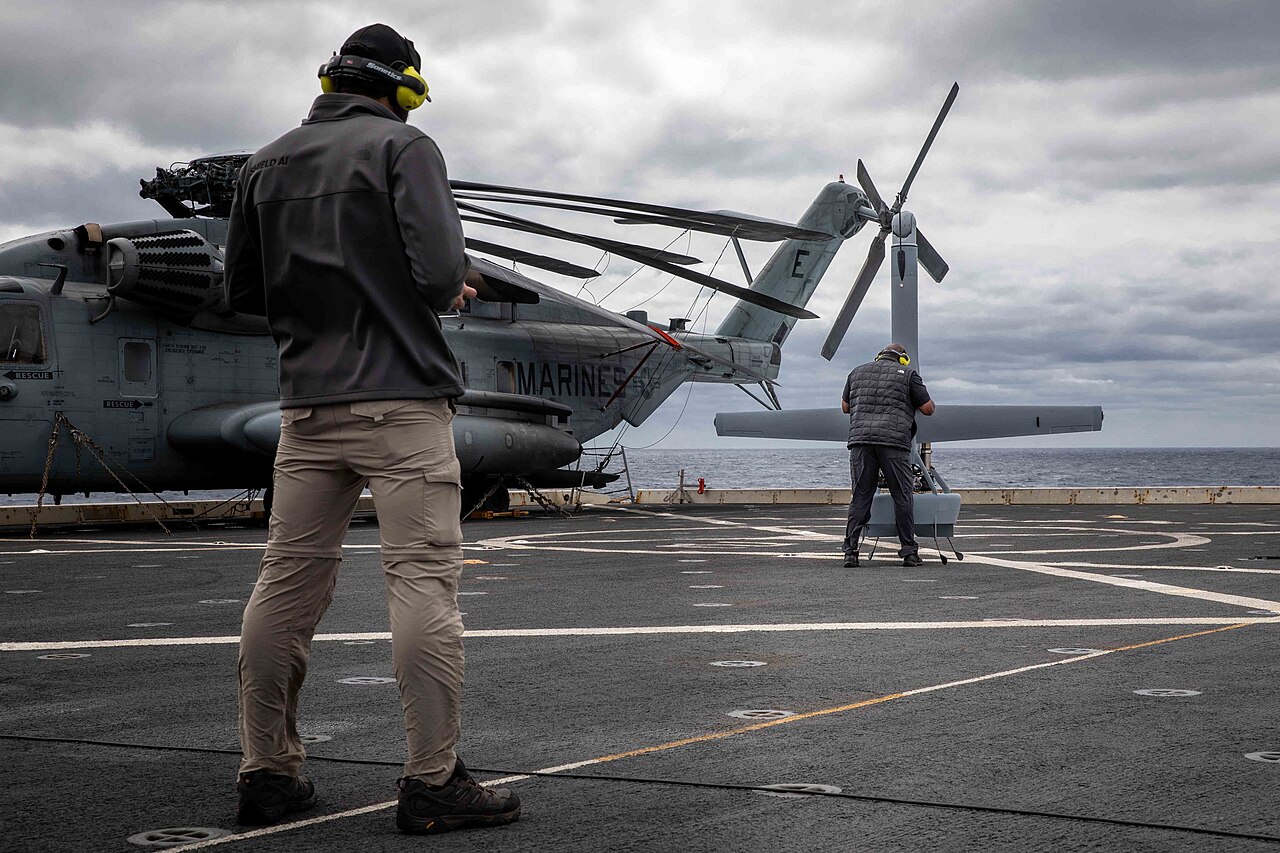
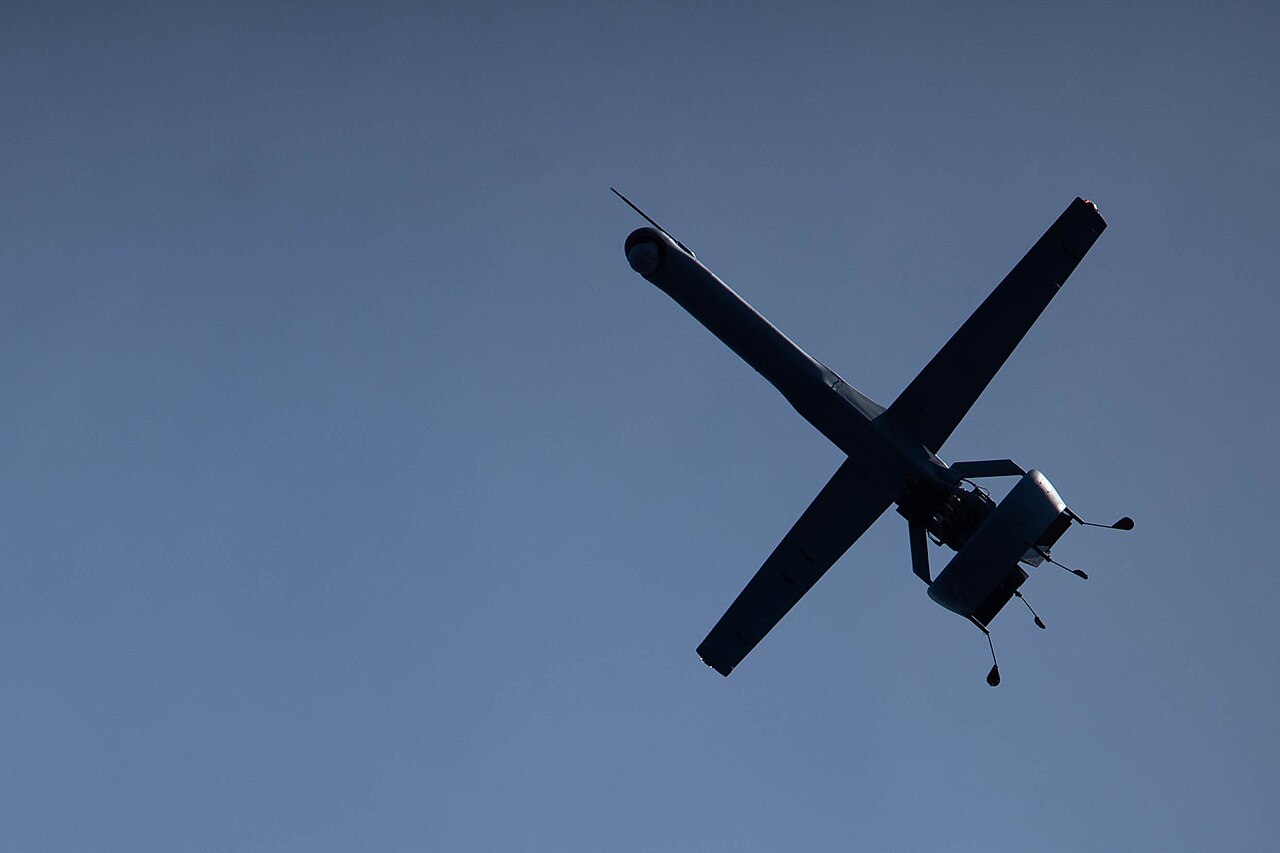
The company's flagship hardware is the V-BAT, a tail-sitting vertical-takeoff drone that needs no runway or launch equipment, already deployed for surveillance from U.S. Navy ships. In October 2025 Shield AI unveiled the X-BAT, a larger, jet-powered, VTOL-launched aircraft pitched as an autonomous fighter-class platform with a reported range near 2,000 nautical miles and a ceiling above 50,000 feet, extending the V-BAT's autonomy software into a faster, higher-flying, weapons-capable airframe. Series G proceeds are earmarked partly for that program and partly for the acquisition of Aechelon Technology, a flight-simulation firm whose software Shield AI says will accelerate Hivemind testing; that acquisition closed on June 22, 2026.
The wave Shield AI sits inside
Shield AI's raise was the first of five multi-billion-dollar autonomy and defense-AI rounds disclosed across 2026 so far. Saronic, which builds autonomous surface ships, closed a $1.75 billion Series D at a $9.25 billion valuation on April 7. Anduril followed on May 13 with a $5 billion Series H that doubled its valuation to $61 billion, on the back of reported 2025 revenue of $2.2 billion. Then came the July cluster: Quantum Systems, a German multi-domain autonomy firm, raised $1.2 billion on July 3, and Helsing, also German, raised $1.8 billion on July 13, together pulling in roughly $3 billion of disclosed defense-AI venture capital in a single week, according to Crunchbase's weekly funding tracking.
Five multi-billion-dollar rounds in five months
Selected disclosed AI-first defense and autonomy venture rounds, March through July 2026. Quantum Systems and Helsing (highlighted) landed ten days apart in July.
Disclosed round sizes by announcement month, 2026. Not exhaustive; selected to show the pace and scale of the wave leading into July.
By early June, before the July cluster even landed, defense-tech startups had already raised more than $14.6 billion for the year, surpassing the $9.6 billion raised across all of 2025, per Crunchbase's sector tracking. Layered on top of the private capital is a matching shift in public demand: the Pentagon's fiscal 2027 budget request would take the little-known Defense Autonomous Warfare Group from $225 million in FY26 to $54.6 billion, one of the largest single line-item jumps outside the traditional service budgets, according to Inside Defense's reporting on the request filed in April 2026. Private investors are not just betting that autonomy will matter eventually; they are pricing in a buyer that has already put a number on it.
Shield AI's valuation, three financings
Reported post-money valuation at Shield AI's last three primary rounds. The jump from Series F to Series G, 140% in twelve months, is the steepest leg of the climb.
Post-money valuations at each disclosed primary round. Private valuations reflect what the marginal investor paid in that round, not an independently audited market price.
The wave is not confined to funding rounds. On July 20, at the Farnborough International Airshow, Anduril and eVTOL maker Archer unveiled Thunder, a jointly developed autonomous attack rotorcraft designed to fly alongside crewed Apache and Cheyenne helicopters on strike, reconnaissance and logistics missions. Thunder is not itself a financing event, but it is evidence that the capital raised earlier in the year is already surfacing as hardware, not just headlines, and that the dual-use logic, the same autonomy and tiltrotor technology serving both defense and commercial aviation, is now a deliberate design choice rather than a side effect.
A company whose central product is autonomy software that improves with flight hours is being underwritten on a technology curve, not a shipbuilder's.
Framing echoed across 2026 defense-AI financings, including Shield AI's, Saronic's and Helsing's
Why now, and why this fast
Three forces are compounding. The first is policy: rising defense budgets on both sides of the Atlantic are explicitly earmarked for modernization and autonomy rather than legacy platforms, and the Pentagon's own FY27 request shows that demand is not a talking point but a line item. The second is technical: the perception, planning and coordination advances that made commercial AI systems useful transfer relatively directly to contested, communications-denied environments, which is exactly the setting Hivemind and its peers are built for. The third is capital rotation: a generation of investors and engineers who once avoided the sector on ethical or return grounds has re-entered it, evidenced by the roster of growth funds, banks and even a strategic pension manager anchoring these rounds.
What the money does not settle
A neutral read has to hold the harder questions alongside the scale of the checks. The most consequential is where a human sits relative to autonomous targeting and strike decisions as software like Hivemind takes on more of the sensing and coordination once done by a pilot; companies in the category, Shield AI included, emphasize human oversight, but the precise boundary between decision-support and decision-making remains an active, unresolved debate among militaries, governments and ethicists, and a funding round does not settle it.
There are commercial caveats too. None of Shield AI, Saronic or Quantum Systems has disclosed audited revenue alongside its valuation, so the growth implied by these prices is, for now, a bet rather than a demonstrated trajectory. The U.S. Air Force's decision to dual-source Hivemind and Fury on the same program suggests the Pentagon wants competitive tension rather than a single winner, which could compress margins for any one vendor even as the category as a whole keeps growing. And government procurement, even when accelerated, still moves on multi-year qualification cycles; a software-style valuation implies software-style growth, and whether autonomy programs can compound at that pace against defense-buying timelines is exactly what the next few years will test.
The takeaway
Shield AI's $12.7 billion valuation is a real, well-documented data point, not a July 2026 event on its own, but it is the clearest early marker of a defense-AI funding wave that has only accelerated since: Saronic in April, Anduril in May, then Quantum Systems and Helsing within days of each other in July, against a Pentagon budget request that would grow one autonomy program office more than 240-fold in a single year. That is a genuinely large reallocation of capital toward a genuinely hard set of questions about autonomy, oversight and how fast defense procurement can actually move. Both are true at once, and the honest position, as with any fast-moving, high-stakes technology category, is to track the money and the open questions with equal attention, since which one ultimately defines the story is still being decided. That same discipline, evaluating a fast-moving technology on its capability and its unresolved tradeoffs rather than on hype alone, is the same lens worth applying to AI tooling generally; it's part of why a model-agnostic workspace like Metir AI is built to let teams evaluate and switch between AI systems on their merits, rather than commit to any one vendor's narrative.
Sources:
- Shield AI to acquire software simulation company Aechelon and raise $2B at $12.7B valuation | Shield AI
- Defense startup Shield AI lands $12.7B valuation, up 140%, after US Air Force deal | TechCrunch
- Shield AI Raises $2 Billion, Doubling Valuation to $12.7 Billion | Bloomberg
- Shield AI closes $1.5B Series G round and moves on acquisition | Washington Technology
- Shield AI completes acquisition of Aechelon Technology | Shield AI
- Shield AI raises $200M at a $2.7B valuation to scale military autonomous flying tech | TechCrunch
- Shield AI unveils X-BAT autonomous vertical takeoff fighter jet | Defense News
- Saronic Closes $1.75B Series D at $9.25B Valuation to Accelerate a New Era of Maritime Autonomy | PR Newswire
- Anduril raises $5B, doubles valuation to $61B | TechCrunch
- Anduril doubles valuation to over $60 billion as defense tech funding boom continues | CNBC
- Quantum Systems Raises $1.2B to Scale Autonomous Defense Systems | The Defense Post
- Helsing raises US$1.8bn in Series E | Helsing
- Europe's Anduril rival Helsing raises $1.8 billion at $18 billion valuation | CNBC
- Sector Snapshot: Defense Startup Funding Hits An All-Time Record As VCs Begin To Eye Exits | Crunchbase News
- Funding for new autonomous drone warfare group slated to skyrocket to $54.6B in FY-27 | Inside Defense
- Thunderstruck: Anduril unveils autonomous attack rotorcraft | Defense News
- Anduril and Archer Unveil Jointly-Developed Autonomous VTOL Platform For Commercial and Defense Applications | Archer Aviation
Image credits
Header image: A Shield AI V-BAT unmanned aircraft being prepared for launch aboard the USS Arlington (LPD 24) in the Atlantic Ocean, March 25, 2022, with a contractor wearing a "Shield AI" branded jacket visible in the foreground. U.S. Navy photo by Mass Communication Specialist 1st Class John Bellino, via Wikimedia Commons, public domain. In-body photograph: a Shield AI V-BAT drone in flight above USS Rushmore (LSD 47) in the Philippine Sea, August 24, 2022. U.S. Marine Corps photo by Lance Cpl. Manuel Alvarado, via Wikimedia Commons, public domain.