On August 5, 2026, teams in the rust-lang/rust repository adopted a policy governing how large language models may be used in contributions to the language's core codebase. The framing that spread fastest, that Rust "banned AI code," is not quite what happened. The policy permits a wide range of assistive uses and restricts a narrower set of them: it draws a line at letting a model author the artifacts that get merged, or letting a model's review stand in for a human's. It applies to the core repository and the teams that adopted it, not to the entire Rust project, and it is explicitly not an official project-wide stance on AI.
The distinction matters because the reasoning behind the policy is more interesting than the headline. Rust's maintainers did not frame this as a philosophical objection to AI. They framed it as a response to a practical problem: a rising volume of low-effort, machine-generated contributions that consume scarce reviewer attention without adding proportional value. That is a governance and bandwidth question as much as a technology question, and it is one that every large open-source project is now facing.
 Anthropic
 OpenAI
 Google
What the policy actually permits and restricts
The clearest way to read the policy is as a line between assistance and authorship.
Where the line falls: assist yes, author no
The policy does not ban AI tools. It draws a line between using a model to help a human contributor and letting a model author the artifacts that get merged or make the merge decision.
- Answering questions and explaining code
- Analyzing or summarizing code and threads for private use
- Private code or prose review by a contributor
- Suggesting possible solutions a human then authors
- Comments or PR descriptions written by an LLM
- Documentation and doc comments originally authored by an LLM
- Non-trivial source, safety and multi-paragraph comments
- Compiler diagnostic messages authored by an LLM
- Treating an LLM review as sufficient grounds to merge or reject
Summarized from the policy adopted by teams in rust-lang/rust. Sources: Inside Rust Blog, Socket.dev, rust-lang/rfcs, August 2026. Applies to the core repository, not the whole Rust project.
On the permitted side, contributors may use LLMs to answer questions, analyze and explain code, summarize threads for private use, review their own code or prose privately, and suggest possible solutions that a human then writes up. These are uses where the model helps a person think and the person remains the author.
On the restricted side are uses where the model produces what gets merged or makes the call on merging: comments and pull-request descriptions written by an LLM, documentation and doc comments originally authored by a model, non-trivial source comments including safety and multi-paragraph comments, compiler diagnostic messages, and, notably, any workflow where an LLM review is treated as sufficient grounds to merge or reject a change. The policy also asks for disclosure of LLM use and applies stricter testing expectations to machine-assisted contributions.
The line is between a model helping a human think and a model authoring what gets merged.
On the structure of the policy
Why maintainer bandwidth is the real issue
The motivation the maintainers gave is telling: people mechanically copy-pasting to and from an LLM is a waste of the project's time. The problem is not that AI-generated code is always wrong. It is that generating a plausible-looking contribution has become nearly free, while reviewing one still costs a human expert real time and attention. When the cost of producing a pull request collapses but the cost of reviewing it does not, the review queue is where the strain shows up.
This is an asymmetry that open source is uniquely exposed to. Volunteer maintainers are the scarce resource, and their attention does not scale with the volume of submissions. A policy that restricts machine-authored comments, documentation, and diagnostics, and that forbids treating an automated review as a merge decision, is a way of protecting that attention. It keeps a human accountable for the parts of a change where judgment and long-term maintainability matter most, and where a fluent but shallow machine output is hardest to catch in review.
What it signals about AI-written code
Rust is an influential project, and its choices tend to be studied by others, so the policy is worth reading as a signal rather than an isolated rule. The signal is not "AI coding tools are unwelcome." Most of the assistive uses that developers actually rely on day to day, asking a model to explain a function, draft a solution, or review a diff privately, remain permitted. The signal is narrower and more durable: as the volume of machine-generated contributions rises, projects will draw explicit lines about where a human must remain the author of record and the final reviewer.
That is a maturation of norms rather than a rejection of the tools. Early in a technology's adoption, informal etiquette is enough. As usage scales, projects write the etiquette down, add disclosure requirements, and specify where accountability sits. Rust is doing that in public, and its version of the line, assist freely, but a human authors what merges and makes the merge decision, is a reasonable candidate for how other large projects settle the same question.
Reading it in context
A growing list of open-source projects has published AI-contribution policies over the past two years, and they vary widely, from near-total bans to detailed disclosure regimes. Rust's is notable for being specific about the boundary rather than blanket in either direction. It reflects a field-wide recalibration: the initial rush to either embrace or forbid AI coding is giving way to targeted rules about authorship, disclosure, and review responsibility.
For teams deploying AI coding tools inside their own organizations, the useful lesson is portable. The value of these tools is highest when they accelerate a human who stays accountable for the result, and the risk is highest when generated output is merged without a human owning it. Building that boundary into a workflow, clear on where the model assists and where a person must author and review, is the same judgment Rust just formalized. Where AI helps in software work is a question of process design as much as tooling, and it is one worth answering deliberately rather than by default. It is the kind of workflow discipline platforms like Metir AI are built to support, keeping a human in the loop while the model does the heavy lifting.
The takeaway
What is verifiable: on August 5, 2026, teams in the rust-lang/rust repository adopted a policy that permits assistive LLM use, such as answering questions, analyzing code, and private review, while restricting LLM-authored comments, documentation, diagnostics, and pull-request descriptions, and forbidding any workflow that treats an automated review as sufficient grounds to merge or reject. It applies to the core repository, not the whole Rust project, and is not an official project-wide stance. The driving concern is maintainer bandwidth, not a rejection of AI, and the line it draws, assist freely but keep a human as author and reviewer, is a plausible template for how other large projects will handle the same pressure.
Sources:
- rust-lang/rust is adopting an LLM policy | Inside Rust Blog
- Rust Moves to Restrict LLM Use in Contributions After Months of Debate | Socket
- Rust May Limit AI-Generated Work in Its Core Repository | Linuxiac
- Add contribution policy for AI-generated work, PR #3950 | rust-lang/rfcs
- Project-wide LLM policy, PR #3959 | rust-lang/rfcs
Image credits
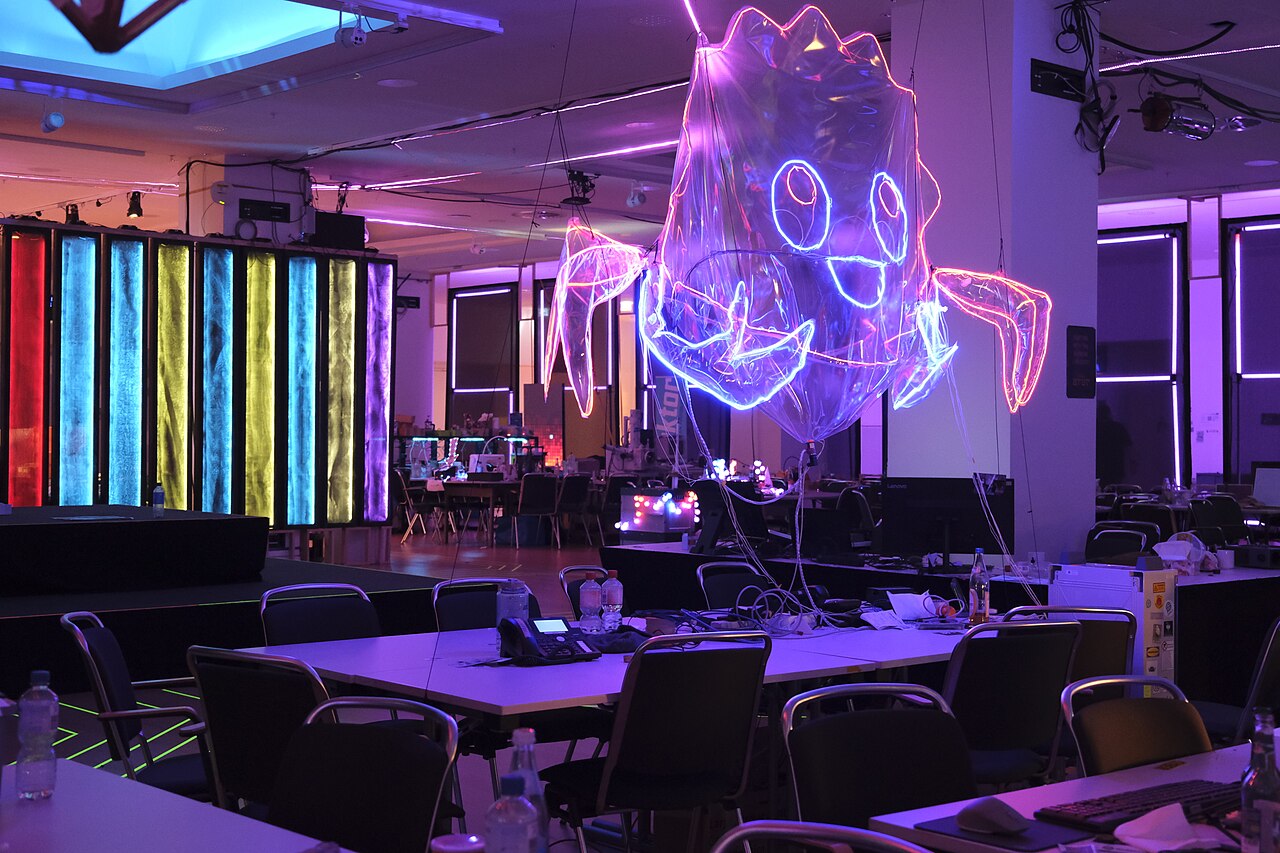
Header and in-body image: a blow-up Ferris at the Rust Programming Language assembly at a Chaos Communication Congress, by Igloo22225 via Wikimedia Commons, licensed under CC BY 4.0. Depicts the Rust community mascot. Reviewed before use.