On September 7, 2026, Alibaba's Qwen team released Qwen-Drive-1.0, a vision-language model built specifically for autonomous driving, and put the code, the weights and demo data out under the Apache 2.0 license. The headline is not that a big lab built a driving model. It is that a big lab open-sourced one, at a size small enough to actually run, in a field where the strongest systems are usually locked inside carmakers and robotaxi companies.
 Qwen
QwenThe model is deliberately modest in scope. Its own paper, published on arXiv as work with researchers from Huazhong University of Science and Technology, calls it "an initial step" toward a vision-language foundation model for driving. That framing is worth respecting rather than inflating. This is not a claim to have solved self-driving. It is a claim to have shown that a general vision-language model can be turned into a competent driving model without throwing away what made it general, and to have handed the recipe to everyone.
What Qwen-Drive-1.0 actually is
Qwen-Drive-1.0 is a 4-billion-parameter model that takes multi-camera images of a driving scene and does three things at once: it perceives the scene in 3D, it answers natural-language questions about it, and it plans where the vehicle should go next. Crucially, it does all of this on top of a largely intact Qwen3.5 vision-language backbone, rather than building a bespoke driving network from scratch.
One model, three jobs: perceive, reason, plan
Qwen-Drive-1.0 keeps a general vision-language backbone and adds driving-specific heads on top, rather than bolting a language model onto a separate driving stack.
The release ships two planning variants: one trained to imitate driving examples, one further tuned with reinforcement learning.
Two components sit on top of that backbone. A BEV perception head, where BEV means bird's-eye view, jointly handles 3D object detection, semantic occupancy prediction, and map segmentation, the spatial understanding a car needs to know what is around it and where. A planning expert then conditions on the shared model representations to generate the vehicle's future trajectory, the actual path it intends to drive. The release includes two versions of that planner: one trained to imitate human driving examples, and one further optimized with reinforcement learning.
The design choice that makes it interesting
The most technically interesting decision is what Qwen-Drive-1.0 refuses to give up. A recurring problem when you specialize a general model is catastrophic forgetting: teach it a narrow skill and it gets worse at everything else. A driving model that has forgotten how to reason about the world in general is brittle, because driving is full of rare, unlabeled situations where broad common sense is exactly what you need.
Qwen-Drive-1.0 tackles this with a staged training recipe that mixes driving supervision with general-purpose vision-language data, so the model acquires driving-specific competence while holding onto broad visual understanding and instruction-following. The reported result is that it stayed within about one point of the original Qwen3.5-4B average across ten general vision-language benchmarks. In plain terms, it learned to drive without unlearning how to see and reason generally.
The achievement is not a driving model that scores well. It is a driving model that learned to drive without forgetting how to reason about the world.
Metir AI analysis
That matters because it points at a general architecture for embodied AI: keep a strong, general vision-language core and attach task-specific heads for perception and control, rather than training a narrow model that can only do one thing. If that pattern holds, the same recipe extends beyond cars to robots and other physical systems, which is why a "modest" driving paper is getting attention well outside the autonomous-vehicle world.
Why open weights change the picture
Autonomous driving has been one of the most closed corners of AI. The best perception-and-planning stacks live inside Waymo, Tesla, the Chinese robotaxi firms and a handful of carmakers, and none of them ship their models for others to study or build on. Academic labs and smaller companies have largely had to work with datasets and partial components, not full, capable models.
An open-weight driving model under a permissive license changes the starting line. A university lab can study exactly how the planner makes decisions. A startup can fine-tune it on its own fleet data instead of training from zero. A safety researcher can probe its failure modes directly rather than guessing from the outside. Apache 2.0 specifically allows commercial use and modification, which is what makes it more than an academic curiosity. None of this makes Qwen-Drive-1.0 competitive with a production robotaxi stack today, and the paper does not claim it is. What it does is lower the floor for everyone else and create a shared reference that the field can push forward together.
The strategic read
It is worth naming the context without overstating it. Alibaba is one of several Chinese labs that have made open weights a deliberate strategy this year, releasing capable models openly across language, vision and now driving. There are plausible commercial and ecosystem motives behind that, and reasonable people read the strategy differently. What is not in dispute is the effect: a growing share of the openly available, capable models in circulation now come from Chinese labs, and Qwen-Drive-1.0 extends that pattern from chatbots into physical AI.
For the rest of the field, the practical consequence is more optionality. Teams building perception or planning systems have another strong, inspectable baseline to start from, and one they can run and modify freely. The same openness that has reshaped the language-model landscape, where developers increasingly pick from a wide menu of open and closed models depending on the task, is now arriving in embodied AI. Platforms that give teams unified access across many models, including Metir AI on the general-purpose side, exist because that menu keeps getting longer and no single model wins every job. Qwen-Drive-1.0 is a sign that the menu is expanding into new domains, not just getting deeper in the ones we already had.
The honest caveats
A few things keep this in proportion. Qwen-Drive-1.0 is small and explicitly an early step, not a deployable driving system. Its performance on driving-specific benchmarks, and how it compares to closed production stacks, is the number to scrutinize as independent evaluations come in, and a 4-billion-parameter research model is not going to match a system tuned on millions of real-world miles. Open weights lower the barrier to studying and building on a model; they do not on their own make that model safe to put on a public road. The right way to read this release is as infrastructure for the field, a capable, inspectable, freely usable foundation to build and test on, rather than a finished product.
The takeaway
Qwen-Drive-1.0 is a small, open-weight driving model that does something quietly important: it shows a general vision-language model can be specialized for driving without losing its general reasoning, and it releases the whole recipe under a permissive license in a field that has been almost entirely closed. It will not drive a robotaxi tomorrow, and it does not claim to. But by lowering the starting line for researchers and startups, and by extending the open-weights wave from language into physical AI, it is the kind of release whose impact shows up in what other people build on top of it.
The model menu keeps getting longer
Open-weight releases like Qwen-Drive-1.0 are a reminder that no single model wins every task. Metir AI gives you one workspace with unified access to leading models from Alibaba's Qwen, OpenAI, Anthropic, Google and xAI, so you can pick the right one for each job instead of betting on one. Try Metir AI free.
Sources:
- Qwen-Drive-1.0: An Initial Step towards a Vision-Language Foundation Model for Autonomous Driving (arXiv 2609.00111)
- Alibaba's Qwen releases open-source model for autonomous driving (TechNode)
- Qwen/Qwen-Drive-1.0-4B (Hugging Face)
- QwenLM/Qwen-Drive-1.0 (GitHub)
Image credits
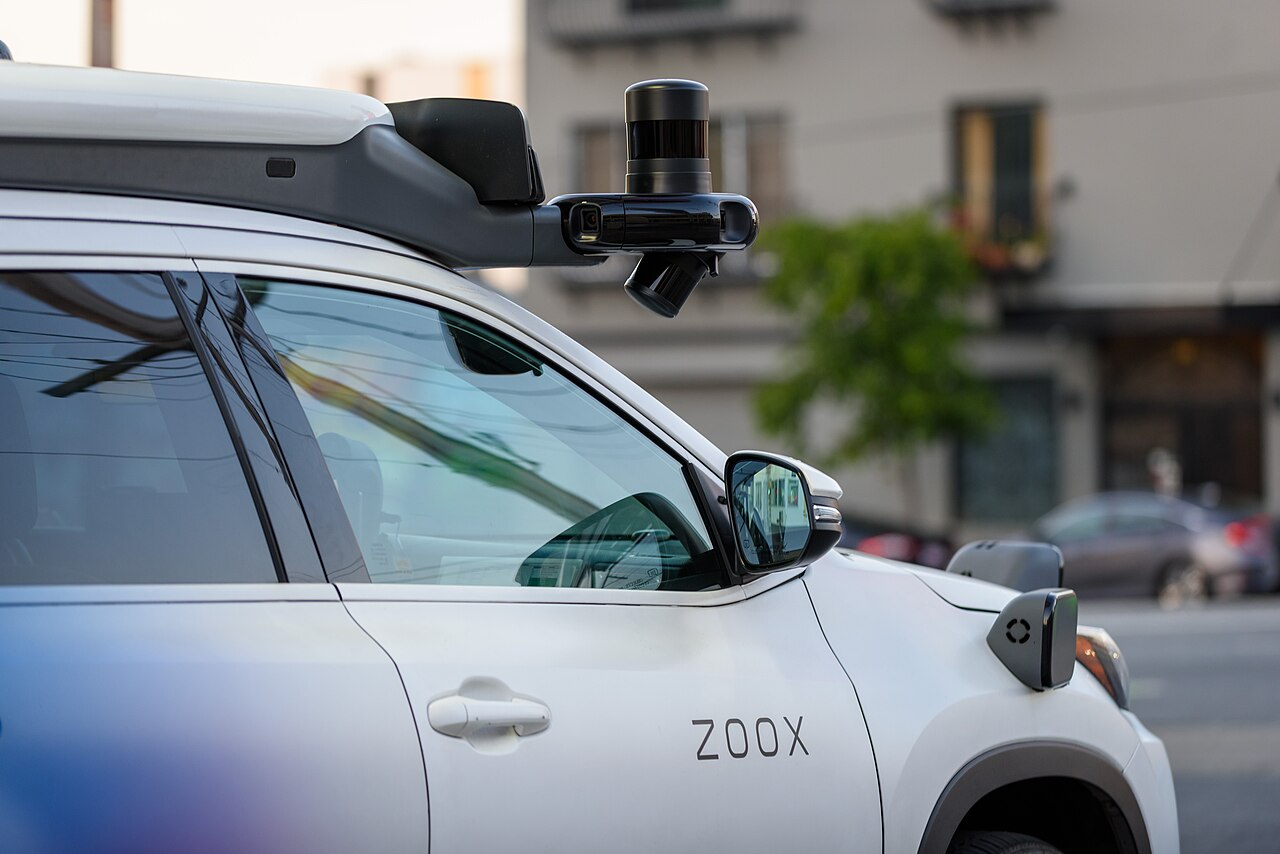
Header image: a close-up of a Zoox autonomous test vehicle's lidar and camera sensor pod in San Francisco, photographed by user 9yz via Wikimedia Commons, licensed under CC BY 4.0. The vehicle shown is a Zoox test car, not a Qwen deployment; it illustrates autonomous-driving sensor hardware.