
On August 14, 2026, Pony.ai and Uber announced an expansion of their partnership to deploy more than 2,000 Pony.ai robotaxis across Europe. The service starts from Zagreb, Croatia, where a commercial robotaxi operation is already running and is described as coming to the Uber app, and extends to four additional European cities that the companies declined to name. They also flagged plans for the Middle East. No deployment timeline was given, only that details would arrive in phases.
The headline number is worth handling carefully. "More than 2,000 robotaxis" is a target, not a fleet on the road today, and the absence of named cities or dates means the announcement is a statement of intent backed by an existing beachhead in Zagreb. What makes it more than a press release is the structure underneath it, which is a useful window into how autonomous driving is actually being scaled in 2026: not by one company doing everything, but by splitting the problem three ways.
The three-party model
The deal divides the work along clear lines. Pony.ai supplies the Level 4 autonomous driving technology and the vehicles. Uber provides the demand side: the app, the riders, and the matching that keeps cars utilized. Local fleet partners handle the physical operations, the depots, charging, cleaning, and maintenance that a robotaxi fleet needs every single day. In Zagreb, that local operator role has been filled by Verne, and the earlier launch there was billed as Europe's first commercial robotaxi service.
A three-party split, not a single operator
The expanded deal keeps each company doing what it already does. No one party owns the whole stack, which is the point: it lets the rollout scale city by city without any single firm building everything.
Level 4 self-driving system and the robotaxi vehicles
Rider demand, the app, and matching
Depots, charging, cleaning, day-to-day operations
The companies did not name the four additional cities or give a deployment timeline, saying details would come in phases.
This division is not incidental. It reflects a hard-won lesson from the first decade of autonomous vehicle development: the self-driving system is necessary but not sufficient. A company can solve the perception and planning problem and still fail to run a profitable service, because the economics live in utilization and operations. Uber brings a demand network it spent fifteen years building. Local partners bring ground operations that would take an outside company years to stand up in each new city. Pony.ai brings the part that is genuinely novel, the driving. Splitting the stack lets each piece scale on its own timetable.
The self-driving system is necessary but not sufficient. The economics of a robotaxi live in utilization and operations, not only in the driving.
On scaling autonomy
Why Europe, and why now
Most of the visible robotaxi progress of the past few years has been in the United States and China. Europe has lagged, held back by fragmented regulation, dense historic city centers, and a cautious approach to removing safety drivers. Starting in Zagreb rather than a megacity is a telling choice: a smaller, more contained market is a lower-risk place to prove the operational model before attempting the harder, denser cities.
For Uber, the logic is defensive as well as offensive. Uber's long-term risk is that autonomy makes the human-driver network it depends on obsolete, and that the companies building the self-driving systems go direct to riders. By becoming the demand layer for multiple autonomy providers, Uber turns that threat into a supply relationship: whoever builds the best robotaxi still needs riders, and Uber has them. The Pony.ai deal sits alongside similar arrangements Uber has struck with other autonomy companies, which is the pattern to watch. Uber is assembling a portfolio of providers rather than betting on one.
What the announcement does not settle
Several things are deliberately vague, and it is worth being precise about them rather than filling the gaps. The four additional cities are unnamed. There is no date for when the 2,000-vehicle figure is reached, or how quickly it ramps from the current Zagreb operation. The regulatory approvals required to run driverless vehicles differ country by country in Europe, and the announcement does not claim they are all in hand. "More than 2,000 robotaxis across Europe" is best read as the ceiling of the ambition, not a committed schedule.
The unit economics are also unproven at this scale. Robotaxi services have struggled to turn the promise of removing the driver into actual profit, because the cost of the vehicle, the sensors, the remote-assistance staff, and the ground operations is substantial. Whether a distributed three-party model lowers that cost enough to work in mid-sized European cities is exactly the question the Zagreb-and-beyond rollout will answer, and it will answer it slowly.
The physical-AI angle
Step back and this is a concrete example of a broader theme in 2026: AI moving off the screen and into the physical world. A robotaxi is an AI system that has to perceive, decide, and act in real time, with no tolerance for the kind of error a chatbot can shrug off. The models involved are different from the large language models that dominate most AI coverage, but the trajectory is the same, capability improving while the binding constraint shifts to deployment, cost, and reliability at scale.
That shift, from "can the model do it" to "can we run it everywhere it needs to run, affordably," is the recurring shape of AI maturing across every domain, physical and digital alike. In software, it shows up as the move from picking one impressive model to building systems that route work to whatever model or provider fits the task and the budget, and swap components as better options appear. Platforms designed around that flexibility, such as Metir AI, reflect the same operational realism that the Pony.ai-Uber structure does: the impressive core capability is only half the problem, and the durable advantage is in how reliably and cheaply you can deploy it. For robotaxis, that means the fleet operators and demand networks matter as much as the driving. For AI software, it means the plumbing around the model matters as much as the model.
The read
The Pony.ai-Uber expansion is a credible step, anchored by a real service in Zagreb, wrapped in ambition that outruns its confirmed specifics. The number to remember is not 2,000. It is the three-way split of roles, because that structure, autonomy provider plus demand network plus local operator, is emerging as the template for how driverless services actually reach new cities. Whether Europe proves fertile ground will be measured in the four cities still unnamed, over a timeline the companies have not yet committed to.
Sources:
- Pony.ai and Uber Expand Partnership to Deploy Over 2,000 Robotaxis in Europe | Uber Investor Relations
- Uber and Pony.ai plan to bring 2,000 robotaxis to Europe | TechCrunch
- Pony AI, Uber expand tie-up to deploy over 2,000 robotaxis in 5 European cities | CnEVPost
- Verne, Pony.ai, and Uber Partner to Launch Europe's First Commercial Robotaxi Service | Uber Investor Relations
- Uber ups robotaxi offensive in Europe, with partnership expansion | Tech.eu
Image credits
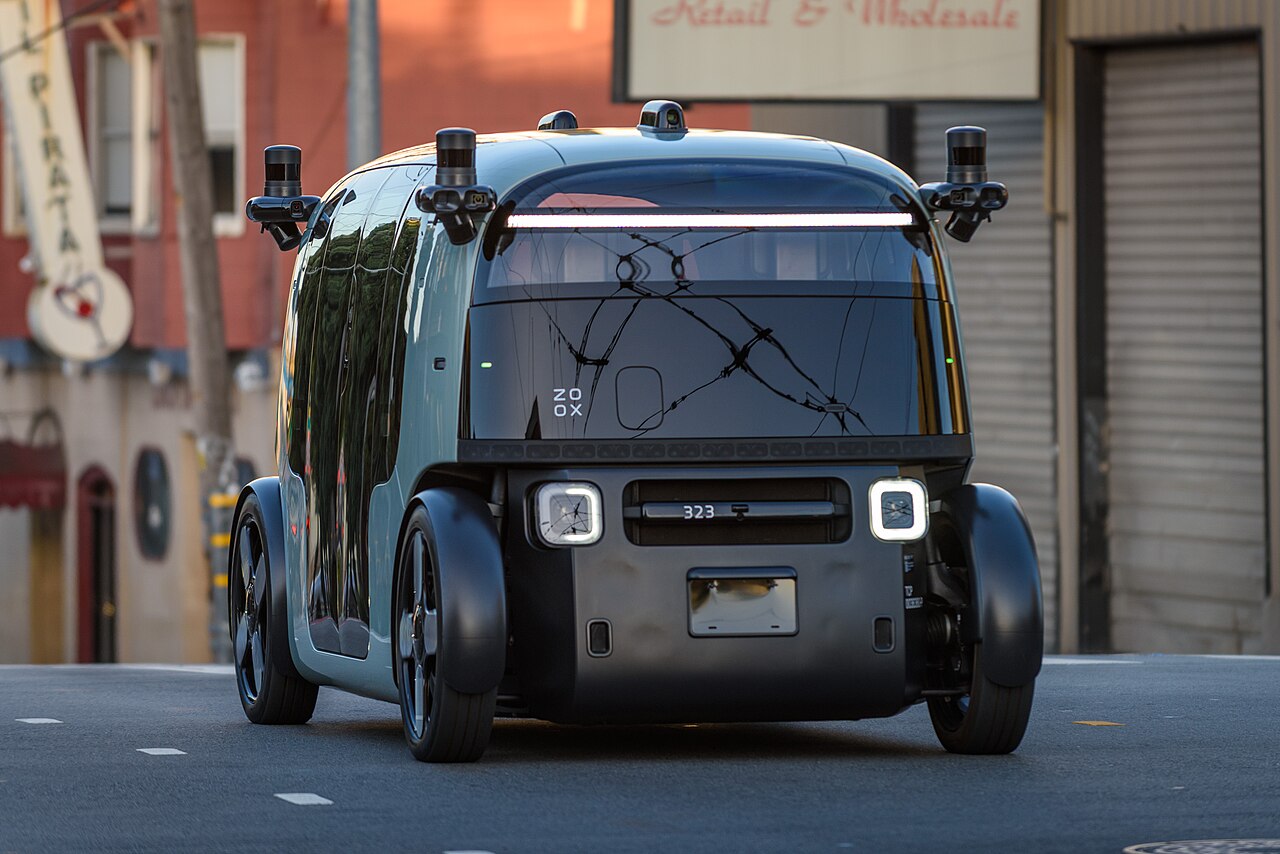
Header image: a view over central Zagreb, Croatia, the launch market for the Pony.ai-Uber European robotaxi service. By Zeitblick via Wikimedia Commons, licensed under CC BY-SA 3.0. In-body image: a Zoox autonomous robotaxi in San Francisco, used to illustrate the driverless vehicle category (it is not a Pony.ai vehicle). By 9yz via Wikimedia Commons, licensed under CC BY 4.0.