The first major antitrust challenge to Google's AI Overviews has failed at the pleading stage. US District Judge Amit Mehta of the US District Court for the District of Columbia dismissed the Penske Media Corporation lawsuit against Google, along with a parallel suit from education company Chegg, in a ruling reported on October 1, 2026 (Press Gazette; Engadget). The Google AI Overviews antitrust lawsuit argued that publishers had to accept AI summaries of their work as the price of appearing in search. The court's answer turned on a single line: "an expectation is not an agreement."
 Google
Mehta is the same judge who ruled in 2024 that Google maintained an illegal monopoly in online search (Engadget). That context makes the outcome worth reading closely: a finding that Google is a monopolist did not, on its own, carry these publisher claims.
Who sued, and what they claimed
Penske Media, which publishes Rolling Stone, Variety, Billboard, The Hollywood Reporter and Deadline, filed its complaint on September 12, 2025 (PPC Land). It alleged that Google uses its search monopoly to coerce publishers into letting their content be republished in AI Overviews, because the only way to opt out would be to leave Google Search entirely, which it called "devastating" (TechCrunch). Penske said search impressions and referrals had declined since AI Overviews launched and that its organic affiliate revenue had fallen by more than a third by the end of 2024 (Press Gazette).
Chegg sued earlier, in February 2025, in the same court. Its claims covered reciprocal dealing, monopoly maintenance and unjust enrichment, and it pointed to non-subscriber traffic that fell 49% in January 2025, compared with an 8% decline it had reported for Q2 2024 (Search Engine Roundtable). Google's spokesperson José Castañeda called the Penske claims "meritless" and said Google sends billions of clicks to sites every day (TechCrunch).
Why the Google AI Overviews antitrust lawsuit failed
According to Search Engine Journal, five types of claim were dismissed, each on different grounds:
| Claim | Theory | Why it failed, as reported |
|---|---|---|
| Reciprocal dealing | Google forces publishers to "buy" traffic by "selling" their content | No actual agreement was pleaded, only an expectation of traffic |
| Tying | AI Overviews are tied to search visibility | Search and AI Overviews not shown to be separate products with separate demand |
| Monopoly maintenance | Content deals entrench Google's search monopoly | Publishers lacked antitrust standing in the search market |
| Attempted monopolization and leveraging | Google is extending its power into new markets | No plausible markets or "dangerous probability" of monopolization pleaded |
| Unjust enrichment (California law) | Google profits from uncompensated content | Court declined jurisdiction once the federal claims fell, without ruling on merits |
The core of the opinion is the reciprocal dealing analysis. Penske and Chegg framed the relationship as a bargain: publishers supply content, Google supplies traffic, and AI Overviews broke the deal. Mehta held that they had not shown any actual agreement in which Google "promised to 'sell' Plaintiffs any specific amount of traffic" in exchange for "'buying' their content." He continued: "Plaintiffs have pleaded only that they have an 'expectation' that Google will send them search traffic if they make their content available for free. But an expectation is not an agreement. It is simply how a general search engine works" (Press Gazette).
An expectation is not an agreement. It is simply how a general search engine works.
Judge Amit Mehta, as quoted by Press Gazette
Press Gazette reports that the judge found publishers had "voluntarily acceded to cost-free crawling" rather than entering a mutual arrangement. That framing matters because antitrust law treats coercion inside a bargain differently from a company's unilateral design choices. Without a bargain, the claim becomes a complaint about how Google built its product, which is much harder to fit into the Sherman Act.
The tying claim had a related problem. A tie requires two distinct products, where buyers are forced to take one to get the other. As Search Engine Journal summarised the ruling, Penske did not plausibly establish that Google Search and AI Overviews are separate products with separate consumer demand. If AI Overviews are simply a feature of search results, there is nothing to tie.
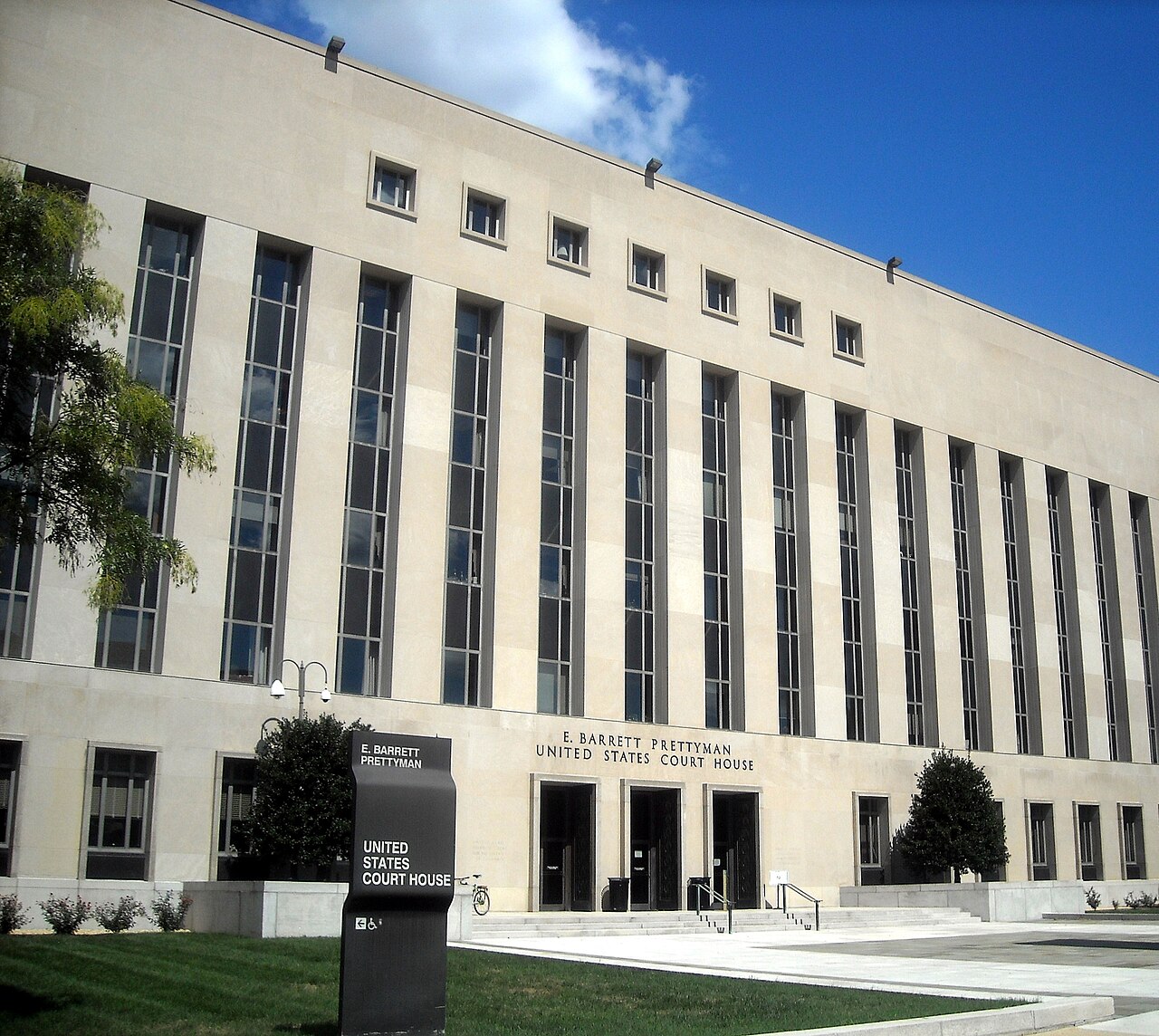
The judge did not dismiss the harm itself. "The court does not treat Plaintiffs' alleged harms lightly," he wrote, adding that he was not unsympathetic to "the knock-on consequences to journalists, educators, and other online creators whose content Google takes and repurposes without compensation" (Press Gazette; Search Engine Journal). The ruling is a statement about the fit between the harm and antitrust doctrine, not a finding that the harm is imaginary.
Without prejudice, but final and appealable
Search Engine Journal reports that the order in the Penske case granted Google's motion to dismiss without prejudice and states that the order is final and appealable (Search Engine Journal). Read together, the two labels suggest Penske can appeal to the D.C. Circuit now, and the state-law unjust enrichment claim, which the court declined to hear rather than rejected on its merits, is not barred from being brought elsewhere. How the plaintiffs use those options is not yet known. The complaints Mehta dismissed were already amended versions (Relevant Audience). The coverage reviewed here did not specify Chegg's prejudice status separately, and neither company had announced its next step at the time of writing.
How this differs from AI copyright suits
The most visible AI legal fights so far are copyright cases against model developers. Those ask whether copying content to train a model, or reproducing it in outputs, infringes copyright or is fair use. The Penske and Chegg cases avoided that question. They accepted that Google crawls the web and argued instead that Google's market power lets it set terms no publisher can refuse.
That choice explains both the appeal and the weakness of the theory. An antitrust framing fits Mehta's 2024 monopoly finding and targets the real economic complaint, which is lost traffic rather than a specific copied passage. But it requires harm to competition in a defined market and a mechanism, such as a coerced bargain or a tie, that antitrust law recognises. This ruling says a reasonable expectation of referrals, however long-standing, is not that mechanism. Copyright claims, state-law claims and regulatory action are untouched by it.
The economics of zero-click search
The dispute exists because AI answers change what users do on the results page. Pew Research Center tracked 900 US adults in March 2025 and found that users clicked a traditional result in 8% of visits when an AI summary appeared, versus 15% when none did, and clicked a link inside the summary in about 1% of visits (Pew Research Center).
Newer experimental evidence points the same way for AI Mode, Google's fully conversational search. A preregistered field experiment with 1,100 participants by researchers at the University of Pennsylvania and Northeastern University, posted to arXiv in August 2026, found that assignment to AI Mode-only search cut the share of searches leading to an external website by 18.8 percentage points. It reduced the share of users clicking through to news sites by 12.5 points, Reddit by 21.2 and Wikipedia by 9.9, and raised the share searching on Bing, DuckDuckGo or Yahoo by 11.2 points. Removing AI features increased click-through by 8.8 points (arXiv; Search Engine Journal).
Two measurements of how AI answers change clicks
Left: observational browsing data (Pew Research Center, March 2025). Right: a randomized field experiment on AI Mode (University of Pennsylvania and Northeastern University, 2026).
The two studies use different methods and are not directly comparable. Pew observed natural browsing; the experiment randomly assigned users to an AI Mode-only search experience for a week.
The study has caveats its authors and reporters note: it ran for one week, and the tool used to hide AI Overviews stopped working as Google changed its page code mid-study (Search Engine Journal). Still, an observational dataset and a randomized experiment both show fewer outbound clicks when AI answers dominate the page. For an ad-supported publisher, fewer visits means fewer impressions, affiliate sales and subscription prompts, which is the chain of harm Penske described.
What remains open for publishers
The US ruling does not end the broader contest. In December 2025 the European Commission opened an antitrust investigation into Google's use of publisher and YouTube content for AI features including AI Overviews and AI Mode, examining whether publishers could refuse that use without losing access to Search (CNBC). In February 2026 the European Publishers Council filed its own complaint, alleging content is used "without authorisation, without effective opt-out mechanisms, and without fair remuneration" (Silicon UK). EU competition law on abuse of dominance does not depend on proving a US-style bargain, so the same facts may be assessed under a different test.
Commercial routes are also moving. Google is testing payments to publishers whose content contributes significantly to AI answers, which we covered in our analysis of the Google AI contribution pilot. Press Gazette also reports Google is rolling out opt-out controls in Search Console. Whether opt-outs and small payments address the traffic gap is the question the lawsuit was trying to force, and it now shifts to regulators, appeals courts and negotiation.
What to watch
- An appeal. If Penske or Chegg appeals, the D.C. Circuit would review whether reciprocal dealing and tying doctrines can reach a platform's product design.
- The EU investigation. A Commission finding on AI Overviews would test the same conduct under a different legal standard.
- Opt-out design. Granular controls that separate AI use from search ranking would weaken the coercion argument in any future case.
- Better traffic data. The Pew data is from March 2025 and the AI Mode experiment ran for a week. Larger, longer measurements will shape both litigation and pricing.
For readers who rely on AI search tools themselves, the takeaway is that answer engines are becoming the main interface for information, and the sources behind them matter. Platforms such as Metir that let users compare answers across several models make the question of where an answer came from easier to check.
Sources:
- Press Gazette: Penske AI Overviews lawsuit dismissed because no formal bargain struck with Google
- Engadget: Judge dismisses lawsuits claiming Google's AI Overviews siphon web traffic
- Search Engine Journal: Judge acknowledges publisher harm but dismisses Google antitrust claims
- PPC Land: Judge Mehta dismisses Penske's Google AI Overviews antitrust suit
- Relevant Audience: Judge dismisses Penske, Chegg AI Overviews suits
- TechCrunch: Rolling Stone owner Penske Media sues Google over AI summaries
- Search Engine Roundtable: Google sued by Chegg over AI Overviews
- Pew Research Center: Google users are less likely to click on links when an AI summary appears
- arXiv: AI in Search Reduces Publisher Referrals Without Improving User Experience
- Search Engine Journal: Research shows Google AI Mode sends fewer clicks
- CNBC: Google hit with EU antitrust investigation over use of online content for AI
- Silicon UK: Publishers file EU complaint over Google summaries
Image credits
- E. Barrett Prettyman United States Court House, Washington, DC. Photo by AgnosticPreachersKid, Wikimedia Commons, public domain.
- Google sign, Charleston Road, Mountain View, California. Photo by Dietmar Rabich, Wikimedia Commons, licensed CC BY-SA 4.0.