On August 13, 2026, OpenAI previewed a new API mode called Ultrafast that serves its frontier GPT-5.6 Sol model at up to 750 output tokens per second, which it describes as up to 14 times the speed of its standard processing. The speed comes from Cerebras wafer-scale hardware, and the framing OpenAI chose is the important part: the intelligence is unchanged. This is the same frontier model, running much faster.
 OpenAI
The 750-tokens-per-second figure itself is not brand new. Cerebras had been serving GPT-5.6 Sol at that speed for select customers since July, a milestone we covered in our look at the inference speed war. What changed on August 13 is that OpenAI turned that capability into a named, purchasable product tier. That shift, from a hardware benchmark to a productized option in the API, is what makes this worth a closer look, because it marks the point where serving speed stops being a spec and starts being something you buy.
What is actually new here
For most of the modern AI era, buyers chose along one axis: how capable is the model. Speed was a fixed property of whatever hardware the provider happened to run. When you did want a faster response, the usual trade was to drop down to a smaller, less capable model and accept lower quality in exchange for lower latency. OpenAI's own phrasing names this directly: until now, getting real-time speed typically meant choosing a smaller or more specialized model.
Ultrafast breaks that trade. It offers the full GPT-5.6 Sol at roughly fourteen times the token rate, with no reduction in the model itself.
Same model, up to fourteen times the tokens per second
Peak output speed for GPT-5.6 Sol in Ultrafast versus Standard mode. The point OpenAI stresses is that the intelligence is identical; only the serving hardware changes. Standard is implied by the 14x figure. Higher is faster.
The speed comes from Cerebras wafer-scale hardware, not from a smaller or distilled model. Speed and intelligence usually trade off; here they do not.
The reason speed and intelligence usually trade off, and the reason they do not have to here, comes down to where the model's weights live. Generating text one token at a time is memory-bound: for every token, the hardware must move the model's parameters from memory to the compute units, and on conventional GPU systems that data movement is the bottleneck. Cerebras builds a single chip the size of a dinner plate with enough on-chip memory to hold large models without shuttling weights back and forth to external memory. Remove the memory-movement wall and the same model simply emits tokens faster. We covered the architectural details of wafer-scale, LPU, and GPU serving in the speed-war piece; the short version is that Ultrafast is that hardware advantage, packaged and sold.
Until now, buying speed meant buying a worse model. Ultrafast unbundles the two: the full frontier model, roughly fourteen times faster.
On what Ultrafast changes
Why speed is worth paying for
A single fast reply is a pleasant nicety. The reason a speed tier can be a real product is agentic work, where latency compounds. An agent that completes a task by making many model calls in sequence feels completely different at 54 tokens per second than at 750, because every step's latency adds to the total.
Latency compounds: where the speed actually pays off
A single fast response is nice. The real prize is agentic work, where dozens of model calls run one after another and each one's latency adds up. These figures are an illustrative model of a fixed workload at each speed, not a measured benchmark.
The gap widens with every added step. That is why a speed tier is aimed at agents and interactive apps, not at one-off chat replies.
This is why OpenAI is aiming Ultrafast at latency-sensitive workloads rather than casual chat. Its named targets include incident response, customer support, financial market analysis, e-commerce, voice applications, and live experimentation. What those share is that a human or a downstream system is waiting on the result, and the value of the answer decays as it takes longer to arrive. In those settings, a fourteen-fold speedup is not a luxury; it is the difference between an interaction that feels live and one that feels like a batch job. There is also a throughput angle: serving the same work faster on the same hardware can mean more completed tasks per dollar, which turns speed into an economic variable and not just an experiential one.
The caveats a neutral read requires
Three things keep this in proportion. First, it is a preview. Ultrafast is available to a limited group of customers, expanding as capacity grows, and OpenAI has not disclosed pricing. A speed tier's value depends entirely on what it costs relative to standard serving; a fourteen-fold speedup at a large premium is a different product from the same speedup at a small one, and until the price is public the economics cannot be judged. The absence of a pricing number is the single biggest open question.
Second, the speed depends on Cerebras. Ultrafast is not something OpenAI can conjure on its own general GPU fleet; it rides on a specific partner's wafer-scale hardware, and the preview's capacity is gated by how much of that hardware is available. That is a supply constraint and a dependency, and it is why the rollout is limited rather than universal. A capability tied to one supplier's scarce hardware scales differently from one that runs on commodity GPUs.
Third, GPT-5.6 Sol is fast here but not the outright most capable model on the market. It trails Claude Fable 5 on composite quality indices and sits close to several rivals rather than clearly above them. Ultrafast makes the strongest OpenAI model faster; it does not make it the smartest model available. For a task where quality is the binding constraint, speed does not change the calculus.
The competitive and strategic read
Ultrafast is a signal about where competition is heading. With top models converging in quality, the axes of differentiation are shifting to cost, openness, and now speed. Anthropic already offers a fast mode for Claude, though not at these figures, and specialized inference providers built their businesses on exactly this promise. OpenAI productizing a wafer-scale speed tier is the largest lab planting a flag on serving speed as a first-class product dimension, not just an implementation detail.
For teams building on these models, the practical takeaway is that "which model" is becoming a multi-dimensional question. The right choice for a live customer-support agent (fast, good enough) may differ from the right choice for a deep research task (slower, maximally capable), and both may differ again on price. That is an argument for keeping the model and serving choice flexible rather than hardwired, so a workload can be routed to the fast tier, the smart tier, or the cheap tier as each task demands. A model-agnostic approach, the design principle behind platforms like Metir AI, is one way to let speed, quality, and cost each win where they should without rebuilding around any one provider's newest tier. Ultrafast is a preview, and its price is still unknown; what it confirms is that speed has graduated from a benchmark into a product, and buyers will increasingly choose along that axis too.
Sources:
- Previewing Ultrafast mode: GPT-5.6 Sol at up to 14X the speed | OpenAI
- OpenAI introduces 'Ultrafast,' a new mode that makes GPT-5.6 Sol work at 14x the speed | TechCrunch
- OpenAI previews 'Ultrafast' GPT-5.6 Sol running up to 14 times faster | 9to5Mac
- Cerebras Powers OpenAI's GPT-5.6 Sol Ultrafast Mode at Up to 750 Tokens Per Second | Quiver Quantitative
Image credits
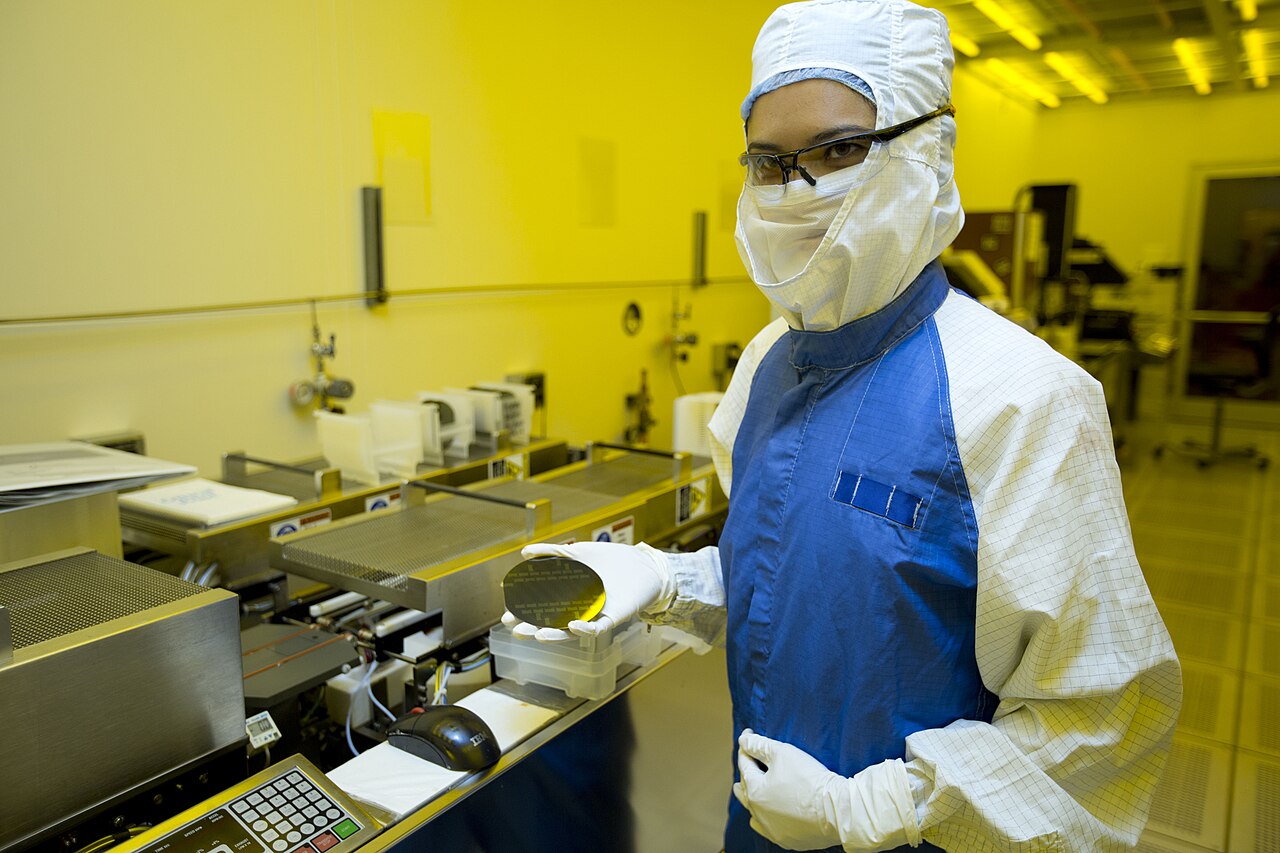
Header image: a researcher holding a silicon wafer in a semiconductor cleanroom. By the U.S. Department of Energy via Wikimedia Commons, public domain.