
OpenAI is moving toward the largest technology public offering in history. After filing a confidential draft registration statement with the SEC in June 2026, the company is reported to be preparing a public S-1 ahead of a targeted listing as soon as September, at a valuation range reported between roughly $852 billion and $1 trillion. The offering would be underwritten by Goldman Sachs and Morgan Stanley. When the full prospectus becomes public, the world will see, for the first time, an audited picture of the finances behind ChatGPT. This piece lays out what is confirmed, what the numbers imply, and what the document will and will not settle for anyone thinking about buying the stock.
The number that frames everything
Strip the story to two figures and the tension is obvious. OpenAI is reported to be generating around $2 billion in revenue per month, which annualizes to roughly $25 billion, and it is reported to be seeking a valuation approaching $1 trillion. That is an implied multiple in the neighborhood of forty times annual revenue for a company at massive scale, a level normally reserved for much smaller, much earlier businesses. The market is not being asked to price OpenAI on what it earns today. It is being asked to price a bet on what it will earn years from now.
The gap the offering has to justify
Reported annualized revenue against the reported IPO valuation target, in US dollars billions. The revenue bar is barely visible next to the valuation, which is the point: the price implies roughly forty times revenue.
Valuation plotted at the $925B midpoint of a reported $852B to $1T range. Revenue shown at a roughly $25B annualized run rate.
That is not automatically unreasonable. Fast-growing platform companies have justified steep multiples before by growing into them, and OpenAI's revenue has climbed at a pace with few precedents. But a multiple that high leaves no room for disappointment. It assumes revenue keeps compounding, that the cost of serving each user falls, and that the company eventually converts scale into profit. Each of those assumptions is contestable, and the prospectus is where they will first meet audited scrutiny rather than press-release optimism.
The losses the prospectus will expose
Revenue is only half the picture, and the other half is the part investors have seen least clearly. OpenAI remains deeply unprofitable. Reported pre-IPO financials describe a company losing on the order of $1.22 for every dollar it earns, a reflection of the staggering cost of training frontier models and serving them to hundreds of millions of users. The company crossed roughly 900 million weekly active users in early 2026 and was reported to be approaching a billion by late July, and every one of those users consumes compute that OpenAI pays for whether or not the interaction generates revenue.
The market is not being asked to price OpenAI on what it earns today. It is being asked to price a bet on what it will earn years from now.
On a valuation near forty times revenue
This is the central question the S-1 will force into the open. A private company can describe its path to profitability in broad strokes; a public filing has to show the actual trajectory, the actual cost structure, and the actual gap between the two. Enterprise contracts, reported to drive more than 40 percent of revenue, are the most credible part of that path, because business customers pay predictably and expand over time. Whether they scale fast enough to close a gap this wide, against compute costs that rise with every capability improvement, is exactly what a prospectus is built to let outsiders judge for themselves.
The governance detail investors should read twice
The most unusual feature of the offering is not financial at all. OpenAI's structure keeps ultimate control with the OpenAI Foundation, the nonprofit that sits atop the corporate group. Reporting indicates the Foundation retains board-appointment control over the public company, OpenAI Group PBC, which means public shareholders would buy economic exposure to the business without the standard governance power that normally comes with owning stock. Buyers would participate in the upside, but not in the usual ability to elect a board that answers to them.
That arrangement is a deliberate expression of OpenAI's mission-first framing, and it is not unheard of; dual-class structures at other tech companies concentrate control with founders in a similar spirit. But it is a material fact. An investor pricing the stock is pricing not only the revenue and the losses but also a governance model in which the entity steering the company is chartered to prioritize a mission over shareholder returns if the two ever conflict. Whether that is a feature or a risk depends entirely on the buyer, which is precisely why it belongs in plain sight in the prospectus.
Why the timing itself is a signal
The path to this filing has not been linear. Earlier in 2026, reporting suggested advisers were weighing a 2027 listing rather than rush a debut, and separate reporting described discussions about a government equity stake. The move toward a September 2026 filing is therefore its own piece of information: it suggests OpenAI and its underwriters judge that market conditions, and the company's own numbers, are strong enough to go now rather than wait. Markets can shift, and the reported window stretches from September into the fourth quarter, so the exact date remains contingent. But the direction of travel is toward sooner, not later.
For companies and teams building on OpenAI's models, none of this changes what the models do tomorrow. It does, however, underline a structural point: the tools many businesses now depend on are supplied by a company about to answer to public markets, with all the pressure toward monetization that implies. Keeping applications portable across providers, the model-agnostic posture that platforms like Metir AI are built around, is one way to make sure a shift in any single vendor's pricing or priorities does not dictate your own.
The takeaway
What is verifiable is that OpenAI filed a confidential S-1 in June, is moving toward a public prospectus and a targeted September 2026 listing, has retained Goldman Sachs and Morgan Stanley, and is reported to be seeking a valuation approaching $1 trillion on roughly $25 billion of annualized revenue while still losing money on every dollar earned. What is not yet verifiable is whether the growth justifies the price, because the audited detail that would let anyone judge that has not been published. The value of an IPO is that it ends the guessing. When the full S-1 appears, the trillion-dollar question stops being a matter of reporting and becomes a matter of record.
Sources:
- OpenAI files for IPO with potential $1 trillion valuation, plans public listing by late 2026 | Crypto Briefing
- OpenAI Files Confidential S-1 With the SEC, Targeting a September IPO at Up to $1 Trillion | BitsMinds
- OpenAI IPO: S-1 Status, Valuation, Timeline, and Risks | TECHi
- OpenAI Revenue 2026: $25B ARR, and Why That's Not the Profitability Signal You Think | Value Add VC
- OpenAI Files Confidential S-1 For September 2026 IPO | The Robotics Media
Image credits
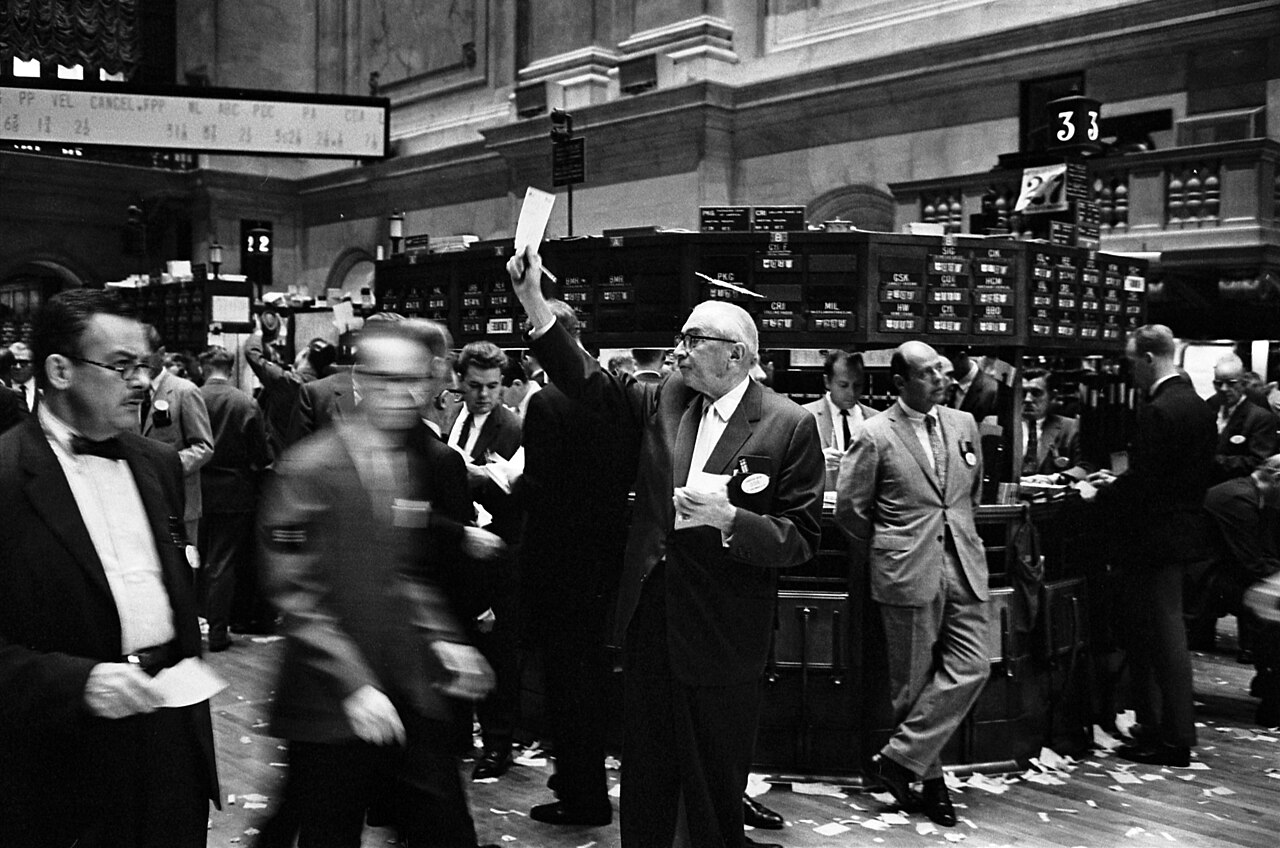
Header image: the facade of the New York Stock Exchange on Wall Street, via Wikimedia Commons, licensed under CC BY-SA 4.0. In-body photograph of the historical NYSE trading floor, via Wikimedia Commons, a public-domain U.S. Library of Congress work. Both images were reviewed before use.