
On September 22, 2026, OpenAI released two new models: GPT-6 Sol and GPT-6 Luna. Both are built on the same foundation as OpenAI's top model, GPT-6 Astra, but are tuned to be faster and far cheaper to run. The headline change for everyday users is price: both models cost about half of what their GPT-5.6 predecessors did.
What GPT-6 Sol and Luna are actually for
OpenAI now sells three GPT-6 tiers, and each one has a clear job:
- GPT-6 Luna is the fast, cheap option, built for "high-volume tasks with a clear goal," in OpenAI's words: summarizing a document, pulling specific facts out of text, or answering a quick question. Think of it as the model you reach for dozens of times a day for small jobs.
- GPT-6 Sol is built for harder, multi-step work such as writing and debugging code, or reasoning through a problem with several steps. It costs more than Luna but far less than OpenAI's flagship.
- GPT-6 Astra, released earlier and unchanged by this announcement, remains OpenAI's most capable and most expensive model, for the hardest problems.
Notably, there is no GPT-6 "Terra" this time. The GPT-5.6 generation had three tiers, Sol, Terra and Luna; GPT-6 skips the middle tier and goes straight from Luna to Sol.
 OpenAI
What a price cut like this actually means
If you don't work with AI pricing day to day, "per million tokens" numbers do not mean much on their own. Here is the plain-English version: a token is a small chunk of text, often a word or part of a word, so a million tokens is several long books' worth of text. Every time you send a message to an AI model, and every time it replies, that text gets measured and charged in tokens.
A model getting cheaper means one of two things for a normal user. If you pay directly for API usage, your bill for the same amount of work goes down. If you use a product like ChatGPT or Metir that already includes AI in a subscription, a cheaper model means the company providing it can afford to give you more usage, faster answers, or hold prices steady for longer, instead of the cost of running the AI eating into what you get.
Both new models cost about half what their GPT-5.6 predecessors did
USD per million tokens, standard API pricing (a token is a short chunk of text, a little over half a word on average).
Sol (reasoning model)
Luna (fast model)
GPT-5.6 Sol shown at its $4 / $20 promotional rate; its standard rate was $5 / $30. GPT-6 Astra, OpenAI's top model, remains priced separately at $10 / $50.
The price drop is significant. GPT-6 Sol now costs $2 per million tokens of input and $10 per million tokens of output; the equivalent GPT-5.6 Sol was $4 and $20 at its promotional rate (its standard price was even higher, at $5 and $30). GPT-6 Luna dropped from $0.20 and $1.20 to $0.10 and $0.50. OpenAI says the savings come from making caching and inference more efficient, and that it is passing them on as 50% lower API prices.
How the lineup fits together
Where Sol and Luna sit in OpenAI's lineup
Prices are input / output per million tokens, standard API rates.
Both Sol and Luna read a 1.05 million token context window and can produce up to 128,000 tokens of output, with text and image input.
Both new models share the same technical basics: they can read very long inputs (about 1.05 million tokens, roughly the length of several long novels at once), they can look at images as well as text, and they can each write up to 128,000 tokens in a single reply. The difference between Luna and Sol is not what they can technically handle, it is how much reasoning effort and cost goes into each answer.
On our internal factuality evaluation, GPT-6 Sol makes about half as many mistakes as its predecessor, reaching Astra-level reliability at much lower cost.
OpenAI, GPT-6 Sol and Luna announcement
Fewer mistakes, not just a lower price
Cost is not the only thing that changed. OpenAI says that on its internal factuality checks, which are built from real conversations where users flagged an AI mistake, GPT-6 Sol now makes about half as many factual errors as GPT-5.6 Sol did, putting it close to the accuracy of OpenAI's more expensive Astra model. In plain terms: for the same everyday questions, Sol should now get things wrong noticeably less often than the model it replaces, while charging less for the privilege.
As with any company's own benchmark, treat OpenAI's specific figures as a reported claim rather than an independently verified result, but the direction, a cheaper model that also makes fewer mistakes, is a real and welcome pairing rather than the usual trade-off of "cheaper but worse."
Timing: a busy day for AI releases
The release landed on the same day, within about 90 minutes, as Anthropic's own release of Claude Opus 5.5, according to TechCrunch's coverage of the launch. It is a reminder of how fast the major AI labs are now shipping new models, often within days or hours of each other. For anyone trying to keep up, that is exactly the kind of situation where having several models available in one place, rather than committing to a single provider, saves you from having to track every announcement yourself.
Where you can use them
GPT-6 Sol and GPT-6 Luna are rolling out today in ChatGPT Work and Codex for Plus, Pro, Business, Enterprise and Edu subscribers, and through OpenAI's API for developers. Free and Go-tier ChatGPT users get access to GPT-6 Luna through the desktop app. OpenAI says the rollout to the full ChatGPT app and website continues through the day.
How to use GPT-6 Sol and Luna on Metir
Sources:
- Announcing GPT-6 Sol and GPT-6 Luna - OpenAI Developer Community
- OpenAI launches GPT-6 Sol and Luna, boasting lower cost and fewer mistakes - TechCrunch
- OpenAI upgrading ChatGPT and Codex with two more GPT-6 models - 9to5Mac
- GPT-6 Sol model page - OpenAI API docs
- GPT-6 Luna model page - OpenAI API docs
- Pricing - OpenAI API docs
Image credits
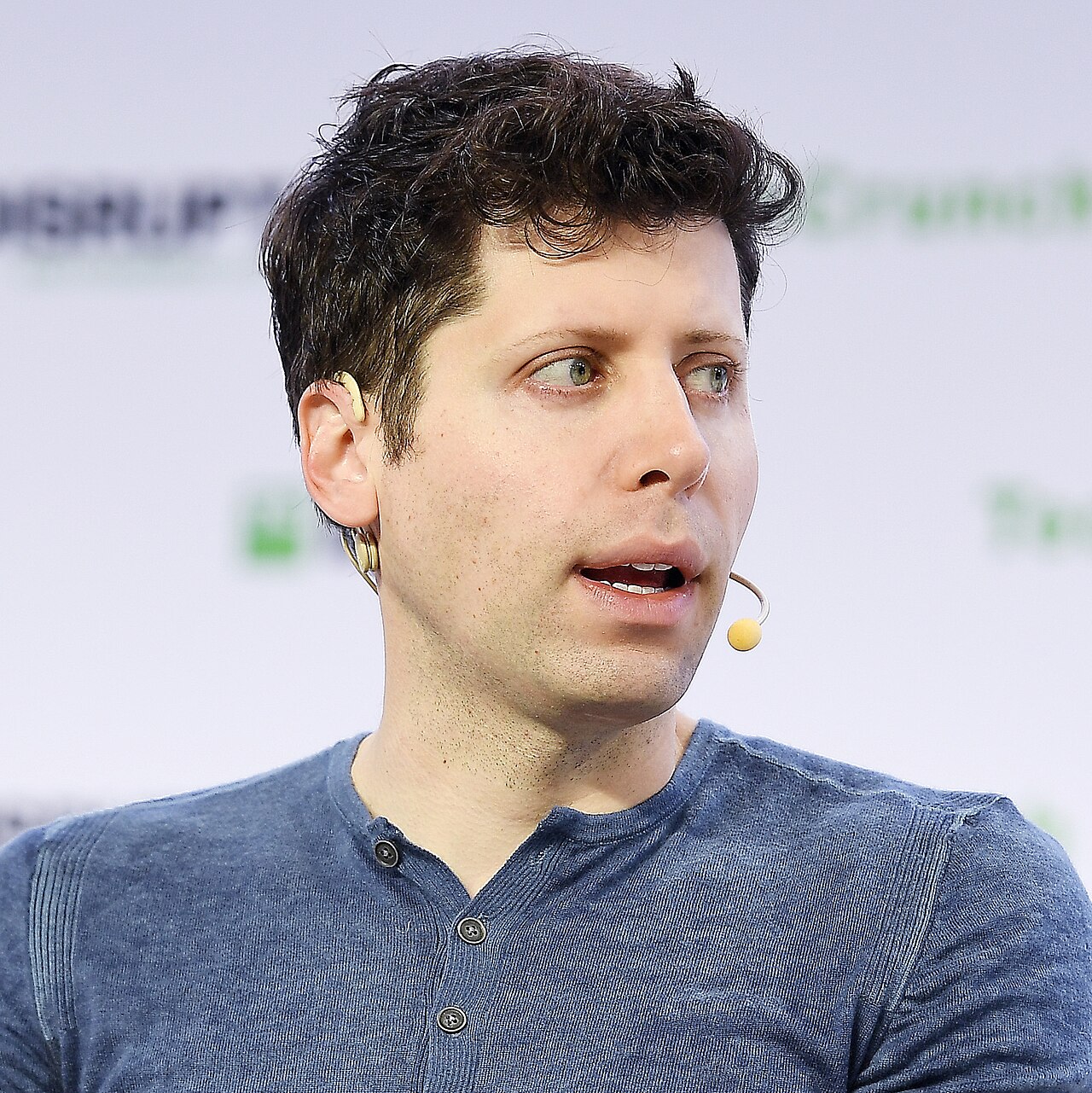
Header image: OpenAI's San Francisco headquarters at 1515 Third Street. Photo by Coolcaesar, Wikimedia Commons, CC BY 4.0. In-body image: Sam Altman speaking at a TechCrunch event, photo by James Tamim, Wikimedia Commons, CC BY 2.0. Neither image is from the announcement itself.