On July 30, 2026, OpenAI cut the price of its two lower-cost GPT-5.6 models by up to 80 percent and, in a separate announcement the same week, said it would give roughly 100,000 researchers free access to its frontier models through 2027. The two moves point in the same direction: OpenAI is working to make its models cheaper to reach, whether the user is a high-volume enterprise buyer or an academic who could never afford frontier pricing. This piece breaks down exactly what changed, why the cut lands where it does in the lineup, what it says about the economics of inference, and how buyers might reasonably respond.
 OpenAI
 Anthropic
 Google
What actually changed
OpenAI's GPT-5.6 family, released earlier in 2026, is split into three tiers named Luna, Terra and Sol, running from cheapest to most capable. The July 30 repricing hit the bottom two tiers hardest and left the flagship untouched.
The cut targeted the cheap tiers, not the flagship
Output price per million tokens, before and after the July 30, 2026 repricing. Luna fell roughly 80 percent and Terra roughly 20 percent, while the Sol flagship was left unchanged.
Input-token prices moved by similar proportions: Luna fell from $1 to $0.20 per million, Terra from $2.50 to $2, and Sol held at $5.
GPT-5.6 Luna, the smallest model, dropped to 20 cents per million input tokens and $1.20 per million output tokens, down from $1 and $6, a reduction of roughly 80 percent on both sides of the meter. GPT-5.6 Terra, the mid tier, fell about 20 percent to $2 per million input and $12 per million output, from $2.50 and $15. GPT-5.6 Sol, the flagship, was left unchanged at $5 per million input and $30 per million output, according to reporting from Forbes, PYMNTS and Yahoo Finance.
The pattern is the tell. Cutting the cheap models while holding the flagship steady is not a blanket discount; it is a targeted move to make high-volume, price-sensitive work economical on OpenAI's platform, while preserving the premium the flagship commands from users who need maximum capability and are less sensitive to token cost.
Why the cheap tiers, not the flagship
The logic behind sparing Sol is worth spelling out, because it reveals how these labs think about their own lineups. A flagship model competes on capability, and the buyers who reach for it are typically doing so because nothing cheaper will do the job. Those buyers are relatively price-insensitive, so cutting the flagship's price would mostly forfeit margin without winning much new volume.
The lower tiers live in a different market. That is where models compete head to head on cost per task for workloads that many providers can serve adequately: classification, extraction, summarization, routing, and the high-frequency calls that sit inside production software rather than in a chat window. In that segment, a price difference of a few cents per million tokens can decide which provider a developer designs around, because at scale those cents multiply into real budget lines.
Cutting the cheap models while holding the flagship steady is a targeted move, not a blanket discount.
That framing also explains the competitive pressure. Coverage of the cut, including from Yahoo Finance, tied it to the rise of low-cost models from Chinese developers and the broader commoditization of the lower end of the market, where open-weight and aggressively priced alternatives have narrowed the gap on routine tasks. When the floor of the market gets cheaper, the incumbent either follows the floor down or cedes the high-volume workloads that feed the rest of the funnel.

The researcher access program
The second announcement, free frontier access for about 100,000 scientists, mathematicians and engineers through 2027, is easy to read as pure goodwill, and it partly is. But it also fits the same commercial logic from a different angle. Academic researchers rarely have the budget for frontier-model bills, which means the segment is close to unmonetizable today regardless of price. Giving it away costs comparatively little in forgone revenue while seeding habits, workflows and published results that run on OpenAI's models.
The precedent is familiar from earlier platform eras: heavily discounted or free access for students and researchers builds a generation of practitioners fluent in one ecosystem, some of whom carry that fluency into paying roles later. None of that makes the program cynical; accelerating scientific work is a real and defensible goal. It simply means the move is coherent with, rather than opposed to, OpenAI's competitive interests.
What the cut says about inference economics
Price cuts of this size are only sustainable if the underlying cost of serving a token has fallen, or if the provider is willing to trade margin for share. Over the past two years, the cost of inference has dropped sharply across the industry, driven by more efficient model architectures, better serving software, quantization, and newer accelerators. An 80 percent price cut on a small model is consistent with a world where the marginal cost of running that model has fallen by a comparable amount, letting the provider pass savings through while defending its position.
There is a second reading that does not contradict the first. Even where cost has not fallen enough to make a cut fully margin-neutral, a provider may still cut to protect the strategic value of owning high-volume workloads, absorbing thinner margins on cheap tokens to keep developers building on its stack. Both dynamics can be true at once, and from the outside it is difficult to separate genuine cost deflation from share-defending subsidy. The honest position is that the cut reflects some combination of the two, and the ratio is not disclosed.
From the outside it is difficult to separate genuine cost deflation from share-defending subsidy, and the ratio is not disclosed.
What it means for buyers
For teams that build on these models, the practical lesson is less about this one cut than about the volatility it represents. Over the past year, every major provider has repriced tiers, renamed models, and shifted the cost-versus-capability frontier under buyers' feet. A workflow architected around one provider's exact price sheet in January can be economically mispriced by July, not because the workflow changed but because the market did.
That is the case for staying flexible about which model runs which task. The right model for a bulk classification job is rarely the right model for a hard reasoning problem, and the cheapest adequate option changes as providers reprice. Tools that keep teams model-agnostic, letting them route each task to the most cost-effective model that meets the quality bar rather than binding a workflow to a single provider's price list, turn pricing volatility from a risk into an advantage. That model-agnostic routing is the principle Metir AI applies at the application layer, giving teams access to leading models from multiple providers and letting the right one handle each job. When a price like Luna's falls 80 percent overnight, a routed workflow captures the saving automatically; a hardwired one has to be re-engineered to benefit.
The takeaway
OpenAI's July 30 price cut is best read not as a discount but as a positioning move. By slashing the two cheap tiers while holding the flagship firm, the company is defending the high-volume segment where low-cost competitors, including open-weight and Chinese models, have been closing the gap, and it is doing so at a moment when the cost of inference has fallen enough to make aggressive pricing at least partly sustainable. The parallel offer of free frontier access to researchers extends the same logic into a segment that was never going to pay full price anyway. For buyers, the durable takeaway is that model pricing is now a fast-moving variable, and the teams best positioned to benefit are the ones that never tied themselves to a single price sheet in the first place.
Sources:
- OpenAI Cuts GPT-5.6 Pricing Up To 80%, As AI Costs Come Under Scrutiny | Forbes
- OpenAI Cuts Prices on Select Models to Make High-Volume Work Economical | PYMNTS
- OpenAI Just Cut GPT-5.6 Luna's Price by 80 Percent, and That Tells You Where the Pressure Is Coming From | Yahoo Finance
- OpenAI cuts GPT-5.6 prices by up to 80%: what does it mean for usage limits? | Softonic
- OpenAI offers GPT-5.6 to 100,000 researchers while drastically reducing the cost of its AI | MyHostNews
- AI News Today July 31 2026: 16 Biggest Stories | BuildFastWithAI
Image credits
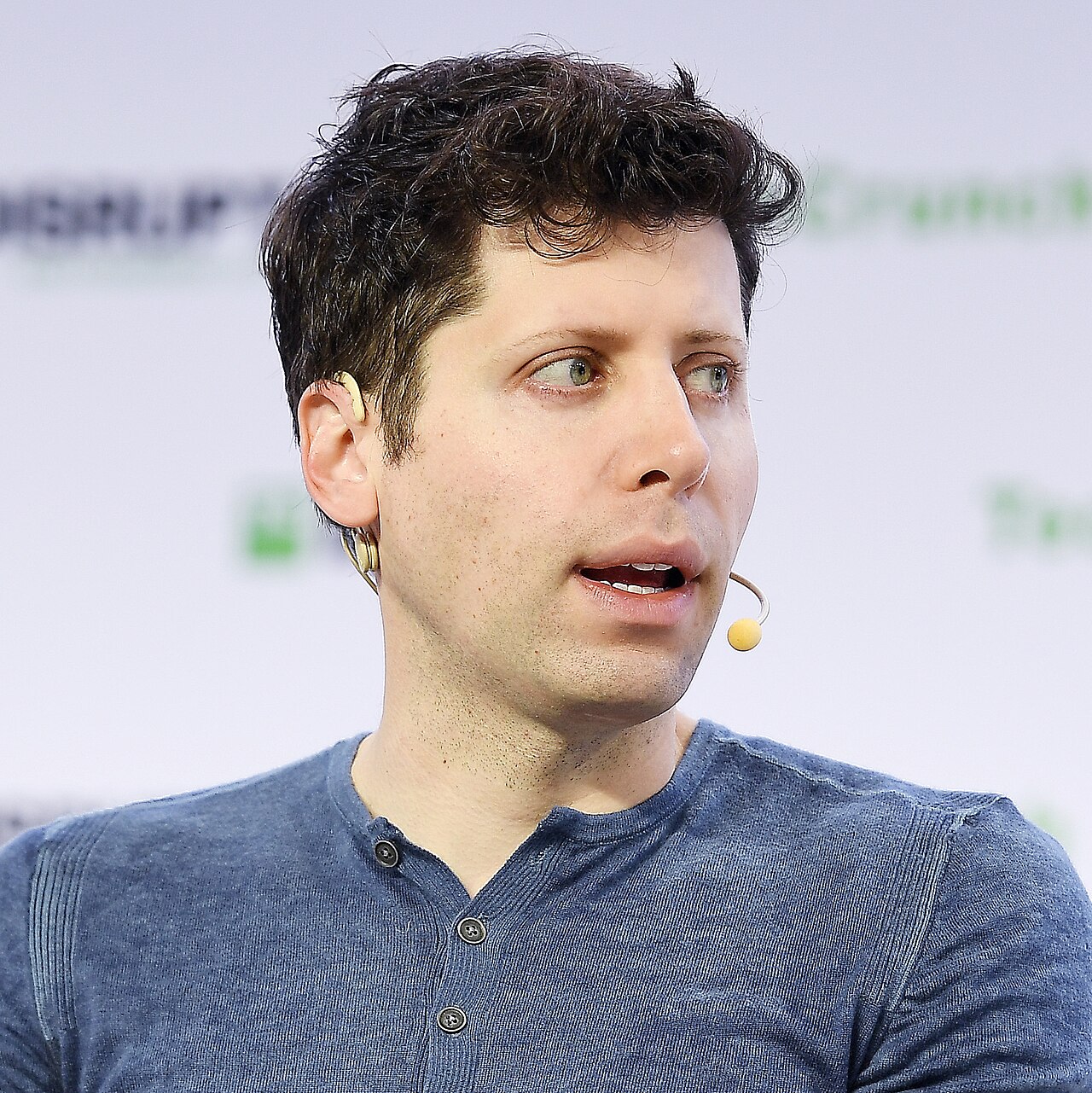
Header image: Sam Altman, CEO of OpenAI, photographed at a TechCrunch event, cropped and edited by James Tamim, via Wikimedia Commons, licensed under CC BY 2.0. In-body photograph: OpenAI representatives during a visit to the European Commission, European Union, via Wikimedia Commons, licensed under CC BY 4.0.