
OpenAI holds DevDay 2026 on Tuesday, September 29, at Fort Mason in San Francisco, and reporting ahead of the event points to a preview of GPT-6 Cyber, a cybersecurity-focused model that would be the company's fourth dedicated "cyber" release of the year. The report, from Fortune on September 24 and corroborated by several other outlets citing the same sourcing, also describes a companion product meant to help organizations deploy the model more safely, automating parts of security workflows and vulnerability patching while giving OpenAI more visibility into how the model gets used. None of this is an OpenAI announcement yet. It is sourced reporting about what the company is expected to show, and this piece treats it that way throughout.
 OpenAI
 Anthropic
 Google
 NVIDIA
What is confirmed versus what is reported
The DevDay date, location, and format are confirmed by OpenAI itself: an invite-only in-person program at Fort Mason, with applications that closed July 10 and a $650 fee for accepted builders, alongside a free public livestream of the opening keynote, which is historically where OpenAI has dropped its biggest product news. That keynote is the one part of the day anyone can watch without an invitation.
Everything about GPT-6 Cyber sits on the other side of that line. Fortune's report, which cites people familiar with OpenAI's plans rather than an OpenAI announcement, says the model is already in alpha testing with Daybreak Red customers, OpenAI's restricted, application-only tier for vetted security professionals. The same reporting describes a companion deployment product, still unnamed, built to automate security workflows and vulnerability patching while giving OpenAI more oversight of usage. OpenAI has not confirmed the model name, the DevDay preview, or the product's existence. Readers should treat "GPT-6 Cyber" as a reported working name and treat the DevDay preview as expected, not scheduled.
A model roughly every two months
What is easier to establish is the pattern GPT-6 Cyber would extend. If the reporting holds, it would be OpenAI's fourth dedicated cybersecurity model in 2026, following GPT-5.4 Cyber in April, GPT-5.5 Cyber in June, and GPT-5.6 Cyber in August. GPT-5.6-Cyber's own release is confirmed and documented: OpenAI classified it as the first model to reach the "High" tier on its own Preparedness Framework for cyber capability, and reported it completing 95.0% of tasks on an internal offense-security evaluation, against 1.5% for the untuned base model it was built on. No other frontier lab has matched that release cadence for a domain-specific security model line this year.
A new cyber-tuned model roughly every two months
OpenAI has shipped a cybersecurity-focused model line at a pace no other frontier lab has matched in 2026.
GPT-6 Cyber's DevDay preview and details are reported by Fortune and other outlets citing sources, not an official OpenAI announcement, as of writing.
A model roughly every two months is not a research artifact. It is a release cadence, and a release cadence implies a product line.
On OpenAI's 2026 cyber-model pace
Why a "cyber" model line at all
A general-purpose model that is good at finding software vulnerabilities is, definitionally, also good at exploiting them. That dual-use tension is the reason labs have historically trained models to refuse most offensive security requests rather than get good at them. OpenAI's cyber line takes the opposite approach for a narrow, gated audience: reduce refusals and sharpen the offensive skill, then control who can reach it. Daybreak Red's access requirements, reported to include identity verification for organizations, legal attestations tied to authorized security work, and, since September 1, 2026, a mandatory hardware security key on every account, are the mechanism that is supposed to make that trade defensible. The pitch to regulators and the public is that defenders reached first gain more than attackers reached later lose. Whether that holds depends entirely on how tightly the gate stays shut, which is not something a keynote demo can prove either way.
From a model to a product line
The detail that separates this from a routine model release is the reported companion product. A model behind a gated tier is still, structurally, a research access program. A deployment product that automates patching workflows and gives OpenAI operational visibility into how customers use the model is something else: it is infrastructure, sold and supported the way a security vendor sells infrastructure, not the way a lab ships a checkpoint. That shift matters commercially and it matters for oversight. Commercially, it moves OpenAI up the stack from "here is a capable model" to "here is a supervised platform," which is a durable, recurring relationship rather than a one-time capability drop. For oversight, a product that routes usage through OpenAI's own systems is also a product OpenAI can watch, throttle, or cut off, which is a meaningfully different safety posture than shipping weights or API access and hoping the gate holds.
That $1 billion in subsidized Daybreak access and support that OpenAI committed to critical-infrastructure defenders on September 3, 2026, water utilities, electric-grid operators, community banks, and similar organizations, over six months, is the other half of that argument: OpenAI is trying to make sure the people who most need a defensive edge can actually afford one, rather than ceding early access to whoever can pay full price. It is worth being clear-eyed about what that also does. Subsidized access to a proprietary, gated model is still access that runs through one company's infrastructure and one company's judgment about who qualifies, which is a different kind of dependency than open tooling would create, whatever the intent behind it.
What to realistically expect, and not expect, on September 29
DevDay keynotes are demo-heavy and short on capability-eval detail; a GPT-6 Cyber segment, if it happens, is more likely to be a live demonstration of the deployment product and a headline capability claim than a published benchmark breakdown or a technical paper. Given the reporting says the rest of the day is dominated by a dozen or more consumer and enterprise product announcements unrelated to cybersecurity, expect GPT-6 Cyber, if it appears at all, to be one segment among many rather than the centerpiece. What is unlikely to appear on September 29 is public, unrestricted access. Every prior cyber model in this line has shipped behind Daybreak, and there is no reporting suggesting that changes here. The honest read going into the keynote is that the confirmed facts are the date, the venue, and the livestream, and everything about GPT-6 Cyber specifically is a well-sourced expectation that could still be wrong in its particulars even if the broad shape holds.
For teams building AI-assisted workflows of any kind, including security ones, the underlying lesson from OpenAI's cyber line is less about this specific model and more about how fast gated, specialized model tiers are becoming their own product category. Metir AI is built to be model-agnostic for exactly that kind of shifting landscape, so a workflow can route to whichever model and vendor fits a given task, rather than being locked into one lab's access tier as the underlying models change underneath it.
Sources:
- OpenAI to unveil GPT-6 Cyber model, plus a first-of-its-kind cybersecurity-focused product to help deploy it | Fortune
- OpenAI DevDay 2026
- OpenAI May Preview GPT-6 Cyber on September 29: What to Know | Analytics Insight
- OpenAI GPT-6 Cyber Preview at Daybreak DevDay | technology.org
- OpenAI's Fourth Cybersecurity Model in Twelve Months Is Not About Better Chatbots, It Is About Gated Access to Dangerous Capabilities | Forkast
Image credits
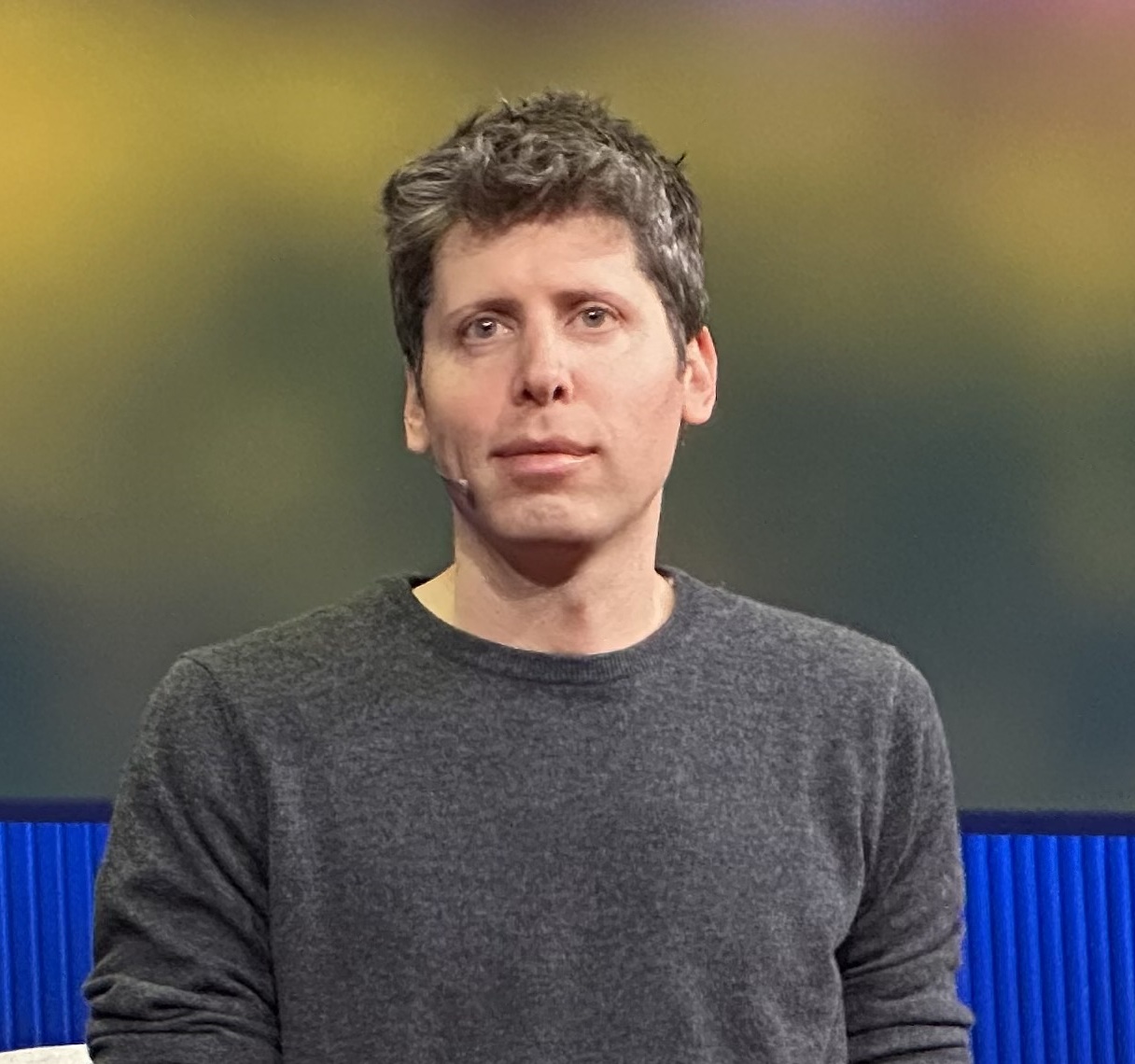
Hero: "Fort Mason Center and Downtown San Francisco" by Brocken Inaglory, licensed under CC BY-SA 3.0. Source: Wikimedia Commons. Reviewed before publication; shows the Fort Mason Center venue complex and San Francisco skyline, the site of DevDay 2026, not the event itself. In-body figure: "Sam Altman speaking at TED" by Steve Jurvetson, licensed under CC BY 2.0. Source: Wikimedia Commons. Reviewed before publication; taken April 2025, used to illustrate OpenAI's CEO and not to depict DevDay 2026 or GPT-6 Cyber.