
Over the first week of August 2026, OpenAI made two moves that look unrelated on the surface but point in the same direction. It widened access to its newest ChatGPT models, pushing the more capable tier down to free users and layering in new voice and reasoning controls. And through a steady drip of reporting, the shape of its first consumer hardware device, designed with Jony Ive, came into sharper focus. Read together, they describe a company trying to make ChatGPT the default place people reach for intelligence, on screens and, eventually, off them.
 OpenAI
 Apple
AppleThe model rollout, in plain terms
The software half is a distribution change more than a new frontier model. OpenAI updated GPT-5.6 Sol inside ChatGPT for Plus and Pro subscribers, and said GPT-5.6 Luna would become the default for Free and Go users, replacing GPT-5.5. The company paired that with two usability changes aimed squarely at everyday use: a Think button that pushes a hard question into a slower, more deliberate reasoning mode, and, for paying tiers, a slider to dial reasoning depth up or down. Free and Go users were also told to expect unlimited text chats.
The headline capability claim is about reliability rather than raw intelligence. OpenAI said internal testing showed factual errors fell 62 percent for Luna and 68 percent for Sol compared with the older GPT-5.5-Instant.
Fewer factual errors, by OpenAI's own measure
Reported reduction in factual errors versus the prior GPT-5.5-Instant model, from OpenAI internal testing. These are vendor-reported numbers, best read as a claim to be checked against independent evaluation.
Luna becomes the default for Free and Go users; Sol serves Plus and Pro. Both replace GPT-5.5.
Two things are worth holding in mind when reading numbers like these. They are vendor-reported, measured on OpenAI's own evaluations, and self-reported figures reliably favor the lab that publishes them, so the honest reading is a claim to be checked against independent testing rather than a settled fact. And a reduction in error rate is a relative figure: a model that makes far fewer mistakes than its predecessor can still be wrong often enough that important answers need checking. What the update does signal clearly is where OpenAI is spending effort. Pushing a stronger model to free users and foregrounding factual reliability is a product decision about trust at scale, not a benchmark flex.
GPT-Live and the shift toward voice
Alongside the text changes, OpenAI has been extending GPT-Live, its lower-latency, full-duplex voice system. Full-duplex means the model can listen and speak at the same time, so a conversation can be interrupted and redirected the way a human exchange is, rather than forcing the rigid take-turns rhythm of older voice assistants. OpenAI has described GPT-Live as supporting asynchronous reasoning and tool use, and has tied it to the ability to control a computer and coordinate agents from the ChatGPT desktop app.
Voice is not a feature bolted onto a chatbot here. It is the interaction model the hardware is being built around.
That last point is the bridge to the hardware. Voice that feels natural and can act on the world, rather than just answer questions, is exactly what a screenless device needs to be useful. The voice work and the device work are not two projects; they are one bet expressed in two places.
The device comes into focus
OpenAI has not held a formal launch, but the reported picture has grown detailed and consistent across outlets. The device is described as a screenless, palm-sized speaker, reportedly donut-shaped, built to be carried around a home rather than fixed in one spot. It is being designed with LoveFrom, the studio founded by former Apple design chief Jony Ive, whose io hardware venture OpenAI acquired in 2025. Reporting puts the price in the $300 to $400 range, with a reveal targeted for 2026 and a commercial release in 2027.
What is publicly known about the device
OpenAI has not run a formal product launch. This is a composite of what has been reported, and every line should be read as reporting rather than confirmed specification.
Reported details, not an official spec sheet. Apple has sued OpenAI and its hardware unit over alleged misuse of confidential hardware information, a claim OpenAI denies.
The more interesting claim than the industrial design is the interaction philosophy. The device is reported to carry cameras and sensors for ambient awareness and to run GPT-Live, and OpenAI is said to want it to behave proactively, anticipating needs and offering help rather than waiting to be addressed. That is a meaningfully different product thesis from a smart speaker. A speaker responds to commands. An ambient companion is supposed to notice context and act on it, which is a far higher bar for both usefulness and, inevitably, for privacy.
There is a legal shadow over the hardware. In July 2026 Apple sued OpenAI and its hardware unit, alleging misappropriation of confidential hardware information, which OpenAI denies. The suit does not appear to have changed OpenAI's public timeline, but it is a reminder that building physical products pulls a software company into a different set of risks than shipping a model.
Why the two moves belong together
It is tempting to file the model rollout under "incremental" and the device under "someday." The connection is the strategy. Widening ChatGPT access, improving factual reliability, and making voice feel conversational all lower the friction of reaching for ChatGPT as a first instinct. The device is the same instinct rendered in hardware: a way to be present in a room without a phone or a browser in between. Whether or not the 2027 device succeeds, the software changes are laying the groundwork for a world where the assistant is ambient rather than app-shaped.
What it means for teams building on AI
For most people, a more capable free ChatGPT and a friendlier voice mode are simply welcome. For teams building products on top of AI, the more useful lesson is about concentration. The clearer OpenAI's push to be the default consumer surface becomes, the more it matters that the intelligence underneath is not permanently wired to a single provider. Models leapfrog each other on a monthly cadence now, and the reliability leader this quarter may not lead next quarter.
The pragmatic response is to treat the model as a component rather than a foundation, and to keep the ability to route a given task to whichever model does it best. A model-agnostic workspace such as Metir AI sits at that layer, letting a team use a strong reasoning model for one job and a cheaper, faster one for another without rebuilding the application when the leaderboard reshuffles. That posture does not compete with a consumer assistant; it is a hedge against tying critical work to any one vendor's roadmap.
The bigger picture
OpenAI's early-August moves are less a single announcement than a direction. Push the better model to everyone, make it more reliable and more conversational, and quietly build a device that removes the screen entirely. None of the individual pieces is revolutionary, and the hardware is still a reported product rather than a shipped one. Taken together, they describe a company betting that the winning interface for AI is not a bigger app but a more present one. The next real test is whether the 2027 device can make "ambient and proactive" feel helpful rather than intrusive, which is a product and trust problem at least as hard as any benchmark.
Sources:
- OpenAI Expands ChatGPT Access With New Models, Details Emerge on Upcoming Hardware Device | The AI Insider
- OpenAI's first hardware device is reportedly a screenless speaker that can move | TechCrunch
- 2026 could be the year we move beyond smartphones, led by a Sam Altman and Jony Ive AI device | TechRadar
- OpenAI's New Device: What We Know So Far | Built In
- OpenAI Release Notes | OpenAI
Image credits
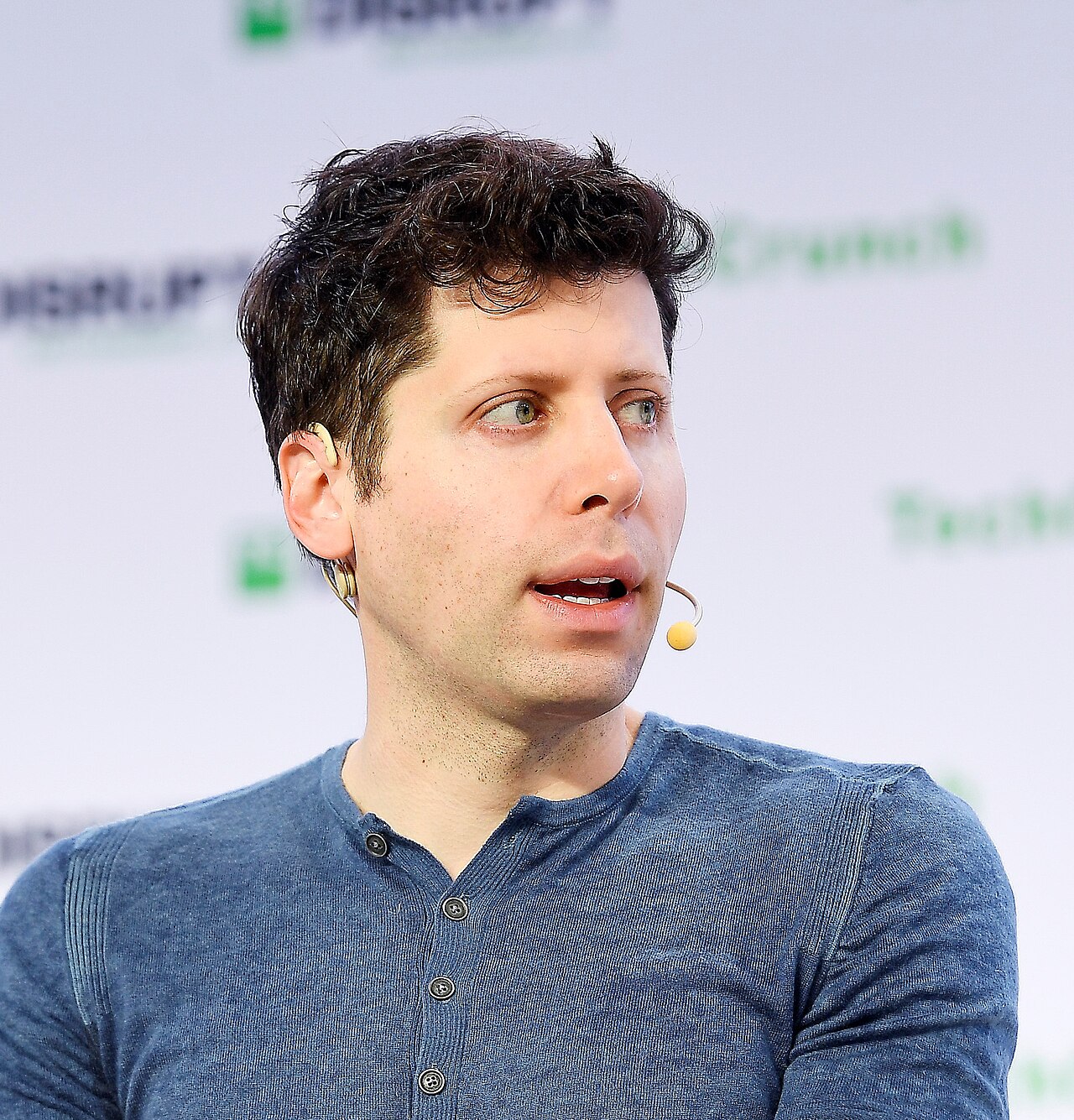
Header image: OpenAI headquarters at 1515 Third Street, San Francisco, by Coolcaesar via Wikimedia Commons, licensed under CC BY 4.0. In-body photograph of Sam Altman by TechCrunch via Wikimedia Commons, licensed under CC BY 2.0. Older photograph, shown for context.