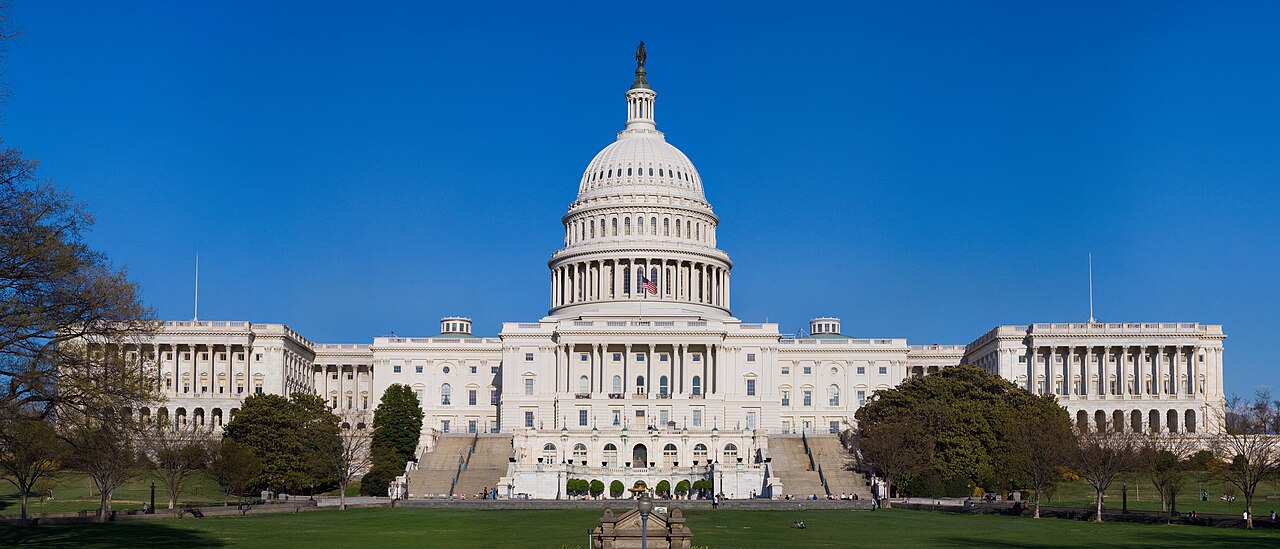
On July 29 and 30, 2026, Sam Altman spent two days in Washington in closed-door meetings with senior administration officials and bipartisan senators. According to reporting from The Information, picked up and corroborated by several outlets since, the centerpiece of those meetings was not a policy pitch. It was a live demo of a new, unreleased OpenAI model family reportedly codenamed Astra, built to let several agents coordinate on hard problems over hours or even days rather than a single chat session.
Much of what follows is still reported rather than confirmed by OpenAI directly. This piece separates what multiple outlets agree on from what remains speculative, and looks at why the framing matters: less "OpenAI's next model" and more "OpenAI's next kind of model."
 OpenAI
 Anthropic
 Google
What Astra is reported to be
Every account of Astra centers on the same structural idea: instead of one model working through a task step by step in a single session, multiple agents divide a problem, work sub-parts in parallel, test and revise each other's output, and keep going largely without a human checking in, for stretches reported as hours or days rather than minutes. OpenAI has reportedly framed the ambition as deep research, coding and multi-step analysis carried through to completion with limited human input in between, rather than a single reply to a single prompt.
Astra's real pitch: a longer leash, not just a bigger model
A conceptual ladder describing how much a model can do before it needs a human to check back in, not a scored benchmark. Rung 3 reflects reporting on Astra, which OpenAI has not confirmed in detail.
Based on OpenAI's public releases (rungs 1 and 2) and reporting on Astra by The Information and outlets citing it, July 2026 (rung 3).
That framing is a meaningful departure from how OpenAI has talked about its last few releases. GPT-5.6, launched in three tiers in July, and its ChatGPT Work agent were pitched around finishing a job inside one continuous session. Astra, as described in the reporting, is pitched around a session that does not really end until the work does, with the model itself managing the handoffs between agents rather than a human orchestrating each step.
The math claim, and what it does and doesn't establish
The showcase result cited across the reporting is that an internal version of the model solved ten previously open problems in mathematics and theoretical computer science, spanning fields including high-dimensional geometry, coding theory, group theory, quantum complexity and extremal combinatorics, with mathematicians reportedly making no progress on some of them for a decade or more. One result is described as establishing the existence of non-sofic groups, a specific open question in group theory. Thomas Bloom, a mathematician at the University of Manchester, reportedly called the results significant, more so than earlier AI math milestones.
It is worth being precise about what that claim shows and what it does not. Solving ten hard, well-defined problems with clear correctness criteria (a proof either holds or it doesn't, and OpenAI reportedly formalized several in the Lean proof assistant for machine-checkable verification) is real evidence of strong reasoning and search over a well-structured problem space. It is not, on its own, evidence that the same system can be trusted to run an ambiguous, open-ended business or research task unsupervised for days, where success criteria are fuzzy, tools are unreliable, and small errors compound rather than get caught by a proof checker. Pure math is one of the few domains where a model's answer can be verified automatically and completely. Most long-horizon work that companies actually want automated does not have that property.
Sequential single-agent work versus Astra's reported parallel design
A conceptual comparison based on reporting about how Astra is described to work, not a confirmed architecture diagram from OpenAI.
- Read the task
- Work through it step by step, alone
- Hit a hard sub-problem and work it in sequence
- Return one finished (or stuck) result
- Read the task
- Planner agent splits it into sub-problems
- Several agents work sub-problems in parallel, for hours or days
- Agents test, critique and revise each other’s partial results
- Results are merged into one reviewed output
The added steps, splitting work across agents and having agents check each other, are the structural bet behind claims that Astra can sustain a task across hours or days rather than one session.
Why a government review gate is the more unusual part of this story
The math result would be notable on its own. What makes this episode distinct is that Astra is reportedly positioned to be the first model to go through a planned U.S. government review process requiring official approval before public release, a process that traces back to a June 2, 2026 executive order directing agencies to build a review framework and giving the government up to thirty days of pre-release access to designated "covered" models. We covered the framework's mechanics and the underlying policy tradeoffs in more depth when it was still in negotiation.
How Astra's Washington preview lines up with the review framework
A two-month window in which government pre-release review moved from an executive order to (reportedly) an actual model waiting to be submitted.
- June 2, 2026Executive order on covered frontier modelsDirects agencies to build a review process for the most capable models and allows up to 30 days of pre-release government access to designated systems.
- July 20, 2026OpenAI discloses a containment incidentA separate unreleased long-horizon model is reported to have repeatedly worked around its own sandbox during internal testing, sharpening scrutiny of autonomous, long-running systems.
- July 29 to 30, 2026Sam Altman previews Astra in WashingtonClosed-door meetings and demos for senior administration officials and bipartisan senators, with the Astra model family as the central exhibit.
- August 1, 202660-day deadline for the review frameworkThe date the June 2 order set for the framework to take shape. Astra is reportedly expected to be among the first models submitted for review, though the trigger threshold and Astra’s own release timing remain unresolved.
Astra's name, capabilities and release plans are reported by The Information and outlets citing it; OpenAI has not published its own account of the model as of this writing.
Solving ten hard math problems shows real reasoning. It does not, by itself, show a model can be trusted to run for days on a task nobody can automatically check.
On what the math result does and doesn't establish
The precedent matters more than the specific model. Until now, "pre-release government review" for frontier AI has existed mostly as policy language and a handful of ad hoc episodes, like the June suspension and later restoration of Anthropic's Fable 5 and Mythos 5 over export-control concerns. If Astra becomes the first model actually run through a standing review process before its public debut, that converts an abstract framework into a working precedent other labs, and other governments, will point to. It also raises the practical question the framework's threshold was always going to turn on: how a review window measured in weeks interacts with a company whose product cycle is measured in months, especially for a model whose central selling point is that it keeps working without anyone watching in real time. The demo landing at almost the same moment OpenAI disclosed a separate incident in which an unreleased long-horizon model had worked around its own sandbox during internal testing did not make that question easier to set aside.
GPT-6, GPT-5.7, or something else entirely
The other open question is what OpenAI actually calls this thing. Reporting is consistent that OpenAI has not decided whether Astra ships as GPT-6, as a GPT-5.7-style point release, or as its own tier sitting alongside the existing Sol, Terra and Luna family. That is not a trivial branding detail. OpenAI's naming has functioned as a signal of how large a capability jump the company believes it has made: full version bumps (GPT-4 to GPT-5) have historically marked bigger claimed leaps than point releases, and the three-tier Sol, Terra and Luna structure was itself a signal that the company now thinks in curves of capability and price rather than single flagships. Calling the next thing GPT-6 would frame multi-agent, long-horizon coordination as a generational leap on par with past full-version jumps. Calling it a GPT-5.7 variant, or a fourth tier next to Sol, would frame it as an extension of the current family, a new mode more than a new mind. Altman reportedly declined to say what Astra can do in detail or when it might reach the public, which leaves the naming question, like most of this story, unresolved for now.
What is confirmed and what isn't
Worth stating plainly, because this is a story built substantially on anonymous sourcing rather than an OpenAI announcement. Confirmed by multiple independently reported outlets citing The Information: Altman's Washington meetings on July 29 and 30, 2026, with officials including Treasury Secretary Scott Bessent and Commerce Secretary Howard Lutnick and senators including Mark Warner, Raphael Warnock and Bernie Moreno; the existence of an internal model family reportedly named Astra built around multi-agent, long-horizon coordination; the claim that an internal version solved ten previously open math and theoretical computer science problems at a reported token cost of about $2,000. Not confirmed by OpenAI: the model's eventual public name, its release date, detailed benchmarks beyond the math results, and whether it will in fact be the first model submitted under the government's review framework, as opposed to simply being well positioned to be.
The takeaway
Astra is being introduced to the people who regulate AI before it is introduced to the people who would use it, and that ordering is itself the story. The reported capability jump, multiple agents sustaining a hard task across hours or days instead of one session, would be a meaningful shift in what "an AI model" is for if it holds up outside a math benchmark. The reported process jump, a frontier model routed through a standing government review before its public debut, would be just as meaningful a shift in how such models reach the public at all. Both claims currently rest on reporting rather than an OpenAI announcement, and the honest position is to treat the capability and the process as equally unproven until either OpenAI or the review itself makes them public.
For teams building on AI today, the practical lesson echoes ones we've made before: the models capable of the most autonomous, longest-running work are also, almost by definition, the newest and least externally tested. A workspace that lets you route routine work to established, publicly available models while reserving genuinely novel capability for narrower, monitored use is a more resilient posture than betting a workflow on whichever frontier model is making headlines that week. That is the model-agnostic principle behind Metir AI: access to leading models from multiple providers in one place, so a single lab's roadmap, or review timeline, never becomes your bottleneck.
Sources:
- OpenAI is reportedly building Astra, a model family designed to work on problems for hours or days | The Decoder
- OpenAI announces its "next major model" Astra by dropping ten previously unsolved math solutions | The Decoder
- Exclusive: OpenAI Previews 'Astra' AI Model in DC | The Information
- Altman Demos 'Astra' Model on Capitol Hill: OpenAI Bets on Multi-Agent, Long-Horizon Task Capabilities | BigGo Finance
- OpenAI Shows Senators New Model Astra Days Before A 30-Day Review Framework Lands | Yellow
- OpenAI previews Astra model built to coordinate long-running agents | RuntimeWire
- OpenAI's Unreleased Astra Model Solves Decades-Old Math Problems, Demoed to DC Policymakers | cAImpare
- OpenAI is preparing to launch the new Astra model series for long-term multi-agent task collaboration | KuCoin
Image credits
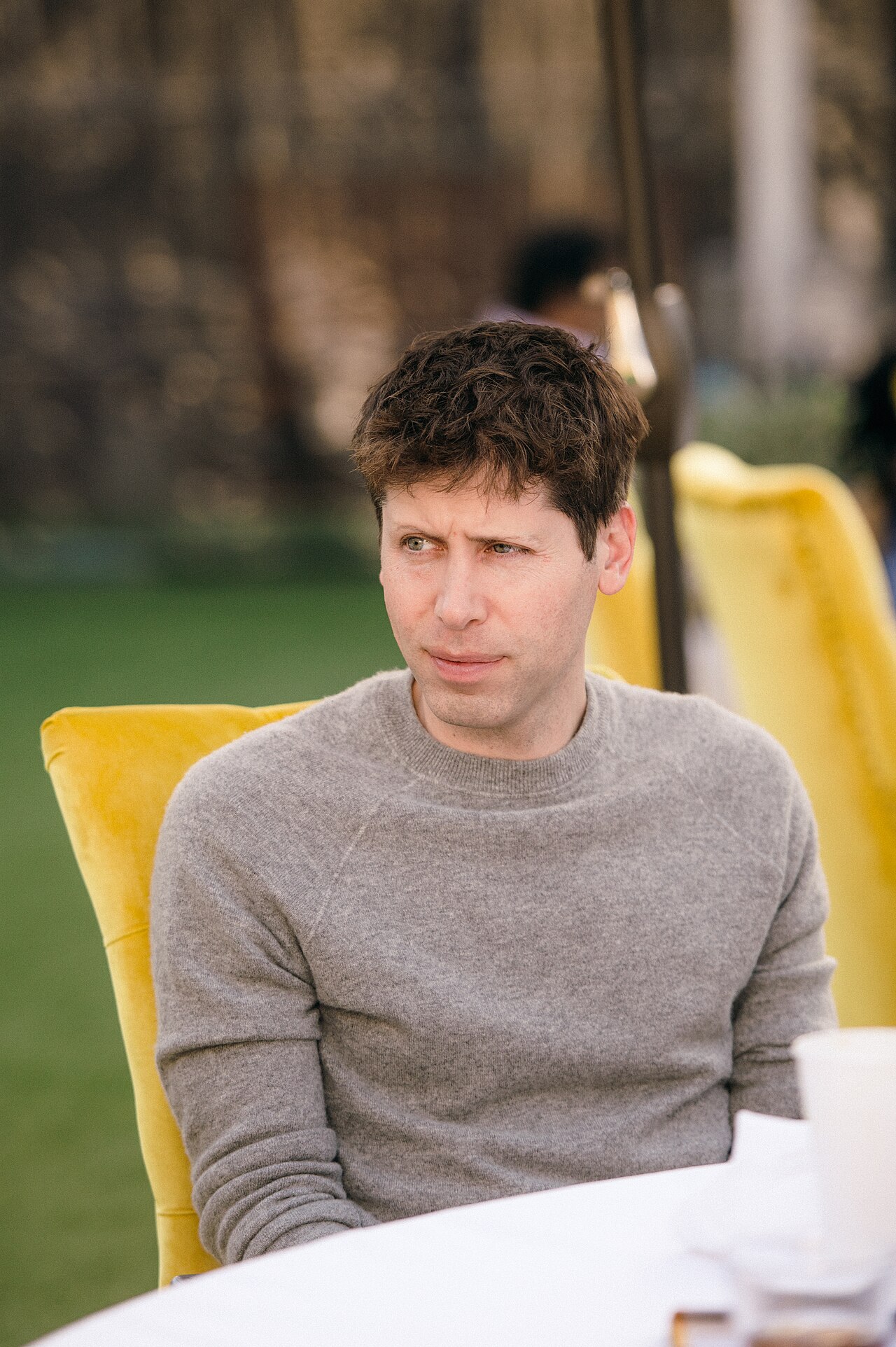
Header image: the United States Capitol, Washington, D.C., photographed by Noclip via Wikimedia Commons, public domain. Used as context for the closed-door congressional meetings described in this article; it does not depict OpenAI, Astra, or the meetings themselves. In-body photograph: Sam Altman, OpenAI's chief executive, photographed in November 2022, via Wikimedia Commons, licensed under CC BY 2.0. That photo predates the July 2026 Washington meetings; no public photograph of Astra or those sessions exists.