
Nvidia does not talk about selling chips anymore. It talks about selling "AI factories," entire buildings of compute, networking, power and software sold as a single unit. In mid-July 2026, that language stopped being a metaphor and became a line item: Nvidia and Japan's government announced a deployment of 13,750 Nvidia Vera CPUs and 27,500 Rubin GPUs, while the company's next architecture, Vera Rubin, moved from early samples into full production at cloud partners around the world. This piece explains what an AI factory actually is, what changes in the Vera Rubin architecture versus the outgoing Blackwell generation, and the power, memory and networking constraints that now shape how fast any of this can actually ship.
 NVIDIA
What an "AI factory" actually means
Nvidia's own framing is deliberate. A conventional data center runs many different workloads at modest, fairly constant power draw. An AI factory is built around one job: converting electricity into tokens, as continuously and cheaply as possible, at a scale where power delivery, cooling and networking are engineered together with the chips rather than bolted on afterward. Nvidia's DSX platform is its attempt to standardize that whole stack, reference designs for the racks, the power and cooling systems, and now a piece of orchestration software called DSX OS that provisions, monitors and manages the hardware at scale, according to Data Center Knowledge's July 2026 hardware roundup.
The clearest evidence that Nvidia means this literally, not just as marketing, is the deal it announced with Japanese AI infrastructure company Noetra Corp. on July 16, 2026.
The Japan deal, and why the ratio matters
The Noetra Corp. buildout is described by Nvidia as the world's first national AI infrastructure project: a state-supported deployment of 13,750 Vera CPUs and 27,500 Rubin GPUs delivering 140 megawatts of data-center capacity, built on the Nvidia DSX platform and backed by Japan's Ministry of Economy, Trade and Industry. It underpins Japan's FRONTia Project, aimed at building multimodal foundation models for manufacturing, logistics, healthcare and robotics.
One deal, a fixed 1:2 chip ratio
The Nvidia-Noetra Corp. AI factory announced for Japan on July 16, 2026 pairs 13,750 Vera CPUs with 27,500 Rubin GPUs, the same 1:2 CPU-to-GPU ratio built into every Vera Rubin NVL72 rack (36 CPUs to 72 GPUs).
Figures announced July 16, 2026 for the Noetra Corp. deployment supporting Japan's FRONTia Project. The deal totals 140 megawatts of data-center capacity across 382 Vera Rubin NVL72 racks.
The ratio in that number is not a coincidence. Twenty-seven thousand five hundred divided by 13,750 is exactly two, the same 1:2 CPU-to-GPU split built into a single Vera Rubin NVL72 rack, which pairs 36 Vera CPUs with 72 Rubin GPUs. In other words, the Noetra deal is not a bespoke configuration; it is roughly 382 standard NVL72 racks, industrialized and repeated at national scale. "Japan invented modern manufacturing," Jensen Huang said at the announcement. "Now, it is building the AI factories that will power the next industrial revolution." Japan's METI minister, Ryosei Akazawa, framed it as combining "Japan's strengths, such as its onsite expertise and manufacturing technology infrastructure," with the compute NVIDIA supplies.
Vera Rubin versus Blackwell: what actually changes
Blackwell, Nvidia's current-generation platform, pairs its Blackwell GPU with the Grace CPU, an Arm-based chip designed mainly to feed data to the GPU efficiently. Vera Rubin replaces both halves. The Vera CPU is a new, Nvidia-designed Arm chip built around 88 custom "Olympus" cores, supporting up to 1.5 TB of LPDDR5X memory, roughly double the CPU performance of Grace, according to hardware breakdowns from Civo and Thunder Compute. The Rubin GPU (internally the R100) is reported at 336 billion transistors across two reticle-sized dies, with up to 288 GB of HBM4 memory at up to 22 TB/s of bandwidth, about 2.75 times the memory bandwidth of Blackwell's HBM3e.
Assembled into a full NVL72 rack, 72 Rubin GPUs and 36 Vera CPUs, Nvidia's own figures claim 3.6 exaflops of FP4 compute and 260 TB/s of internal bandwidth, connected over a new NVLink 6 fabric running at 3.6 TB/s per GPU, double NVLink 5 on Blackwell. Nvidia's May 2026 announcement of Vera Rubin reaching full production claimed up to 10 times lower inference token cost and up to four times fewer GPUs required for mixture-of-experts training compared with the outgoing Grace Blackwell platform. Those are vendor figures rather than independently audited benchmarks, and should be read with that caveat, but the direction, more memory bandwidth and interconnect per chip rather than simply more chips, is consistent with where the rest of the industry is also headed.
Vera Rubin was built for this moment, an AI factory engine that delivers intelligence at scale.
Jensen Huang, NVIDIA CEO, on Vera Rubin reaching full production
Blackwell isn't done, and the ramp is a straddle
None of this means Blackwell disappears overnight. Blackwell continues to see strong demand through the second half of 2026 even as Vera Rubin ramps in parallel, and Nvidia has reportedly secured close to 60% of TSMC's advanced packaging capacity to try to keep up with Blackwell orders while Rubin production scales. That overlap is the practical reality of an architecture transition at this size: customers who committed to Blackwell racks are still deploying them, while early Vera Rubin systems are being validated at Nvidia's largest cloud partners in parallel. Nvidia says Vera Rubin NVL72 racks are now running at Microsoft Azure, Google Cloud, AWS, Oracle Cloud Infrastructure and CoreWeave, among eight confirmed cloud partners, with CoreWeave reporting the first bring-up of the platform and roughly a tenfold increase in token output over the previous generation of racks. Production shipments to customers broadly are set to begin this fall.
 Microsoft
 Azure
Azure Google Cloud
 AWS
AWSThe constraints that actually gate the buildout
The more interesting story for anyone trying to judge how fast this can scale is what is running short. Power is the most obvious limit: the Noetra deployment alone requires 140 megawatts, and every AI factory announcement in 2026 now comes with a megawatt figure attached, because power delivery, not chip supply, increasingly determines how quickly a site can go live.
Memory is the newer and less visible constraint. Data Center Knowledge's July 2026 hardware roundup flags memory as "quickly becoming a potential chokepoint alongside GPUs and power as deployments scale," and Rubin's own generational leap, HBM4 at far higher bandwidth than Blackwell's HBM3e, only works if enough of that memory can actually be manufactured and packaged in time. That is a real supply constraint sitting underneath every headline chip count.
The buildout is widening past the GPU
Nvidia's Spectrum-X networking line took the top revenue spot in data-center Ethernet switching in Q1 2026, up from under 4% two years earlier, per IDC. Compute is no longer the only layer Nvidia sells into an AI factory.
Data-center segment revenue share, IDC. The overall Ethernet switch market (all segments) is still led by Cisco; Nvidia's lead is specific to the data-center segment where Spectrum-X competes.
Networking is the constraint Nvidia has moved to control directly rather than just work around. IDC data shows Nvidia becoming the top revenue vendor in data-center Ethernet switching in the first quarter of 2026, with a 21.5% share of that segment, up from under 4% two years earlier, driven by its Spectrum-X switch line. Nvidia does not lead the broader Ethernet switch market overall, Cisco still does across all segments, but inside the AI-factory data-center segment specifically, Nvidia now sells the fabric connecting the racks as well as the racks themselves. That is a meaningful expansion of what "buying Nvidia" means for a hyperscaler: compute, memory-adjacent design choices, and now a growing share of the network in between.
The trillion-dollar backdrop
Jensen Huang told Nvidia's GTC 2026 keynote that the company has roughly $1 trillion of AI infrastructure demand it can already see through 2027, a figure repeated across financial press coverage of the keynote. That kind of forward guidance is useful context for why Nvidia is racing to stand up Vera Rubin capacity in parallel with Blackwell rather than sequentially, but it is guidance from the seller, not an independently verified order book, and should be read as a signal of visibility and confidence rather than a guaranteed number.
The honest caveats
A few things are worth holding onto. First, "intend" and "in production" are doing real work in this story: cloud partners running early Vera Rubin racks for validation is a genuine milestone, but it is not the same as the platform being broadly available, which Nvidia itself pegs at this fall. Second, vendor-reported performance multiples (10x token cost reduction, 4x fewer GPUs for training) come from Nvidia and its partners and have not yet been independently benchmarked at scale. Third, the Japan deployment is described with the word "intent" behind some of its associated industrial commitments, and the real test will be measured in operating factories and shipped foundation models over the next several quarters, not announcement size.
Why this matters beyond one company's chip roadmap
The AI factory buildout is ultimately in service of running many different models, not one. A rack full of Rubin GPUs is agnostic about whether it is serving a reasoning model from one lab or a coding model from another; the value it creates depends on whoever is choosing which model runs which job. That is the same principle that applies one layer up the stack, in the tools people actually use to work with AI day to day: the winning approach is rarely to bet everything on a single vendor, whether that vendor is a chipmaker or a model lab. Metir AI applies that logic at the application layer, giving teams model-agnostic access to leading AI systems in one workspace, so the benefits of this compute buildout, whichever chips or labs end up ahead, show up as more capable tools rather than lock-in to any one provider's roadmap.
The takeaway
Nvidia's July 2026 announcements are less about a single new chip and more about a company selling entire buildings as a unit. The Vera CPU and Rubin GPU are a genuine architectural leap over Grace Blackwell on paper, particularly in memory bandwidth and interconnect, and the Noetra deal in Japan shows what "AI factory at national scale" concretely looks like: tens of thousands of specific, ratio-matched chips, a fixed power budget, and a government backing it. But the constraints worth watching now sit beside the GPU count, not inside it: how much power a site can actually draw, how much HBM4 the supply chain can produce, and how much of the surrounding network Nvidia itself now controls.
Sources:
- Japan Government, Industrial Leaders and NVIDIA Launch the World's First National AI Infrastructure | NVIDIA Newsroom
- NVIDIA and Noetra plan Vera Rubin AI factory in Japan | Engineering.com
- Nvidia and Japan unveil world's first national AI infrastructure, Noetra consortium to build a 140MW Rubin AI factory with 27,500 GPUs | Tom's Hardware
- Data Center Hardware Highlights: July 2026 | Data Center Knowledge
- GTC Taipei: Nvidia Says Vera Rubin, Vera CPU on Track, Launches DSX OS to Run AI Factories | Data Center Knowledge
- NVIDIA Vera Rubin Ramps Into Full Production to Power Agentic AI Factories Worldwide | NVIDIA Newsroom
- NVIDIA Vera Rubin NVL72: Full Specs & Platform Breakdown | Hashrate Index
- NVIDIA Rubin GPU vs. NVIDIA Vera CPU | Civo
- NVIDIA Rubin Architecture: Everything You Must Know (July 2026) | Thunder Compute
- NVIDIA Vera Rubin Driving Performance Per Watt, Lower Token Costs for Partners Worldwide | NVIDIA Blog
- CoreWeave Completes Industry-First Bring-Up and Validation of NVIDIA Vera Rubin NVL72 | CoreWeave
- NVIDIA Becomes #1 in Datacenter Ethernet Switching as 1Q26 Market Surges 39.8% to $15.4 Billion | IDC
- Nvidia Overtakes Rivals in Data Center Ethernet Switching, IDC Says | Data Center Knowledge
- Jensen Huang expects Nvidia to sell $1 trillion of AI hardware through 2027 | Tom's Hardware
Image credits
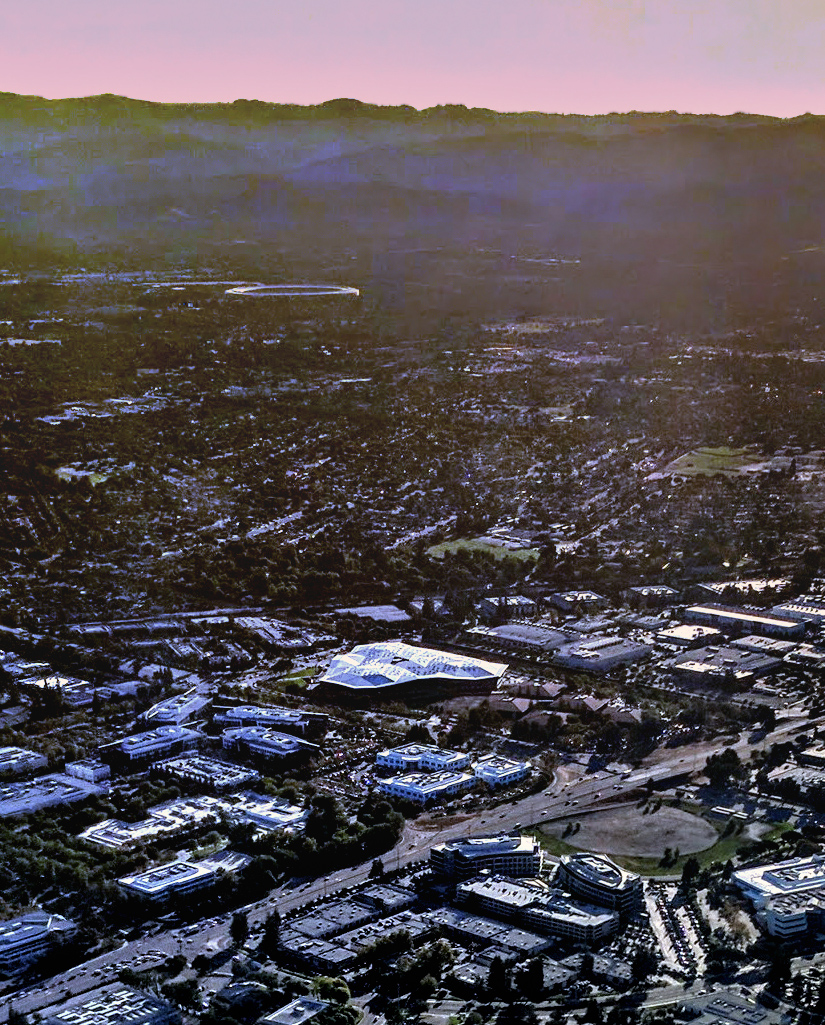
Header image: Jensen Huang, founder and CEO of Nvidia, posing for selfies with students after a talk at Stanford University's CS 153 course, April 30, 2026, via Wikimedia Commons, licensed under CC BY-SA 4.0. In-body photograph: an aerial view of Nvidia's headquarters campus in Santa Clara, California, photographed in 2017 by Dicklyon via Wikimedia Commons, licensed under CC BY-SA 4.0. No public photograph of the unreleased Rubin GPU or a Vera Rubin rack exists yet, so both images depict the company and its leadership rather than the hardware itself.