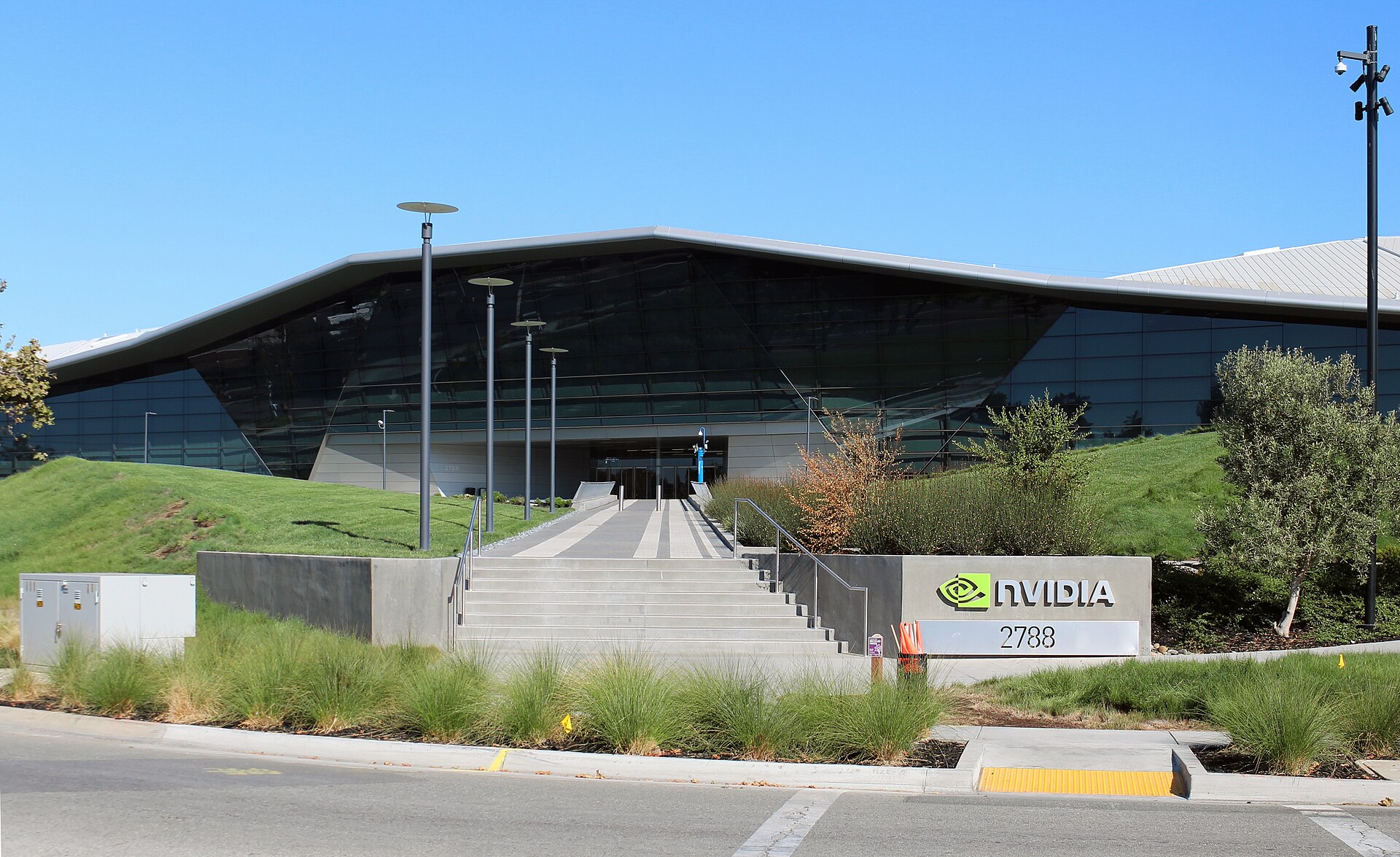
Nvidia has agreed to invest a reported $5 billion in Safe Superintelligence (SSI), the AI lab Ilya Sutskever founded in 2024 after leaving OpenAI, according to reporting from Bloomberg and The Information published July 27, 2026. The deal makes Nvidia a strategic backer of a company that has never shipped a product, has no announced revenue, and has spent two years pursuing a single, unreleased goal: safe superintelligence.
The transaction sits at the intersection of three separate stories worth pulling apart. One is about Nvidia, the chipmaker increasingly investing in the companies that buy its GPUs. One is about SSI's own trajectory, from a $5 billion valuation in 2024 to roughly $32 billion two years later, on the strength of a founder's reputation rather than a shipped product. And one is about the broader 2026 pattern of compute-for-equity deals reshaping how frontier AI labs are financed. This piece treats each in turn, and states plainly where the facts support more than one reading.
 NVIDIA
 Google
What the deal actually is
According to the reporting, Nvidia's investment gives SSI access to Nvidia's upcoming Vera Rubin platform, the chipmaker's next-generation AI hardware line, and the companies say the added infrastructure will increase SSI's available compute roughly tenfold over the next twelve months. That is a significant technical shift as much as a financial one: SSI had relied on Google's TPUs early in its life, and the move to Nvidia GPUs marks a change in which chip architecture underwrites the lab's research.
SSI was founded in June 2024 by Sutskever, an OpenAI co-founder and its former chief scientist, alongside Daniel Gross and Daniel Levy. From the outset the company described a narrow mission: pursue safe superintelligence as its "sole focus," with no interim products and, by its own account, no near-term pressure to generate revenue. As of this reporting, SSI has released no model, no product, and no public demo. The Nvidia deal does not change that; it changes how much computing power SSI has to work with while it keeps that mission unchanged.
From Google's TPUs to Nvidia's GPUs
The infrastructure switch is the part of the story that reads as most consequential for the wider industry. Google has spent the past two years positioning its Tensor Processing Units as a credible alternative to Nvidia's GPUs, courting AI labs that wanted an option beyond a single supplier. SSI's early use of TPUs was, in that sense, a small but visible data point for Google's pitch. A move of this scale back toward Nvidia GPUs, particularly ahead of the Vera Rubin generation, is a reminder of how much leverage Nvidia still holds over which chips the most closely watched labs choose to build on, even when a competitor's hardware is already in the building.
A pattern, not an isolated deal
Nvidia investing in a company that will spend a large share of that money on Nvidia's own chips is not new in 2026. The chipmaker has made a series of large strategic investments across the AI stack this year, and outside observers, including the outlets covering this specific deal, have repeatedly used the word "circular" to describe the shape of the financing: Nvidia funds a customer, the customer buys Nvidia hardware, and Nvidia's revenue and its investment portfolio both grow from the same transaction. That structure is not illegal or even unusual for a dominant supplier, but it does complicate simple readings of demand. When a chipmaker is also a major financier of its own customer base, growth in orders is harder to separate from growth in Nvidia's own capital deployment.
A chipmaker funding the customer that buys its chips is not proof of weak demand, but it is not independent proof of strong demand either.
On reading circular AI financing
SSI is a particularly stark example of the pattern because, unlike most companies receiving this kind of strategic capital, it has no product revenue to point to at all. The compute it receives from Nvidia goes directly into research on a system that, by design, is not yet meant to ship.
Backing a person and a thesis, not a product
SSI's valuation, roughly sixfold in under two years
Reported valuation at each capital event since SSI's founding in 2024. Bar length is scaled to valuation, not amount raised.
SSI has raised roughly $7B in total since 2024. The Nvidia investment is reported as strategic capital layered onto the existing ~$32B valuation, not a new priced round.
SSI raised $1 billion in September 2024 at a valuation of roughly $5 billion, an unusually large seed-stage number justified almost entirely by Sutskever's standing as one of the researchers most responsible for OpenAI's early breakthroughs. It later raised roughly $2 billion more, in a round associated with investment firm Greenoaks, at a valuation near $32 billion, and has raised approximately $7 billion in total since founding. None of that capital has been tied to a shipped product, a customer base, or disclosed revenue. Nvidia's $5 billion is layered on top of that existing valuation rather than arriving as a fresh priced round, according to the reporting.
Valued this way, SSI is a bet almost entirely on people and thesis. The case for that bet is straightforward: Sutskever has a track record inside OpenAI that few researchers can match, and a lab willing to forgo the distraction of shipping interim products may credibly move faster toward its stated goal than one juggling a commercial roadmap alongside a research one. The case against is equally straightforward: a $32 billion valuation with no revenue and no product is, by any conventional measure, a valuation built on narrative rather than traction, and it raises the question of what evidence, short of the eventual product itself, would ever cause that number to be revised.
Both of these are legitimate readings of the same set of facts, and this deal does not resolve which one is correct. It simply adds Nvidia, a company with obvious commercial interest in AI capital flowing toward compute purchases, to the list of investors making that bet.
What it means beyond SSI
For builders and teams outside the frontier-lab conversation, deals like this one are a reminder that the AI infrastructure market is being shaped as much by strategic capital relationships as by product competition. A single chip supplier sitting on both sides of a growing share of frontier AI deals, as customer-facing investor and as hardware vendor, is a concentration worth tracking even for organizations that will never train a model themselves. It is also one more argument for not anchoring a workflow to a single provider's roadmap or a single lab's fortunes; platforms like Metir AI that work across models from multiple labs give teams a way to keep building without betting the whole stack on any one company's compute deal or valuation trajectory.
Two readings, stated plainly
Reading one: this is validation. A researcher with Sutskever's record chose to found a lab with a genuinely unusual structure, no interim products, no revenue pressure, and investors including the world's dominant AI chipmaker are willing to fund that structure at scale because they believe the underlying research bet is sound. The TPU-to-GPU move and the tenfold compute increase are, in this reading, simply what it looks like when a serious research effort gets the resources it needs.
Reading two: this is a valuation detached from any observable output, propped up by a small number of investors, including one with a direct commercial interest in AI capital being spent on its own hardware, in a year when "circular" AI financing has become common enough to draw its own scrutiny. In this reading, a $32 billion valuation with zero revenue is not evidence the thesis is correct, only evidence that enough capital believes it might be.
The honest position is that both readings remain open, and will stay open until SSI ships something the outside world can actually evaluate. Until then, the size of the checks being written is the only publicly available signal, and checks are not proof.
Sources:
- Nvidia Makes Substantial Investment in Sutskever's AI Startup | Bloomberg
- Nvidia Invests $5 Billion in Ilya Sutskever's Safe Superintelligence as AI Startup Shifts From Google TPUs to GPUs | TechStartups
- Nvidia Invests $5 Billion in Safe Superintelligence | Crypto Briefing
- Nvidia Makes Multibillion-Dollar Investment in Ilya Sutskever's Safe Superintelligence | The Information
- Nvidia Pours Billions Into Safe Superintelligence, a Startup With No Product and No Revenue | Trending Topics
- Nvidia Backs Safe Superintelligence With Investment and Vera Rubin Compute | MLQ.ai
Image credits
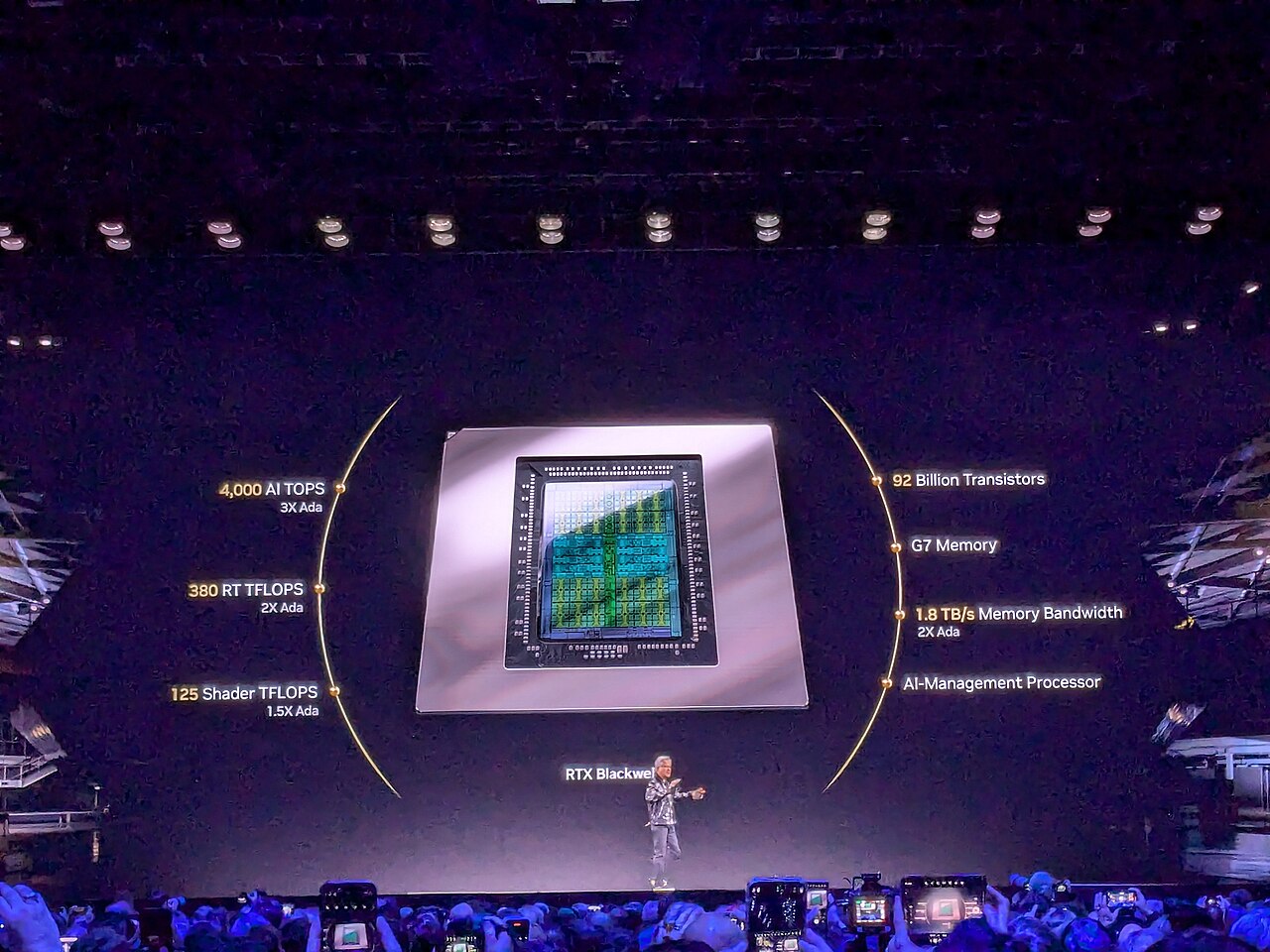
Header image: Nvidia's headquarters building in Santa Clara, California, photographed by Coolcaesar, CC BY-SA 4.0, via Wikimedia Commons. In-body image: Nvidia CEO Jensen Huang presenting the RTX Blackwell GPU architecture at CES 2025, photographed by Pronoia, CC0 (public domain), via Wikimedia Commons.