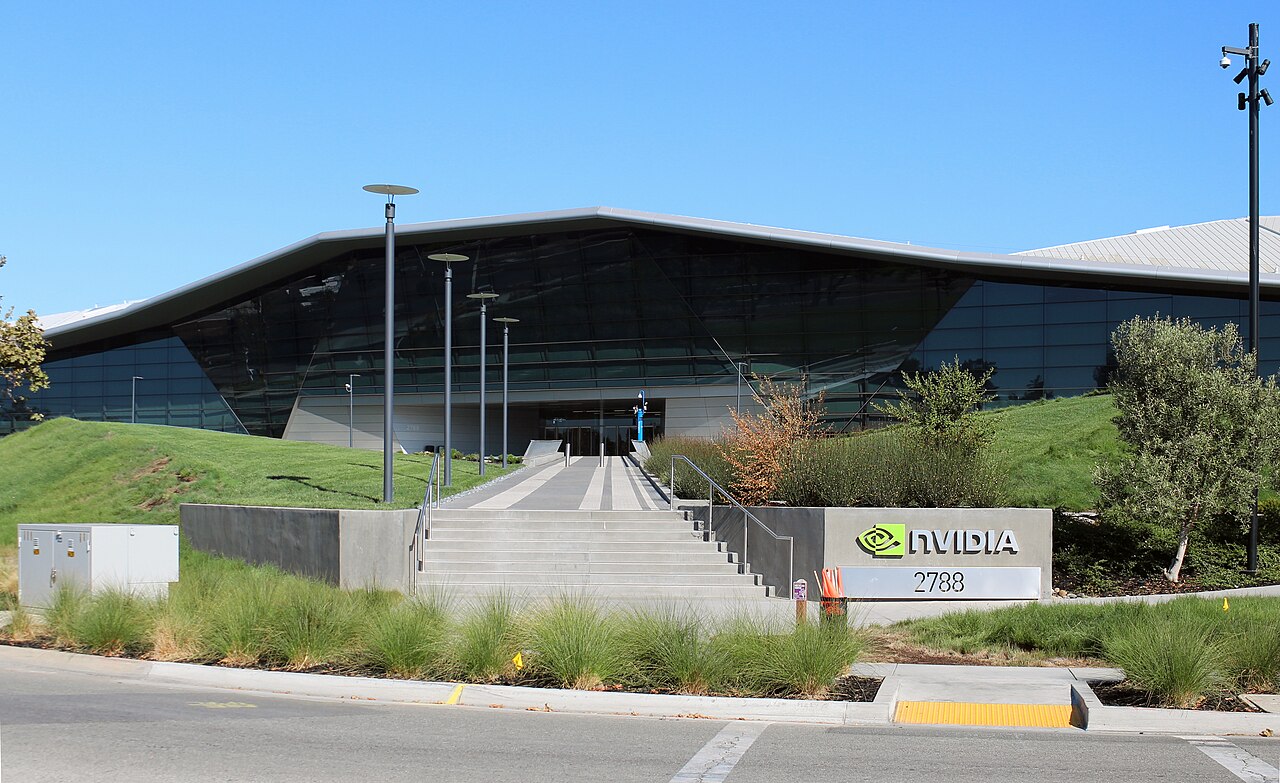
Nvidia is in early discussions with Rebellions, a South Korean designer of AI inference chips, about a possible tie-up that could take the shape of a technical partnership, an equity investment, or an acquisition, according to a report Bloomberg published on August 21, 2026, and corroborated by Seeking Alpha and The Next Web. Nvidia CEO Jensen Huang met Rebellions co-founder and CEO Sunghyun Park at Nvidia's Santa Clara headquarters this week to discuss the potential deal. Nothing has been agreed, and people familiar with the matter cautioned that the talks are preliminary and may not lead to a transaction at all.
What is confirmed, and what is not
The confirmed facts are narrow. Nvidia and Rebellions are talking, and the conversation covers a range of possible structures, from a technology license to a direct investment to an outright purchase. Huang and Park met at Nvidia's headquarters this week. Beyond that, terms, any valuation, and even whether a deal happens at all remain open. Reporting is explicit that the discussions are early-stage, and that framing should carry through any read of what this could mean.
Who Rebellions is
Rebellions was founded in 2020 and is based in South Korea, where it designs neural processing units, or NPUs, purpose-built for AI inference in data centers. Inference is the stage where an already-trained model is run against live data to produce an answer, as distinct from the training stage where a model first learns its weights. Rebellions' flagship Rebel100 chip is manufactured on Samsung's 4-nanometer process and pairs a four-chiplet design with 144GB of HBM3E high-bandwidth memory, according to earlier reporting on the company.
The company has raised roughly $850 million to date and was most recently valued at about $2.3 billion, with backers that include SK Hynix, Samsung Ventures, Arm Holdings, SK Telecom, Saudi Aramco's Wa'ed Ventures, and South Korea's Korea National Growth Fund, a government-backed vehicle. Rebellions is widely described as a centerpiece of South Korea's effort to build a domestic AI chip industry, an initiative some coverage has nicknamed "K-Nvidia." The company has said it is preparing for an IPO, with a listing on South Korea's KOSPI exchange targeted for late 2026 or early 2027, while also holding preliminary talks with the New York Stock Exchange and Nasdaq about a US listing.
Deliberations between Nvidia and six-year-old Rebellions are preliminary and may not lead to a transaction.
Reported by Bloomberg, August 21, 2026
Why Nvidia would be interested in an inference specialist
Nvidia's dominance in AI computing was built on training, the process of teaching large models on massive GPU clusters, where its CUDA software stack and high-end GPUs face few credible substitutes. Inference is a different market with different economics. It runs at a much larger and more distributed scale than training, since every query a deployed model answers is another inference workload, and buyers of inference capacity are more sensitive to cost per query than to peak theoretical performance. That has drawn a wave of specialized challengers, including Rebellions, that argue a chip designed only for inference can be cheaper and more efficient than a general-purpose GPU pressed into serving that role.
Nvidia has responded to that pressure with the same broad playbook twice in the past year, once with the American company Groq and once with Poolside, another US-based AI startup. The chart below lays out the pattern.
Nvidia's recurring move against inference-chip challengers
Twice in the past eight months, Nvidia has neutralized an inference-focused challenger through a non-exclusive licence plus a hiring wave and a minority stake, rather than an outright purchase. The Rebellions talks fit the same shape, but are still at an early, unconfirmed stage.
- Dec 24, 2025Groq: ~$20B non-exclusive licence + hiresNvidia licenses Groq’s inference technology and hires founder Jonathan Ross plus other senior staff. Groq keeps operating independently and continues its GroqCloud business.
- Aug 20, 2026Poolside: $6B licence + $1B investmentNvidia licenses Poolside’s Model Factory software and offers jobs to 109 staff, while separately investing $1 billion at a $12 billion pre-money valuation. Poolside’s founders stay on; the licence is non-exclusive.
- Aug 21, 2026Rebellions: early talks, no terms disclosedJensen Huang meets Rebellions CEO Sunghyun Park at Nvidia’s Santa Clara HQ. Reported options include a technical partnership, an equity investment, or an acquisition. Nothing is agreed, and talks may not lead anywhere.
The Rebellions discussions are preliminary and unconfirmed as of August 21, 2026. Deal values for Groq and Poolside reflect press reporting, not official disclosures.
In December 2025, Nvidia reached a roughly $20 billion arrangement with Groq, described publicly as a non-exclusive technology license, under which it hired Groq founder Jonathan Ross and other senior engineers while Groq continued operating its own cloud business. In August 2026, Nvidia struck a similar deal with Poolside, paying $6 billion to license the startup's model-development software and extending job offers to 109 of its staff, alongside a separate $1 billion equity investment at a $12 billion valuation. In each case, the structure let Nvidia absorb the technology and much of the talent while stopping short of a formal acquisition, and while leaving the licensed company nominally independent.
If the Rebellions conversation follows that same shape, it would extend the pattern to a foreign, government-backed inference-chip maker for the first time, rather than a US software or hardware startup. That is a meaningfully different case, both commercially and politically, and it is the reason this report is being read closely even though nothing is close to signed.
The regulatory backdrop
Any Nvidia-Rebellions deal, in whatever form, would draw scrutiny on two fronts. In the United States, Nvidia's Groq and Poolside deals have already attracted attention from lawmakers and antitrust regulators who argue that license-and-hire structures function as de facto acquisitions designed to sidestep merger review, at a time when Nvidia holds a commanding share of the AI accelerator market. Senators Elizabeth Warren and Richard Blumenthal have publicly questioned whether the Groq deal was structured to avoid antitrust law, and the FTC has signaled interest in scrutinizing "reverse acquihire" deals across Big Tech more broadly. A move into inference chips specifically, an area regulators have flagged as the next frontier of Nvidia's market power, would likely sharpen that scrutiny rather than avoid it.
In South Korea, a deal would face a separate layer of review. Rebellions has taken direct investment from a Korean government growth fund and is treated as a strategic asset in the country's push to build domestic AI chip capacity. Any change of control, technology transfer, or exclusivity arrangement involving a company in that position would likely require sign-off from Korean regulators concerned with semiconductor policy and technology sovereignty, independent of whatever US antitrust process applies.
 NVIDIA
What it would signal for other inference challengers
Whatever the outcome, the talks are a data point about how difficult it has become for an independent inference-chip company to stay independent and well-capitalized at the same time. Groq, once one of the most visible attempts to out-engineer Nvidia on inference economics, is now largely inside Nvidia's orbit and has pivoted much of its remaining business toward running Nvidia GPUs as a cloud provider rather than competing with them. Cerebras, SambaNova, and other wafer-scale or dataflow-chip makers continue to operate independently for now, but the Rebellions talks are a reminder that Nvidia has both the capital and a repeatable playbook for absorbing the technology and talent of any inference challenger that gets far enough to be worth absorbing.
For companies and teams that build on top of AI models rather than the silicon underneath them, the practical takeaway is less about any single chip vendor's fortunes and more about avoiding lock-in to one. As the inference hardware layer keeps consolidating around a small number of players, staying flexible about which models and which infrastructure a workflow depends on becomes more valuable, not less. A model-agnostic platform like Metir AI, which works across models from OpenAI, Anthropic, Google, and xAI rather than tying a workflow to one provider's stack, is one way to keep that flexibility as the underlying hardware market keeps reshuffling.
The bigger picture
An early conversation between two companies is not a deal, and Bloomberg's reporting is careful to say the discussions may go nowhere. What makes it worth tracking is the pattern it fits: a dominant training-chip vendor repeatedly absorbing the technology and people of promising inference challengers through structures that fall short of a formal acquisition, now potentially reaching beyond the US for the first time into a company backed by a foreign government's industrial policy. The terms Nvidia and Rebellions land on, if any, and the regulatory response on both sides of the Pacific, will say more about the state of AI chip competition than this initial meeting does on its own.
Sources:
- Nvidia in Talks With Chip Startup Rebellions for Potential Deal | Bloomberg
- Nvidia mulls potential deal with Korean AI chip startup Rebellions | Seeking Alpha
- Nvidia is in talks with the Korean inference chip designer Rebellions | The Next Web
- Nvidia Explores Potential Partnership Or Acquisition With Rebellions | Dataconomy
- Samsung-backed AI chip firm Rebellions targets IPO in South Korea next year | CNBC
- Samsung-backed AI chip firm Rebellions raises $400 million ahead of IPO | CNBC
- Nvidia to license tech from AI inference chip company Groq, hire its leadership | Data Center Dynamics
- Nvidia buying AI chip startup Groq's assets for about $20 billion | CNBC
- Nvidia to Pay AI Startup Poolside a $6 Billion License | Bloomberg
- Sources: Poolside Strikes $6 Billion Licensing Deal with Nvidia | Newcomer
- Warren, Blumenthal Question Whether Nvidia's $20 Billion Groq Deal Is Attempt to Avoid Antitrust Laws
Image credits
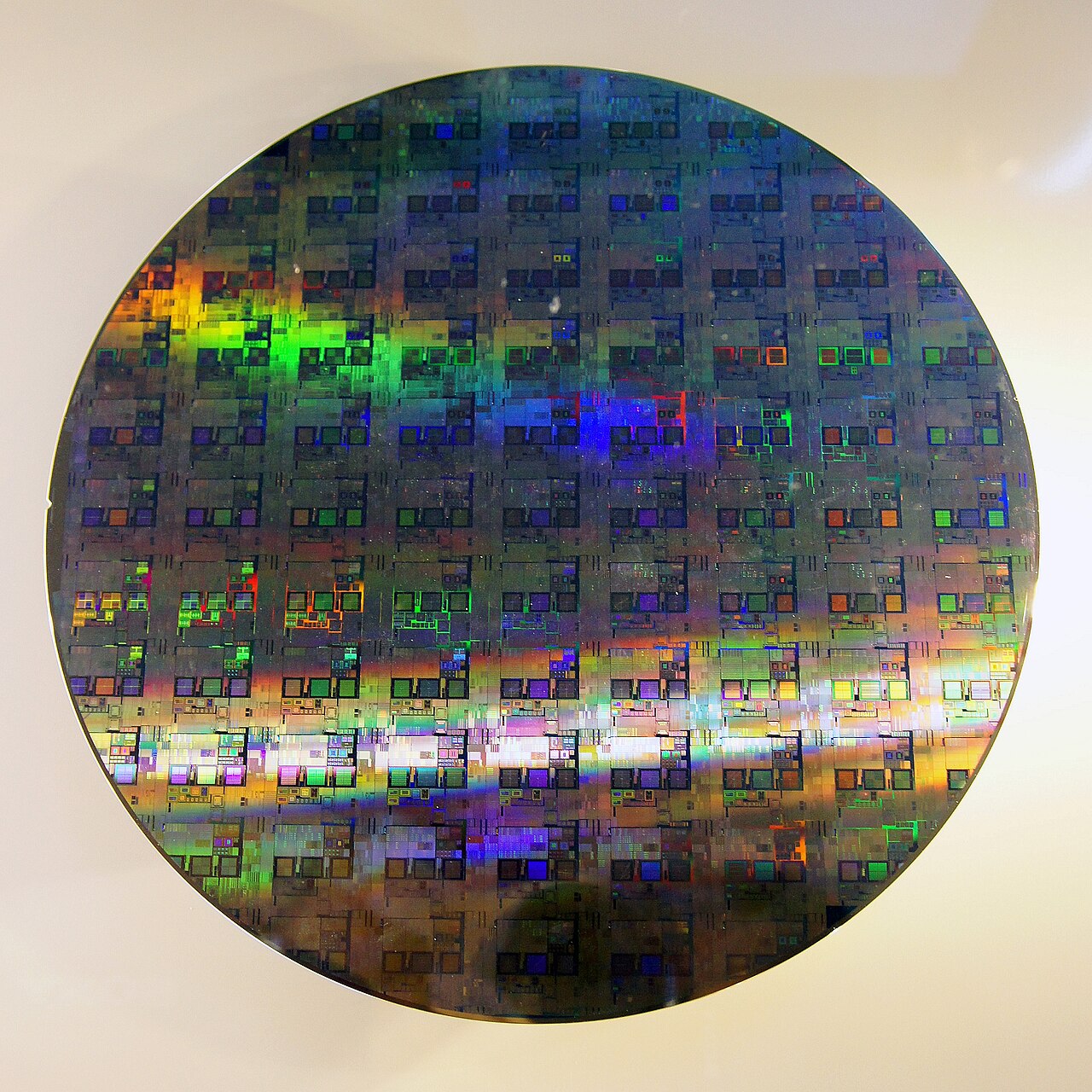
Header image: Nvidia's "Endeavor" headquarters building at 2788 San Tomas Expressway, Santa Clara, California, by Coolcaesar via Wikimedia Commons, licensed under CC BY-SA 4.0. In-body photograph of a processed 12-inch silicon wafer by Peellden via Wikimedia Commons, licensed under CC BY-SA 3.0, used to illustrate semiconductor manufacturing generally rather than any specific Nvidia or Rebellions product. Both images reviewed before use.