NVIDIA reported second-quarter fiscal 2027 results after the close on August 26, 2026, and the headline cleared every bar in front of it. Revenue reached $96.2 billion, up 106% from the $46.7 billion of a year earlier and up 18% from the prior quarter, ahead of the roughly $92 billion analysts expected. Data center revenue was $89.0 billion, up 117% year over year. Management then guided the current quarter to $108 billion, plus or minus 2%. And yet the stock slipped in after-hours trading. The gap between a record report and a muted reaction is the most instructive thing about this quarter, and it is where the analysis has to start.
 NVIDIA
 Microsoft
 Google
 AWS
AWSThe Numbers, Cleanly Stated
For the quarter that ended July 26, NVIDIA posted revenue of $96.2 billion. Non-GAAP earnings were $2.22 per diluted share, more than double the $1.05 of the year-ago quarter; on a GAAP basis, diluted earnings were $2.46 per share. GAAP and non-GAAP gross margins were both 75.0%. Data center, which now accounts for roughly 93% of total revenue, grew 117% from a year earlier to $89.0 billion, with the networking portion of that segment growing even faster than the compute portion, a sign that the buildout extends beyond the accelerators themselves into the switches and interconnects that tie them together.
NVIDIA quarterly revenue, through the Q2 FY27 result
Total company revenue, in billions of dollars. The Q3 FY27 figure is company guidance ($108.0B, plus or minus 2%); the rest are reported actuals.
Q2 FY27 revenue of $96.2 billion was up 18% sequentially and 106% year over year. Striped bar denotes forward guidance, not a reported figure.
The sequential story matters as much as the year-over-year one. A 106% annual gain is easy to produce against a smaller base a year ago. Growing another 18% on top of the prior quarter's already-record $81.6 billion is the harder test, and it is the one that tells you the demand curve has not yet flattened. The forward guide extends the same line: $108 billion at the midpoint would be another sequential step up, and management pointed to full-year growth for the next fiscal year in the neighborhood of 70%, which is an unusual thing to signal when the base is this large.
Why a Record Report Still Drew a Shrug
The after-hours dip is not a contradiction; it is a feature of how expectations work at this scale. When a stock has priced in a beat, merely beating is not news. The bar NVIDIA has to clear is not the published analyst consensus but the higher, unstated number that traders have already positioned around. This has happened before in recent quarters: the company posts records and the shares sell off as investors who bought the anticipated beat take profits. Reading the report well means separating the objective results, which were strong, from the market's pre-positioning, which is a separate variable the income statement cannot control.
At this scale, the reported quarter is history. The guidance and the backlog are the only numbers that trade.
Analysis of NVIDIA's recent earnings reactions
There is also a valuation-discipline point underneath the reaction. For most of 2026, NVIDIA shares have been a middling performer relative to their own history, up modestly on the year even as revenue more than doubled. That divergence between fundamentals and stock performance is the market slowly repricing growth it already expects. A company cannot beat its way out of a valuation that assumes perfection; it can only keep validating the assumption quarter after quarter, which is exactly what this report did.

On the call, CEO Jensen Huang put the argument plainly: "AI has reached its inflection point. It's doing useful work. Its tokens are productive and profitable. Now, compute is revenue." Stripped of the rhetoric, the claim is that AI workloads have moved from research budgets to operating budgets, and that the spending is being justified by output rather than by hope. The financials are consistent with that reading, though a single vendor's revenue cannot prove the return on investment across the entire customer base.
The Backlog Is the Story Under the Story
The most consequential line in this report is not revenue at all. It is the disclosure that NVIDIA's supply commitments have swelled to about $279 billion, up from roughly $119 billion the prior quarter, with the increase driven primarily by memory procurement tied to the next-generation Vera Rubin platform. That figure is a purchase obligation, money NVIDIA has committed to spend with its own suppliers to lock in components before they are scarce.
NVIDIA supply commitments more than doubled in one quarter
Total purchase and supply obligations, in billions of dollars. The quarter-over-quarter increase was driven primarily by memory procurement for the Vera Rubin platform.
A backlog of roughly $279 billion locks in a large share of future revenue before a single unit ships, and tightens the memory market for every other buyer.
Read one way, a backlog that more than doubled is a confidence signal: NVIDIA does not commit a quarter of a trillion dollars to memory unless it expects the demand to absorb it. Read another way, it is the clearest evidence yet of how much capital is being pulled forward and how concentrated the AI buildout has become in a handful of component markets, memory chief among them. The same commitment that guarantees NVIDIA's supply also tightens the market for everyone else buying high-bandwidth memory, which is one reason memory prices have been climbing all year. Both readings are true at once, and the honest position is to hold them together rather than pick the flattering one.
China, Absent by Design
NVIDIA's outlook assumes no data center compute revenue from China at all. That is not a demand statement; it is a policy statement. Export controls have removed a market that once contributed billions per quarter, and rather than model an uncertain partial reopening, the company has simply zeroed it out of guidance. The practical effect is that any future change in export policy becomes upside optionality rather than a number the company is counting on. For a forecaster, that is a cleaner setup than it sounds: the guide does not depend on a geopolitical outcome nobody can predict.
What It Means Beyond the Ticker
Zoom out from the quarter and the through-line for anyone building AI products is that the hardware layer underneath every model is still moving fast on all three axes that matter: price, availability, and which chips run which workloads best. A $279 billion supply commitment concentrated in memory tells you the cost structure of inference is being renegotiated in real time, and the transition from the current architecture to Vera Rubin will reset performance-per-dollar again. None of that is a reason to wait; it is a reason not to hard-wire a product to a single vendor's cost curve at a single moment in time.
That is the quiet argument for keeping the model layer portable. A platform that routes across providers, the way Metir AI spreads work across models from OpenAI, Anthropic, Google, and xAI rather than betting the product on one stack, preserves the option to follow the economics as they shift. When the hardware underneath resets every couple of quarters, the teams that stay flexible at the layer above are the ones that keep their costs aligned with the frontier instead of with last year's assumptions.
What to Watch Next
The report answered the question of whether demand is holding: it is, and the forward guide says it accelerates into the next quarter. The open questions move down the stack. Watch whether the $279 billion in commitments translates cleanly into shipped revenue as Vera Rubin ramps, whether gross margin holds near the guided 74% through that transition or compresses first and recovers later as new products always do, and whether the hyperscalers funding this spending continue to report returns that justify it. NVIDIA's quarter was a strong readout on the present. The durability of the cycle is a story told by its customers' income statements, not just its own.
Sources:
- NVIDIA Announces Financial Results for Second Quarter Fiscal 2027 (Form 8-K, SEC) | NVIDIA
- Nvidia doubles Q2 revenue to $96 billion and crushes estimates | Fortune
- NVIDIA Q2 2027: $96 Billion Quarter Fueled by 117% Data Center Surge | 24/7 Wall St.
- Nvidia forecasts fiscal '28 revenue growth of 70%, soaring past estimates | CNBC
- Nvidia Earnings: Live Updates and Commentary August 2026 | Kiplinger
- Will Nvidia Stock Soar After Aug. 26? Here's What History Shows | The Motley Fool
Image credits
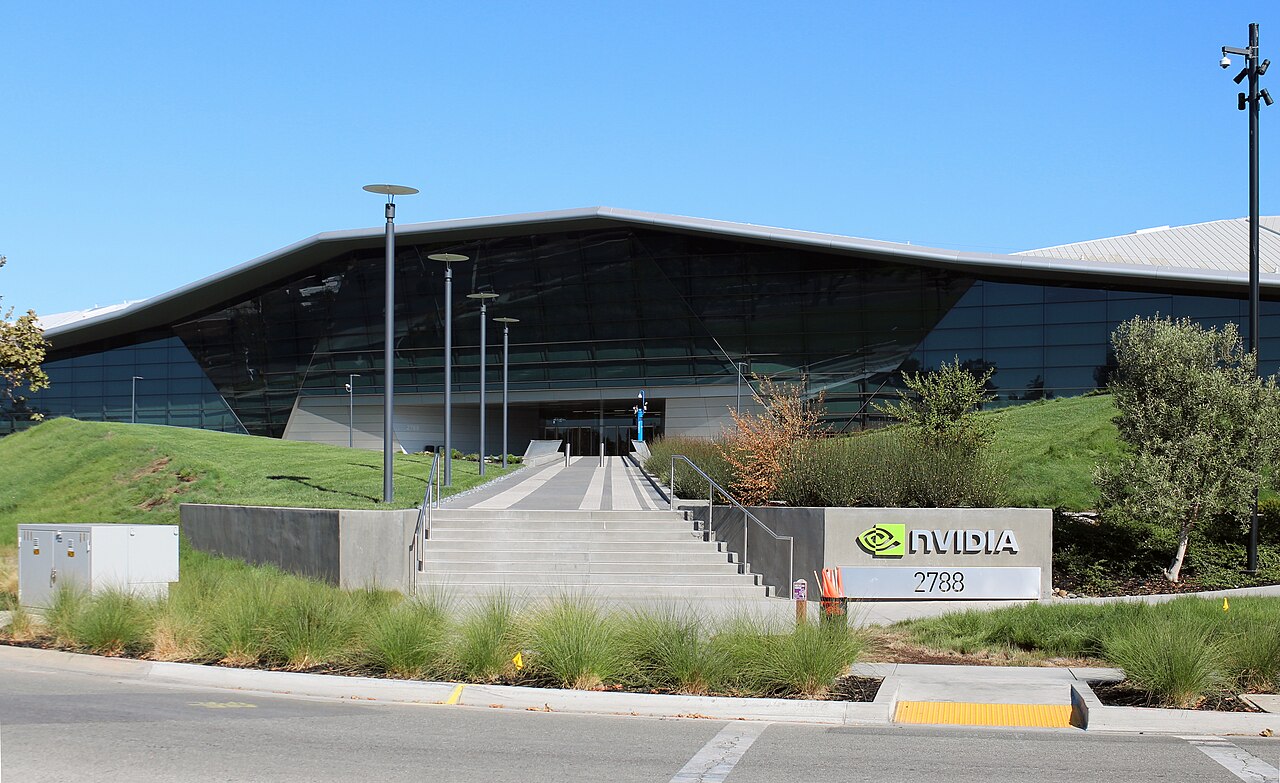
Header image: NVIDIA's Endeavor headquarters building in Santa Clara, California, by Coolcaesar via Wikimedia Commons, licensed under CC BY-SA 4.0. In-body photograph of NVIDIA founder and CEO Jensen Huang by VQTCS via Wikimedia Commons, licensed under CC BY 4.0.