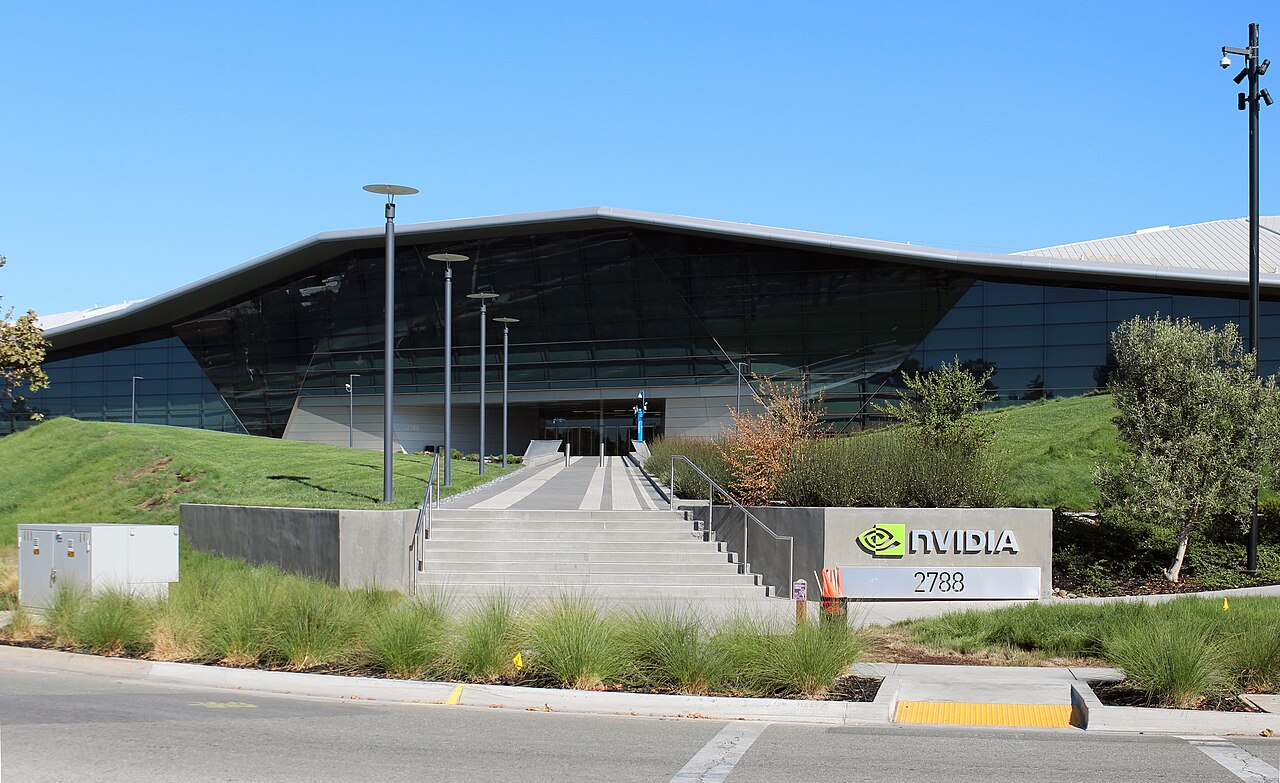
NVIDIA reports second-quarter fiscal 2027 results after the close on August 26, 2026, with a conference call at 2 p.m. Pacific. The quarter it is reporting ended July 26. Wall Street consensus sits at roughly $91.7 billion in revenue, just above the $91.0 billion, plus or minus 2%, that NVIDIA itself guided to in May, with non-GAAP earnings per share expected around $2.08. A result near that mark would be roughly double the $46.7 billion NVIDIA reported in the same quarter a year earlier. This preview lays out what those numbers mean and, more usefully, what to read once the headline figure is out of the way.
 NVIDIA
 Microsoft
 Google
To be clear about what follows: the figures below are guidance and analyst estimates, not results. The actual numbers land on August 26. The value of a preview is in knowing which lines to look at first.
The Setup: A Company Reporting From a Standing Start
NVIDIA enters this report from an unusually strong position, which paradoxically raises the bar. In the prior quarter, Q1 FY27 reported in May, the company posted record revenue of $81.6 billion, up 85% year over year, with data center revenue of $75.2 billion, up 92%. GAAP net income was $58.3 billion and free cash flow reached $48.6 billion. When a company is already growing the top line at that rate off a base this large, the interesting question is not whether it grew again but whether the rate of growth is holding, decelerating, or reaccelerating.
NVIDIA quarterly revenue heading into Q2 FY27
Total company revenue, in billions of dollars. The Q2 FY27 figure is analyst consensus; NVIDIA guided to $91.0 billion, plus or minus 2%.
A Q2 FY27 result near consensus would be roughly double the $46.7 billion of a year earlier. Striped bar denotes an estimate, not a reported figure.
The chart above frames the arithmetic. The year-ago comparison ($46.7 billion) is easy; the sequential comparison against $81.6 billion is the harder test. Consensus of $91.7 billion implies roughly 12% sequential growth, which for most companies would be a blockbuster quarter and for NVIDIA is close to the recent run rate. The market has effectively priced in continued acceleration, so the reaction will hinge less on the reported number and more on the guidance for the quarter ahead.
What Actually Matters Beyond Revenue
The revenue headline is the least surprising part of any NVIDIA report at this point. The lines that move the stock, and by extension a large slice of the broader market, sit underneath it.
Five things to read beyond the headline number
What analysts will parse in NVIDIA's Q2 FY27 report on August 26, 2026, once the revenue figure is out of the way.
Was about 92% of total in Q1 FY27 ($75.2B of $81.6B). The AI story lives almost entirely in this one line.
How fast the newest architectures reach volume shipment shapes the next several quarters of guidance.
A new product ramp usually pressures margin first, then recovers. The trajectory matters more than the level.
NVIDIA shipped no data-center Hopper to China in Q1 FY27, versus $4.6B a year earlier. Any change here is policy-driven.
The forward number, not the reported one, is what typically moves the stock and the wider AI trade.
The single most concentrated risk is the data center mix. In Q1 FY27, data center was about 92% of total revenue. That concentration is the entire AI narrative in one line: gaming, professional visualization and automotive are real businesses, but they are rounding errors against the accelerator sales to cloud providers and AI labs. Any wobble in data center demand would show up here first, and any sign of a demand air pocket, even a small one, would carry outsized weight.

The second is the product ramp. NVIDIA's advantage rests on staying a generation ahead, and the pace at which its newest architectures reach volume shipment sets the ceiling for the next several quarters. New ramps also tend to compress gross margin first and recover it later as yields improve, so the margin line and the ramp commentary have to be read together. A margin dip framed as ramp-related reads very differently from a margin dip framed as pricing pressure.
The third is China. NVIDIA shipped no data-center Hopper products to China in Q1 FY27, against $4.6 billion in the year-ago period, a swing driven entirely by export policy rather than demand. Any commentary about renewed access, new China-specific parts, or further restrictions changes the addressable market at the margin and is worth more attention than its current contribution to revenue would suggest.
For a company this size, the reported quarter is history. The guidance is the only number that trades.
Analysis of NVIDIA's recent earnings reactions
Why One Company's Report Moves the Whole Market
NVIDIA's earnings have become a proxy for the health of the entire AI capital-spending cycle, and the reason is structural. The hyperscalers building AI data centers are NVIDIA's largest customers, so NVIDIA's revenue is a near-real-time readout of how much they are actually spending, as opposed to how much they have announced. When those buyers commit multi-year, multi-billion-dollar orders, that demand lands on NVIDIA's income statement before it shows up anywhere else. A strong report validates the spending plans of Microsoft, Google, Amazon, Oracle and the AI labs; a soft one raises questions about all of them at once.
That is also why the report carries risk in both directions. Expectations are high enough that merely meeting them has, in recent quarters, sometimes been met with a stock decline, as investors who priced in a beat sell the news. The company can post record numbers and still disappoint a market positioned for more. Reading the report well means separating the objective results from the market's pre-positioning, which are two different things.
The Longer Arc: From Scarcity Toward Normalization
Step back from the single quarter and a longer question comes into view. The current economics rest on demand for accelerators outstripping supply, which supports both volume and pricing. That dynamic will not last forever. Supply is expanding as NVIDIA, its foundry partners and its memory suppliers add capacity, competition is intensifying from AMD and from the custom silicon efforts of the hyperscalers themselves, and buyers are becoming more sophisticated about matching workloads to the cheapest hardware that can run them. None of that derails a single quarter, but all of it shapes the multi-year trajectory, and thoughtful readers will watch for early signs of it in the guidance and the margin commentary.
For teams building AI products rather than trading the stock, the through-line is that the hardware layer underneath every model is still in rapid flux, on price, on availability and on which chips run which workloads best. That is an argument for not hard-wiring a product to a single provider's cost structure. A model-agnostic platform like Metir AI, which routes across models from OpenAI, Anthropic, Google and xAI rather than betting on one stack, is one way to keep options open while the economics of compute keep resetting one earnings report at a time.
What to Watch Next
When the report lands on August 26, the sequence to read it in is simple: check the data center line against the roughly $75 billion base, check gross margin against the prior quarter and the ramp narrative, check any China commentary, and then, most importantly, read the guidance for the following quarter, because that forward number is what the market actually trades. The headline revenue figure will make the news, but the story is in the four lines beneath it.
Sources:
- Nvidia schedules Q2 fiscal 2027 earnings call for Aug. 26 | Investing.com
- NVIDIA Announces Financial Results for First Quarter Fiscal 2027 | NVIDIA Newsroom
- Nvidia earnings takeaways: Data center revenue nearly doubles | CNBC
- NVIDIA's record Data Center revenue for fiscal Q1 2027 beat estimates | TweakTown
- Nvidia earnings preview: Q1 2027 | S&P Global Market Intelligence
Image credits
Header image: NVIDIA's Endeavor headquarters building in Santa Clara, California, by Coolcaesar via Wikimedia Commons, licensed under CC BY-SA 4.0. In-body photograph of NVIDIA founder and CEO Jensen Huang by VQTCS via Wikimedia Commons, licensed under CC BY 4.0.