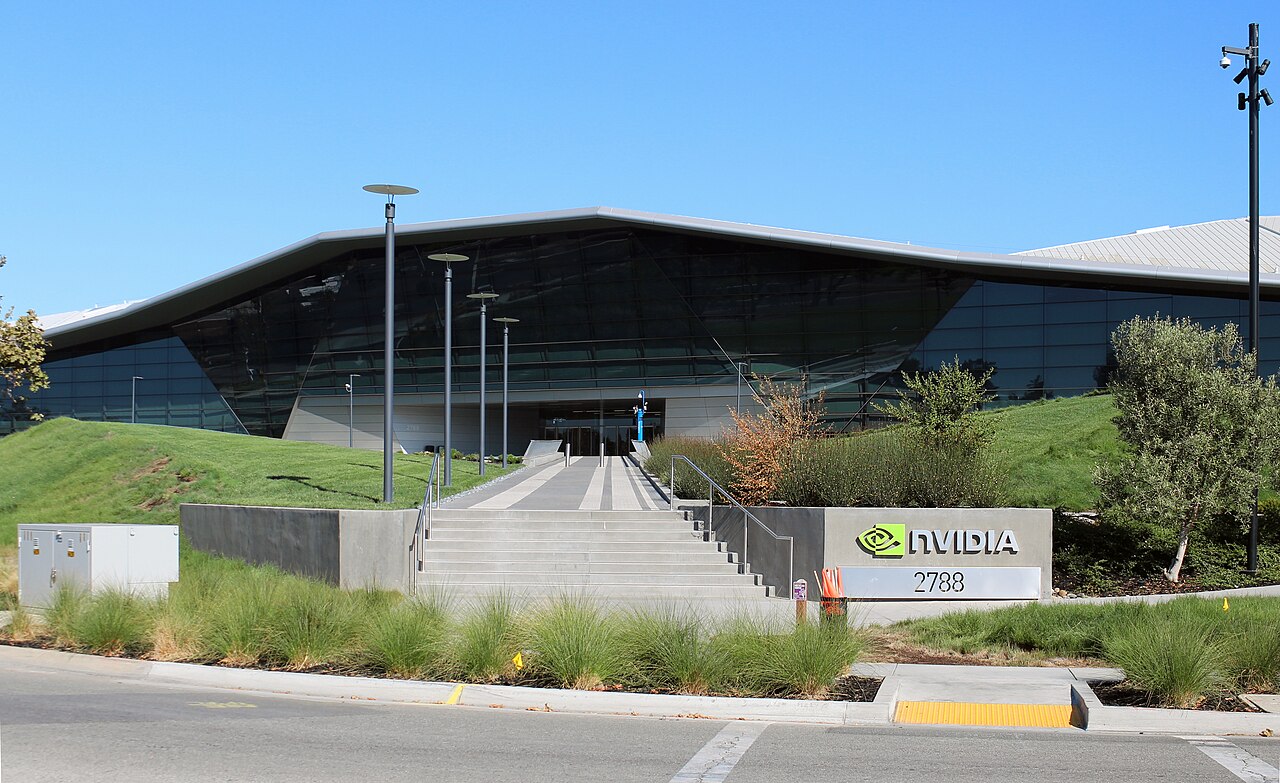
In the same stretch of days that Nvidia reported another record quarter, it quietly stepped away from one of the more unusual experiments in AI finance. According to a Wall Street Journal report, the company paused its "AI Compute Partnership," a program under which Nvidia provided credit backing to smaller AI cloud providers in exchange for a share of their revenue. The program had been announced only in July 2026. It was pulled fewer than two months later, after Nvidia employees raised alarms about antitrust exposure and prospective partners bristled at how much control Nvidia wanted to keep.
What the Program Was Trying to Solve
Smaller cloud providers, the so-called neoclouds that rent out GPU capacity, face a brutal financing problem. To offer AI compute, they must spend billions up front on Nvidia chips and the data centers to house them, long before the revenue from renting that capacity arrives. Traditional lenders are wary of financing a pile of hardware whose resale value and utilization are hard to predict, which leaves these providers capital-constrained precisely when demand for compute is highest.
The AI Compute Partnership was Nvidia's answer. Nvidia would backstop the build-out with credit support, making it easier for a provider to finance the purchase. In return, the provider and Nvidia would set a base hourly rate covering the provider's costs, and Nvidia would take roughly half of any revenue earned above that threshold. In effect, Nvidia was underwriting demand for its own chips and taking equity-like upside on the compute those chips produced.
How the paused revenue-sharing program worked
Nvidia's "AI Compute Partnership" backstopped a cloud provider's spend, then split the upside and kept control rights. The control terms are what raised antitrust flags.
A smaller AI cloud provider spends billions on Nvidia GPUs and data-center infrastructure to stand up capacity.
Nvidia provides credit backing so the provider can finance the build-out. The two agree a base hourly rate that covers the provider's costs.
Providers were told they had to vet customers through an approval process. Nvidia's insistence on control irritated prospective partners, and employees flagged the antitrust exposure. Nvidia paused the program less than two months after launching it.
Why It Stalled
Two problems surfaced quickly, and they compounded each other. The first was control. Reporting indicates that providers were told they had to vet their customers through an approval process, and that Nvidia's insistence on maintaining significant say over the arrangements irritated a number of prospective partners during the program's early weeks. A financing lifeline is attractive; a financing lifeline that comes with the supplier approving your customer list is a different proposition.
The second problem was legal, and it came from inside. Nvidia's own employees reportedly raised alarms with current and potential customers about the antitrust risk the structure created. That instinct is sound. When the dominant supplier of a scarce input also finances its buyers, shares in their revenue, and holds approval rights over who they sell to, the arrangement starts to look less like vendor financing and more like a mechanism to steer an entire market. For a company already under regulatory scrutiny over its position in AI compute, that is a dangerous shape for a program to take.
A financing lifeline is attractive. A financing lifeline that comes with the supplier approving your customer list is a different proposition.
Analysis of the paused AI Compute Partnership terms
The Bigger Pattern: Circular Financing
Zoom out and the paused program is one visible instance of a pattern that now runs through the entire AI build-out. Nvidia does not only sell chips. It invests in the companies that buy its chips, backstops the clouds that host its chips, and takes stakes across the customers who generate demand for its chips. Money flows out from Nvidia and a portion returns as revenue, which is why analysts increasingly describe parts of the AI economy as circular. The AI Compute Partnership made that circularity unusually explicit by writing the revenue share directly into the contract.
 Nvidia
There is a legitimate business logic to this. When you make the scarcest, most valuable input in a fast-growing industry, helping your customers afford more of it can be rational, even necessary, to keep demand from being throttled by capital constraints. The counterpoint is that the same structures make the system's growth partly self-referential, and they concentrate both the upside and the systemic risk in a single company. Pausing the most explicit version of the arrangement, right after posting record numbers, suggests Nvidia understands the optics as well as the law.
What It Means for the Companies That Rent Compute
For the neoclouds themselves, the pause removes a financing option that some may have been counting on, at least temporarily. The Journal reported that Nvidia has left open the possibility of restructuring the initiative or folding it into a different effort later, so this may be a redesign rather than an abandonment. Either way, the underlying financing gap has not gone anywhere. Providers still need billions to build capacity, and the demand for that capacity, judging by Nvidia's own record revenue of $96.2 billion for the quarter, remains extraordinary.
For the businesses that ultimately consume this compute, through AI products and platforms, the episode is a reminder of how much of the stack sits on top of financing arrangements that are still being invented in real time. The cost and availability of AI capacity are shaped not only by chip supply but by who is willing to underwrite the build-out and on what terms. Those terms are clearly still in flux.
The Practical Takeaway
The healthiest response to a supply chain this concentrated and this financially entangled is not to bet on any single layer of it staying cheap or available forever. Compute pricing, provider economics, and even which clouds survive are all moving targets right now. For teams building on AI, that argues for flexibility: designing workflows that can move across providers and models rather than being welded to one vendor's capacity and one vendor's pricing. A model-agnostic platform such as Metir AI, which lets teams work across models from multiple providers instead of committing to a single stack, is one way to keep that optionality while the infrastructure layer sorts itself out.
Nvidia's dominance of AI compute is not in question; the same week it paused this program, its results underscored how central it remains. What the pause shows is that even the most powerful company in the industry is still feeling for the boundary between financing a market and controlling it, and that the boundary is closer than the initial program design assumed.
Sources:
- Nvidia pauses revenue-sharing deals with AI cloud companies, WSJ reports | WHBL
- Nvidia pauses AI cloud revenue-sharing deals over antitrust concerns | Quartz
- Nvidia pauses AI cloud financing deals amid control, antitrust concerns | American Bazaar
- Nvidia Reportedly Pauses Revenue-Sharing Deals With AI Cloud Companies Amid Antitrust Concerns | Benzinga
- NVIDIA Announces Financial Results for Second Quarter Fiscal 2027 | NVIDIA Newsroom
Image credits
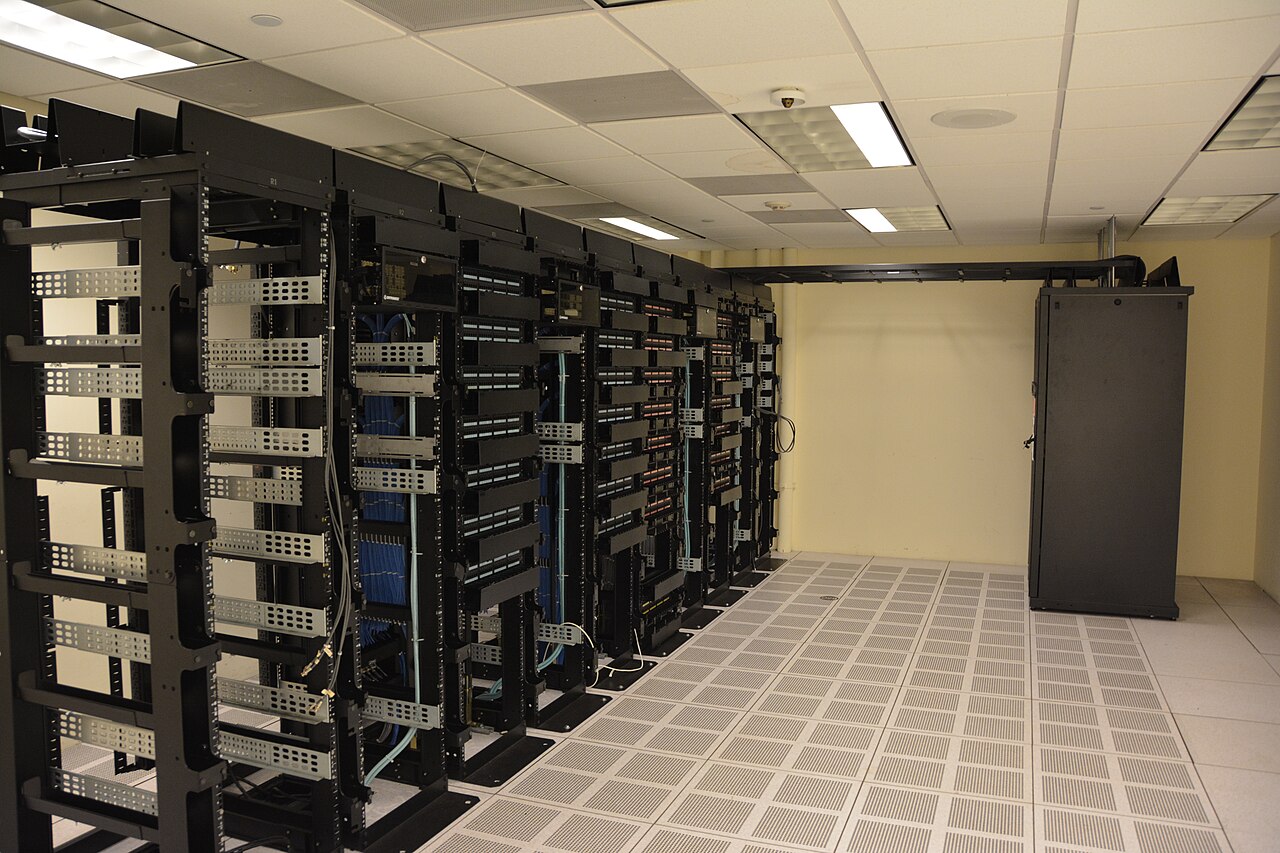
Header image: Nvidia's Endeavor headquarters in Santa Clara, California, by Coolcaesar via Wikimedia Commons, licensed under CC BY-SA 4.0. In-body photograph of a data-center server hall, by Carl Lender via Wikimedia Commons, licensed under CC BY 2.0.