During a two-day visit to Japan in mid-July 2026, NVIDIA CEO Jensen Huang did two things at once. He launched Cosmos 3 Edge, a compact 4-billion-parameter world model designed to run reasoning directly on a robot rather than in the cloud, and he announced that more than 20 of Japan's largest industrial and robotics companies intend to join an open NVIDIA Cosmos coalition to build physical AI on a shared stack. Neither move is a consumer product, and that is precisely why they are worth reading carefully. This piece explains what a world model is, why moving it on-device changes the economics of robotics, and what a coalition of that scale actually signals.
 NVIDIA
What a world model is, and why "Edge" is the important word
A large language model predicts text. A world model predicts the physical world: given what a robot currently sees, it forecasts what will happen next and what action to take. That is the capability a machine needs to move through an unstructured space, a warehouse aisle, a construction site, a hospital corridor, rather than repeat a fixed motion. NVIDIA's Cosmos family provides these world models, and the company positions them as the perception-and-reasoning layer for robots and vision AI agents.
The word that matters in Cosmos 3 Edge is Edge. Earlier world models are large and run in the cloud or on data-center hardware. Cosmos 3 Edge is deliberately small, 4 billion parameters, built on NVIDIA's Nemotron foundation, so it can run locally on robot-grade hardware including Jetson Thor and new T2000 and T3000 modules. NVIDIA says developers can adapt it to a specific robot or environment in roughly a day.
From simulation to the factory floor
The physical AI pipeline behind Cosmos. The notable change with Cosmos 3 Edge is that real-time reasoning moves from the cloud onto the robot itself.
Cosmos 3 Edge is a 4-billion-parameter world model that runs locally on NVIDIA edge hardware, letting robots interpret surroundings and act without a round trip to the cloud.
On-device reasoning matters for reasons that are practical rather than headline-grabbing. A robot that reasons locally does not depend on a network round trip to decide how to move, which removes latency and a point of failure, and it keeps sensor data on the machine. For any system that has to react in real time or operate where connectivity is unreliable, moving the reasoning step onto the device is not a convenience, it is a requirement. That is the shift Cosmos 3 Edge is built around.
The coalition is the strategy
The model launch would be a modest story on its own. The coalition is what makes it strategically significant.
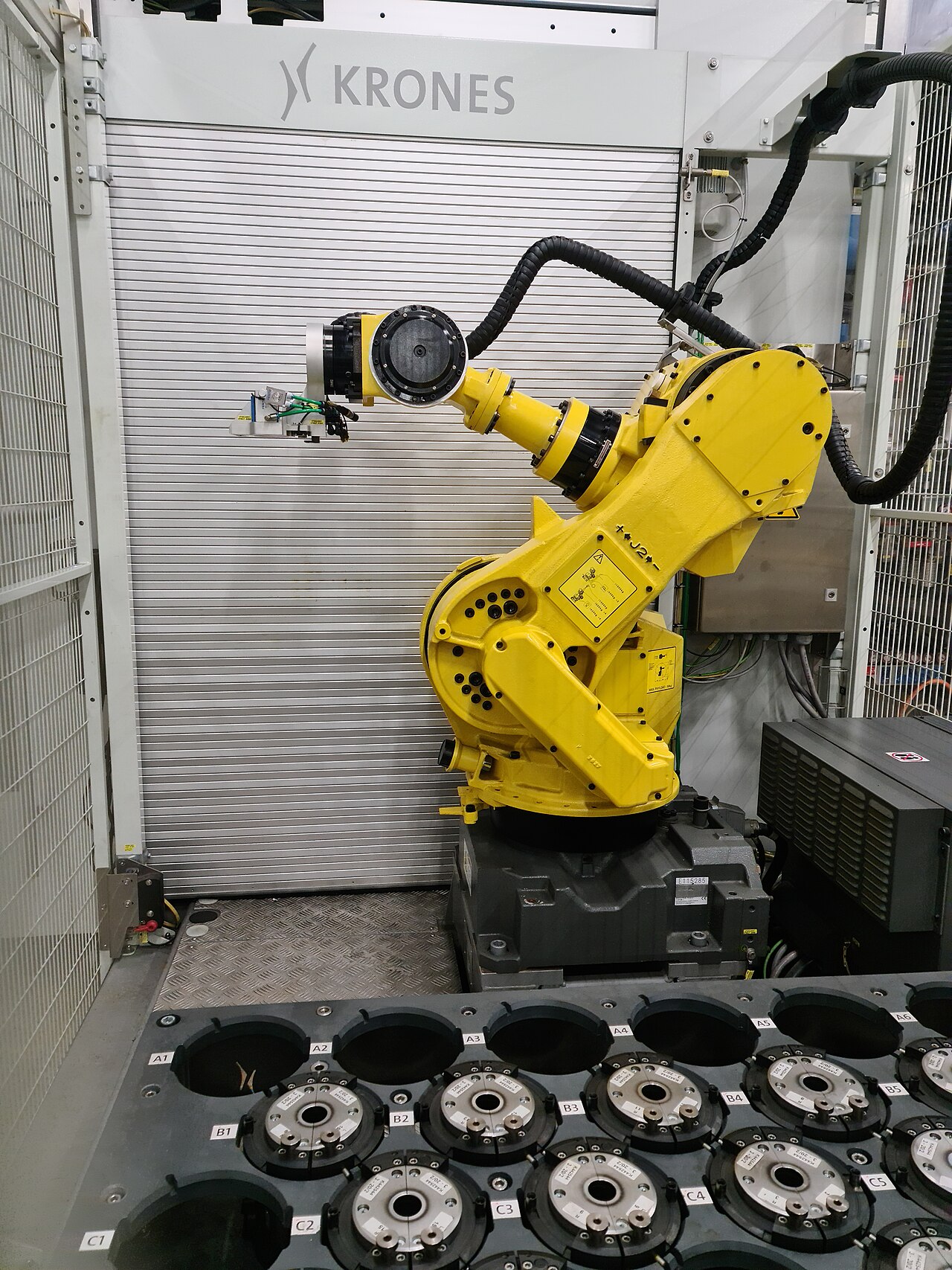
More than 20 Japanese firms said they intend to join the Cosmos coalition, and the list reads like a census of Japanese industry: robotics and automation names including FANUC, Yaskawa Electric, Kawasaki Heavy Industries and Kubota; electronics and conglomerate players including Hitachi, NEC, Sony Group and Fujitsu; and a long tail of robotics specialists such as Honda R&D, GROOVE X, Telexistence, OMRON and Mujin, alongside SoftBank Corp. The stated goal is to build on the Cosmos platform using open models, data-curation libraries and shared datasets, so members can test and optimize physical AI in simulation before deploying it across factories, logistics, farms and more.
Japan invented modern manufacturing. Now, it has the opportunity to reinvent it.
Jensen Huang, NVIDIA CEO, July 2026
Two things stand out analytically. First, the models are described as open, which lowers the barrier for a manufacturer to adopt the stack and contribute data back to it, and it stands in contrast to a purely proprietary approach. Second, and more consequentially, NVIDIA is extending its position from selling the training chips to owning the software layer that robots reason on. If a critical mass of the world's manufacturers standardizes on Cosmos world models running on NVIDIA edge hardware, NVIDIA's role in physical AI starts to resemble its role in AI training: not just the supplier of the compute, but the default platform the ecosystem builds against.
Why Japan, and why now
The choice of Japan is not incidental. Japan is one of the densest robotics and precision-manufacturing economies in the world, home to a large share of the industrial-robot installed base, and it faces a demographic squeeze, an aging population and shrinking workforce, that makes automation an economic necessity rather than an efficiency play. A country that both builds robots and urgently needs them is close to an ideal proving ground for physical AI, which is the substance behind Huang's framing that Japan can "reinvent" the manufacturing it helped invent.
The timing fits a broader pattern in 2026. Language-model progress has been rapid but increasingly incremental, and much of the industry's forward-looking attention has moved to physical AI, the application of the same underlying techniques to robots, vehicles and machines that act in the world. Cosmos 3 Edge and the Japan coalition are a concrete instance of that shift: not a demo of a walking robot, but the model, hardware and industrial partnerships that a real deployment pipeline requires.
The caveats worth keeping
A neutral reading requires holding two facts in view. The word intend is doing real work: the coalition members have signaled intent to join and build on the stack, which is a commitment of direction, not a guarantee of shipped products or volumes. Announcements of ecosystems at industry moments are a genuine signal of momentum and also a marketing surface, and the honest position is that the proof will be in deployed systems and repeat orders over the next several quarters, not in the size of the launch list.
It is also worth being precise about what Cosmos 3 Edge is not. It is a perception-and-reasoning model, not a finished robot or a general-purpose intelligence. Turning it into a working system still requires the robot hardware, the integration, the safety validation and the domain data, which is exactly why the coalition and its shared datasets matter. The launch lowers one barrier, on-device reasoning, in a stack that has several.
What it means more broadly
For anyone tracking where AI is heading rather than which chatbot leads this month, the Cosmos news is a useful marker. The frontier of investment and engineering is broadening from models that produce text and images to models that let machines act in physical space, and the competitive battleground is becoming the full stack: the world model, the edge hardware it runs on, and the industrial partnerships that put it to work. NVIDIA is assembling all three at once.
The same principle that applies in software AI applies here in a different form. Capability is arriving from many directions at once, and the durable advantage goes to those who can adopt the best available components without locking their whole operation to a single vendor's roadmap. In physical AI that flexibility is harder to preserve, because hardware, models and tooling are tightly coupled, which is exactly why the open-model framing of the Cosmos coalition is the detail to watch. Whether that openness proves real, or narrows over time, will shape how much choice manufacturers actually retain.
The bigger picture
Cosmos 3 Edge is a small model with a large implication. By pushing world-model reasoning onto the robot and rallying much of Japanese industry behind a shared, nominally open stack, NVIDIA is doing in physical AI what it already did in AI training: supplying the compute and, increasingly, defining the platform. The launch itself is incremental; the strategy behind it is not. The measure of its success will not be the length of the coalition list but the number of machines that end up reasoning with these models on factory floors and in warehouses over the next few years.
Sources:
- Japan's Robotics and Manufacturing Leaders Build on NVIDIA Cosmos to Advance Physical AI Frontier | NVIDIA Newsroom
- Nvidia unveils new AI model and expands Japan's physical AI ecosystem | CNBC
- Nvidia launches Cosmos 3 Edge model and expands its physical AI push in Japan | SiliconANGLE
- NVIDIA Expands Japan's Physical AI Ecosystem With Cosmos 3 Edge | Open Data Science
Image credits
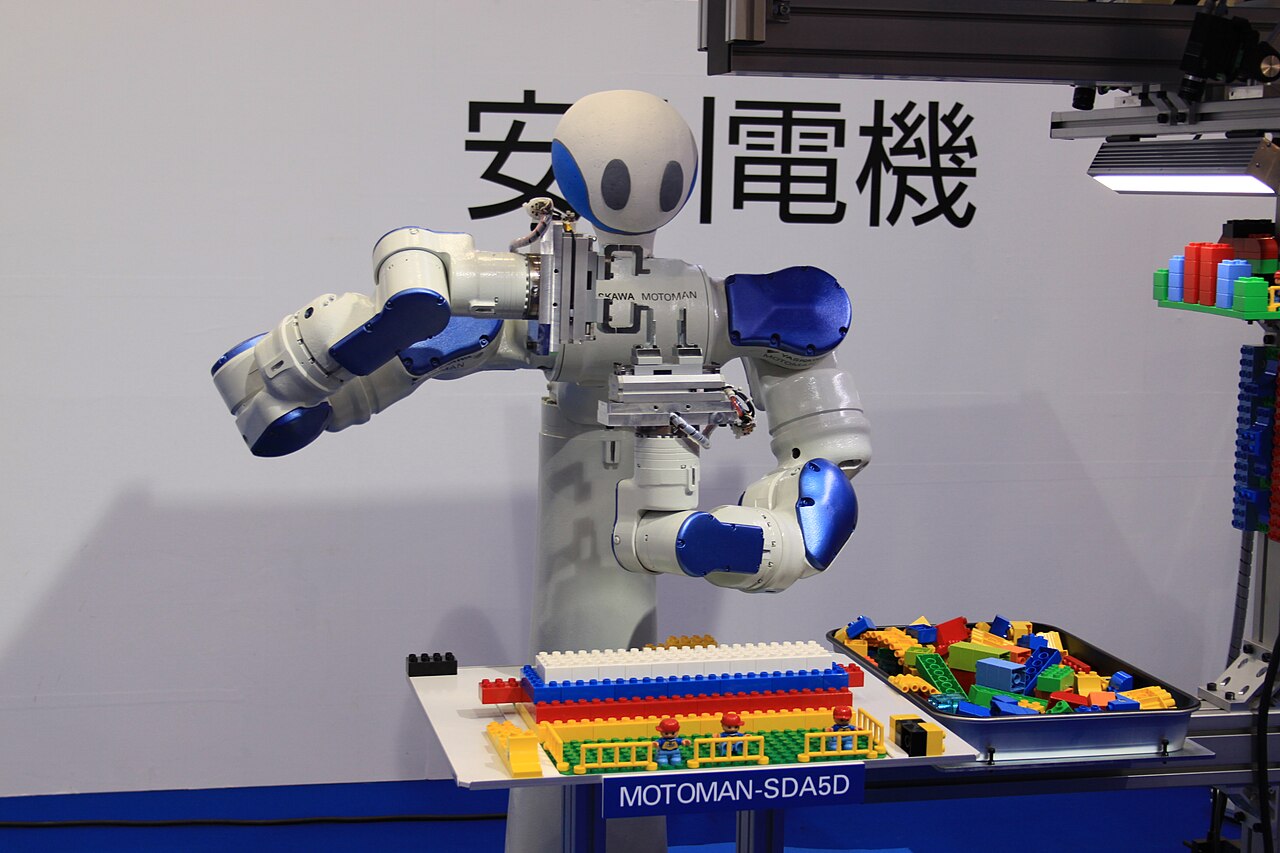
Header image: a Yaskawa Electric Motoman SDA5D dual-arm robot on demonstration, by Hetarllen Mumriken via Wikimedia Commons, licensed under CC BY-SA 2.0. In-body photograph of a FANUC industrial robot by Biso via Wikimedia Commons, licensed under CC BY-SA 4.0. Cosmos 3 Edge is a software model, so both photographs show existing robots from named coalition members rather than the product itself.