On September 28, 2026, NVIDIA's board of directors authorized an additional $150 billion in share repurchases, lifting the company's total remaining buyback authorization to $235 billion. NVIDIA said it expects to execute the program through fiscal year 2028, and described the increase as the largest single addition to a share repurchase authorization in U.S. corporate history. The announcement landed alongside a company that is simultaneously the anchor of the largest capital-spending cycle in the history of computing, which makes this a useful moment to separate what a buyback authorization actually promises from what it signals, and why the market's response was almost a shrug.
 NVIDIA
What was actually announced
The mechanics are simple and worth stating plainly, because "buyback" headlines routinely get conflated with "spending." A repurchase authorization is a ceiling the board sets on how much stock the company is permitted to buy back, not a commitment to buy any particular amount by any particular date. NVIDIA's filings show the pattern of authorization increases has accelerated sharply over the past three years, each one larger than the one before it.
Each new NVIDIA buyback authorization has been larger than the last
New share-repurchase authorization approved by NVIDIA's board at each date, in billions of dollars. These are additions, not running totals; the September 2026 increase brought the total remaining authorization to $235 billion.
Five board approvals in three years, each one the largest single increase to that point, culminating in the $150 billion addition announced September 28, 2026.
Between quarterly repurchases and the newly authorized capacity, NVIDIA's remaining ceiling sat at roughly $99.3 billion as of July 26, 2026, the end of its second fiscal quarter, according to its 10-Q filing. The company bought back $19.7 billion of stock and paid $6.0 billion in dividends in that single quarter alone, a combined $26 billion returned to shareholders in three months. Layering $150 billion of fresh authorization onto what remained after continued repurchases through the current quarter brings the total to $235 billion. CEO Jensen Huang framed the move around the company's core growth story rather than around the stock price: "NVIDIA's growth is being driven by a once-in-a-generation platform shift to AI and accelerated computing. Our cash generation gives us the capacity to invest in the technologies that advance this transformation and return capital to shareholders."
Authorization is not spending, and spending is not EPS
The distinction between "authorized" and "spent" matters for a second reason: even fully executed, a buyback authorization does not translate one-for-one into a smaller share count. A meaningful share of NVIDIA's annual repurchases go toward offsetting dilution from employee stock-based compensation, which is substantial at a company growing headcount and equity grants as fast as NVIDIA has through the AI buildout. When a company issues new shares to employees and then buys back a similar dollar amount of stock, the share count barely moves; the buyback is functioning as a dilution offset rather than a shrinking of the float. Only repurchases beyond that offset actually concentrate ownership and lift earnings per share for existing holders.
A buyback authorization is a ceiling, not a commitment. The mechanical effect on ownership only shows up in the repurchases that happen beyond what offsets new stock-based compensation.
On the authorization-vs-execution distinction
This is also why the market's reaction to the announcement was so muted. NVIDIA shares moved up roughly 0.8% to 1.2% in premarket trading depending on the outlet reporting it, a modest bump for what was billed as a record authorization increase, and the stock's roughly 20% gain for 2026 through late September was barely dented either way. Markets tend to price buyback authorizations lightly for the same reason described above: the announcement changes optionality, not near-term cash flow or share count. Investors already have a good read on NVIDIA's cash generation from its quarterly results; a larger ceiling on future repurchases updates that picture only at the margin.
Returning capital while spending record sums to build it
The more interesting tension sits one level up. NVIDIA is, at the same time, the central node in an AI infrastructure capital-spending cycle measured in the hundreds of billions of dollars, with confirmed multi-year purchase commitments from the largest cloud and AI companies in the world. The same balance sheet that supports a $235 billion buyback ceiling also underwrites large, multi-year compute and financing commitments to customers such as OpenAI and other frontier labs. Authorizing one of the largest buybacks in history while the company is simultaneously extending large financing commitments to its own customers is not necessarily contradictory, but it is a real allocation choice, and it is worth naming as one.
OpenAI and other frontier labs are among the counterparties in NVIDIA's largest compute financing arrangements, spending that runs in parallel with, not instead of, the capital NVIDIA returns to its own shareholders. NVIDIA ended its second fiscal quarter of 2027 with $97.4 billion in cash, cash equivalents and marketable securities on hand, after a quarter in which revenue reached $96.2 billion, up 106% year over year, and GAAP net income came to $59.7 billion. A company generating cash at that pace has room to do more than one thing with it: fund data-center commitments, invest in the ecosystem of customers building on its chips, and still return tens of billions of dollars a quarter to shareholders. The buyback authorization is best read as a statement that management does not see a near-term use for all of that cash generation inside the business that would out-earn returning it, not as a signal that the AI buildout is slowing.
 OpenAI
What a mega-buyback does and does not tell you
A useful way to read any large buyback authorization, NVIDIA's included, is as one input rather than a verdict. It tells you the board is confident enough in sustained free cash flow to commit to a large ceiling on repurchases without an expiration date, which every one of NVIDIA's authorizations since 2023 has carried. It does not tell you management expects the stock to fall, since companies buy back stock across a wide range of valuations for reasons ranging from dilution offset to genuine conviction. It does not by itself compress or expand the multiple the market assigns to future earnings. And it says nothing directly about the demand picture for AI chips beyond the fact that the company generating this much cash believes its business can keep generating it.
For anyone building products on top of the AI infrastructure NVIDIA's chips underpin, the practical lesson is less about the buyback mechanics and more about the reminder underneath them: the economics of this industry are still being written by a small number of very large capital decisions, made quarter to quarter, by a small number of companies. Teams building AI products are generally better served by staying flexible about which underlying models and infrastructure they depend on rather than betting a single roadmap on any one vendor's trajectory. A model-agnostic approach, of the kind Metir AI takes by treating model choice as a routing decision rather than a rebuild, is one way to keep that flexibility intact while the capital allocation story at the infrastructure layer keeps evolving.
The bigger picture
NVIDIA's $235 billion buyback authorization is real, and it is large by any historical comparison. What it is not is a change in direction. The company has raised its repurchase authorization in nearly every one of the last several years, each increase bigger than the last, while simultaneously scaling data-center revenue, capital commitments to customers, and its own cash generation in tandem. Reading this announcement correctly means holding both facts at once: a board that is confident enough in future cash flow to commit a quarter-trillion dollars in buyback capacity, at a company that is also underwriting some of the largest infrastructure spending commitments in corporate history. Neither fact cancels the other out, and the muted stock reaction suggests the market already understood that going in.
Sources:
- NVIDIA Announces a $150 Billion Share Repurchase Authorization Increase | NVIDIA Newsroom
- Nvidia Boosts Share Buyback Authorization by $150 Billion | Bloomberg
- Nvidia share buyback plan gets $150 billion boost | CNBC
- Nvidia (NVDA) Boosts Buyback by $150 Billion, Total Authorization Hits $235 Billion | GuruFocus
- NVIDIA Announces a $150 Billion Share Repurchase Authorization Increase | MarketScreener
- NVIDIA Announces Financial Results for Second Quarter Fiscal 2027 | NVIDIA Newsroom
- NVIDIA CORP - Form 10-Q, quarter ended July 26, 2026 | SEC EDGAR
- Nvidia's Board Just Authorized an Additional $80 Billion Buyback | The Motley Fool
- NVIDIA boosts dividend to $0.25, authorizes $80 billion share buyback | StreetInsider
- NVIDIA board approves $60 billion share repurchase authorization | StreetInsider
- NVIDIA Approves $50 Billion Stock Buyback | Yahoo Finance
- NVIDIA (NVDA) adds $25 billion to share buyback program | Shacknews
- Nvidia Stock Is Up 19% in 2026. Time to Sell or Load Up? | TIKR
- NVIDIA Announces Financial Results for Fourth Quarter and Fiscal 2026 | NVIDIA Newsroom
Image credits
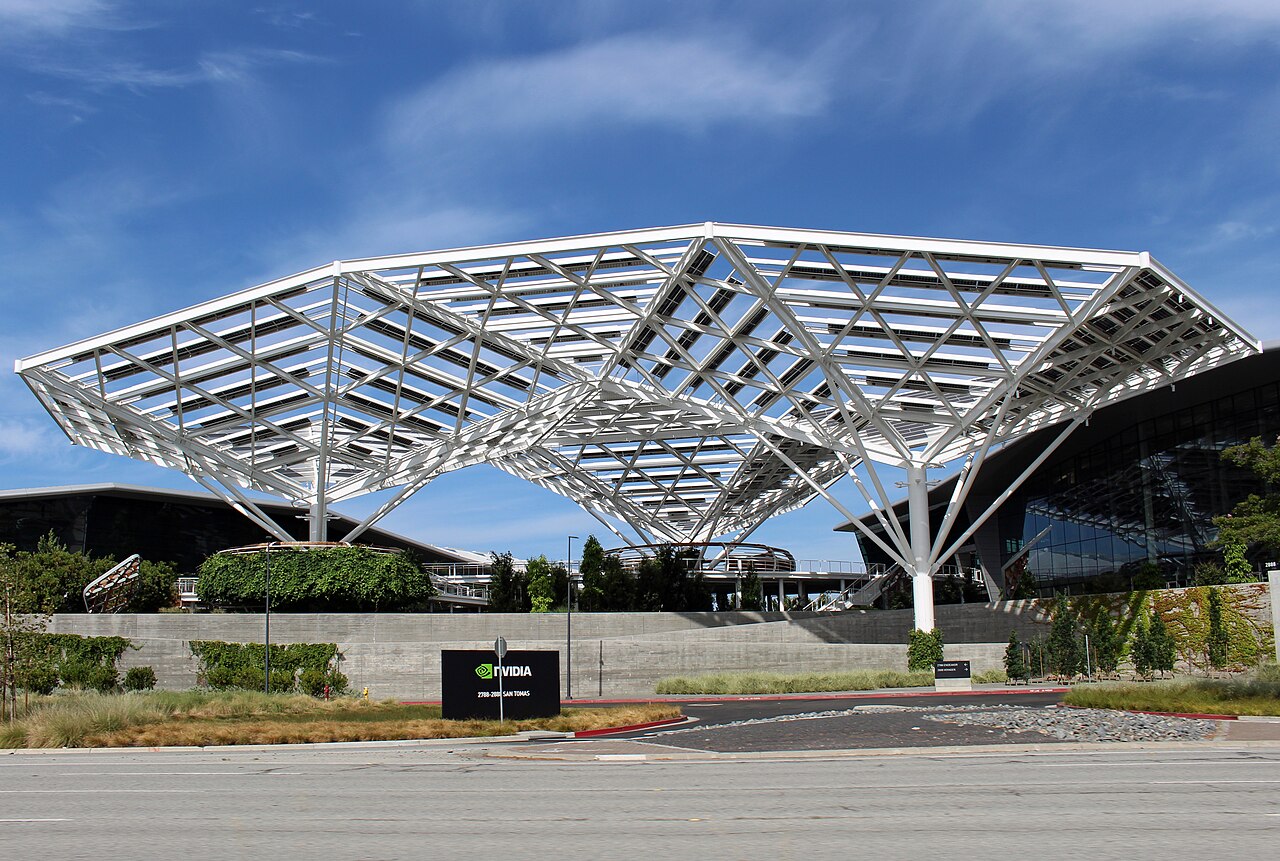
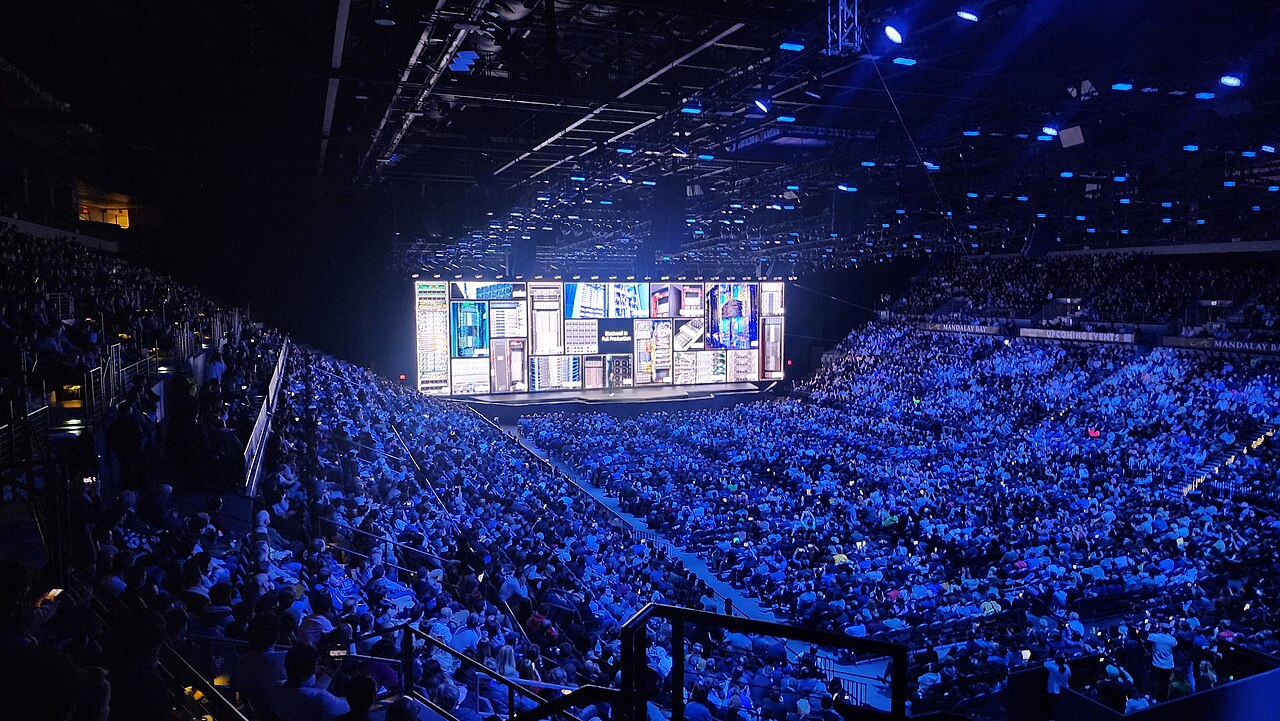
Header image: NVIDIA's Voyager headquarters building entrance at 2788-2888 San Tomas Expressway, Santa Clara, California, by Coolcaesar via Wikimedia Commons, licensed under CC BY-SA 4.0. In-body photograph of attendees at an NVIDIA keynote at CES 2025 in Las Vegas, via Wikimedia Commons, licensed under CC BY-SA 4.0. Neither photograph depicts the September 28, 2026 buyback announcement itself.