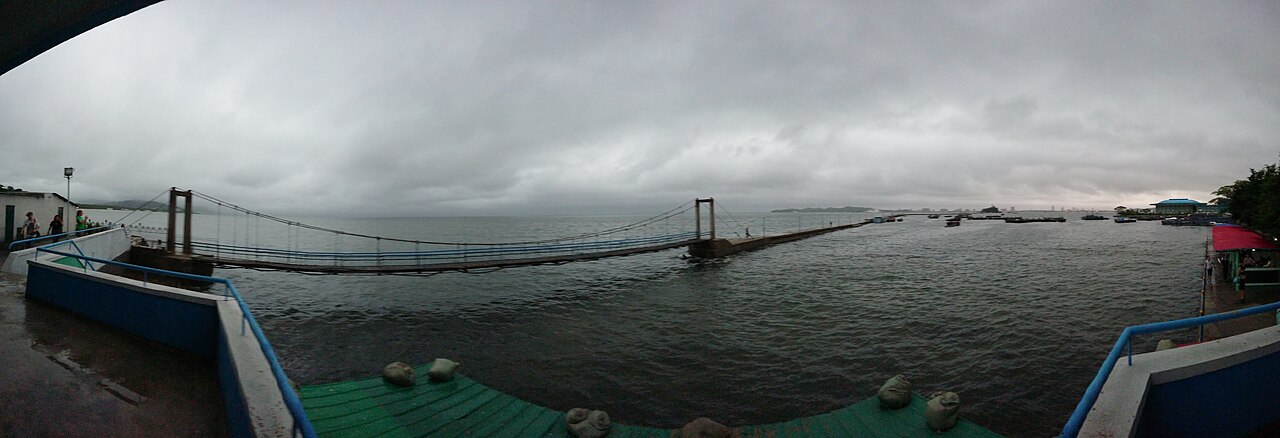
North Korea says it has tested an AI hypersonic missile, a weapon whose guidance software can alter its flight path at low altitude, in a launch Kim Jong Un oversaw on October 3, 2026. Arab News, in an Associated Press report, says the missile was fired from the Wonsan area on the east coast and flew more than 700 kilometers (435 miles), according to South Korea's military. The AI claim comes from North Korean state media and Kim's sister, not from any independent measurement, and this article keeps that line visible throughout.
What was reported about the AI hypersonic missile test
According to Arab News, state media described the launch as training for a "hypersonic strategic weapon system" that demonstrated soldiers' "professional qualifications and counterattack posture." Kim Yo Jong, the leader's sister, said the artificial intelligence lets the missile "change its flight orbit at a low altitude," and that there was "no way to avoid" such an attack. Kim Jong Un was quoted saying the country must "make the enemy recognize the reliability and fatality of our strategic offensive means."
Per Anadolu's coverage, state media said the missile used AI to adjust its trajectory in flight. Defence Security Asia quotes Kim Yo Jong as saying the enemy "failed to track the targets from their first skip points," and describes Pyongyang's label as "an intermediate-range hypersonic strategic weapon system." K News adds that she attributed the tracking failure to a "special wavy trajectory."
The AI claim comes from state media and has not been independently verified.
Analysis based on the cited reports
Claimed versus measured: the distance gap
The reports disagree on how far the missile flew. North Korea said it hit a designated sea target about 1,000 kilometers away, per the OECD.AI incident record. South Korea reported more than 700 kilometers. According to Defence Security Asia, Japan assessed about 680 kilometers with a peak altitude near 90 kilometers, and that outlet notes the published accounts leave unresolved whether the gap reflects incomplete public tracking, differing methods, an exaggerated claim, or a mix.
As derived arithmetic, 700 divided by 1,000 means the South Korean figure is about 70 percent of the claimed distance, and Japan's 680 is about 68 percent. Neither government's figure would be a precise measure of a missile whose later flight may have passed beyond radar coverage, so the percentages describe the reported numbers only.
The same pattern appears in earlier launches. Wikipedia's Hwasong-16B entry records that on April 2, 2024, North Korea claimed 1,000 km while South Korea assessed 600 km and Japan 650 km. On January 6, 2025, it claimed 1,500 km, while Japanese and South Korean data showed about 1,100 km, and South Korea called the claim "most likely exaggerated."
Claimed versus assessed flight distance
Kilometres flown, as stated by North Korean state media and as assessed by South Korea and Japan, for three hypersonic-related launches.
The October 2026 South Korean figure is a floor (more than 700 km). For January 2025, Japanese and South Korean data were reported together as about 1,100 km.
How South Korea and Japan responded
Seoul's defense ministry disputed the "no way to avoid" assertion. Anadolu reports it said the missile "was well within the detection and interception capabilities" of the joint South Korean and U.S. defense systems, and called the launch a violation of UN Security Council resolutions. Japan's figures, cited above, came through its own tracking assessment. The accounts I could retrieve did not include a detailed U.S. government statement or a Japanese government quote, so none is attributed here.
What a hypersonic glide vehicle is
A hypersonic glide vehicle is, in Wikipedia's wording, "a type of warhead for ballistic missiles that can maneuver and glide at hypersonic speed." A conventional ballistic warhead follows a predictable arc; a glide vehicle can maneuver, which the same source says makes it harder to intercept, and it may fly lower to cut warning time. That source also notes the vehicle becomes "easier to attack" as it descends and slows near the target.
This is why the October claim concentrates on low altitude. The reported peak altitude of about 90 kilometers, per Japan's assessment as cited by Defence Security Asia, and the "skip points" language together describe a skipping flight profile. Defence Security Asia also reports a conical payload on a solid-fuel Hwasong-16-family booster, which differs from earlier wedge-shaped glide vehicles.
What AI guidance could plausibly mean
No source retrieved for this article explains what the AI does. The statements say it changes trajectory at low altitude, and nothing more. Three readings are possible, and this is analysis, not reporting: software that optimizes a flight path from onboard sensor data, a terminal-phase seeker or navigation algorithm that refines aim, or a marketing label applied to conventional guidance. The public record cannot distinguish among them. Treat "AI" here as a claim about capability, not a documented technical fact.
North Korea also published impact coordinates in unusual detail. Anadolu notes analysts saw coordinates given "down to decimal points," while K News reported roughly 30-centimeter accuracy and analyst views that it signaled confidence and highlighted alleged tracking gaps. Those are interpretations of a disclosure, not verified precision.
North Korea's hypersonic timeline
- September 28, 2021: the first Hwasong-8 test, which state media said was meant to verify the fuel ampoule system and the warhead's "maneuverability and gliding flight characteristics," per Wikipedia. South Korean assessments called it early-stage.
- January 5 and 11, 2022: two further tests of a maneuverable version, same source.
- April 2, 2024: the test described above, with a claimed 1,000 km and a claimed pull-up maneuver.
- January 6, 2025: a claimed 1,500 km at Mach 12, versus about 1,100 km in Japanese and South Korean data.
- October 3, 2026: the AI-attributed launch.
K News reports North Korea has conducted more than 10 missile tests this year and frames the system as moving toward operational deployment, which is that outlet's assessment.
AI in weapons policy
The claim lands in a live policy debate. The U.S. directive on autonomy in weapons, DoD Directive 3000.09, says, as quoted by Wikipedia, that autonomous weapon systems "shall be designed to allow commanders and operators to exercise appropriate levels of human judgment over the use of force." That is a U.S. standard and does not bind North Korea.
At the UN, the General Assembly adopted a resolution on autonomous weapons on November 6, 2025 by 156 votes to 5 with 8 abstentions, according to Stop Killer Robots. It asks parties to the Convention on Certain Conventional Weapons to work toward completing elements of an instrument "with a view to future negotiation." The same source says the expert group's mandate runs through 2026, when states decide whether to launch negotiations. The resolution itself is not legally binding. For a related look at how Washington is studying future warfare, see our post on Project Meridian.
What to watch
- Independent evidence: imagery, tracking data or debris that clarifies the flight profile and any maneuvering.
- Distance reconciliation: whether Seoul, Tokyo and Washington publish fuller trajectory data.
- Repeat tests: whether later launches show consistent range and the same "wavy" profile.
- The 2026 CCW decision: whether states open negotiations on autonomous weapons.
Teams tracking fast-moving stories like this can keep sources and notes side by side in a model-agnostic workspace such as Metir.
Sources:
- Arab News (AP): North Korea's Kim oversaw launch of missile that uses AI
- Anadolu: North Korea's Kim oversaw launch of missile that uses AI
- K News: North Korea reveals details of AI-enhanced missile launch
- Defence Security Asia: North Korea claims 1,000 km hypersonic flight
- OECD.AI incident record
- Wikipedia: Hwasong-8
- Wikipedia: Hwasong-16B
- Wikipedia: Hypersonic glide vehicle
- Wikipedia: Lethal autonomous weapon
- Stop Killer Robots: 156 states support UNGA resolution
Image credits
- Hero: "Wonsan City - 03 - bridge and pier" by Jan Engelhardt, CC BY-SA 4.0, Wikimedia Commons. Shows the Wonsan waterfront in 2019; it does not depict the missile test.
- In body: "Wonsan City - 01 - Panorama" by Jan Engelhardt, CC BY-SA 4.0, Wikimedia Commons.