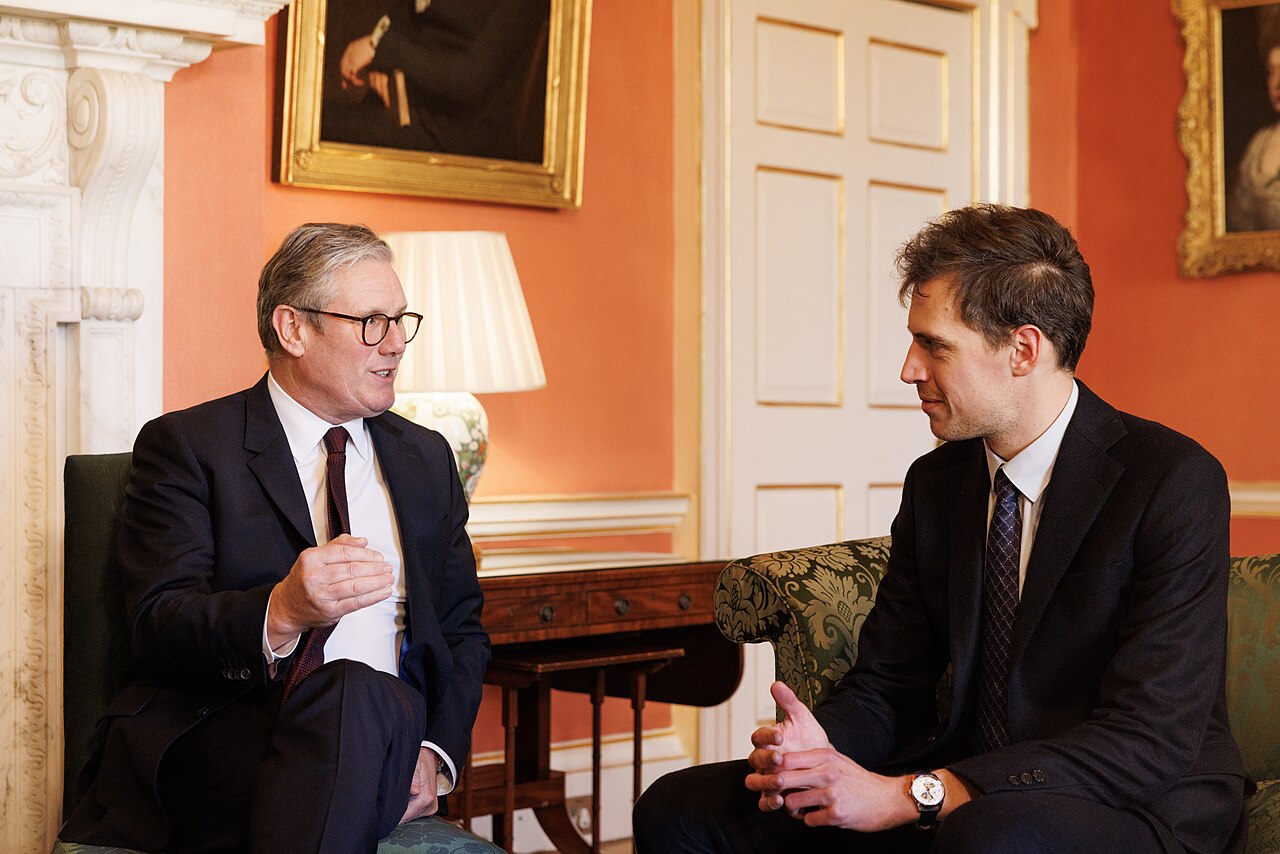
In the first week of July 2026, Mistral AI began early access to a new open-weight model family, with CEO Arthur Mensch describing the architecture as "fat but sparse." The phrase is a compact summary of a Mixture-of-Experts design: a very large total parameter count, of which only a small fraction runs for any given token. Released, as Mistral's models typically are, under a permissive Apache 2.0 license, the launch reopens one of the most consequential questions in AI: how close can freely downloadable models get to the closed frontier, and does closing the last few points even matter for most work?
This piece unpacks the architecture, the state of the open-versus-closed gap, and why the license is arguably the more important story than the benchmark.
What "fat but sparse" actually means
A traditional dense model runs its entire network for every token it processes. If it has 400 billion parameters, all 400 billion participate in generating each word. That is expensive, and it scales badly.
A Mixture-of-Experts model breaks the network into many specialised sub-networks, called experts, and adds a small routing function that sends each incoming token to only the top few experts. The rest sit idle for that token. The result is a model that can carry an enormous total parameter count, the "fat" part, while the active computation per token stays close to that of a much smaller dense model, the "sparse" part.
Mistral's current flagship illustrates the pattern. Mistral Large 3, released in late 2025, is a 675-billion-total, 41-billion-active sparse MoE. In other words, it holds the knowledge capacity of a 675B model but pays the per-token compute bill of a roughly 41B one. The new family is expected to be considerably larger in total size while keeping that same sparse-activation discipline. Mensch has declined to confirm exact figures.
The appeal is straightforward: MoE is one of the few techniques that improves capability and efficiency at the same time, which is exactly why nearly every frontier lab, open and closed, has converged on it. The trade-off is complexity. Routing tokens well is hard, experts can be unevenly used, and serving a sparse model efficiently requires careful engineering. But the direction of travel is clear, and Mistral is leaning into it.
The gap that will not quite close
The question every open-weight launch invites is whether it reaches the frontier. The honest answer, tracked over the past five quarters, is that open weights have climbed steadily while the best closed models have stayed a step ahead.
The open-weight gap is narrowing, not closing
Leading Intelligence Index score for the best closed model versus the best open-weight model, by quarter. A structural gap has persisted even as both lines climb.
The frontier gap has held near 9 to 14 points through five quarters. Mistral positions its new family to compress that distance for the workloads that can run on open weights.
Both lines rise. Neither converges. Through 2026 the best open-weight models have generally trailed the best closed model by somewhere in the region of nine to fourteen points of Intelligence Index. The gap narrows and widens as releases land on each side, but it has not vanished. The reasons are structural: the closed labs have the largest training clusters, the most expensive human-feedback pipelines, and the strongest commercial incentive to hold a lead. Open-weight developers, whether releasing for strategic, reputational or ecosystem reasons, tend to arrive at a given capability level a little later.
So if the test is "did Mistral beat the closed frontier," the likely answer is no. But that framing misreads what open weights are for.
Why the license can matter more than the score
For a large class of real deployments, the marginal points at the very top of the leaderboard are worth less than control. That is where Apache 2.0 changes the calculus.
Under a permissive open-weight license, an organisation can download the model, run it on its own hardware, fine-tune it on proprietary data, and redistribute the result commercially, all without asking permission or triggering a vendor review. That unlocks things a closed API cannot easily offer:
- Data residency and privacy. The model runs inside your own environment, so sensitive data never leaves it. For regulated industries, this is frequently non-negotiable.
- No dependency on a vendor's roadmap. A downloaded model cannot be deprecated, price-changed, or rate-limited out from under you. It runs as long as you keep the weights.
- Deep customisation. Fine-tuning on domain data can lift a smaller open model above a larger general one for a narrow task, which is often the task that matters.
- Cost control at scale. For very high-volume workloads, self-hosting an efficient sparse model can undercut per-token API pricing once utilisation is high enough.
None of this requires beating the frontier. It requires being good enough on the task while giving the owner control the closed labs will not sell. That is the actual competitive position of open weights in 2026, and it explains why the category keeps growing even though the top of the leaderboard remains closed.
The strategic picture around Mistral
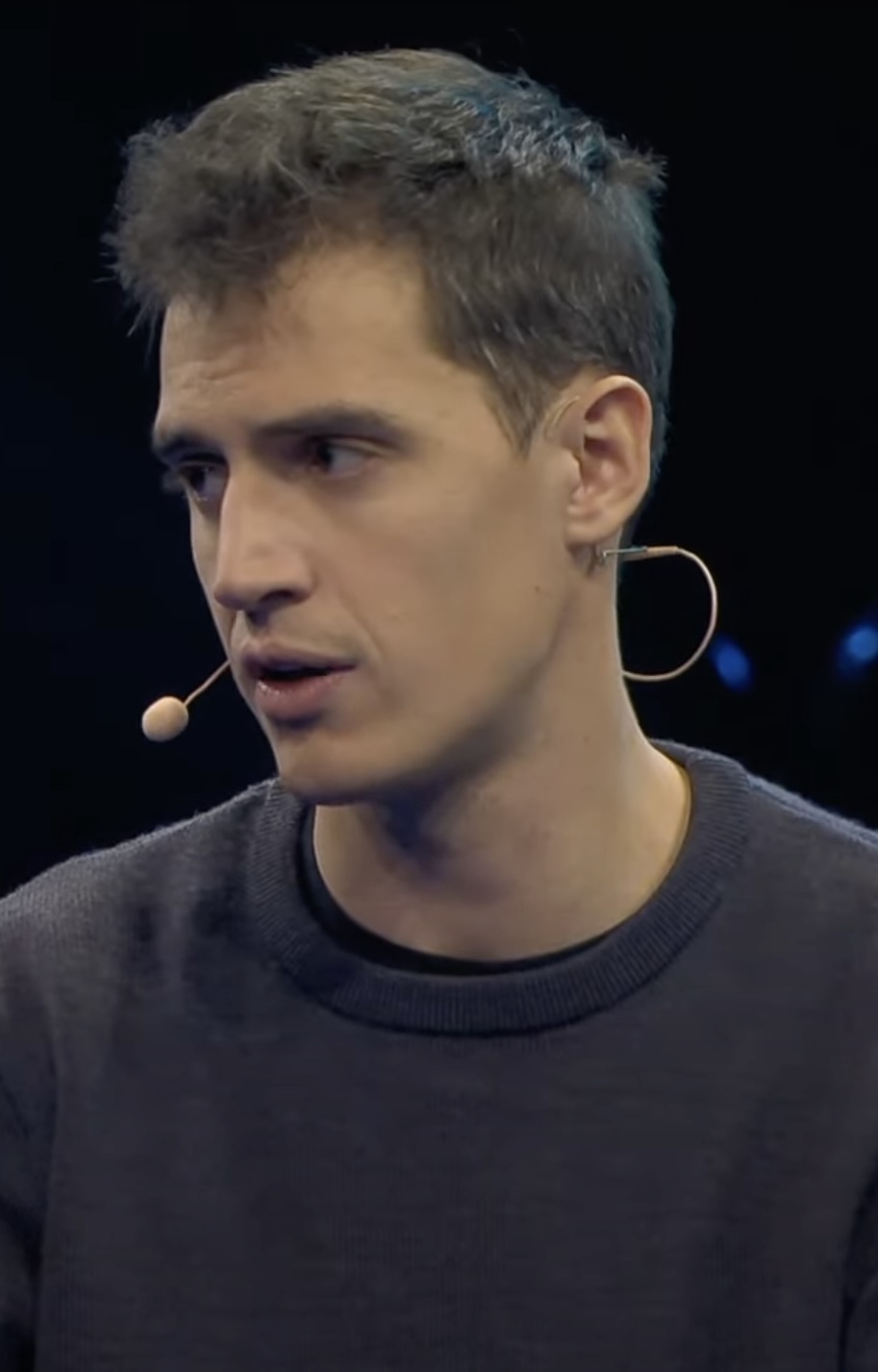
The model does not arrive in isolation. Mistral has been broadening its footprint, with reports of a robotics-focused model and a valuation approaching $23 billion. As one of the few frontier-adjacent labs outside the United States, and a European champion for open weights, its releases carry a sovereignty dimension: governments and enterprises wary of depending entirely on a handful of US API providers see permissively licensed models as strategic infrastructure, not just cheaper tooling.
That said, a neutral view keeps two cautions in mind. First, "open weight" is not the same as "fully open." Releasing weights under Apache 2.0 is meaningfully open, but training data and full training code usually are not published, so reproducibility is limited. Second, self-hosting is only cheaper past a certain scale. Standing up and operating inference infrastructure has real fixed costs, and for low or bursty volumes a closed API often remains the more economical choice. Open weights lower the ceiling on control, not necessarily the floor on cost.
What builders should take from it
The pragmatic reading of Mistral's launch is not "open has caught up" or "open is still behind." It is that the two categories are settling into complementary roles. Closed frontier models lead on raw capability and remove all operational burden. Open-weight models like Mistral's new family trade a few points of peak intelligence for control, privacy, customisation and independence.
The teams getting the most out of 2026 rarely pick one camp. They route sensitive or high-volume work to a self-hosted open model and send the hardest reasoning to a closed frontier model, choosing per task rather than per contract. That mixed posture is easier to run when a single workspace can reach both, which is part of why model-agnostic platforms such as Metir AI treat open and closed models as interchangeable options rather than rival religions.
The takeaway
Mistral's "fat but sparse" family is unlikely to top the global leaderboard, and it does not need to. Its significance is in keeping a credible, permissively licensed alternative within striking distance of the frontier, so that organisations retain a real choice about where their most sensitive AI work runs. The gap between open and closed is narrowing slowly and may never fully close. For a great many practical uses, it already does not need to.
Use open and closed models side by side
The most resilient AI strategy keeps both options open: self-hosted models where control and privacy matter, frontier APIs where raw capability wins. Metir AI brings leading models together in one workspace so you can match each task to the right engine without locking yourself to a single vendor. Try Metir AI free and keep your options open.
Sources:
- Mistral AI Targets Frontier Gap With Open-Weight Model Entering July Early Access | TechTimes
- Mistral Ships Robotics Model as Valuation Nears $23B | Tech Insider
- Artificial Analysis Intelligence Index | open-source model filter
- New AI Model Releases News, July 2026 | mean.ceo
Image credits
Header image: UK Prime Minister Keir Starmer meeting Mistral AI CEO Arthur Mensch at 10 Downing Street, by Number 10 via Wikimedia Commons, licensed under the Open Government Licence v3.0. In-body photograph of Arthur Mensch by Slush via Wikimedia Commons, licensed under CC BY 4.0.