On August 6, 2026, MiniMax, a Shanghai-based AI company, open-sourced MiniMax H3, an open-weights general-purpose multimodal model built to generate video with synchronized native audio. Within days it topped two independent leaderboards: it ranked #1 among open video models on the Video Arena benchmark, and #1 on Artificial Analysis's audio-enabled video editing ranking. Open weights mean the model can be downloaded, inspected, modified, and run outside MiniMax's own infrastructure, a release shape that has become the defining pattern of China's frontier AI labs in 2026.
 MiniMax
 DeepSeek
 Qwen
Qwen Moonshot AI
The headline claims are worth taking in order: what H3 actually does, how it is built, how it scored, and what an open release of this kind changes for the people who would otherwise be renting equivalent capability from a closed API.
What H3 does
H3 generates video clips up to 15 seconds long at 2K resolution, with native stereo audio generated alongside the video rather than added afterward. It accepts a unified input format, meaning text, images, video, and audio can all be fed into the same model as prompts or references, rather than requiring separate specialized tools for each modality. That combination, video generation plus synchronized audio plus multimodal input, is what MiniMax is positioning as the model's differentiator against the current field of open video generators, most of which still produce silent clips.
The architecture: one dense Transformer, not a chained pipeline
Most systems that produce "video with sound" today do it by chaining together separate models: one for the visual generation, another for text-to-speech or music, and a synchronization step that stitches the two afterward. MiniMax built H3 differently. Its core is the H3-Omni-Transformer, a 33-billion-parameter dense, single-stream Transformer, with roughly 13 billion of those parameters concentrated in AdaLN-related branches (adaptive layer-normalization components that let the model condition its outputs on the different input modalities it is handling). Being dense (as opposed to a mixture-of-experts model that only activates a subset of parameters per token) and single-stream means text, image, video, and audio are processed through one shared architecture rather than routed to modality-specific sub-networks that are later merged.
One dense Transformer versus a chain of specialists
H3's H3-Omni-Transformer takes a unified input format and outputs video with native audio in a single pass, instead of stitching together separate models for each modality.
Native, jointly generated audio and video is the harder engineering problem than silent video generation. A single-stream architecture is what lets H3 accept text, images, video, or audio as input and produce synchronized output in one pass, rather than assembling it from separately trained models.
That architectural choice is also why native audio matters more than it might first appear. Silent video generation has been a solved-enough problem for over a year; producing audio and video jointly, so that a mouth moves in sync with speech or a footstep lands with an audible impact, has remained one of the harder open problems in generative media. A unified model that learns the relationship between sound and motion during training, rather than approximating it in a post-hoc sync step, is attempting to solve that problem structurally instead of papering over it.
Where it lands on the leaderboards
MiniMax reports that H3 ranked #1 among open video models on the Video Arena benchmark, ahead of Tencent's HunyuanVideo-1.5 by roughly 280 points, across both text-to-video and image-to-video evaluation tracks. Separately, on Artificial Analysis's ranking for audio-enabled video editing, a benchmark specifically testing models that handle both video and its accompanying audio, H3 scored an Elo of roughly 1,130, putting it ahead of models including Google's Gemini Omni Flash and Alibaba's Wan 2.7.
H3's lead atop the open video leaderboard
Video Arena score gap, combined text-to-video and image-to-video. Tencent's HunyuanVideo-1.5 is plotted as the baseline; the bar shows MiniMax H3's reported margin above it, not an absolute score.
MiniMax reports H3 ranked #1 among open video models in the Video Arena benchmark, roughly 280 points ahead of Tencent's HunyuanVideo-1.5, across both text-to-video and image-to-video tasks. Treat as a directional leaderboard result, not an absolute quality measure.
Both of these are benchmark results, not universal truth. Arena-style Elo scores reflect how a specific pool of evaluators or automated judges ranked outputs on a specific set of prompts, and leaderboard position can shift as new models are added or as evaluation methodology is refined. They are directional evidence that H3 is currently competitive with, and by these measures ahead of, both other open models and at least one prominent closed model on a narrow but meaningful task. They are not a substitute for hands-on evaluation against a specific production use case.
Native, jointly generated audio and video has been the harder problem in generative media. A single unified model is an attempt to solve that structurally, not paper over it with a sync step.
Analysis of MiniMax H3's H3-Omni-Transformer architecture
China's open-weight momentum keeps building
H3 is not an isolated data point. Over the past year, a cluster of Chinese labs has repeatedly chosen to open-weight frontier or near-frontier models rather than keep them behind an API: DeepSeek's reasoning and general-purpose model releases, Alibaba's Qwen family, Moonshot AI's Kimi models, and now MiniMax's move into generative video and audio. Each release has narrowed a different part of the gap between what is available only through closed, proprietary APIs and what a developer can download and run themselves. H3's contribution is narrowing that gap specifically in generative video and audio, a category that, until now, has been dominated by closed systems from labs like Google and OpenAI, plus a handful of well-funded video-generation startups.
That pattern matters independent of any single model's benchmark score, because it changes what "state of the art" means operationally. When the best-performing systems in a category are closed, the frontier is something you rent. When open-weight releases are competitive with or ahead of closed alternatives, the frontier becomes something you can also own, audit, and modify, and that shift changes the calculus for anyone deciding how to build on top of generative AI.
What open weights change, concretely
The practical difference between an open-weight model and a closed API is not philosophical, it shows up in four specific places.
Self-hosting. H3's weights can be deployed on infrastructure the operator controls, rather than routed through a third party's servers. MiniMax adapted H3 across 16 chip manufacturers and platforms at launch, and it is also available through inference platforms such as fal, so teams have a choice between running it themselves or consuming it as a hosted endpoint, without being locked into a single vendor's infrastructure either way.
Control and customization. Open weights can be fine-tuned, distilled, or otherwise modified for a specific use case, style, or domain, something a closed API generally does not permit beyond prompt engineering and whatever customization endpoints the provider chooses to expose.
Cost structure. Self-hosting trades a per-call API fee for fixed compute costs. That trade only pays off at meaningful volume, since running a 33B-parameter multimodal model requires real GPU capacity, but at scale it can materially change unit economics for a product built on top of video generation.
Data governance. For regulated industries or any workflow involving sensitive source material, being able to run inference entirely within an organization's own infrastructure, with prompts and outputs never leaving that environment, is often a harder requirement than raw model quality.
None of these advantages are new to H3 specifically, they are the standard argument for open weights generally. What is new is that the argument now applies to a category, video-plus-audio generation, where until this release the credible open options were noticeably behind the closed frontier.
The caveats worth holding onto
Three qualifications keep this release in proportion.
First, benchmark leadership is not the same as production-ready quality across every use case. Video Arena and Artificial Analysis scores are useful comparative signals, but real-world video generation quality varies by prompt type, subject matter, and the specific artifacts a given application cares about (temporal consistency, fine hand and face detail, audio-lip sync accuracy under motion). Anyone evaluating H3 for a specific product should test it directly against their own prompts rather than relying on leaderboard position alone.
Second, generative video raises safety and provenance questions that scale with capability. A model that produces increasingly convincing synchronized audio and video, and that is available as open weights that can be modified or run without a provider's content filters, sits squarely in the territory that concerns researchers working on deepfake detection and content provenance. MiniMax has not published, and this article makes no claim about, what safeguards H3 ships with by default; that is a question worth asking directly of the release documentation before deploying it at scale.
Third, "open weights" does not mean "runs on a laptop." A 33-billion-parameter dense multimodal model generating 2K video with audio requires substantial GPU infrastructure to run at usable speed. The accessibility open weights provide is the ability to self-host and control the model, not a reduction in the compute needed to actually operate it. That is precisely why MiniMax's day-one adaptation across 16 chip platforms is a meaningful part of the release, it is an attempt to lower the practical bar to running the model on whatever hardware an organization already has.
Why the "which model" question keeps getting harder
H3's release adds one more strong option to a field that already includes Google, Alibaba, and Tencent's video systems, on top of a base layer of text and reasoning models from a dozen labs. No single model, open or closed, is going to be the best choice for every task indefinitely, and the practical cost of committing to one provider's stack is that switching later, when a better or cheaper option ships, becomes an integration project rather than a configuration change. That is the case for staying model-agnostic: treating the underlying model, whether it's H3, a closed video API, or whatever the next open release turns out to be, as a swappable component rather than a foundation to build directly on top of. Platforms like Metir AI are built around that principle, giving teams access to the best available model for a given task, open or closed, without re-architecting a workflow every time the leaderboard changes.
The bigger picture
MiniMax H3 is a genuine technical milestone: an open-weight model that unifies text, image, video, and audio generation in a single dense Transformer, and that currently leads two independent benchmarks measuring open video quality and audio-video editing. It also fits a larger and now well-established pattern, in which Chinese AI labs have repeatedly chosen to open-weight models that compete with the closed frontier, doing so this time in a category, synchronized video and audio, that had largely been the province of closed systems. Whether H3 holds its leaderboard position as newer models ship, and how it performs on the specific tasks any given team cares about, are open questions that only direct testing will answer. What is already clear is that the gap between what is available only behind a closed API and what a developer can download and run themselves just got narrower in one more domain.
Sources:
- MiniMax H3 open-source announcement | MiniMax
- MiniMax H3 outperforms HunyuanVideo-1.5 in Video Arena benchmark | CryptoBriefing
- MiniMax H3 benchmarks, specs, and hardware review | Kingy AI
- MiniMax H3 on fal
- MiniMax H3 coverage | 36Kr
Image credits
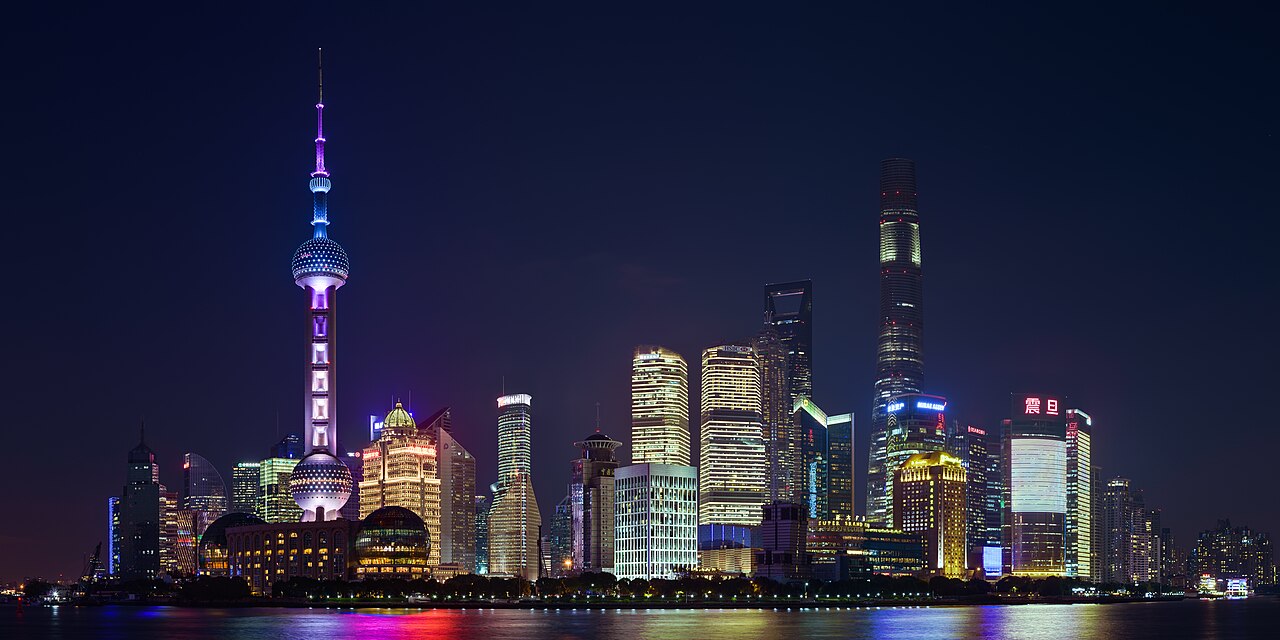
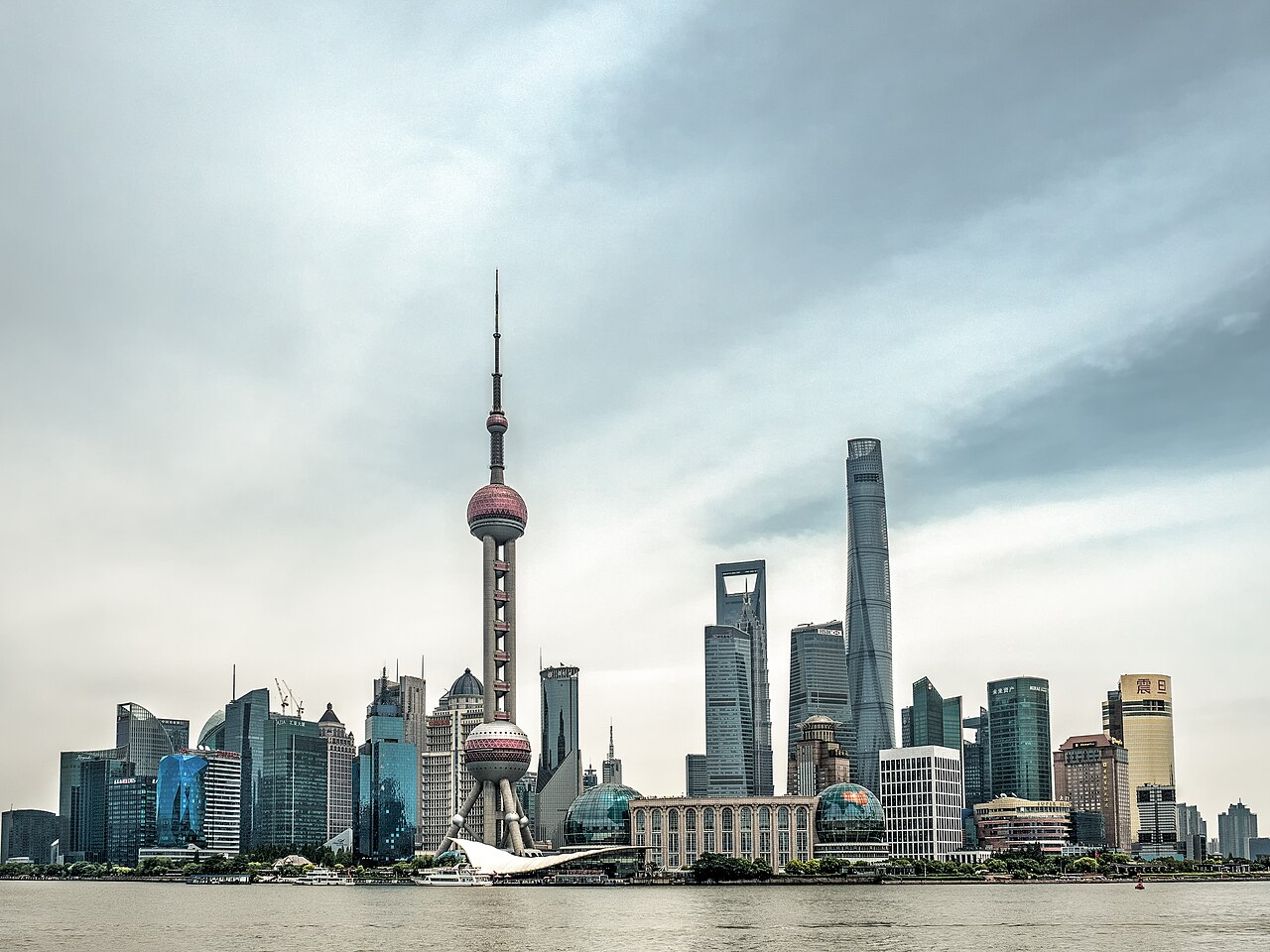
Header image: night panorama of the Pudong skyline across the Huangpu River, Shanghai, China, by King of Hearts via Wikimedia Commons, licensed under CC BY-SA 4.0. In-body photograph: daytime view of the same skyline, by Ermell via Wikimedia Commons, released under CC0. Neither photo depicts MiniMax's offices, the H3 model, or any MiniMax product; both are included to show the city where MiniMax is headquartered.