On July 29, 2026, Microsoft reported results for the fourth quarter of its fiscal year 2026, and the numbers landed on the reassuring side of the market's central question about artificial intelligence: is the spending producing revenue yet. Quarterly revenue reached $90 billion, up 18 percent year over year, Azure and other cloud services grew 43 percent, and Microsoft disclosed that annual Azure revenue had crossed $100 billion for the first time. In the same breath, the company guided fiscal 2027 capital spending to between $255 billion and $260 billion, a roughly 35 percent increase over the year just ended. This piece looks at what the results show, why Azure's acceleration matters, and how to read a capex line that keeps climbing.
 Microsoft
 OpenAI
 NVIDIA
The headline numbers
Microsoft's fiscal Q4 2026, covering the quarter ended June 30, beat expectations on both the top and bottom lines. Revenue of $90 billion rose 18 percent, GAAP net income climbed 31 percent to $35.8 billion, and earnings per share came in at $4.81, according to the company's results and coverage from CNBC and StockTitan. Microsoft Cloud revenue reached $59.3 billion, up 27 percent.
The single most watched figure was Azure. Azure and other cloud services grew 43 percent, ahead of the company's own guidance, and management attributed the strength partly to efficiency gains across its CPU and GPU fleet and to process improvements that shortened the lead time for bringing new capacity online. The Intelligent Cloud segment that houses Azure posted $39.3 billion in revenue, up 32 percent. Microsoft also said its 365 Copilot product had passed 30 million paid seats, one of the clearer signals to date that AI features are converting into recurring subscription revenue rather than remaining a demo.
Why Azure's acceleration is the point
For most of the past two years, the bull case for Microsoft's AI spending has rested on a promise: that the tens of billions poured into data centers and accelerators would show up as cloud growth. The bear case has been that demand might not keep pace with the build, leaving expensive capacity underused. Azure accelerating to 43 percent growth, rather than decelerating, is the data point that tilts the current quarter toward the bull case.
The spending that funds the acceleration
Microsoft's capital expenditure, fiscal 2026 versus its fiscal 2027 guidance of $255 to $260 billion, an increase of roughly 35 percent.
FY2027 shown at the $258B midpoint of the $255 to $260 billion guided range. The build is aimed at Azure, Microsoft 365 Copilot, and the OpenAI partnership.
The nuance management offered is worth holding onto, because it cuts against a simple reading. Part of the acceleration, the company said, came not from demand alone but from getting more usable output from the same hardware through efficiency gains, and from bringing new capacity online faster. That matters because it means the growth is partly a supply-side story: for several prior quarters, Azure's AI growth had been described as capacity-constrained, with more demand than Microsoft could serve. Easing that constraint converts latent demand into booked revenue. It is a genuinely positive signal, and it is also a reminder that some of the acceleration reflects catching up to demand that already existed rather than only new demand appearing.
Azure accelerating rather than decelerating is the data point that tilts the quarter toward the bull case.
The capex that pays for it
The other half of the story is the spending. Microsoft's capital expenditures for fiscal 2026 ran near $190 billion, and the company guided fiscal 2027 to between $255 billion and $260 billion, an increase of roughly 35 percent. That is one of the largest capital programs any company has ever undertaken, and it is aimed squarely at the compute needed to serve AI workloads across Azure, Microsoft 365 Copilot, and the OpenAI partnership.
The way to read a number that large is not in isolation but against the revenue it is meant to generate. When capex rises 35 percent while cloud revenue grows and Azure accelerates, the market tends to tolerate the spending, because the return signal is visible. The risk sits in the timing mismatch: capital is spent up front to build capacity, while the revenue it enables arrives over the years the assets are in service. If demand growth slows before the assets are fully utilized, the depreciation on that capital weighs on margins with no offsetting revenue. Microsoft's current results suggest demand is keeping pace; the guidance asks investors to believe it will continue to for another year of even heavier building.
How Microsoft's quarter fits the wider earnings season
Microsoft's report did not stand alone. It arrived in the same stretch as results from other hyperscalers, and the contrast is instructive. The market rewarded Microsoft's quarter because the spending came paired with visible acceleration in the business the spending funds. Where peers guided capex sharply higher without an equally clear near-term payoff, the reaction was harsher, a reminder that the market is no longer willing to fund AI capex on faith alone. It wants the capex and the revenue line moving together.
That framing explains why the same behavior, spending heavily on AI infrastructure, produced very different market reactions across companies reporting within days of each other. The determining variable was not the size of the capex but whether the accompanying results made the case that the money is turning into revenue. Microsoft, this quarter, made that case.
What it means for AI buyers
For organizations that consume rather than build cloud AI, Microsoft's results carry a practical signal. The eased capacity constraint on Azure suggests that the availability and, over time, the cost dynamics of frontier compute are improving as more capacity comes online across the industry. More supply generally works in buyers' favor. At the same time, the sheer concentration of this build in a handful of providers is a reminder of how much of the AI economy now runs through a small number of clouds and model vendors.
That concentration is the strategic case for flexibility. When capacity, pricing, and model availability shift quarter to quarter across providers, teams that can move workloads between clouds and models capture the best terms available at any moment rather than being locked to one vendor's roadmap. Staying model-agnostic and provider-flexible, the approach Metir AI takes at the application layer by giving teams access to leading models across providers, is a way to benefit from the competition that quarters like this one intensify, rather than being exposed to any single provider's pricing or capacity decisions.
The takeaway
Microsoft's fiscal Q4 2026 is the quarter where the AI spending case got a concrete data point in its favor. Azure accelerated to 43 percent growth and crossed $100 billion in annual revenue, Copilot passed 30 million paid seats, and profit grew faster than revenue, all while the company committed to a fiscal 2027 capital budget approaching $260 billion. The results do not end the debate about whether AI infrastructure spending will earn its return; the timing gap between spending and payback is real, and next year's build is larger still. What they do is show, for at least one quarter and one company, the spending and the revenue moving in the same direction. That is what the market had been waiting to see, and it is why Microsoft's reaction diverged from peers whose spending outran their visible returns.
Sources:
- Microsoft (MSFT) Q4 earnings report 2026 | CNBC
- Microsoft Q4 Earnings: Revenue $90B, Up 18% | StockTitan
- FY26 Q4 Press Release | Microsoft Investor Relations
- Microsoft 2026 Q4 earnings: New Azure revenue milestone | MSDynamicsWorld
- Microsoft (MSFT) Q4 FY2026 Earnings Preview: Azure 40%, FY2027 Capex $255-260B | TradingKey
- Microsoft Q4 FY26 Results: Why MSFT Stock Jumped | INDmoney
Image credits
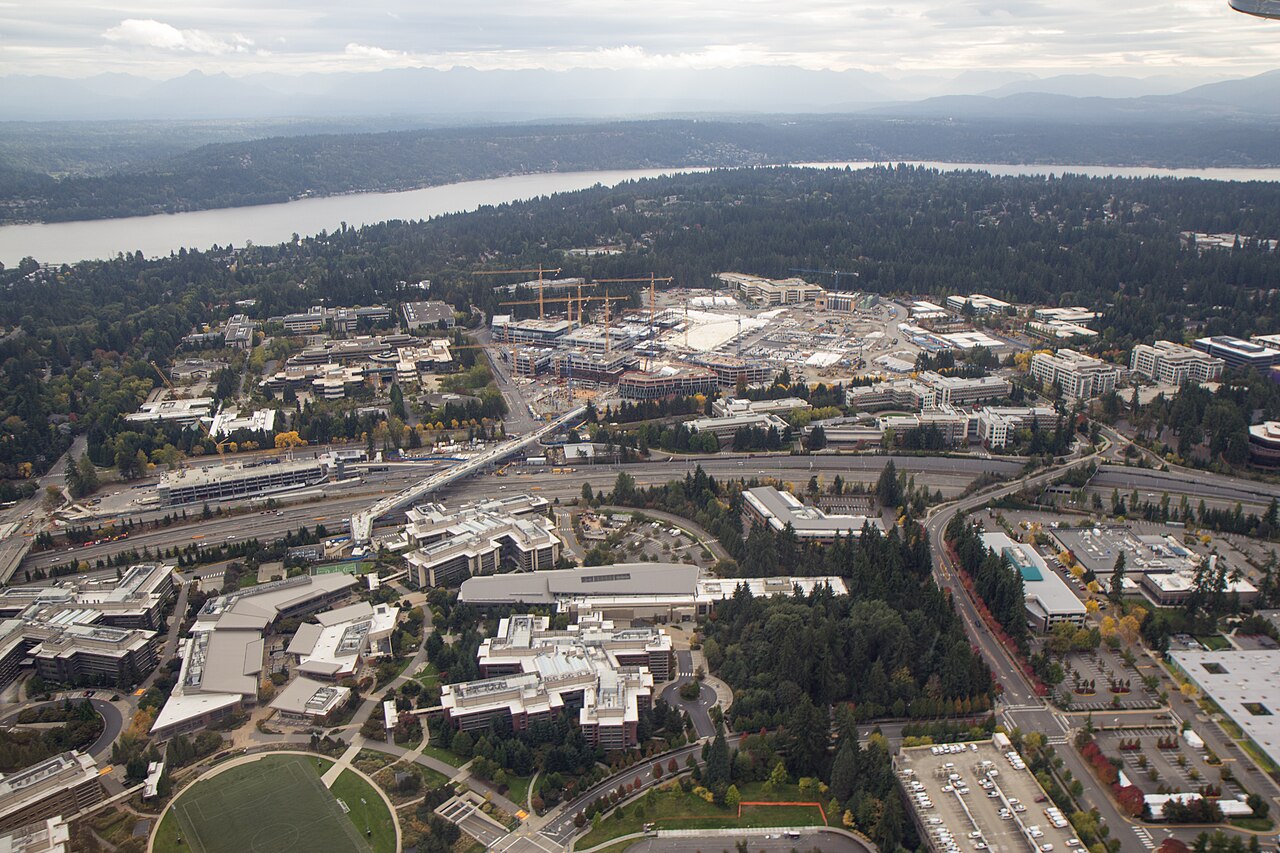
Header image: Satya Nadella, Chairman and CEO of Microsoft, official executive photo, via Wikimedia Commons, licensed under CC BY-SA 4.0. In-body photograph: Microsoft's Redmond campus, aerial view, via Wikimedia Commons, licensed under CC BY-SA 2.0.