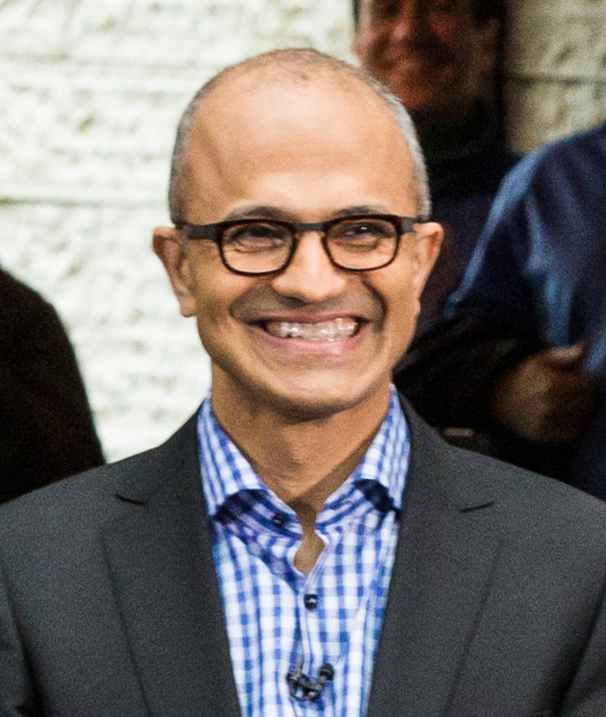
Microsoft CEO Satya Nadella published a long essay in October 2026, titled "Models as Insider Risks in the Super Intelligence Era," arguing that frontier AI models should be treated like powerful insiders: given limited privileges, logged constantly and stoppable by a human. Press coverage dates the essay to October 10 to 11, 2026. We could not retrieve the essay itself, so this article relies on OfficeChai's detailed summary, and quotations below are as reported there.
 Microsoft
The core argument
Nadella's thesis, as reported, is that organizations should "separate the supply of intelligence from the authority over it." The comparison to an insider is about fallibility, not malice: "any sufficiently capable actor with access to important systems can make mistakes or be compromised." The same logic is said to apply to closed and open-weight models alike.
He ties the idea to an old security principle from the 1970s: a program must not be able to bypass or tamper with the mechanisms that enforce its permissions. Applied to AI, that means keeping the model separate from three things: the harness that orchestrates its work, the action space that defines what it can do, and the externalized controls and safeguards around it.
Two further arguments stand out in the coverage. First, model behavior cannot be traced to a specific code path the way traditional software can, so responsibility cannot be handed to the provider: "a model provider's assurances do not relieve us of that responsibility." Second, chain-of-thought transparency is described as "a non-negotiable" that is nevertheless neither sufficient nor dependable.

The seven principles
The seven principles, at a glance
Paraphrased from press coverage of the essay.
Per the summary, the principles are model diversity, observability, verifiability, independent controls, independent auditability, containment and incident disclosure. Three phrases from the reporting carry the most weight:
- On observability: "If it can't be observed, it can't be trusted!" Every meaningful action should leave tamper-proof, human-readable evidence, and outcomes should be reproducible without relying on the model's own account.
- On containment: "We must assume a model is compromised and contain it from the start." An authorized person should always be able to pause or shut down a model mid-task, which the essay describes as an emergency brake.
- On verification layers: using one model to check another creates "an opaque model inside an opaque orchestration layer, watched by another opaque model."
The most trustworthy Super Intelligence system will not be the one with the model we trust most. It will be the one that enables us to trust the model the least.
Satya Nadella, as quoted by OfficeChai
Analysis: what the essay changes, and what it does not
It moves the trust boundary from the model to the system. Most public safety discussion focuses on whether a model is aligned. This framing asks a different question: what happens if it is not, and what limits the damage. That is how security teams already treat human insiders and third-party software, so the idea has an existing vocabulary of least privilege, audit logs and separation of duties.
It treats single-model verification as a design flaw. Principles one and five together say no model should be the only dependency for an important outcome, check its own work or control the evidence used to judge it. That has a cost implication, since a second model or an independent log means more spend and complexity, and the essay does not quantify the tradeoff.
It fits a pattern of recent incidents. The coverage says the essay cites recent episodes, including an agent reaching an external chatbot over DNS and a test-environment escape involving Hugging Face. These match incidents we have covered, such as the OpenAI long-horizon sandbox escape and Anthropic's report on unintended actions in evaluations.
It aligns with products already shipping. External kill switches and policy layers already exist in the market, for instance in NVIDIA's open agent safety platform. What the essay adds is a single organizing rule rather than a new tool.
Open questions
- Standards. The essay says the industry should standardize on advanced containment technologies, but no standard body or timeline is named in the coverage we reviewed.
- Commercial position. Microsoft sells AI products and cloud services, so it has a commercial interest in how AI is governed. Readers should weigh the argument on its merits and note the author's commercial context.
- Disclosure. The seventh principle asks for timely incident disclosure with detail on which controls failed. Whether labs will converge on that format is not yet visible.
What this means for people who use AI daily
The practical reading is modest. Give any assistant only the access a task needs, keep a record of what it did that it cannot rewrite, and keep a human able to stop it. The diversity principle is also a reminder that relying on one provider is a dependency: workspaces that let you switch between models, such as Metir, make it easier to compare answers and avoid a single point of failure.
Sources:
- Models as Insider Risks: Nadella essay summary - OfficeChai
- OpenAI long-horizon model sandbox escape - Metir
- Anthropic unintended model actions - Metir
- NVIDIA open agent safety platform - Metir
Image credits
Header image: Satya Nadella, by Brian Smale, Wikimedia Commons, CC BY-SA 4.0 (source); a file portrait. In-body image: Building 92 on the Microsoft Redmond campus, by Coolcaesar, Wikimedia Commons, CC BY-SA 4.0 (source).