At Ignite on November 17, 2026, Microsoft announced MAI Code 2 and MAI Code 2 Flash, two coding models from its in-house MAI model group. Microsoft's announcement leads with price-performance rather than a claim to the top of a leaderboard, which makes the cost arithmetic as important as the scores.
Every figure below is vendor-reported from Microsoft's own page. We found no independent replication at the time of writing.
 Microsoft
 OpenAI
 Anthropic
What Microsoft announced
Two models, with different jobs:
- MAI Code 2 targets production code, deep debugging, multi-file implementation, repo-wide reasoning and UI work. Microsoft describes it as "at the frontier of price-performance for common enterprise coding tasks."
- MAI Code 2 Flash targets high-volume work: code explanations, targeted edits, routine fixes and rapid iteration.
Microsoft states that both models are explicitly not tuned for fundamental science research or very long-horizon agentic work. That is a narrower claim than most frontier launches make, and it frames how the numbers should be read.
The benchmark claims
Microsoft averages scores over four benchmarks: DeepSWE 1.1, Terminal Bench 2.1, SWE-Atlas and FrontierCode v1.1.
| Comparison | Microsoft-reported result |
|---|---|
| MAI Code 2 vs GPT 6.1 Sol | 98% of the performance at 40% of the cost |
| MAI Code 2 vs Claude Opus 5.5 | 96% of the performance at 5% of the cost |
| MAI Code 2 vs GPT-6 Sol, blind frontend evaluation | Reviewers preferred MAI Code 2's output 64% of the time (258 annotators; UIs, games, data visualisations, 3D scenes, SVG) |
| MAI Code 2 Flash vs GPT-6 Luna and Claude Haiku 5.5 | Comparable performance across three high-volume coding benchmarks, at lower cost (the cost share for the Luna comparison is garbled on the page we read, so we do not quote it) |
MAI Code 2: performance and cost as a share of each rival
Microsoft-reported, 100% = the rival model. Cost uses a 50% promotional price for MAI Code 2.
Vendor-reported at maximum reasoning effort on a Microsoft evaluation platform; independent replication was not available at publication.
Reading the cost claims
Three details change the interpretation:
- The cost figures use a 50% promotional price. Microsoft states that cost figures for both models use the promotional price, and it gives no absolute prices anywhere on the page. A 40% cost share at half price would be a larger share at standard price, and the page does not say what that standard price is.
- Costs are shares, not dollars. Without per-token prices, a developer cannot recompute the comparison for their own token mix.
- Maximum reasoning effort for every model. Microsoft states all models ran at maximum reasoning effort, which affects both score and cost. Results vary by workload, configuration, reasoning effort and pricing assumptions, as the page itself notes.
On who ran the tests: DeepSWE, Terminal Bench and SWE-Atlas ran on MSBench, Microsoft's internal evaluation platform, with GitHub Copilot CLI and without subagents. FrontierCode scores and costs came from Artificial Analysis. So one of the four inputs has a third-party origin, while the others sit on a vendor-run harness.
Beyond coding: MAI Work Flash
Microsoft says one further model, MAI Work Flash, was optimised from Code 2 Flash for Microsoft 365 and Fabric IQ. All results here are internal, and most are offline or internal benchmarks:
- Excel and PowerPoint: on par with GPT 6 Luna on accuracy or quality and token efficiency.
- Word: similar to GPT 6.1 Sol with about 42% fewer input tokens per call in production.
- Teams: beats GPT 6 Luna on tracking decisions, filling knowledge gaps and following custom instructions, using up to 28% fewer tokens.
- Fabric IQ: outperforms GPT-5.6-sol, GPT-6-astra and Opus-5.5 on DAX query generation in offline runs.
Availability
Per Microsoft's page, both models are in GitHub Copilot. MAI Code 2 Flash is in limited-access preview on Microsoft Foundry. Microsoft lists OpenRouter, Vercel, Hermes, OpenCode and Kilo as coming soon, with no dates. Context window size and absolute pricing are not stated on the page.
What the evidence supports
- A credible low-cost tier is being claimed. If the 96% at 5% figure holds under independent testing, the cost gap to a frontier model is the headline, not the score.
- The scope is deliberately limited. Excluding long-horizon agent work leaves open how the model behaves on the tasks where frontier models are currently differentiated.
- Verification is pending. Independent evaluations on a neutral harness, at standard pricing, are the missing piece.
- Model supply is diversifying. A platform owner shipping its own coding models next to partner models gives buyers more routing choices, which is the case for tools that let teams switch models per task, as Metir does.
Sources:
- Introducing MAI Code 2 and MAI Code 2 Flash - Microsoft AI
- Everything That Happened in AI Today, Wednesday, November 18 - The Neuron
Image credits
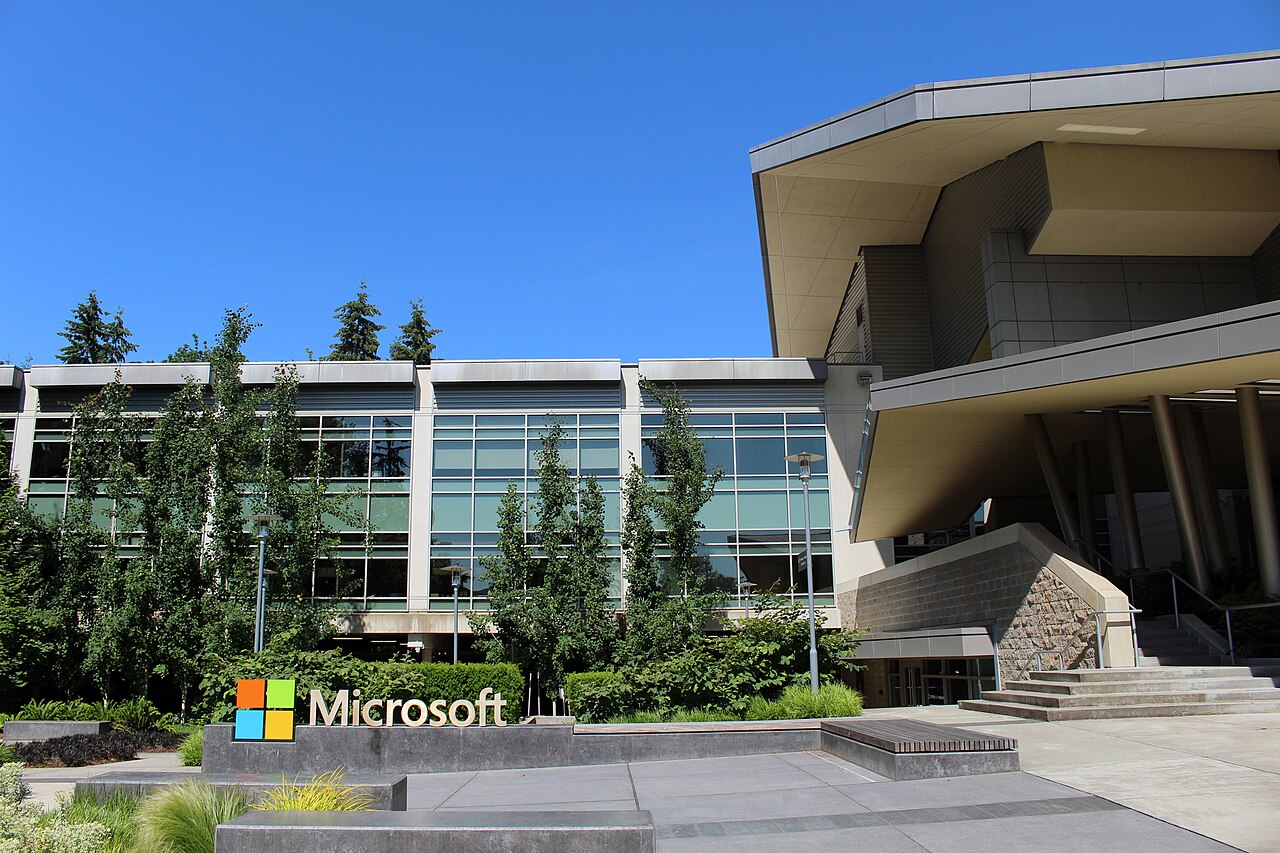
Header and in-body image: Building 92 on Microsoft's Redmond campus by Coolcaesar, Wikimedia Commons, CC BY-SA 4.0 (source). A file photo, not from Ignite.