Microsoft has spent two years telling investors its artificial intelligence business is large and growing fast. A disclosure surfaced on August 5, 2026 put a finer point on where that business comes from. Microsoft recorded $24.1 billion in AI revenue from OpenAI in the year ended June 2026. Bloomberg, analyzing the filing, estimated that OpenAI accounts for more than half, and possibly around 70%, of Microsoft's total AI revenue, which the company's own disclosures place near $37 to $40 billion annualized. In other words, a large share of what Microsoft counts as AI revenue is money flowing through its cloud from a single partner.
The number is not a scandal, and it does not mean Microsoft's AI business is hollow. But it reframes a story that had been told mostly in aggregate. When a company reports tens of billions in AI revenue, the natural reading is broad demand across many customers. The disclosure shows something more concentrated: one relationship, deeply intertwined, doing much of the work. Understanding that concentration is useful for anyone trying to read the real shape of the AI economy underneath the headline totals.
 Microsoft
 OpenAI
 Azure
AzureWhat the disclosure actually says
The core figure is specific: $24.1 billion of AI revenue attributable to OpenAI over the trailing year. Much of that is OpenAI's own consumption, the compute it buys from Azure to train and serve models, plus enterprise and API usage that reaches customers through Microsoft's cloud. Bloomberg's contribution was to set that figure against Microsoft's total AI revenue and estimate the share.
Most of Microsoft's AI revenue traces back to one customer
Microsoft disclosed $24.1 billion in AI revenue from OpenAI for the year ended June 2026. Bloomberg estimates that is more than half, and possibly around 70%, of a total AI business it puts near $37 to $40 billion annualized.
OpenAI figure is Microsoft-disclosed; the total AI figure and the share estimate are Bloomberg's. The total bar uses the low end of the reported $37 to $40 billion range.
The estimate carries a range, not a single number, because Microsoft does not report a clean, comparable "total AI revenue" line and the definition of what counts as AI revenue is itself elastic. Bloomberg's framing, more than half and possibly around 70%, reflects that uncertainty honestly. The safe conclusion is directional rather than precise: OpenAI is not one AI customer among many for Microsoft. It is the dominant one.
OpenAI is not one AI customer among many for Microsoft. It is the dominant one.
On what the disclosure reframes
The backlog tells the same story
Revenue is a snapshot. Backlog, the contracted future business a company has signed but not yet recognized, is a better read on where things are heading, and it points the same direction. Reporting on the disclosure noted that OpenAI-related commitments make up roughly 45% of Microsoft's $625 billion commercial cloud backlog.
That is a striking figure. Nearly half of the future cloud revenue Microsoft has under contract is connected to a single partner's needs. For Microsoft, that is a source of strength in the near term: it is a large, committed, fast-growing anchor tenant for Azure. It is also a concentration that prudent analysis has to weigh, because the health of a meaningful part of Microsoft's cloud outlook is now linked to the trajectory of one company.
Why this is a two-way dependence
The relationship is often described as Microsoft supporting OpenAI, and it is, through investment and compute. But the disclosure makes clear the dependence runs both ways. OpenAI relies on Azure for the enormous compute its models require. Microsoft, in turn, relies on OpenAI for a large share of the AI revenue and future cloud commitments it reports to investors. Each company is a top-tier customer and supplier to the other.
Mutual dependence of this size cuts in two directions. It binds the partners tightly and gives each a strong incentive to keep the other healthy, which is stabilizing. It also means a change in one company's fortunes or strategy propagates directly to the other. If OpenAI diversified its compute across other providers, or if its growth slowed, the effect would land on Microsoft's reported AI numbers. If Microsoft changed its terms or priorities, OpenAI would feel it in its cost base. The concentration is an asset and a risk at the same time, which is exactly why the disclosure drew attention.
Reading it in context
This fits a pattern visible across the 2026 AI economy, where a handful of very large bilateral relationships, chip makers and clouds, clouds and model labs, labs and their biggest customers, account for a disproportionate share of the reported activity. These arrangements are efficient and they move fast, but they also concentrate risk in a small number of links. The Microsoft and OpenAI relationship is the most consequential of them, and the disclosure is a rare quantified look inside one.
For companies buying AI rather than supplying it, the lesson is about where dependence sits in the stack. Much of the market's revenue and its most important relationships run through a few concentrated partnerships, and the terms of those partnerships are set well above the level of any individual buyer. A business that pins its own AI stack to a single provider inherits a slice of that concentration. Keeping applications portable across models and providers, the model-agnostic approach Metir AI is built on, is one way to keep your own dependence a choice rather than a default, whatever the big players decide among themselves.
The takeaway
What is verifiable: Microsoft disclosed $24.1 billion in AI revenue from OpenAI for the year ended June 2026, Bloomberg estimated that is more than half and possibly around 70% of Microsoft's roughly $37 to $40 billion annualized AI business, and reporting put OpenAI-related commitments at about 45% of Microsoft's $625 billion commercial cloud backlog. The disclosure does not undercut Microsoft's AI business; it clarifies its shape. A large, fast-growing AI business is also, to a significant degree, one deep and mutual relationship. That concentration is a strength and a risk in the same breath, and it is now a documented feature of the AI economy rather than an inference.
Sources:
- Microsoft's AI Sales Mostly Come From OpenAI, Disclosures Show | Bloomberg
- Microsoft's AI Sales Mostly Come From OpenAI, Disclosures Show | Yahoo Finance
- OpenAI May Account for 70% of Microsoft's AI Revenue | TipRanks
- Microsoft Disclosures Suggest OpenAI Sales Account For Around 70% Of FY26 AI Revenue | Where's Your Ed At
- Microsoft's AI Revenue Heavily Dependent on OpenAI, New Filing Reveals | BigGo Finance
Image credits
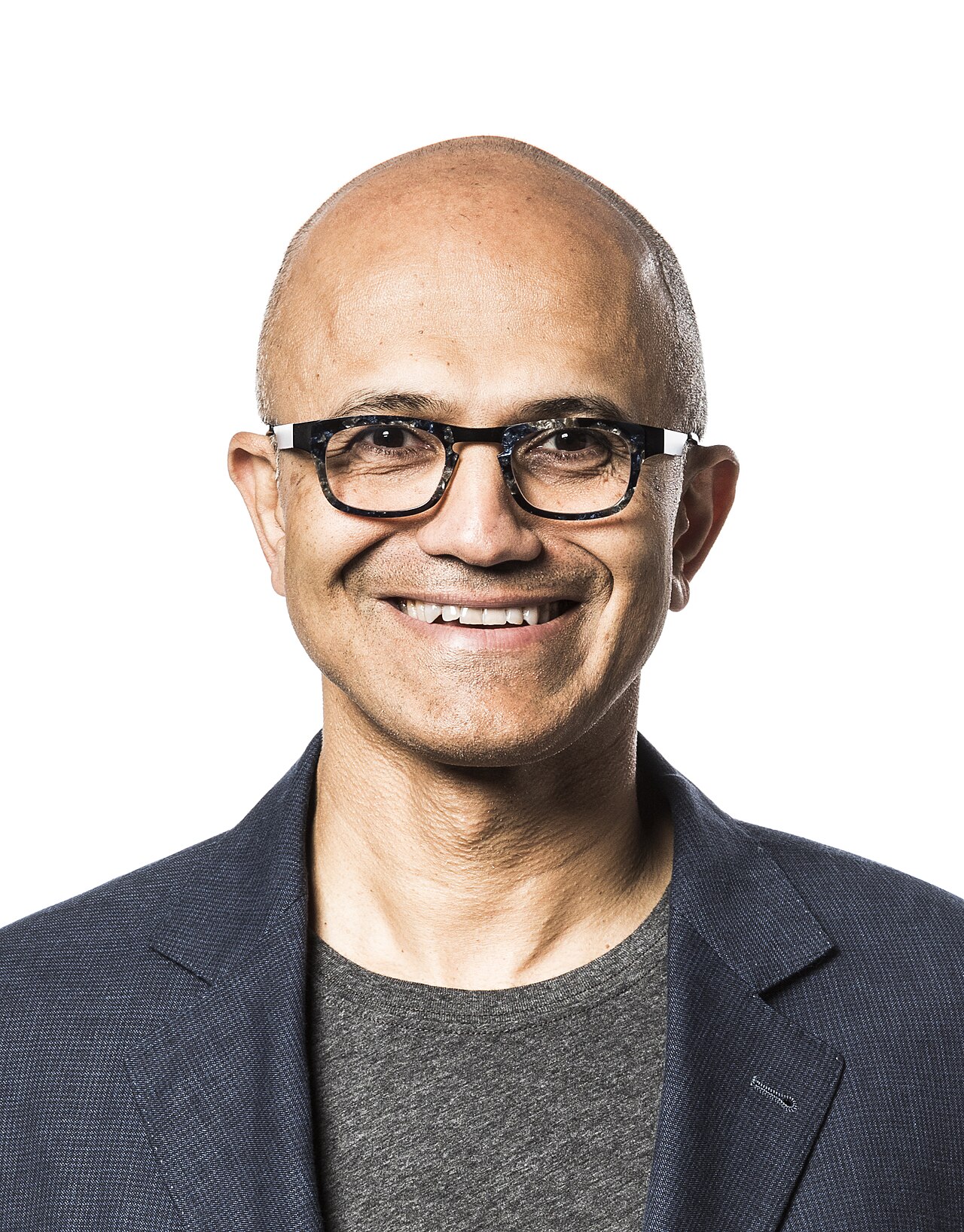
Header and in-body image: Satya Nadella official portrait, by Brian Smale and Microsoft via Wikimedia Commons, licensed under CC BY-SA 4.0. Used to depict the individual. Reviewed before use.