
Meta and Microsoft are scaling back how much their own employees use Anthropic's Claude in favor of in-house tools, according to a report from The Information published on October 5, 2026. The story is about internal usage, not the commercial relationship: both companies remain large Anthropic partners, and customer spending on Claude through Microsoft's platforms is reported to be growing. It still offers a rare look at how the biggest AI buyers think about build versus buy, and about what token bills look like at scale.
 Anthropic
 Microsoft
 Meta
MetaWhat was reported
All figures below are as reported by The Information and relayed by outlets including Yahoo Finance, Seeking Alpha, PYMNTS and Finimize. Neither company has been quoted confirming the specifics in the coverage reviewed.
- Microsoft: had expected to spend at least $1 billion on Anthropic technology internally this year. That estimate has reportedly been cut by more than a third. Leadership has asked staff to reduce Claude use in favor of Microsoft's own offerings, such as GitHub Copilot, though one summary says engineers may still choose other models.
- Meta: internal Claude Code users have reportedly fallen from roughly 60,000 earlier this year to roughly 30,000. Meta is promoting its own coding tools, MetaCode (reported at more than 30,000 internal users) and Muse Code (more than 6,000).
- Customers: spending on Anthropic models by customers using Microsoft platforms is reported to be still growing.
One caveat on Meta's number: spring layoffs reportedly affected about 10% of its roughly 78,000 employees, so a share of the decline reflects a smaller workforce rather than a change in tool preference. Reports say layoffs do not explain most of the drop.
Reported internal pullback from Claude, 2026
Meta: internal Claude Code users
Approximate, earlier in 2026 vs. October 2026.
Microsoft Cloud and AI: monthly AI limit per employee
Approximate, in most cases. Reported by a single outlet.
Sources: The Information as relayed by Yahoo Finance and PYMNTS (Meta); Tech Insider (Microsoft caps). Not independently confirmed.
The per-employee cap, and why to read it carefully
One outlet, Tech Insider, reported that monthly AI spending limits per employee in Microsoft's Cloud and AI organization dropped from roughly $100,000 to about $10,000 in most cases, while noting it was unclear whether this was a formal policy, a departmental ceiling or an individual allowance. The other coverage reviewed for this article, including PYMNTS, Yahoo Finance and Finimize, does not repeat that figure, so treat it as a single-source claim.
It is consistent with earlier reporting on a broader trend. In August, The Next Web, citing 404 Media, reported that Microsoft had introduced division-level AI token budgets as of July 2026, switched its default internal model to a cheaper option, and that executive vice president Jay Parikh told staff that "tokenmaxxing is not what we are optimizing for."
The same agent that is cheap per task can become expensive when thousands of engineers run it all day.
Build versus buy for AI coding tools
Companies the size of Microsoft and Meta sit in an unusual position: they sell or build competing products. Microsoft owns GitHub Copilot, and Meta has been developing its own models and coding agents (see our earlier coverage of Meta's Muse Code). For them, running internal teams on a rival's tool means paying a competitor and generating usage data for it, while using the in-house tool is both a cost saving and a form of product testing.
That logic does not apply to most companies. Buying works well when a vendor's model is clearly ahead and the bill is predictable. Building makes more sense when usage is enormous, when the company already has the models and infrastructure, and when internal adoption doubles as a proving ground. The reported moves are consistent with that framing, though they do not show that the in-house tools match Claude on quality. No benchmark or productivity data accompanied the report.
Token cost governance inside big tech
The bigger lesson may be about governance. Agentic coding tools consume tokens in proportion to how autonomously they work, and individual spend can vary by orders of magnitude. TechRadar earlier reported a Microsoft employee who spent about $28,000 in 28 days, and a Ramp AI Index figure showing the top 1% of US businesses spending a median of $7,400 per employee on AI against $11.95 for the median company, as PYMNTS noted. The same PYMNTS piece cited a survey in which only 11% of nearly 400 businesses could accurately forecast AI costs.
Typical responses include division-level budgets, default models that are cheaper, per-person caps and routing simple tasks away from the most expensive model. Cost control and tool preference are hard to separate in the Microsoft and Meta reports: a cap pushes people toward cheaper tools, whichever vendor supplies them.
What it means for Anthropic
Customer concentration is already a topic ahead of Anthropic's expected IPO. A draft prospectus reported by Reuters (via The Star) and others indicates two unnamed customers each accounted for about 12% of 2025 revenue, close to a quarter combined, and that many large clients are not locked into long-term contracts. The prospectus does not name those customers, and linking them to Meta or Microsoft would be speculation.
Two points keep the picture balanced. First, internal use at two firms is a small slice of a business whose adoption is broad: Ramp's index found 43.5% of US businesses paying for Anthropic as of July. Second, Microsoft's investment in Anthropic and Anthropic's Azure compute commitment were reported as unaffected by AI Weekly, and sales through Microsoft's platforms are still rising. A company can reduce what it consumes internally while continuing to resell the same models to customers.
Lock-in and model portability
The episode illustrates why many teams avoid tying workflows to one model. Switching costs include prompts, tool configurations, evaluation suites and developer habits. Teams that keep an abstraction layer can move spend as prices and quality change. That is the premise behind model-agnostic platforms such as Metir, where several providers sit behind one interface, though the same principle applies to any internal gateway.
What to watch
- Confirmation: whether Microsoft or Meta comment on the figures, and whether the $10,000 cap holds up beyond a single report.
- Quality evidence: published results comparing MetaCode, Muse Code and Copilot CLI against Claude Code on real engineering work.
- Anthropic's disclosures: updated customer concentration and revenue by channel in its IPO filings.
- Copycats: whether other large employers adopt similar caps or in-house defaults, which would matter more to Anthropic than any single firm.
The reported shift is real enough to track and limited enough not to over-read: two companies steering their own staff toward their own products, while the commercial relationships continue.
Sources:
- Meta and Microsoft scale back internal use of Anthropic's Claude, report says (Yahoo Finance UK)
- Meta, Microsoft scale back employee use of Claude: report (Seeking Alpha)
- Microsoft and Meta Steer Staff From Anthropic Claude to In-House AI (PYMNTS)
- Meta And Microsoft Rein In Employees' Use Of Claude (Finimize)
- Meta, Microsoft Cut Claude Use, Lean on In-House AI (Tech Insider)
- Microsoft tells employees to stop tokenmaxxing, sets division-level AI budgets (The Next Web)
- Microsoft cracks down on employee AI use after one worker spent $28,000 in 28 days (TechRadar)
- Meta, Microsoft Scale Back Staff Use of Anthropic's Claude (AI Weekly)
- Anthropic IPO prospectus lays bare deep dependence on Big Tech partners (Reuters via The Star)
Image credits
- Hero: Aerial view of Microsoft's West Campus, Redmond, August 2009 (an older photo, shown only as an illustration of the company). Author: Jelson25. Public domain. Wikimedia Commons
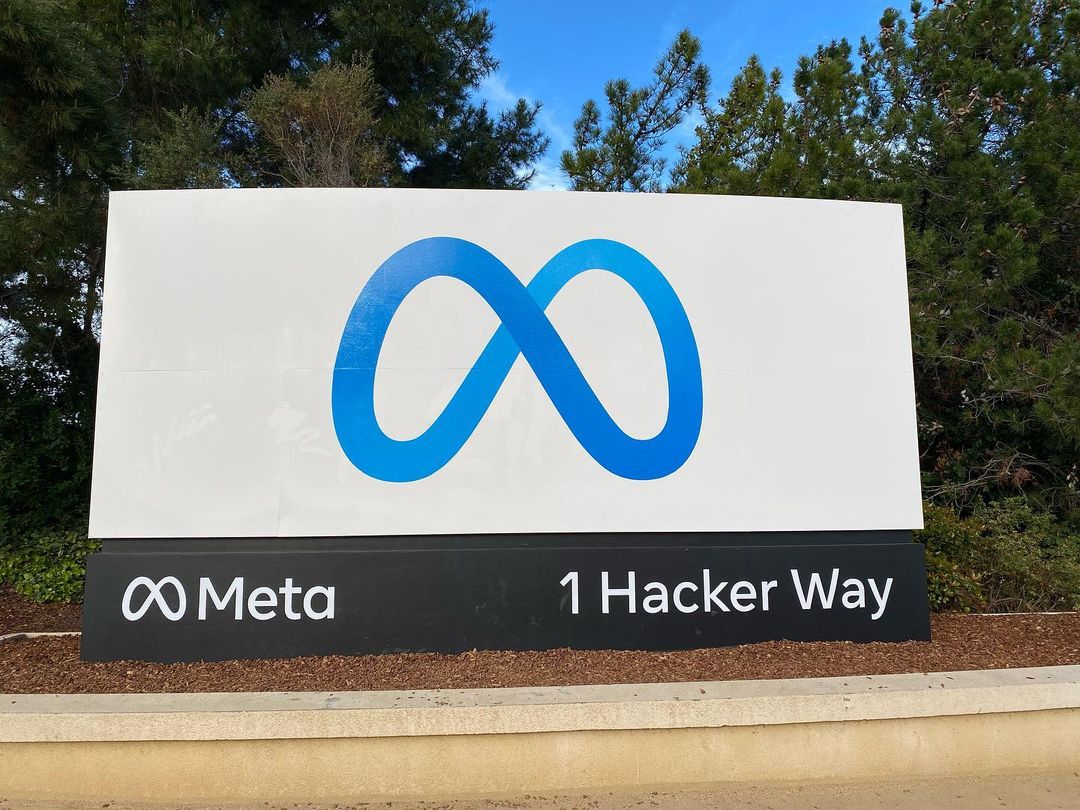
- Meta sign at 1 Hacker Way, Menlo Park. Author: Nokia621. CC BY-SA 4.0. Wikimedia Commons