An internal memo, reported by Reuters on July 9, 2026 and covered widely since, disclosed that Meta plans to begin manufacturing its own AI chip, code-named Iris, in September 2026. The detail is narrow, a single chip entering production, but it sits inside a much larger story: Meta is trying to double its data center compute capacity while reducing how dependent it is on outside chip vendors, chiefly Nvidia and AMD. This piece looks at what the memo actually says, and what building custom AI silicon does and does not change for a company at Meta's scale.
 Meta
Meta NVIDIA
What the memo says
According to the reporting, Iris is one of four planned chip generations under Meta's MTIA program, short for Meta Training and Inference Accelerators. The chip is aimed at strengthening the AI systems that run recommendation, ranking, and generative features across Facebook and Instagram. Per the memo, Iris cleared its bug-testing phase in roughly six weeks without significant problems, and production is slated to start in September 2026.
Meta is not building this chip alone. Broadcom is reported to be the design partner, and TSMC (Taiwan Semiconductor Manufacturing Co.) handles fabrication. That division of labor is worth noting on its own: even a hyperscaler with Meta's balance sheet is not designing a chip from scratch or building its own fab. It is directing a design partner and a foundry toward a chip tailored to its own workloads, which is a meaningfully different undertaking than what Nvidia or AMD do as merchant silicon vendors selling to the whole market.
It's worth flagging, as the memo itself is internal and the plan has not been independently confirmed by Meta in a public announcement as of this writing. The broad direction, more in-house silicon alongside continued Nvidia and AMD purchases, is consistent with public statements Meta has made about its AI infrastructure roadmap.
The scale behind the chip: gigawatts, not just GPUs
The more consequential number in the memo may not be about the chip at all. Meta is reportedly bringing about 7 gigawatts of compute capacity online in 2026, with a target of 14 gigawatts by 2027, a doubling in roughly a year. Meta's projected AI infrastructure spending for 2026 reaches as high as $145 billion.
Meta's compute capacity is set to double
Data center compute capacity in gigawatts, per the July 2026 memo reporting. Meta's projected AI infrastructure spend for 2026 reaches as high as $145 billion.
Figures from Meta's internal memo as reported July 9, 2026. The 2027 figure is a stated target, not a completed build.
Gigawatts, not chip counts, is the unit that matters here because it names the real constraint. A rack of accelerators is only useful if there is power to run it and cooling to keep it running. As AI data centers have scaled, the bottleneck has shifted from "can we get enough chips" to "can we get enough electricity, transmission capacity, and sites to put them in." Reading Meta's plan as a hardware story alone misses that the harder problem it is solving for is an energy and site-planning problem, at a scale that now shows up in national grid planning conversations. A doubling from 7 to 14 gigawatts implies a doubling of that entire physical footprint, not just an order for more silicon.
Gigawatts, not chip counts, is the unit that actually names the constraint.
On reading infrastructure memos correctly
Why hyperscalers build their own chips
Meta is following a pattern other hyperscalers set earlier. Google has its TPU line, Amazon has Trainium and Inferentia, and Microsoft has its Maia accelerator. None of these companies has stopped buying Nvidia GPUs in large volume; each is running custom silicon alongside merchant chips, not instead of them. The motivations are consistent across the industry, and they are mostly about the economics of running your own known workloads at extreme scale:
- Cost per unit of useful work. A chip designed narrowly for a company's own recommendation or inference workload can be more efficient than a general-purpose GPU built to serve every customer's every model, because the general-purpose chip is paying an efficiency tax for flexibility it doesn't need.
- Supply security. Relying entirely on one or two outside vendors for the hardware your entire product runs on is a single point of failure. Owning a second, in-house source, even a partial one, gives a company a fallback if external supply tightens or lead times stretch.
- Bargaining leverage. A credible in-house alternative changes the negotiating position with Nvidia and AMD, even if the internal chip only ever covers a fraction of total workload. It is harder to price aggressively against a customer who has a viable option to walk away from part of the order.
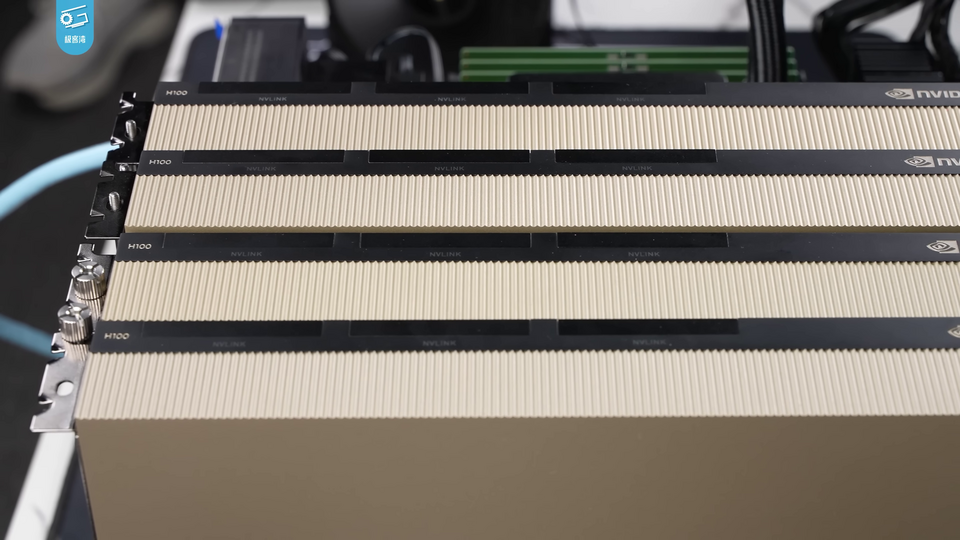
Iris is designed to work alongside the large volumes of Nvidia and AMD GPUs Meta already buys, not replace them.
Per the reported memo
The limits of the strategy
None of this displaces Nvidia's core advantage, which is not really the silicon itself but the software built on top of it. CUDA, Nvidia's programming platform, has a roughly two-decade head start and an enormous base of tools, libraries, and trained engineers built around it. A custom chip that handles Meta's internal recommendation and inference workloads well does not automatically generalize to the broad range of model architectures and research workloads that a flexible GPU platform supports. That is one reason Iris is reported as a complement to Nvidia and AMD purchases rather than a replacement for them.
There is also a market-scope limit. Google, Amazon, Microsoft, and now Meta are building chips for their own internal use, not to sell into the merchant market the way Nvidia and AMD do. That keeps the manufacturing volumes lower than a true merchant chip business would need to justify its own fab investment, which is exactly why Meta leans on Broadcom for design and TSMC for fabrication rather than building either capability itself. Vertical integration, in this case, means owning the chip's specification and its economics, not owning every layer of the supply chain beneath it.
Why this matters beyond one company's balance sheet
For a business the size of Meta, a custom chip program is a rational hedge against concentration risk and a lever on unit costs at a scale where even small per-chip savings compound into billions. For nearly everyone else building AI-powered products, the practical lesson sits one layer up. The infrastructure question of which chips, which fabs, which power contracts is being decided by a handful of companies with the balance sheets to run four chip generations in parallel. Builders who are not in that category are better served staying flexible about the models and infrastructure they depend on rather than betting their product on any single vendor's roadmap. That is part of the thinking behind model-agnostic platforms such as Metir AI, which treat the underlying model and infrastructure layer as something to stay portable across, rather than a permanent commitment.
The takeaway
Meta's Iris chip, per the reported memo, is a modest, narrowly scoped piece of a much larger infrastructure buildout: 7 gigawatts of compute this year growing to a targeted 14 by 2027, backed by AI infrastructure spending that could reach $145 billion in 2026 alone. The chip itself will not replace Nvidia or AMD hardware in Meta's data centers. What it represents is the same calculation every hyperscaler running custom silicon has made: at sufficient scale, owning even a slice of your own chip roadmap is worth the design and fabrication effort, even while the bulk of the workload keeps running on merchant GPUs. The bigger number to watch is not the chip generation count. It's the gigawatts.
Sources:
- Meta to put AI chip into production in September, report says | CNBC
- Meta could start production of Iris AI chip in September, report | Data Center Dynamics
- Meta to Start Production of Iris AI Chip | Yahoo Finance
- Exclusive: Meta to put AI chip into production in September as it looks to double computing capacity, memo shows | U.S. News
Image credits
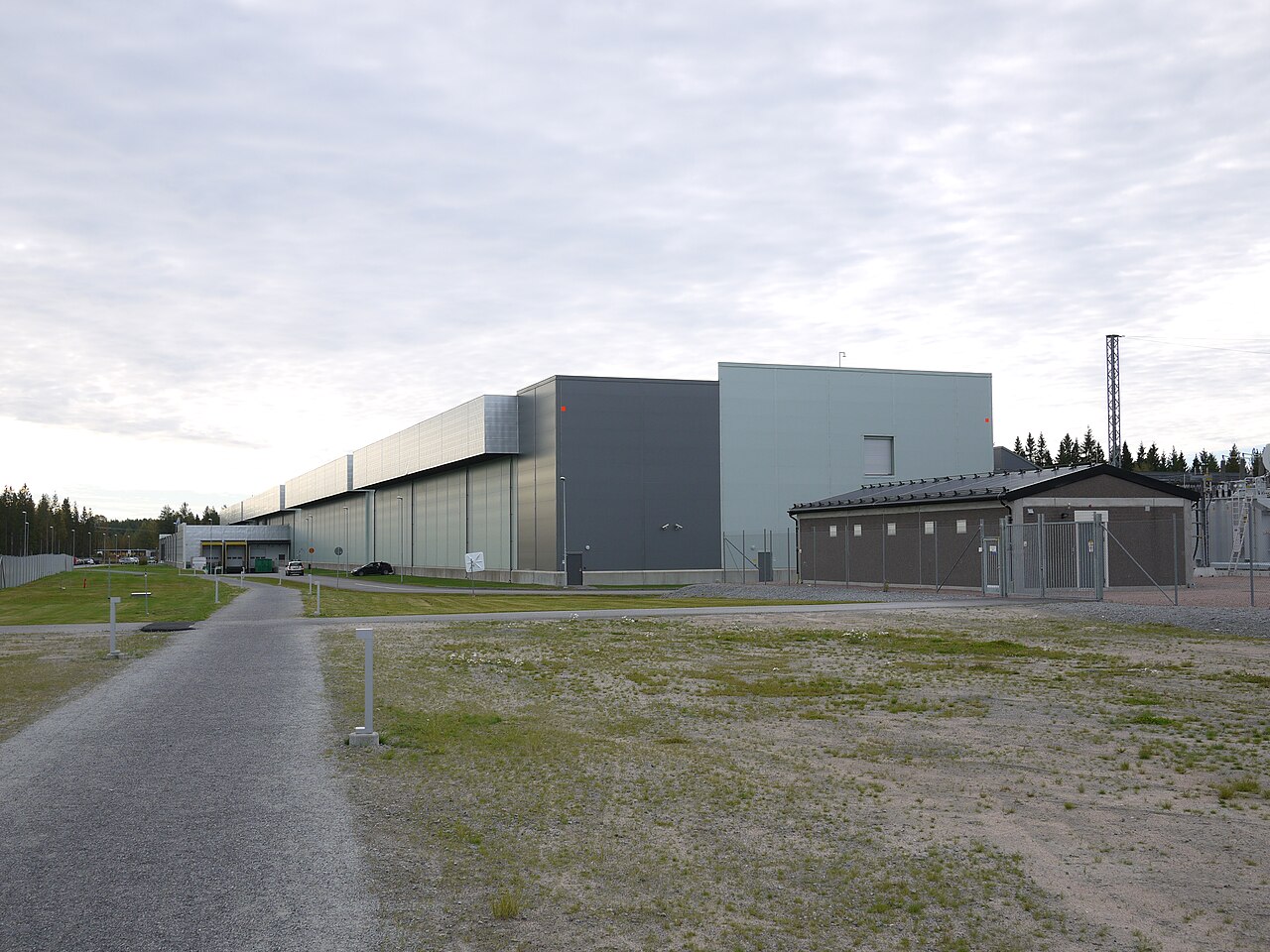
Header image: Meta's data centre at Luleå, Sweden, by Christopher Down via Wikimedia Commons, licensed under CC BY 4.0. In-body photograph of Nvidia H100 accelerators by Geekerwan via Wikimedia Commons, licensed under CC BY 3.0.