The most revealing thing about Meta's smart-glasses announcements at Connect 2026 was not any single pair. It was that there were three of them, deliberately spaced apart in price and capability. Meta launched the camera-free Ray-Ban Meta Audio at $349, the camera-equipped Ray-Ban Meta Gen 3 at $449, and pushed its in-lens Meta Ray-Ban Display, at $799, into more countries with new features. A company introduces one product to test a market. It introduces a tiered lineup when it has decided the market exists and wants to own the whole shelf.
 Meta
Meta Apple
AppleThe three tiers, and what separates them
The tiers are not just cheaper and more expensive versions of the same thing. Each removes or adds a specific capability, and the capability boundaries are the interesting part.
Three tiers, one assistant
How Meta's new and updated Ray-Ban glasses tiers compare. Muse, the AI assistant, runs across all three.
| Ray-Ban Meta Audio | Ray-Ban Meta Gen 3 | Meta Ray-Ban Display | |
|---|---|---|---|
| Starting price | $349 | $449 | $799 |
| Camera | None | 12MP / 3K video | Yes |
| Display | None | None | In-lens + Neural Band |
| Battery (glasses) | 12 hrs | 9 hrs | Varies |
| Availability | Oct 13 | Available now | US now, EU Oct 13 |
Availability and battery figures as announced at Connect 2026; display-glasses battery depends on display use.
The Ray-Ban Meta Audio is defined by what it lacks: a camera. At $349, 43 grams, with up to 12 hours of battery plus 48 from the case and prescription support, it is a pair of ordinary-looking glasses with the AI assistant, open-ear audio and microphones, and nothing pointed outward at other people. Shipping October 13, it is the cheapest way into Meta's assistant and, not coincidentally, the least socially fraught.
The Ray-Ban Meta Gen 3 is the mainstream pair, available immediately at $449. It adds a 12-megapixel camera with 3K video, extends battery life to 9 hours, and includes a six-microphone array that Meta says cancels over 90 percent of background noise. This is the volume product, the direct descendant of the Ray-Ban Meta line that already dominates the category.
The Meta Ray-Ban Display, at $799, is the only one with an actual screen in the lens, controlled by the Neural Band, a wristband that reads faint muscle signals from the wrist so you can control the interface without touching the glasses or speaking. Connect added cycling and transit directions, landmark navigation, holographic WhatsApp avatars, on-display photo editing and Dolby Atmos capture, and expanded availability to the UK, Canada, Germany, France and Italy.
Why a ladder beats a hero product
Selling across a price range does specific commercial work. It lets Meta capture buyers at different willingness-to-pay without cannibalizing a single flagship, and it turns the category from one product into a platform with an entry point and an upgrade path. Someone who buys the $349 audio pair to try the assistant is a candidate for the $449 camera pair next year and the display pair after that. The ladder also spreads risk: if displays turn out to be a slower sell, the camera and audio tiers still carry the business, and vice versa.
A company introduces one product to test a market. It introduces a tiered lineup when it has decided the market exists.
On why Meta shipped three glasses tiers at once
There is a defensive dimension too. Independent market data from Counterpoint Research put overall AI-glasses shipments up 263 percent year over year in the first half of 2026, with Meta holding about 94 percent of the display-less segment, and Apple is widely reported to be preparing a 2027 entry. Filling every price point now, before a large competitor arrives, makes the category harder to enter. By the time a rival ships one well-reviewed pair, Meta intends to have four.
The camera-free pair is the quiet signal
The most strategically interesting move is the cheapest one. Launching a deliberately camera-free pair is Meta conceding, in product form, that the camera is the friction. Camera glasses raise a social problem the wearer cannot fully resolve: bystanders cannot easily tell when they are being recorded. By offering an audio-only pair, Meta gives privacy-conscious buyers and, notably, people who want the assistant in settings where a camera is unwelcome a version of the product with that objection removed. Meta even attached a hearing enhancement feature, at a one-time $149 fee or via subscription and eligible for health-spending reimbursement, which reframes the audio glasses as something closer to an assistive device than a gadget.
That the assistant, Muse, runs identically across all three tiers is the tell. The camera and the display are options; the AI is the product. Meta is selling the same intelligence in three physical wrappers and letting buyers choose how much hardware they want around it.
The takeaway
Meta's Connect glasses announcements are best read as the moment the company stopped treating smart glasses as an experiment and started treating them as a product line. The three tiers cover privacy-first buyers, mainstream camera users and display early adopters, and the common thread across all of them is an AI assistant that does not change with the frame. That last point is the one worth holding onto: as the hardware fragments into a ladder of options, the durable choice for a buyer is less about which frame to wear and more about which intelligence sits behind it, and whether that intelligence is open enough to move with them. Keeping the assistant layer portable across devices and models rather than locked to one maker's frame is the principle Metir AI is built on.
Sources:
- Everything announced at Meta Connect 2026 | Engadget
- Meta Connect 2026 LIVE: new VR glasses, Muse Charm, Ray-Ban Meta gen 3, audio-only smart glasses | Tom's Guide
- New Meta Ray-Ban AI-Powered Display Glasses and Neural Band | Meta Store
- Global AI Glasses Shipments Surge 263% YoY in H1 2026 | Counterpoint Research
Image credits
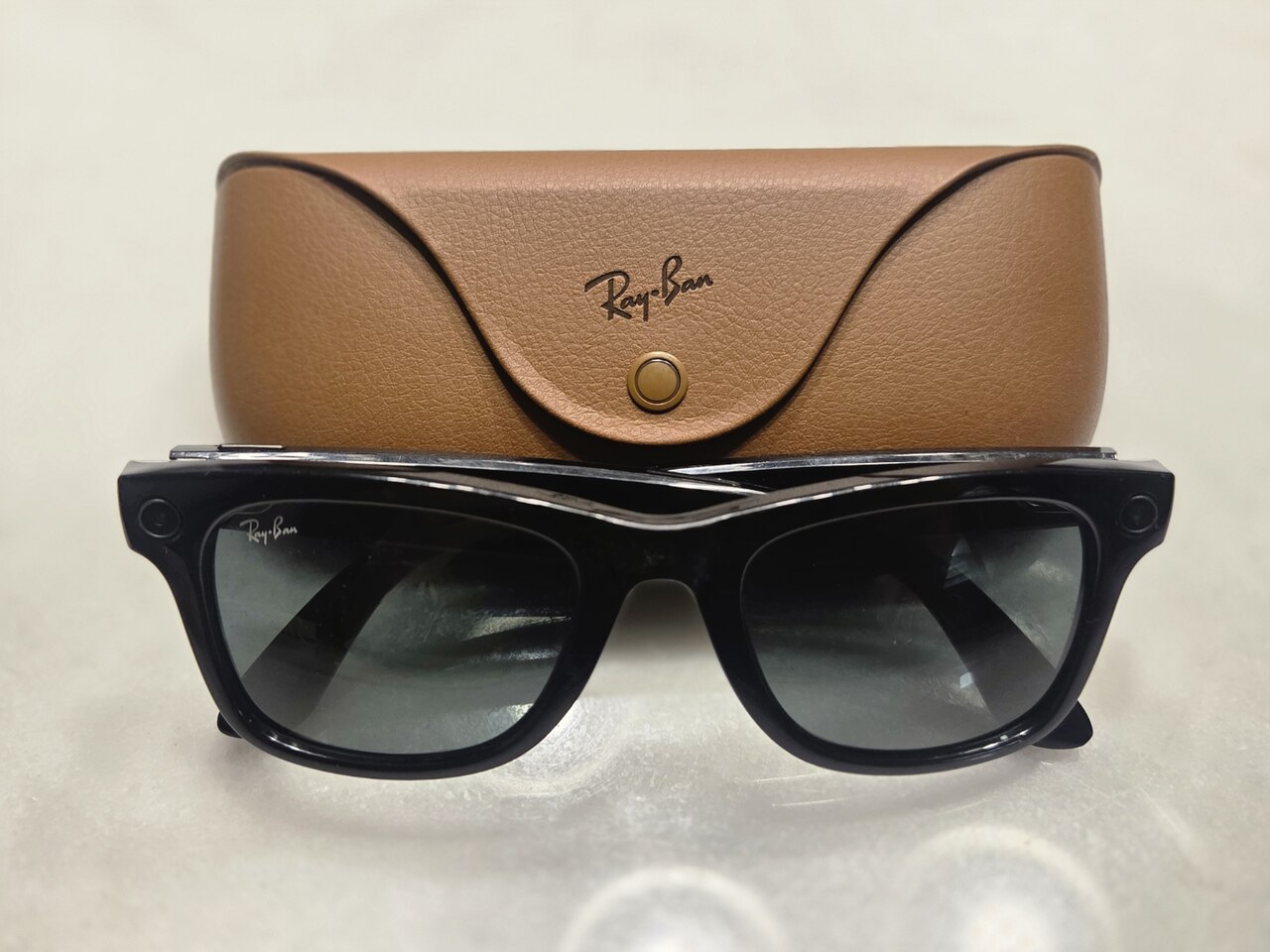
- Hero and in-body figure: "Ray-Ban Meta Gen 1 smart glasses with charging case" by Wikimedia Commons contributor, licensed under CC BY 4.0. Source: Wikimedia Commons. Reviewed before publication; depicts Ray-Ban Meta smart glasses representative of the line discussed. The photo shows an earlier generation, as noted, not the Gen 3 hardware specifically.